AI Generated Quiz
Primary 1 Chinese Hanyu Pinyin Quiz
Free P1 Chinese Hanyu Pinyin quiz, MiniMax AI version, with questions, answers, and syllabus-aligned practice for Singapore students.
These static practice materials are generated from the site's syllabus and paper-generation workflow, with source and model context shown so students and parents can evaluate the material before use.
Questions
Free quiz and exam paper access
Enter your details to view this paper
Your access is remembered on this device.
Answers
Primary 1 Chinese Quiz - Hanyu Pinyin — Answer Key
Total: 20 marks Topic: Hanyu Pinyin (汉语拼音)
Section A: 声调 (Tones) — Questions 1–5
Concept: Pinyin has four basic tones (一声 ˉ, 二声 ́, 三声 ˇ, 四声 ̀). Students must listen carefully and spot the syllable whose tone is different from the other three. This trains the ear and prepares them for reading and speaking with correct tones.
(1) D — má
- mā (1st tone), mǎ (3rd tone), mā (1st tone), má (2nd tone)
- Three syllables share the 1st tone (mā, mā, mā). D is the only one with a 2nd tone (má), so D is "different".
- Common mistake: Students may pick B (mǎ) because it "looks different" in tone mark, but the question asks for the odd one out; B's 3rd tone actually appears only once too. Re-read carefully: the only 2nd-tone syllable is D.
(2) A — bā
- bà (4th), pà (4th), dà (4th), bā (1st)
- Three syllables have the 4th tone (bà, pà, dà). A (bā) is the only 1st-tone syllable, so A is different.
- Common mistake: Confusing bā/bà visually. Encourage students to say the syllable aloud and feel the tone.
(3) D — lì
- lǐ (3rd), nǐ (3rd), yǐ (3rd), lì (4th)
- Three are 3rd tone, only D (lì) is 4th tone.
- Common mistake: Confusing the falling-rising 3rd tone (lǐ) with the falling 4th tone (lì). Have students drop the syllable and feel the dip.
(4) C — tī
- dōu (1st), hēi (1st), tī (1st), gé (2nd)
- Three syllables have the 1st tone (dōu, hēi, tī). C (gé) is the only 2nd-tone syllable, so C is different.
- Common mistake: Confusing the high-flat 1st tone with the rising 2nd tone. Have students say each syllable and listen for the pitch change.
(5) C — dū
- tú (2nd), pú (2nd), dū (1st), tú (2nd)
- A, B, D share the 2nd tone. C (dū) is the only 1st-tone syllable, so C is different.
- Common mistake: Counting from the wrong position. Tell students to mark the tone of each syllable first, then look for the odd one.
Section B: 声母和韵母 (Initials and Finals) — Questions 6–10
Concept: Each Chinese hanzi has a fixed pinyin spelling. At P1, students learn to match common hanzi to their pinyin by recognising the initial (声母), the final (韵母), and the tone. Common confusions at this stage are b/p, d/t, n/l, and similar-sounding finals.
(6) A — mā
- 妈 = mā (1st tone, "mother")
- B (mǎ) is the 3rd-tone homophone of 妈 — a very common distractor.
- Teaching note: The hanzi 妈 is in the P1 识写字 list (Lesson 1). Encourage students to remember: 妈 = mother = mā.
(7) B — dà
- 大 = dà (4th tone, "big")
- A (tà) confuses the initial d/t. C (dǎ) confuses the tone (3rd vs 4th).
- Teaching note: 大 is in the P1 识写字 list (Lesson 6). Reinforce that 大 is 4th tone (dà), not 3rd tone (dǎ).
(8) C — shuǐ
- 水 = shuǐ (3rd tone, "water")
- A (suì) and D (shuí) confuse the initial s/sh. B (shuǐ) and D (shuí) confuse the final -ui vs -ei.
- Teaching note: 水 is in the P1 识写字 list (Lesson 10). Students should hear the "sh-" initial and the "-ui" final together.
(9) A — tiān
- 天 = tiān (1st tone, "sky/day")
- B (diān) confuses initial t/d. C (tián) confuses the final -an vs -ian. D (tān) is missing the "-i-" medial.
- Teaching note: 天 is in the P1 识写字 list (Lesson 10). Reinforce the "-ian" final.
(10) B — rén
- 人 = rén (2nd tone, "person/people")
- A (lén) and C (yín) confuse the initial r/l/r/y. D (rěn) confuses the tone (3rd vs 2nd).
- Teaching note: 人 is in the P1 识写字 list (Lesson 1). The 2nd tone rises — students often write "ren" without a tone, but pinyin always needs a tone mark.
Section C: 看图选拼音 (Picture–Pinyin Matching) — Questions 11–15
Concept: Pinyin is the sound bridge to hanzi. Matching a picture to its pinyin trains students to decode sound → symbol and supports early reading. At P1, distractors usually change the initial, the final, or the tone of the correct answer.
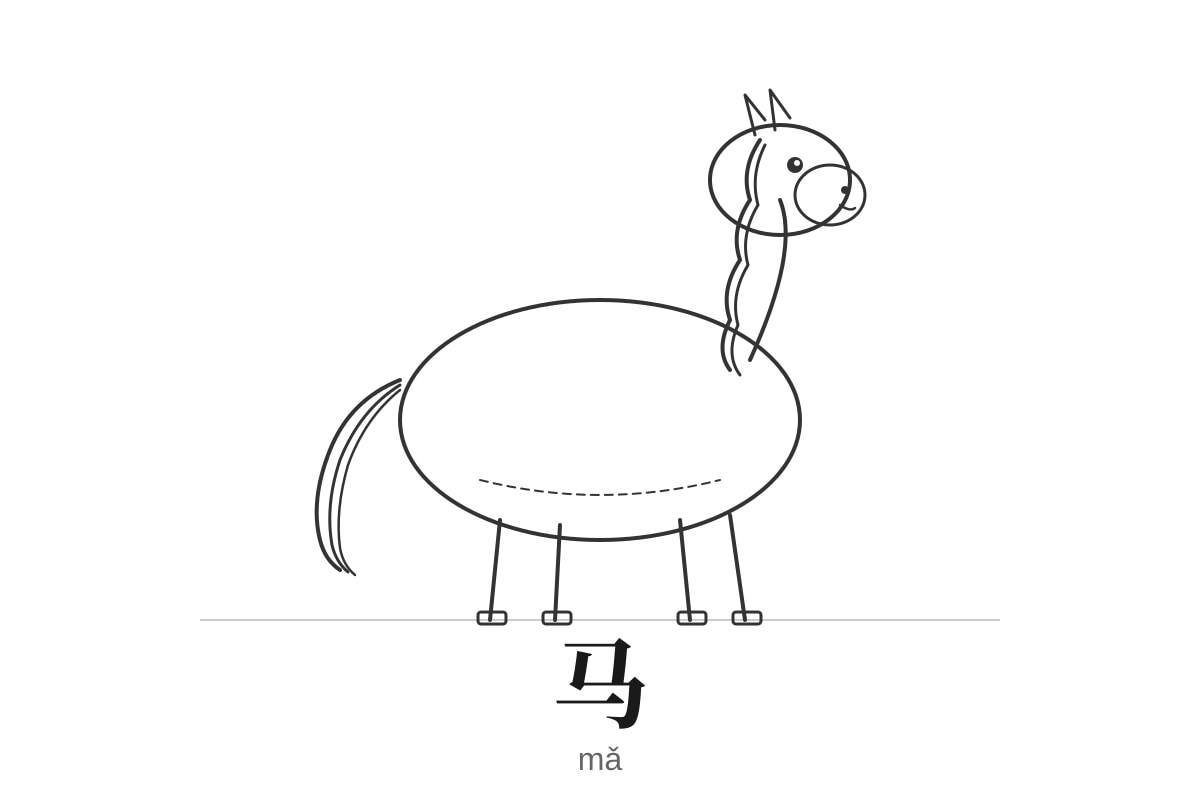
(11) A — mǎ
- 马 = mǎ (3rd tone, "horse")
- Distractor B (mā) is 1st tone, C (mà) is 4th tone, D (mē) has a non-standard final.
- Visual needed: a simple line drawing of a horse, labelled 马. The student should point to the picture, say "mǎ", and pick the option that matches.
(12) C — shuǐ
- 水 = shuǐ (3rd tone, "water")
- Distractor A (shuì) is 4th tone, B (suǐ) confuses sh/s, D (shuí) confuses -ui/-ei.
- Visual needed: a clear glass of water, labelled 水.
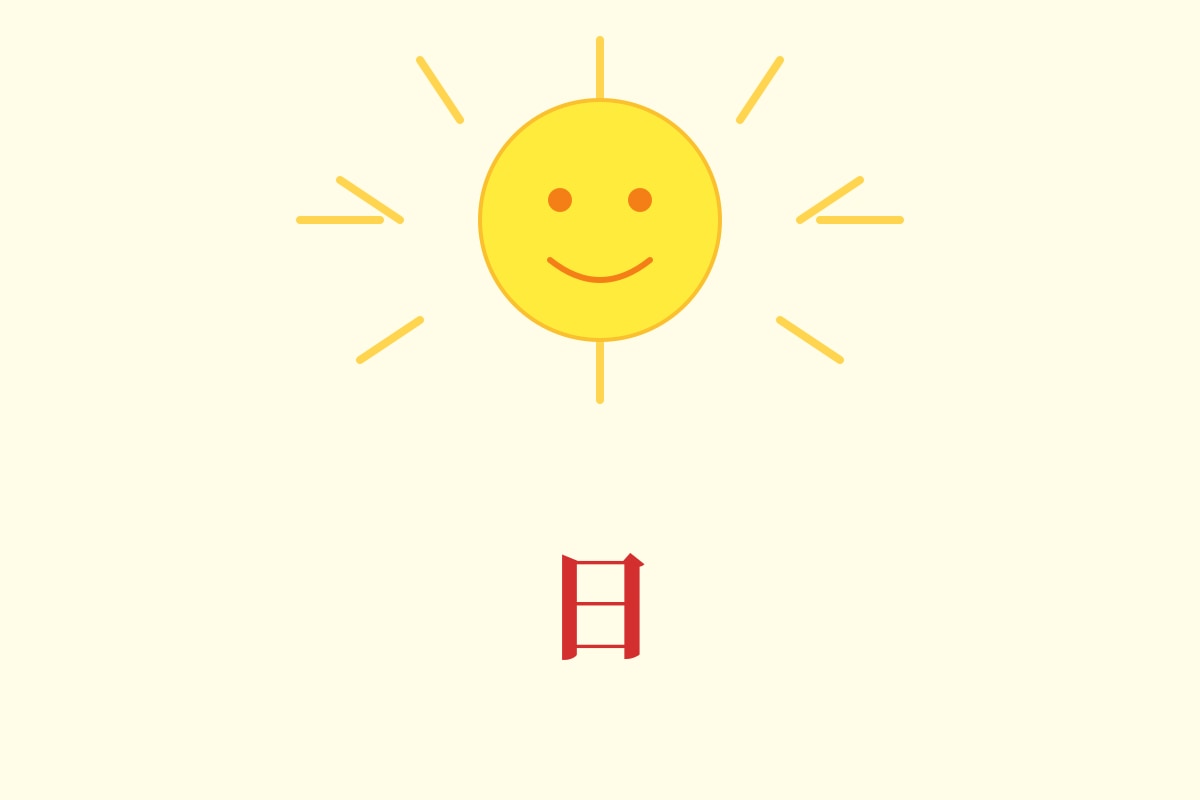
(13) C — rì
- 日 = rì (4th tone, "sun/day")
- Distractors A (lì) and B (nì) confuse the initial r/l/n. D (yì) confuses the initial and the tone.
- Visual needed: a bright sun in the sky, labelled 日.
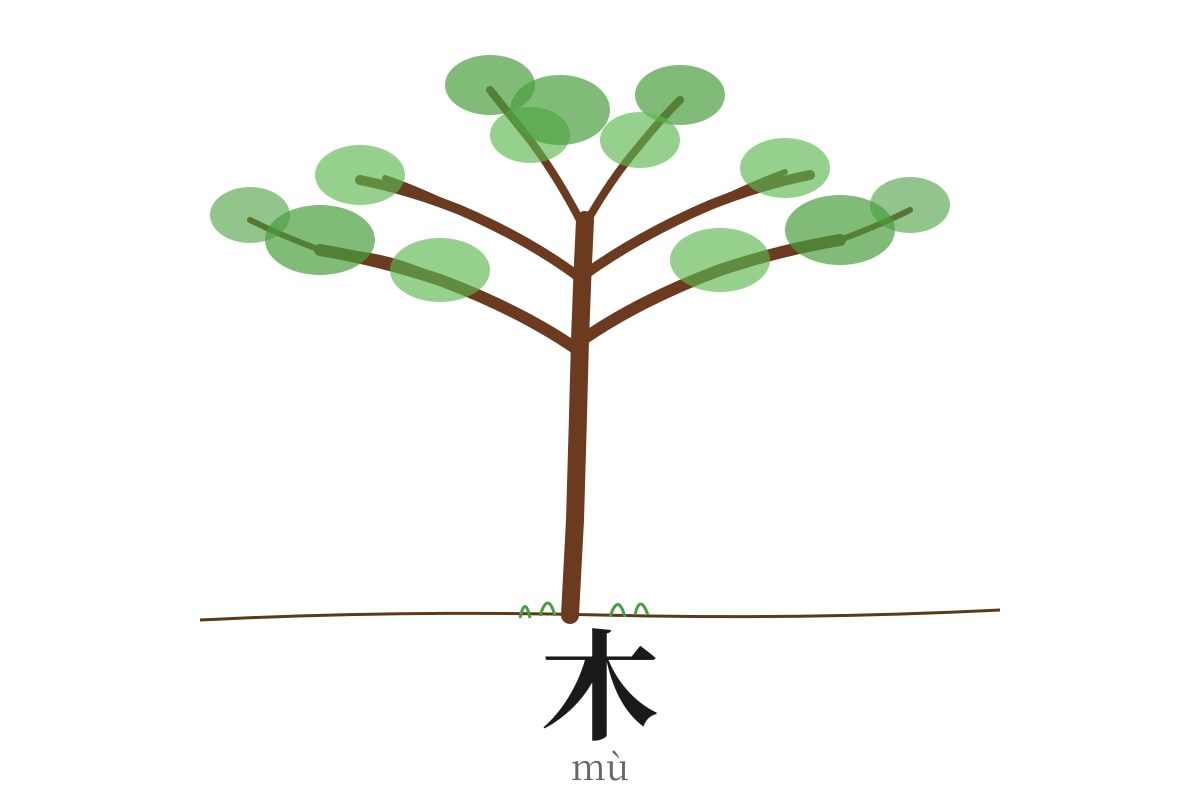
(14) A — mù
- 木 = mù (4th tone, "tree/wood")
- Distractor B (wù) confuses the initial m/w. C (mǔ) is 3rd tone. D (fù) confuses the initial m/f.
- Visual needed: a single tree, labelled 木.
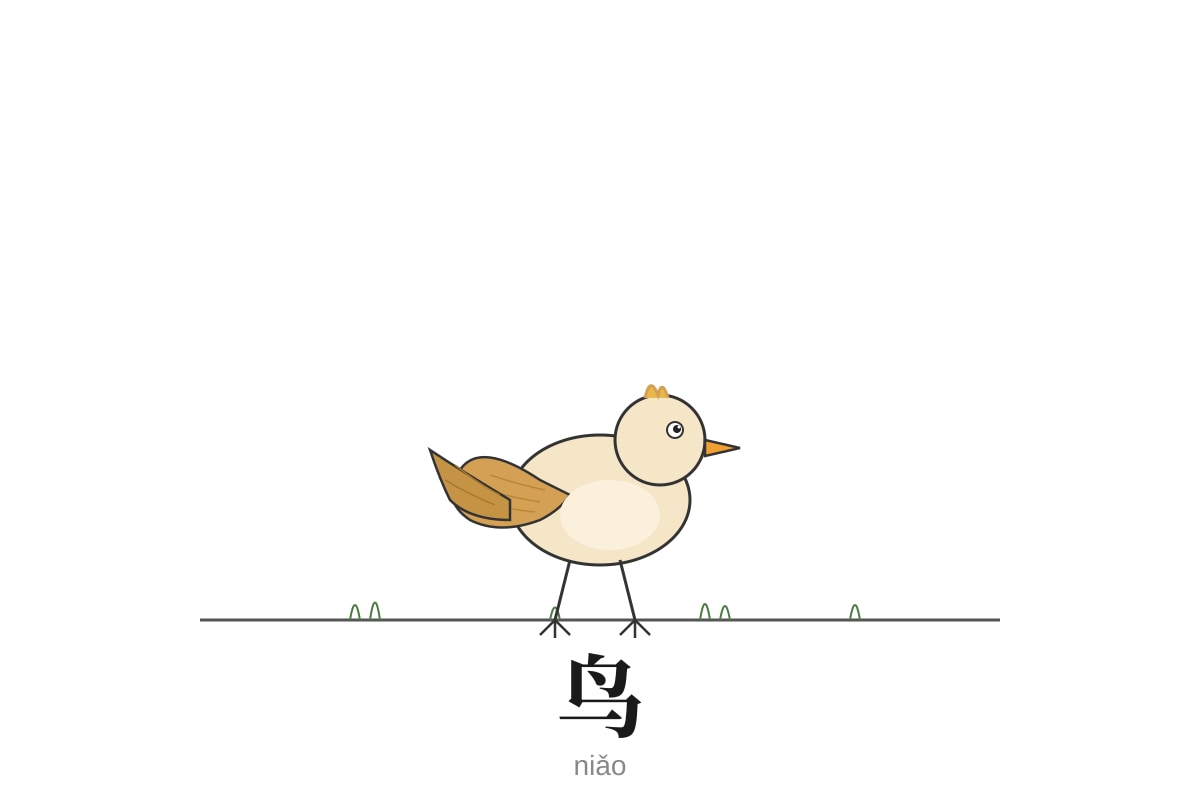
(15) A — niǎo
- 鸟 = niǎo (3rd tone, "bird")
- Distractor B (miáo) confuses n/m. C (liǎo) confuses n/l. D (niào) is 4th tone.
- Visual needed: a small bird standing on the ground, labelled 鸟.
Section D: 拼音写汉字 (Pinyin to Hanzi) — Questions 16–20
Concept: Once students know the pinyin of a hanzi, they can write the hanzi when they hear or see the pinyin. This is a foundational step for handwriting and for using pinyin to type Chinese.
(16) wǒ — 我
- 我 = wǒ (3rd tone, "I/me")
- 我 is in the P1 识写字 list.
- Teaching note: 3rd tone in pinyin — the voice dips down and rises. The hanzi 我 has 7 strokes.
(17) shū — 书
- 书 = shū (1st tone, "book")
- 书 is in the P1 识写字 list (Lesson 4).
- Teaching note: The hanzi 书 has 4 strokes. 1st tone is a high, flat tone.
(18) huǒ — 火
- 火 = huǒ (3rd tone, "fire")
- 火 is in the P1 识写字 list (Lesson 7).
- Teaching note: 3rd tone dips and rises. The hanzi 火 has 4 strokes. Be careful not to confuse 火 (huǒ) with 伙 (huǒ, second hanzi meaning "partner"), which is not taught at P1.
(19) shuǐ — 水
- 水 = shuǐ (3rd tone, "water")
- 水 is in the P1 识写字 list (Lesson 10).
- Teaching note: 3rd tone dips and rises. The hanzi 水 has 4 strokes. The initial is "sh-" and the final is "-ui".
(20) mā — 妈
- 妈 = mā (1st tone, "mother")
- 妈 is in the P1 识写字 list (Lesson 1).
- Teaching note: 1st tone is high and flat. The hanzi 妈 has 6 strokes. Do not confuse with mǎ (horse, 3rd tone) which has the same consonants but a different tone.
Marking Notes
- Each question = 1 mark.
- Total = 20 marks.
- For tone questions (Section A), the teacher should read the pinyin aloud so students rely on listening, not visual tone-marks.
- For picture questions (Section C), the image should be clear and labelled with the hanzi to support P1 readers.
- For Section D, accept any clear, correctly-formed hanzi written on the line. Partial credit is not given — it is either the correct hanzi (1 mark) or not (0 marks).
- All items align with the P1 MOE EL Chinese 识写字 list and the foundational 汉语拼音 syllabus outcomes (recognising initials, finals and four tones; matching pinyin to hanzi; writing hanzi from pinyin).