AI Generated Exam Paper
Primary 1 Chinese Practice Paper 5
Free P1 Chinese Practice Paper 5, Kimi2.6 AI version, with questions, answers, and syllabus-aligned practice for Singapore students.
These static practice materials are generated from the site's syllabus and paper-generation workflow, with source and model context shown so students and parents can evaluate the material before use.
Questions
Free quiz and exam paper access
Enter your details to view this paper
Your access is remembered on this device.
Answers
TuitionGoWhere Practice Paper (AI) — Version 5
Primary 1 Chinese — Hanyu Pinyin Focus
Answer Key and Marking Scheme
Total Marks: 40
Section A: Choose the Correct Answer (Questions 1–10)
| Question | Answer | Marks | Explanation |
|---|---|---|---|
| Q1 | C) b | [2] | "爸爸" bá ba — The first character "爸" is pronounced with initial consonant b. The first "爸" is fourth tone (bà), and the second "爸" is neutral tone (ba). Both start with b. Common mistake: Confusing b and p — "b" is unaspirated (no strong puff of air), while "p" is aspirated. |
| Q2 | B) má | [2] | Second tone (阳平) rises from middle to high pitch, like asking a question "What?" The tone mark goes upward: ˊ. First tone is flat (ˉ), third tone dips (ˇ), fourth tone falls (ˋ). In "má," the tone mark shows the rising pattern. |
| Q3 | A) ui | [2] | "水" shuǐ — The Pinyin is sh-u-ǐ, so the final vowel combination is ui. The tone mark goes on the i (the last vowel in this combination following Pinyin rules: when i and u are together, mark the second one if it's i, u, or ü). Note: "ui" is actually "uei" simplified — the e is dropped in writing but still affects pronunciation. |
| Q4 | A) First tone (一声 — high and level) | [2] | "七" qī has a flat, high tone mark ˉ above the i. First tone (阴平) is high and level, like singing a steady high note. The number 7 in Chinese is qī, same tone as "one" yī and "eight" bā. |
| Q5 | B) 妈妈 (mā ma) | [2] | In "妈妈," the first "妈" is first tone mā (high and level), but the second "妈" becomes light/neutral tone (轻声) — shorter, lighter, with no tone mark. This is a special pattern in Chinese where repeated words or certain grammatical particles lose their full tone. Common mistake: Thinking both characters keep their original tone. |
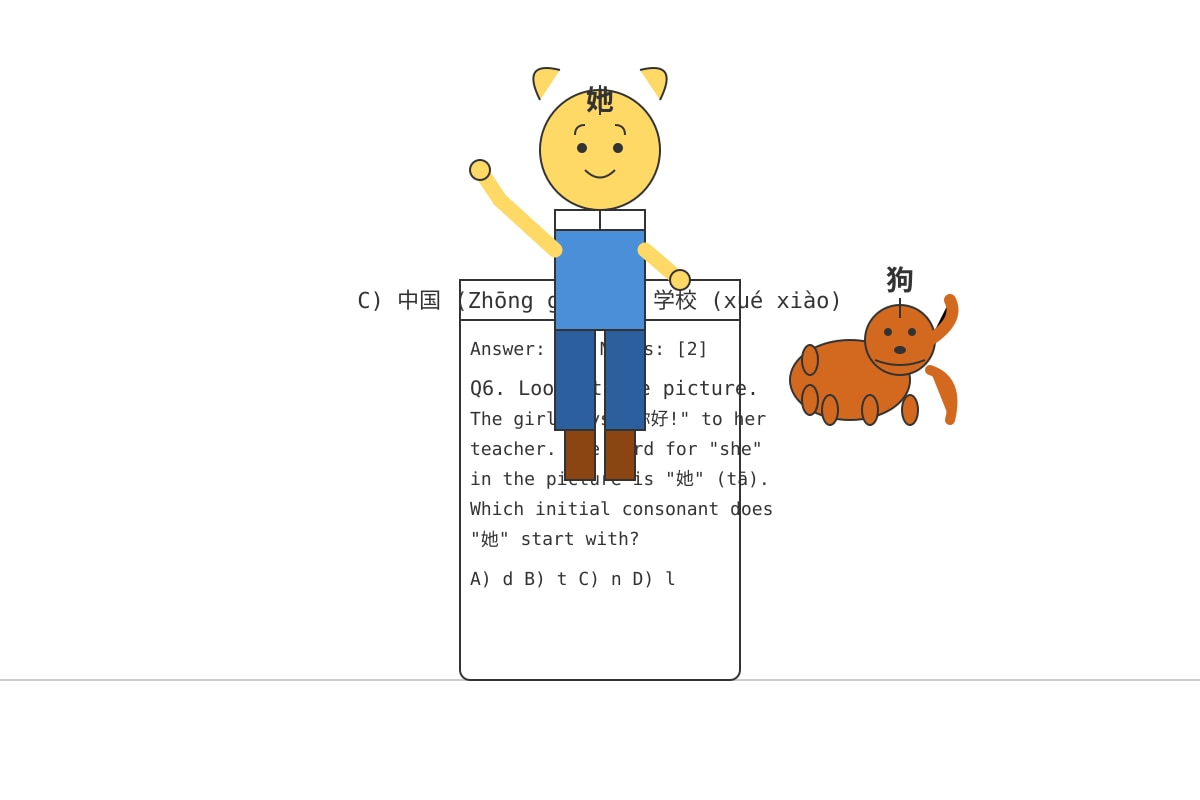
| Q6 | B) t | [2] | "她" tā — The Pinyin is t-ā, so the initial consonant is t. "She/her" starts with t, just like "他" (he/him, tā) and "它" (it, tā). All three share the same pronunciation! The picture shows a girl (她) and dog (狗 gǒu). Note: "他" for male, "她" for female, "它" for animals/objects — same sound, different characters. |
| Q7 | C) b, p, m, f | [2] | Initial consonants (声母) are the starting sounds of syllables — consonants that come before the vowel. In P1, students learn: b, p, m, f, d, t, n, l, g, k, h, j, q, x, zh, ch, sh, r, z, c, s, y, w. Options A, B, and D all contain final vowels (韵母), not initial consonants. "a, o, e" are single vowels; "ai, ei, ui" and "an, en, in" are compound vowels. |
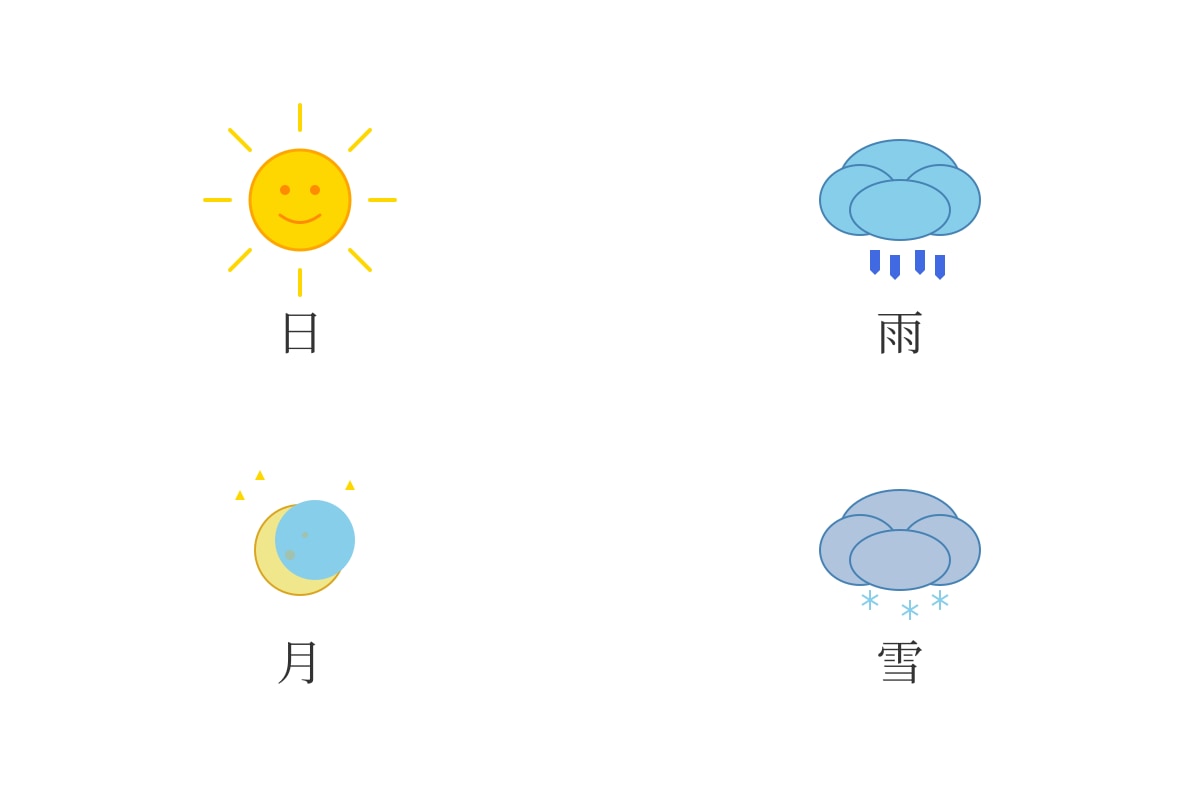
| Q8 | C) Third tone | [2] | "雨" yǔ — Pinyin with tone mark ˇ indicates third tone (上声), which dips down then rises. Imagine saying "huh?" with a puzzled voice — it goes down then up. The picture shows four weather words: 日 rì (sun, fourth tone), 雨 yǔ (rain, third tone), 月 yuè (moon, fourth tone), 雪 xuě (snow, third tone). |
| Q9 | C) On the a: jiā | [2] | Tone mark placement rule: When a syllable has multiple vowels, the tone mark goes on the main vowel (韵腹) following this priority: a > o > e > i/u (whichever comes last if both i and u appear). In "jiā," we have i + a — a comes first in priority, so the tone mark goes on a. Exception: For iu and ui combinations, mark the last letter. This rule helps make Pinyin clear and consistent. |
| Q10 | D) jüǎn | [2] | The correct spelling is juǎn, not jüǎn. In Pinyin, when j, q, x meet ü, the two dots on ü are dropped in writing — but the pronunciation keeps the ü sound! So we write "juǎn" but say /jyǎn/. This is a special spelling rule for j/q/x only. All other options are correct: zhuō (table), chuāng (window), shuǎng (refreshing). Error to avoid: Never write jü, qü, xü — always ju, qu, xu. |
Section A Total: 20 marks
Section B: Fill in the Blanks and Write (Questions 11–20)
| Question | Answer | Marks | Explanation |
|---|---|---|---|
| Q11 | d | [2] | "大山" dà shān — "大" is pronounced dà, so the initial consonant is d. This is the same initial as "弟" (younger brother, dì) and "刀" (knife, dāo). Common mistake: Confusing d and t — "d" is unaspirated (like English "d" in "dad"), while "t" is aspirated with a puff of air. |
| Q12(a) | sh | [1] | "手" shǒu — The Pinyin is sh-ǒu, so the initial consonant is sh. This is a retroflex sound (翘舌音) — tongue curls back slightly. In P1, students learn this as part of the zh/ch/sh/r group. |
| Q12(b) | ou | [1] | The final vowel is ou. In "shǒu," the vowel combination is o + u, written as ou. The tone mark goes on o (following the a-o-e priority rule). Total: 2 marks. |
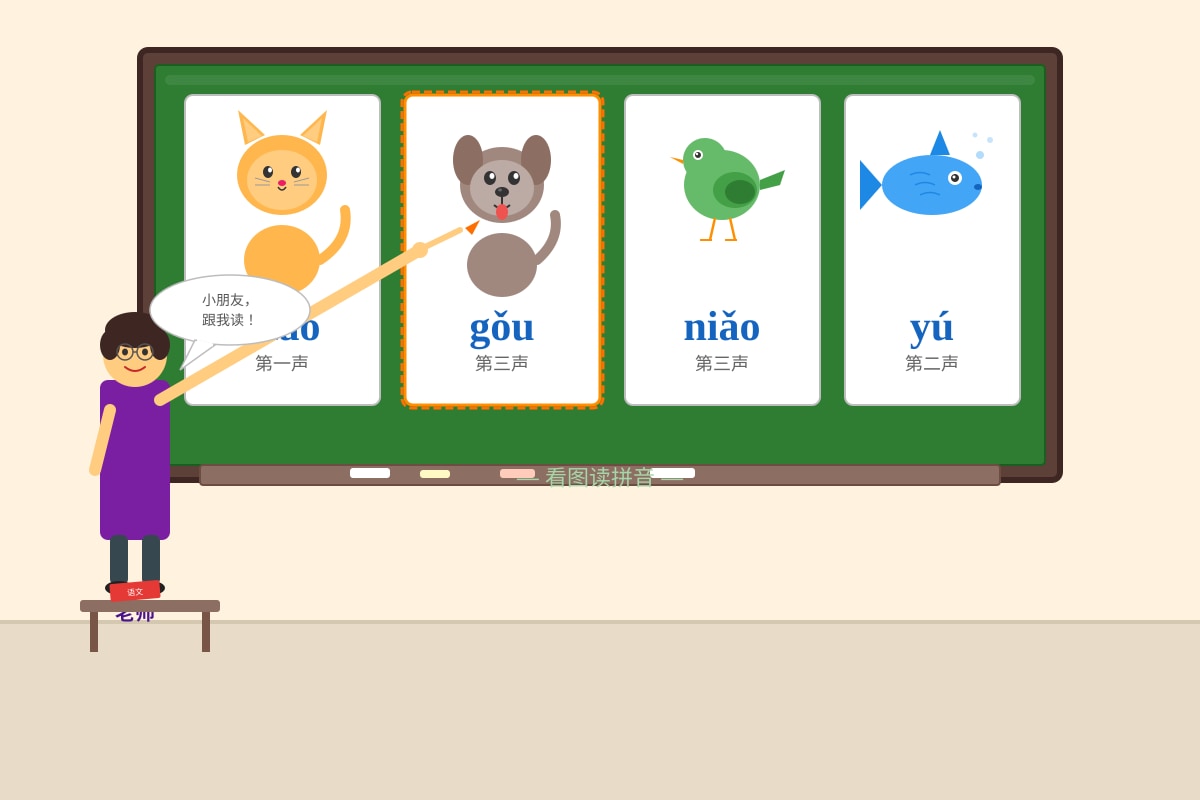
| Q13(a) | gǒu | [1] | The teacher points to the second card "狗" (dog). The Pinyin is g-ǒ-u = gǒu. The picture shows the dog card in position 2. |
| Q13(b) | third | [1] | "gǒu" has tone mark ˇ on the o — this is third tone (上声). The dog's voice saying "woof" in Chinese goes up-down-up in a playful way, helping remember third tone! Total: 2 marks. |
| Q14(a) | h | [1] | "花" huā — Pinyin is h-u-ā, so initial consonant is h. This is a fricative sound — air flows through with a soft "h" sound, different from English "h" which is more breathy. |
| Q14(b) | ua | [1] | The final vowel combination is ua (u + a). In "hua," the u is actually a medial (介音) — it glides into the main vowel a. When marking tone, a takes priority, so we write huā with the mark on a. Total: 2 marks. |
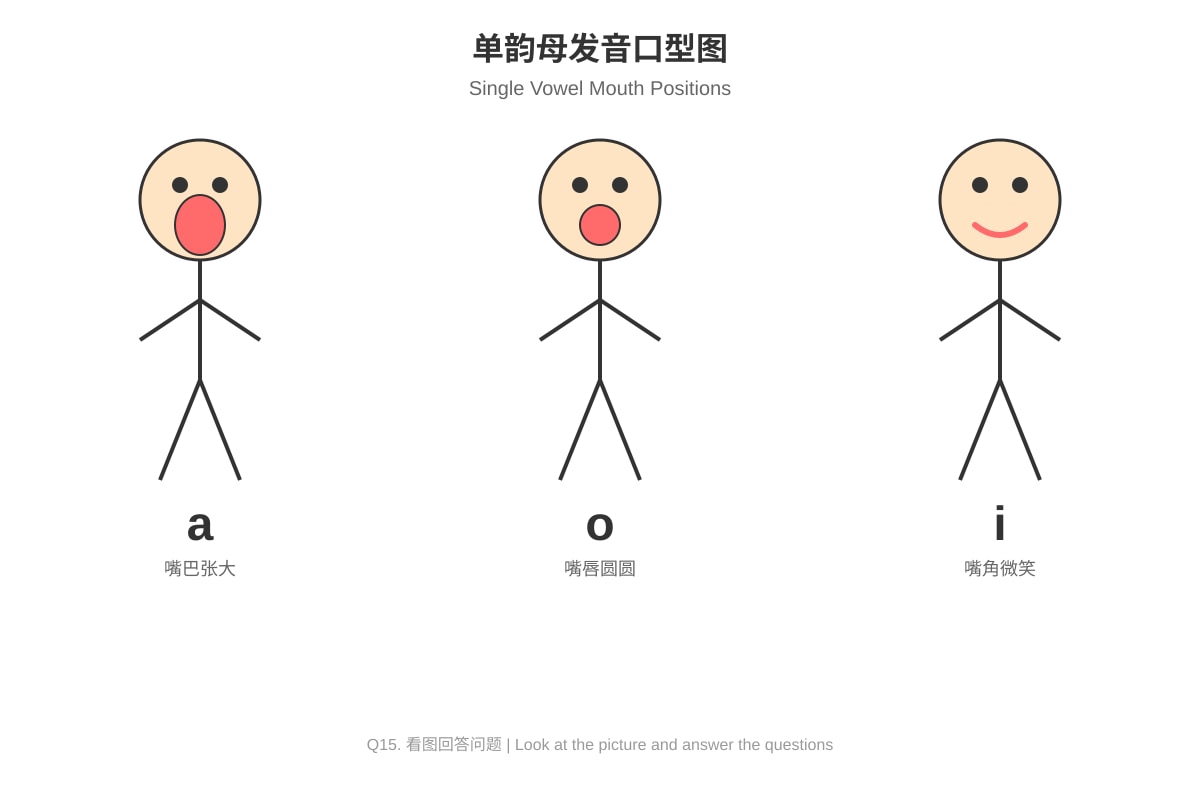
| Q15(a) | o | [1] | The rounded lips position shows o — like saying "oh!" with surprised rounded lips. Pronunciation tip: Make your lips into a small circle and say "oh." This is different from "a" (wide open) and "i" (flat/smiling). |
| Q15(b) | a | [1] | The widest open mouth shows a — mouth opens wide like saying "ah!" at the doctor's. This is the most open vowel sound in Chinese. Total: 2 marks. |
| Q16 | ěr duo | [2] | "耳朵" — First character: ěr (third tone, tone mark on e). Second character: duo — here "朵" is pronounced with neutral tone (轻声), written as duo without tone mark. This is because "耳朵" is a common word where the second syllable becomes light and short. Note: In careful speech or when reading character-by-character, some may say "ěr duǒ" with full third tone, but in natural speech it's "ěr duo." |
| Q17(a) | yuè | [1] | "月" has the main vowel e following u. The tone mark goes on e (since e has priority over u in the a-o-e-i-u-ü sequence). Actually in "yue," this is a special case — it's üe with dots dropped after y-initial. The mark goes on e: yuè. |
| Q17(b) | no mark | [1] | Neutral tones (轻声) are shown by writing no tone mark — the syllable is written without any ˉ ˊ ˇ ˋ. "liang" has no mark, showing it's lighter and shorter than the full-toned "yuè." Total: 2 marks. |
| Q18(a) | píng (or any of bān, dēng, píng, tǎng — all have nasal finals!) | [1] | Actually all four have nasal finals! -n or -ng endings: bān (ending -an, with -n), dēng (ending -eng, with -ng), píng (ending -ing, with -ng), tǎng (ending -ang, with -ng). This checks if students can identify nasal sounds. Accept any correct identification with valid explanation. Bān has -n; others have -ng. |
| Q18(b) | ing | [1] | "píng" = p + ing. The final is ing (i + ng), where ng is the velar nasal — tongue back touches soft palate. Total: 2 marks. |
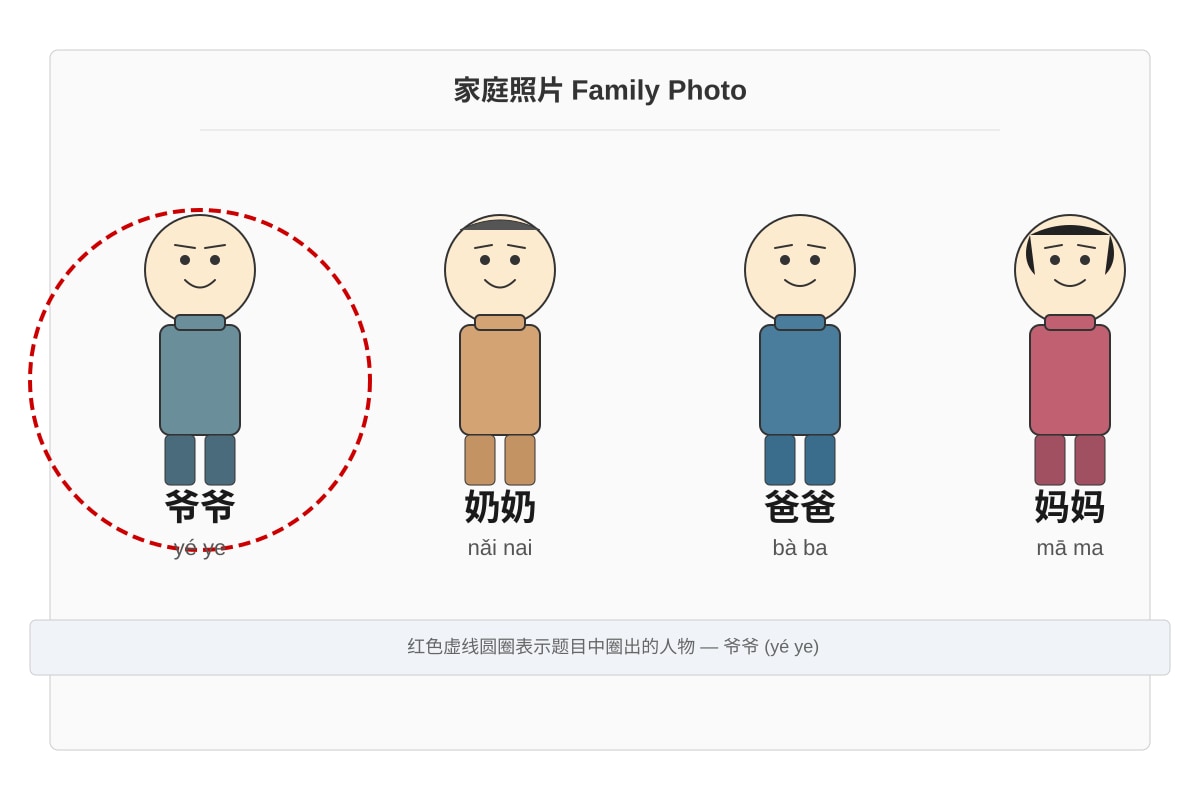
| Q19(a) | y | [1] | "爷爷" yé ye — The first "爷" starts with y. Note: When i-initial syllables stand alone, they become y- (yi, ya, ye, yao, you, yan, yin, yang, ying, yong). This is a spelling rule, not a true consonant sound — the actual sound begins with the vowel quality, but y marks the syllable boundary. |
| Q19(b) | yes | [1] | The second "ye" in "yé ye" is neutral tone (轻声) — shorter, lighter, no tone mark. Repeated family terms often have this pattern: 爸爸 bà ba, 妈妈 mā ma, 爷爷 yé ye, 奶奶 nǎi nai. Total: 2 marks. |
| Q20 | See table below | [2] | Marking: 0.5 marks per correct cell × 4 cells = 2 marks. Deduct 0.5 for any error. |
| Chinese | Pinyin | Initial | Final | Tone |
|---|---|---|---|---|
| 八 | bā | b | a | first |
| 米 | mǐ | m | i | third |
| 土 | tǔ | t | u | third |
Explanation for Q20:
- "米" mǐ — rice; initial m, final i, third tone (tone mark on i becomes dot when marked: mǐ, but in basic form it's written as i with tone)
- "土" tǔ — earth/soil; initial t, final u, third tone
- Tone mark on "i": When the main vowel is i, the dot is removed and the tone mark goes there instead: mǐ (not mǏ with dot + mark). So "mǐ" looks like m + ǐ.
Common errors to watch:
- Writing "mi" without tone mark (loses 0.5)
- Writing initial as "n" instead of "m" for 米 (loses 0.5)
- Wrong tone name (e.g., "second" instead of "third") — loses 0.5
Section Totals Verification
| Section | Questions | Marks |
|---|---|---|
| Section A | Q1–Q10 | 20 marks |
| Section B | Q11–Q20 | 20 marks |
| TOTAL | 40 marks |
Timing Guide (Internal — Not for Students)
| Section | Suggested Time |
|---|---|
| Section A (10 MCQs) | 10 minutes |
| Section B (10 written questions) | 15 minutes |
| Review | 5 minutes |
| Total | 30 minutes |
Syllabus Coverage Notes
This Version 5 Practice Paper covers the following P1 Chinese Hanyu Pinyin learning outcomes from the MOE 2024 syllabus:
- Initial consonants (声母): b, p, m, f, d, t, n, l, g, k, h, j, q, x, sh, y — tested in Q1, Q6, Q7, Q11, Q12a, Q14a, Q19a, Q20
- Final vowels (韵母): a, o, e, i, u, ai, ei, ui, ao, ou, an, en, ang, eng, ing, ong, ua, ua — tested in Q3, Q8, Q12b, Q14b, Q15, Q18b, Q20
- Tones and tone marks: Four tones + neutral tone, tone mark placement rules — tested in Q2, Q4, Q5, Q8, Q9, Q13b, Q16, Q17, Q20
- Syllable structure and Pinyin rules: j/q/x + ü rule, y/w usage, i-dot removal — tested in Q10, Q17a
- Visual-text connection: Picture-based Pinyin recognition — tested in Q6, Q8, Q13, Q15, Q19
Note: This content is syllabus-aligned practice material generated from LLM-inferred templates. No past-year paper evidence was available for this topic group. The questions are designed to match the difficulty, style, and cognitive demands appropriate for Primary 1 students beginning formal Chinese language study, following the 2024 MOE Chinese Language Primary syllabus framework.