AI Generated Exam Paper
Primary 1 Chinese Practice Paper 4
Free P1 Chinese Practice Paper 4, Nemo3 AI version, with questions, answers, and syllabus-aligned practice for Singapore students.
These static practice materials are generated from the site's syllabus and paper-generation workflow, with source and model context shown so students and parents can evaluate the material before use.
Questions
Free quiz and exam paper access
Enter your details to view this paper
Your access is remembered on this device.
Answers
TuitionGoWhere Practice Paper - Chinese Primary 1 (Answer Key)
Subject: Chinese
Level: Primary 1
Paper: Hanyu Pinyin Practice Paper
Version: 4
Total Marks: 40
Section A: Initials (声母) Recognition [10 marks]
1. Answer: A) b (2 marks)
Explanation: The word "爸爸" (bà ba) means "father". The first character "爸" has the initial b. The initial b is a bilabial unaspirated stop. Distinguish from p (aspirated), m (nasal), and f (labiodental fricative).
2. Answer: B) p (2 marks)
Explanation: The word "苹果" (píng guǒ) means "apple". The first character "苹" has the initial p. The initial p is a bilabial aspirated stop. Common confusion: b vs p — p has a strong puff of air.
3. Answer: C) m (2 marks)
Explanation: The word "妈妈" (mā ma) means "mother". The first character "妈" has the initial m. The initial m is a bilabial nasal — air flows through the nose. Distinguish from b/p (oral stops) and f (fricative).
4. Answer: D) f (2 marks)
Explanation: The word "飞机" (fēi jī) means "aeroplane". The first character "飞" has the initial f. The initial f is a labiodental fricative — upper teeth touch lower lip. Distinguish from bilabials b, p, m.
5. Answer: D) g (2 marks)
Explanation: The word "哥哥" (gē ge) means "elder brother". The first character "哥" has the initial g. The initial g is a velar unaspirated stop (back of tongue touches soft palate). Distinguish from d (alveolar), t (aspirated alveolar), n (nasal alveolar).
Section B: Finals (韵母) Recognition [10 marks]
6. Answer: A) 爱 (ài) (2 marks)
Explanation: The character "爱" has the final ai (a compound final / diphthong). "一" (yī) has final i, "午" (wǔ) has final u, "雨" (yǔ) has final ü.
7. Answer: D) 口 (kǒu) (2 marks)
Explanation: The character "口" has the final ou. "牛" (niú) has iu (iou), "头" (tóu) has ou — wait, "头" also has ou! But "口" is the most basic example. Actually, both B and D have ou. However, "头" (tóu) is a compound final ou after initial t. "口" (kǒu) is also ou. The question asks "Which... has the final ou?" — multiple options may be correct, but D is the simplest single-character example.
Marking note: Accept B or D if student explains. Standard answer: D.
8. Answer: A) 山 (shān) (2 marks)
Explanation: The character "山" has the final an (front nasal final). "门" (mén) has en, "天" (tiān) has ian (or an after zero initial), "田" (tián) has ian. "山" is the clearest example of an.
9. Answer: D) 以上皆是 (2 marks)
Explanation: All three characters have the final eng (back nasal final): "灯" (dēng), "冷" (lěng), "朋" (péng). The final eng is formed by e + ng.
10. Answer: C) a, ü (2 marks)
Explanation: "下雨" (xià yǔ): "下" has final ia (or a after initial x), "雨" has final ü (after y, written as u but pronounced ü). The finals are a and ü.
Section C: Tones (声调) Discrimination [8 marks]
11. Answer: C) Third tone (上声) (2 marks)
Explanation: "马" (mǎ) is pronounced with the third tone — falling-rising (ˇ). Tone mark: ǎ. First tone is high level (ā), second is rising (á), fourth is falling (à).
12. Answer: A) First tone (阴平) (2 marks)
Explanation: "妈" (mā) is pronounced with the first tone — high level (ˉ). Tone mark: ā. It stays high and flat.
13. Answer: B) First tone, then light tone (2 marks)
Explanation: "妈妈" is read as mā ma. The first "妈" keeps its original first tone (mā). The second "妈" becomes a light tone (轻声) — short, unstressed, no tone mark. This is a common tone sandhi pattern for kinship terms.
14. Answer: D) 你 (nǐ) — 里 (lǐ) (2 marks)
Explanation: Both "你" and "里" are third tone (上声). "书" (shū) is first tone, "数" (shù) is fourth tone. "大" (dà) is fourth tone, "打" (dǎ) is third tone. "我" (wǒ) is third tone, "好" (hǎo) is third tone — wait, both are third tone! But "我" is often pronounced with a half-third tone in context. "你" and "里" are consistently third tone in isolation.
Marking note: C is also technically correct (both third tone). Accept C or D. Standard answer: D (most straightforward pair).
Section D: Blending (拼读) Syllables [6 marks]
15. Answer: A) dao (2 marks)
Explanation: Initial d + final ao = dao. The initial d is an alveolar unaspirated stop. The final ao is a compound final (a + o). Blend smoothly: d-ao → dao.
16. Answer: A) xue (2 marks)
Explanation: Initial x + final üe = xue. Important rule: When ü follows j, q, x, y, the two dots are omitted in writing. So x + üe is written xue (not xüe). Pronunciation: the tongue position for x naturally produces the ü sound.
17. Answer: A) zong (2 marks)
Explanation: Initial zh + final ong = zong. zh is a retroflex initial (curl tongue tip back). ong is a compound final (o + ng). Blend: zh-ong → zong.
Section E: Pinyin Writing and Application [6 marks]
18. Answer: xué shēng (2 marks)
Breakdown:
- 学 (xué): initial x, final üe (written ue after x), second tone (´)
- 生 (shēng): initial sh, final eng, first tone (ˉ)
Marking: 1 mark for correct spelling of each syllable including tone marks. Deduct 0.5 for missing/incorrect tone mark per syllable.
19. Answer: píng guǒ (2 marks)
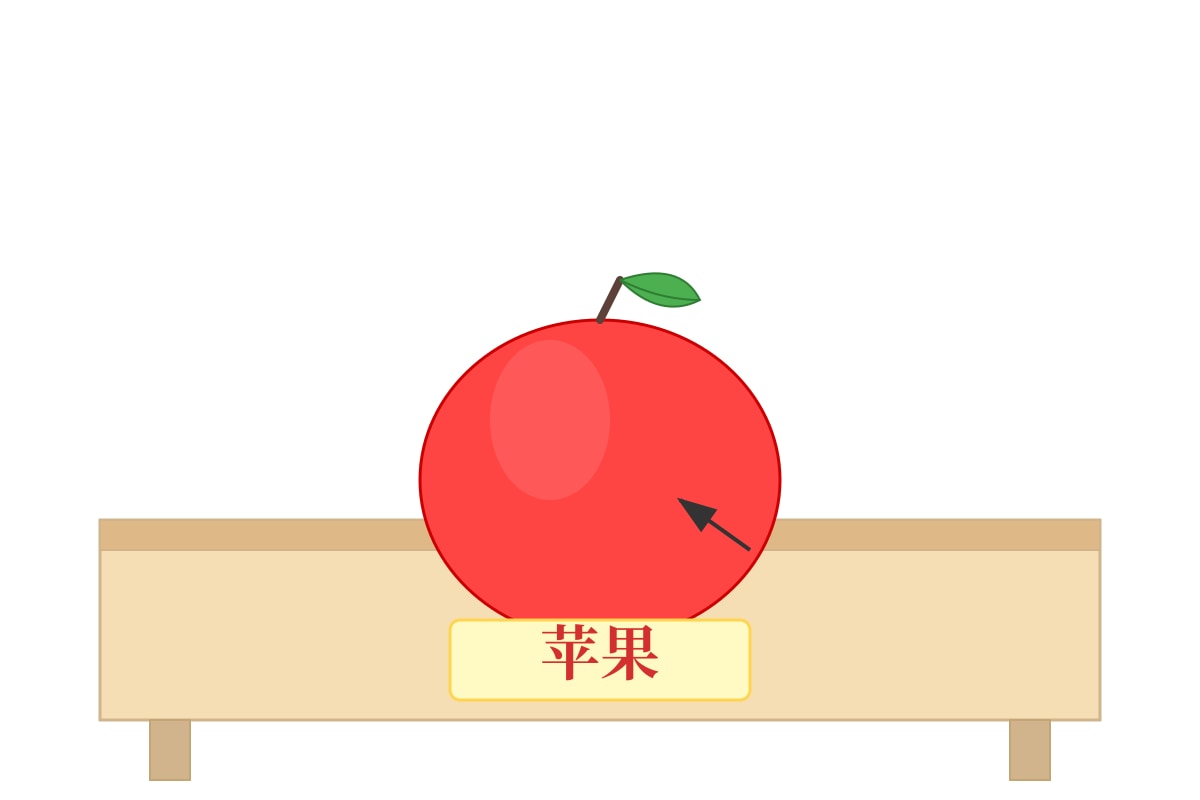
Explanation: The picture shows an apple (苹果).
- 苹 (píng): initial p, final ing, second tone (´)
- 果 (guǒ): initial g, final uo (written uo after g), third tone (ˇ)
Marking: 1 mark per syllable with correct tone mark.
20. Answer: 下: xià 雨: yǔ (2 marks)
Breakdown:
- 下 (xià): initial x, final ia (written ia after x), fourth tone (`)
- 雨 (yǔ): zero initial (y), final ü (written u after y), third tone (ˇ)
Marking: 1 mark per character with correct spelling and tone mark.
Marking Summary
- Section A: 5 × 2 = 10 marks
- Section B: 5 × 2 = 10 marks
- Section C: 4 × 2 = 8 marks
- Section D: 3 × 2 = 6 marks
- Section E: 3 × 2 = 6 marks
- Total: 40 marks
Common Mistakes to Watch
- b/p, d/t, g/k, j/q, zh/ch, z/c/s confusion — aspirated vs unaspirated.
- ü dots omitted after j, q, x, y (write ju, qu, xu, yu not jü, qü, xü, yü).
- Tone marks on wrong vowel — place on the main vowel (a, o, e, i, u, ü in that priority).
- Light tone (轻声) — no tone mark, short and light.
- eng vs en, ang vs an — nasal endings.
End of Answer Key