AI Generated Exam Paper
Primary 1 Chinese Practice Paper 3
Free P1 Chinese Practice Paper 3, MiniMax AI version, with questions, answers, and syllabus-aligned practice for Singapore students.
These static practice materials are generated from the site's syllabus and paper-generation workflow, with source and model context shown so students and parents can evaluate the material before use.
Questions
Free quiz and exam paper access
Enter your details to view this paper
Your access is remembered on this device.
Answers
TuitionGoWhere Practice Paper — Chinese Primary 1 (Version 3 of 5): Answer Key
Total: 30 marks
Marking notes for teachers
- Each 1-mark item: full mark for a correct option. No half marks.
- 2-mark items (Q1, Q2, Q3, Q4, Q5, Q10, Q11, Q12, Q13, Q14, Q15): 1 mark per correct subpart.
- Dictation / listening items (Q6, Q18): the teacher reads three times. Award 1 mark only if the student circles the syllable the teacher actually reads.
- Picture-matching items depend on the visuals described in the
<image_placeholder>tags; the expected visuals are restated below each answer.
Part A: Hanyu Pinyin (15 marks)
Question 1 (2 marks)
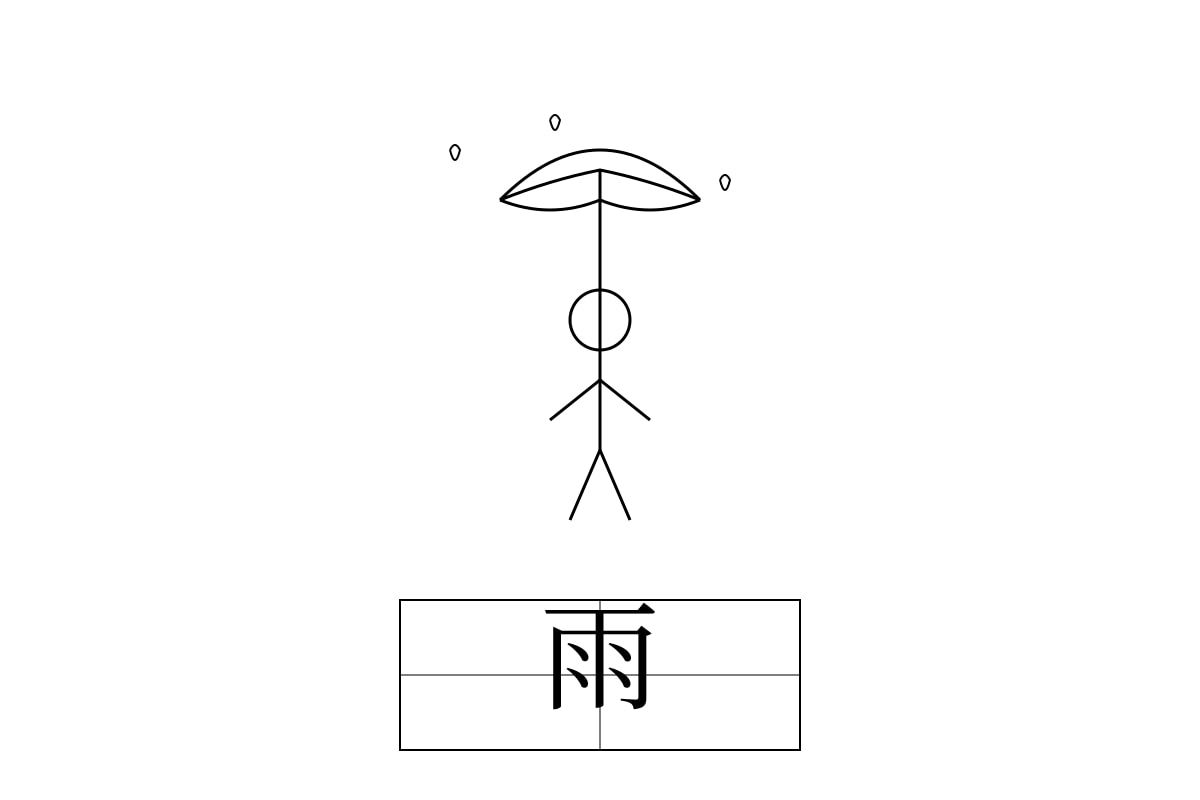
(1) A. yú — 鱼 is read as yú, second tone. (2) A. yǔ — 雨 is read as yǔ, third tone.
Teaching note: tone marks are essential in Hanyu Pinyin. yú (rising) and yǔ (falling-rising) sound different and change the meaning. Always check the tone mark above the vowel.
Question 2 (2 marks)
(1) A. yǔ — 雨 is yǔ, third tone. The distractors B, C, D all show yǔ but the correct answer is the standard spelling for this character. (2) A. dà — 大 is dà, fourth tone. Distractor B (tà) confuses the initial d and t; C (dǎi) is an incorrect final; D (duò) is an incorrect final.
Teaching note: the umbrella + raindrops picture is a visual clue for 雨. The hanzi 大 appears in P1 Lesson 6 writing list.
Question 3 (2 marks)
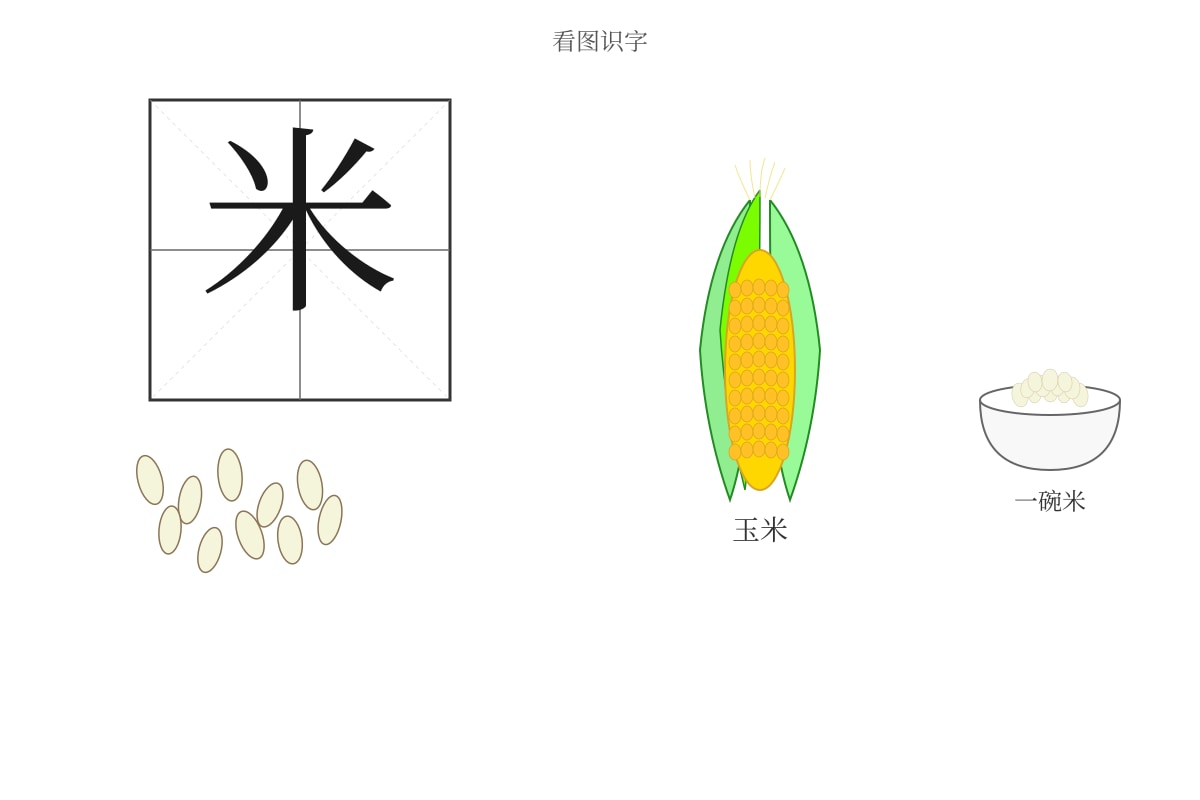
(1) mǐ — 米 is read as mǐ, third tone. (2) shān — 山 is read as shān, first tone.
Teaching note: students write the full pinyin in the brackets. Award 1 mark for a correct syllable with the correct tone mark.
Question 4 (2 marks)
(1) pā has a different initial (the others are bā, dā, tā — initials b, d, t; pā starts with p, the only aspirated initial in the set). (2) fā has a different initial (the others are mā, ná, lā — initials m, n, l; f is different).
Teaching note: at P1, the four aspirated/unaspirated pairs (b/p, d/t, g/k) and the nasals (m, n) plus the lateral (l) and fricative (f) are taught. Remind students that f looks like a mouth blowing air, while b/p is made with the lips.
Question 5 (2 marks)
(1) mò has a different final (the others are mā, má, mǎ — all with the final a; mò has the final o). (2) dū has a different final (the others are dī, tí, nī — all with the final i; dū has the final u).
Teaching note: finals (yunmu 韵母) are the vowel part of a syllable. P1 students learn the simple finals a, o, e, i, u, ü and a few compound ones.
Question 6 (2 marks)
(1) Teacher reads mā (first tone). Answer: A. mā. (2) Teacher reads bǒ (third tone). Answer: C. bǒ.
Teaching note: this is a listening-discrimination item. If the print fallback is used, see the answer key as stated; for a teacher-read version, the teacher chooses one of the four options and reads it three times.
Question 7 (1 mark)
(1) mā —— B. 妈 (2) bà —— A. 爸 (3) dà —— C. 大 (4) xiǎo —— D. 小
Teaching note: each pinyin matches exactly one hanzi. 妈 and 爸 are the most common P1 family words. 大 and 小 are antonyms (Lesson 6).
Question 8 (1 mark)
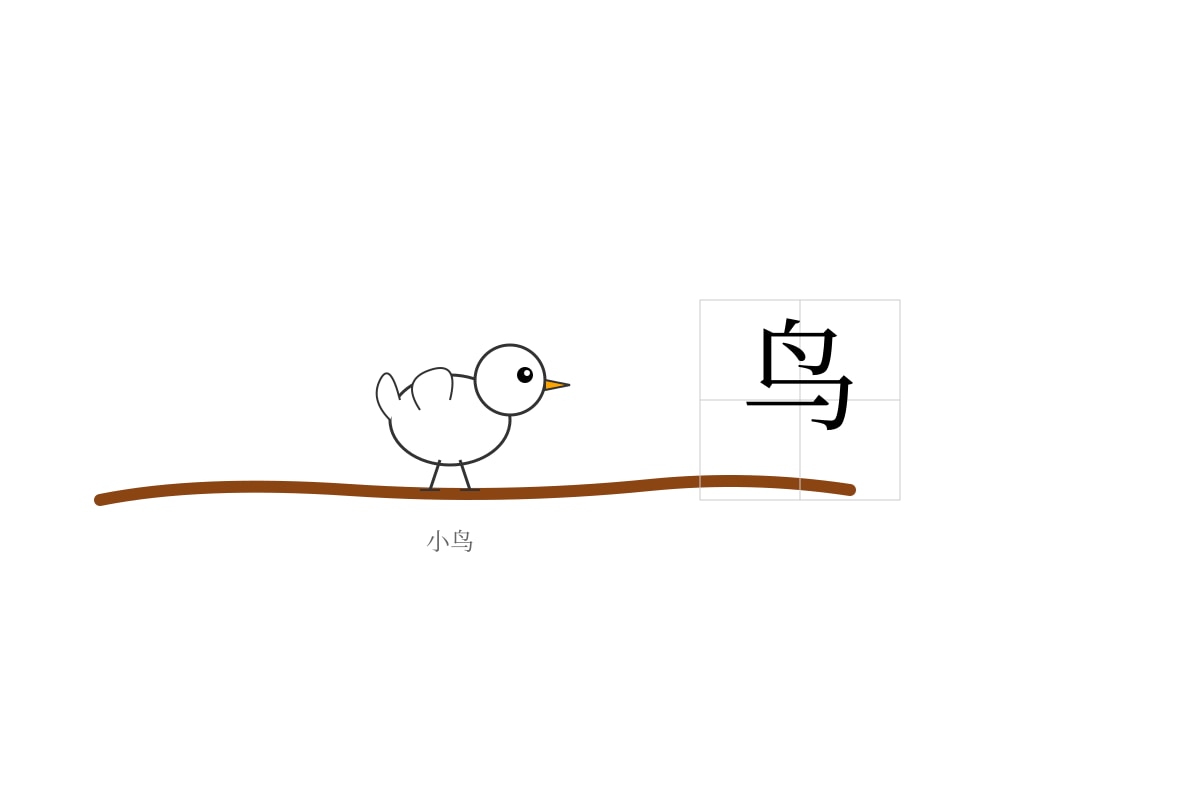
A. niǎo — 鸟 is niǎo, third tone. The i in niǎo is a special compound initial n + iao (sometimes written niǎo). Distractors change the medial or the tone.
Teaching note: the picture of the bird supports meaning. Even if the student does not know the pinyin, they can match picture → pinyin by elimination.
Question 9 (1 mark)
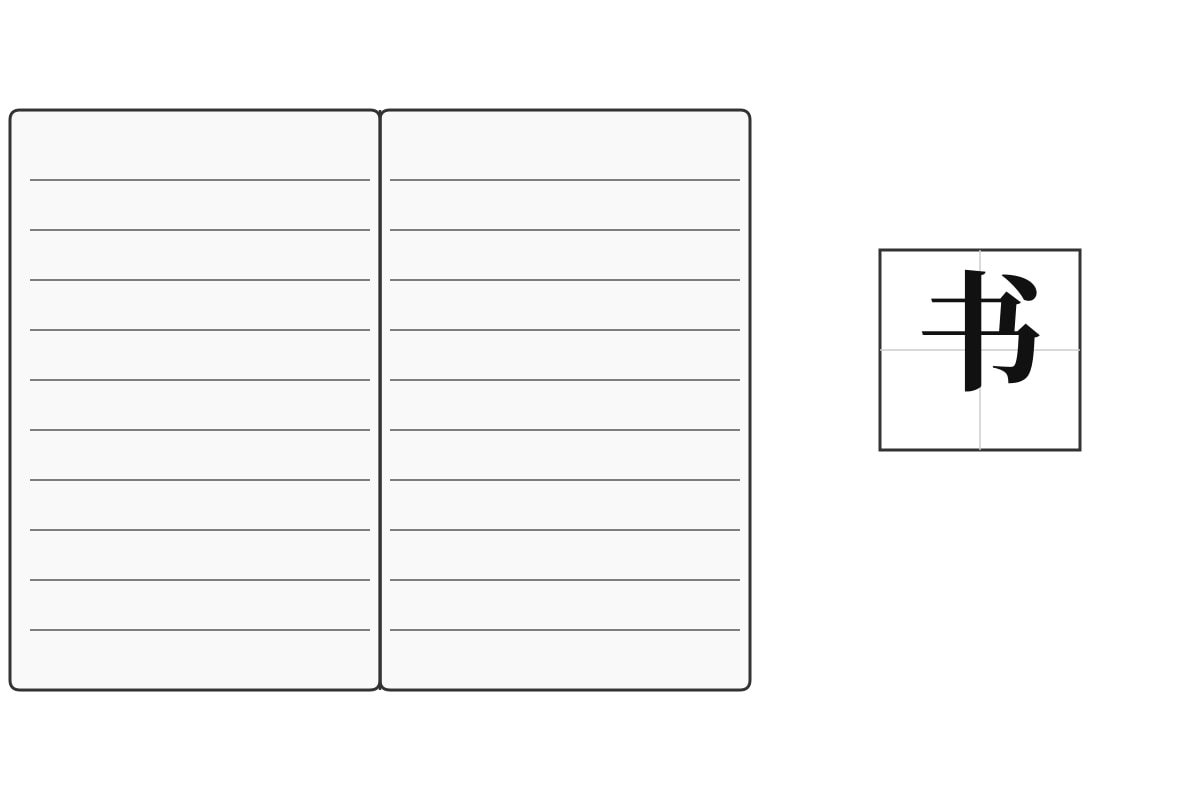
B. shū — 书 is shū, first tone. The initial sh is one of the four "翘舌音" (retroflex initials) taught later, but at P1 students learn sh as a single sound. Distractor A (sū) confuses s and sh; C (xū) confuses sh and x; D (shǔ) has the wrong tone.
Teaching note: distinguish s and sh by tongue position — sh curls the tongue tip back.
Part B: Vocabulary & Application (15 marks)
Question 10 (2 marks)
(1) A. yī — 一 is read as yī, first tone, in this context (when counting/meaning "one"). (2) B. shì — 是 is read as shì, fourth tone. The sentence means "Mother is a teacher." 是 is a P1 recognition character (Lesson 4).
Teaching note: 一 has multiple tone changes in Chinese (变调), but at P1 students only need the base reading yī.
Question 11 (2 marks)
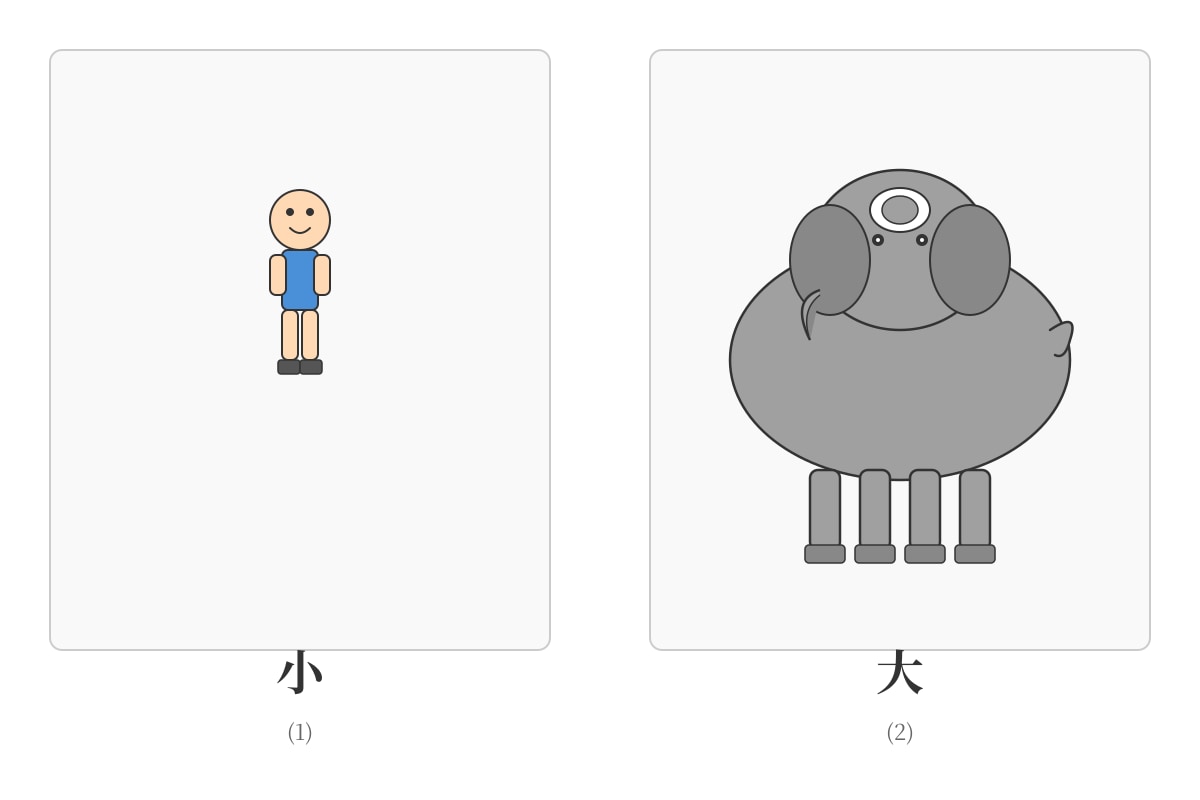
(1) (small boy) — B. 小. 小 means small; it appears in P1 Lesson 6 writing list. (2) (big elephant) — C. 大. 大 means big/large; it appears in P1 Lesson 6 writing list.
Teaching note: visual size contrast (small boy vs. big elephant) is the cue. 大 and 小 are antonyms.
Question 12 (2 marks)
(1) A. 我有一只猫。 — yī zhī is the correct measure word for animals like cats. (2) B. 爸爸去商店。 — shāng diàn is shop/store; 商店 appears in P1 Lesson 19.
Teaching note: 支 is the measure word for thin, long things (pen, pencil, song), not animals. 只 is the measure word for animals. Teach measure-word pairings explicitly.
Question 13 (2 marks)
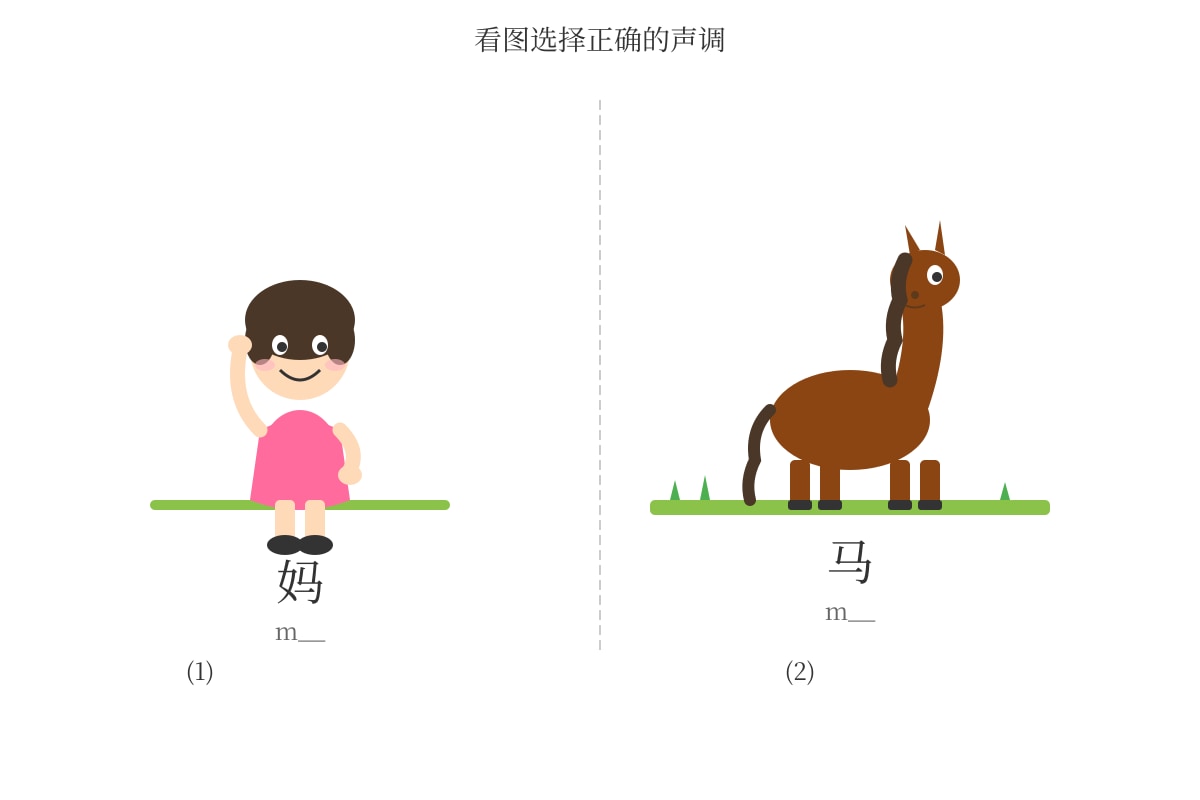
(1) 妈 — A. mā (first tone). 妈 is read with the high, level first tone. (2) 马 — C. mǎ (third tone). 马 has the falling-rising third tone.
Teaching note: 妈 and 马 are perfect minimal pairs at P1 — same initial m, same final a, different tones. Tone discrimination is a key P1 skill.
Question 14 (2 marks)
(1) A. hē — 喝 is hē, first tone. Means "to drink." (2) C. chī — 吃 is chī, first tone. Means "to eat."
Teaching note: aspirated h vs. k and aspirated ch vs. c are common P1 confusions. Students can mime the action to remember the meaning.
Question 15 (2 marks)
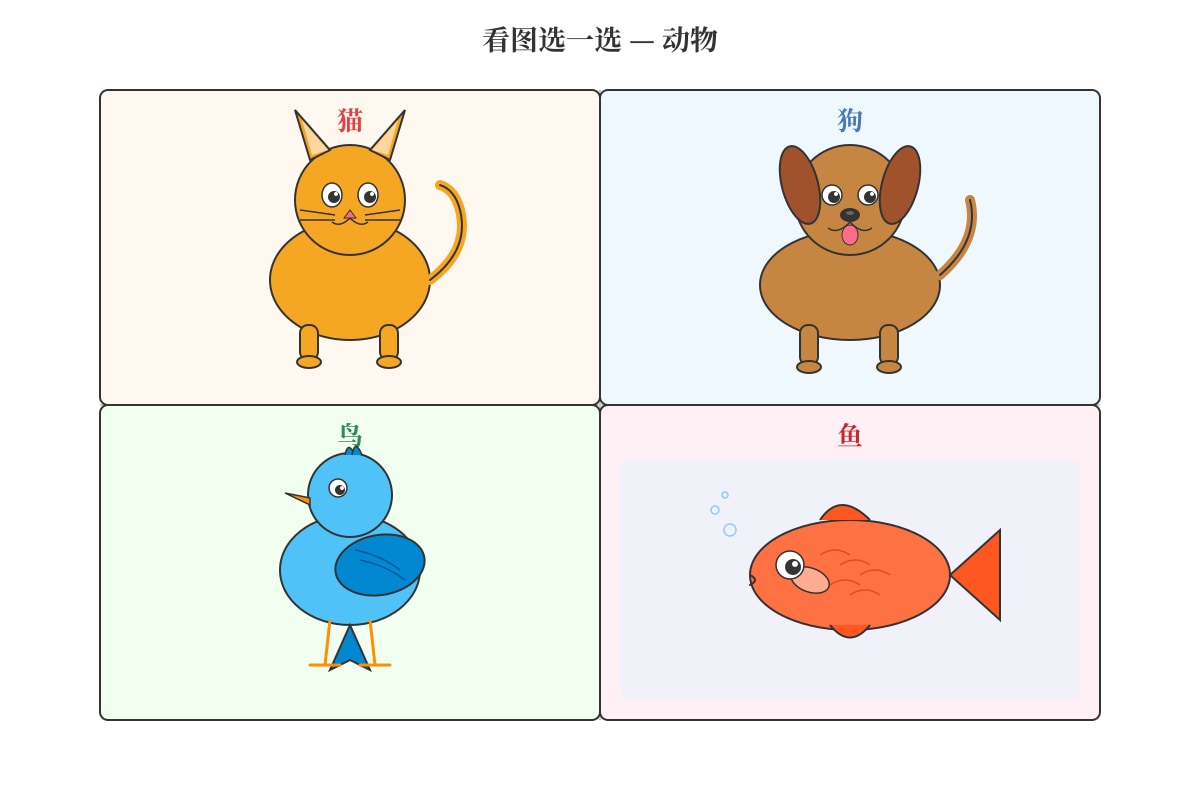
(1) māo — C. 猫 (cat). (2) yú — D. 鱼 (fish).
Teaching note: animal-noun pinyin is reinforced by picture. The 2x2 picture grid (cat, dog, bird, fish) lets the student match by sound or by picture.
Question 16 (1 mark)
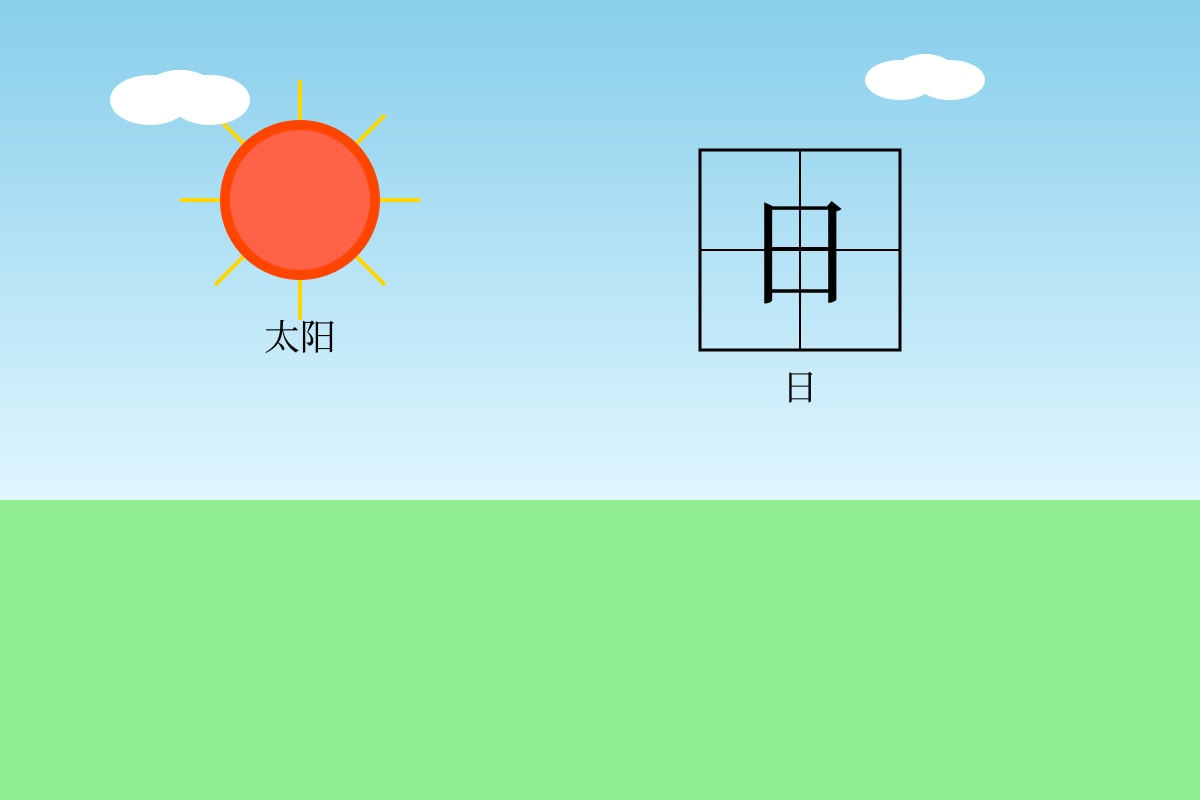
日 — The hanzi 日 means "sun" or "day." Pinyin rì, fourth tone.
Visual: the picture shows a red sun (太阳) and the hanzi 日 in a 田字格.
Teaching note: 日 is also the radical for many time-related characters. At P1, students recognize 日 and write it in Lesson 4.
Question 17 (1 mark)
A. flower / 花 — huā is the pinyin for 花. The other options (火 huǒ, 水 shuǐ, 口 kǒu) have different initials or finals.
Teaching note: this is a sound-meaning link. After learning 花 (Lesson 7), students can match huā → 花.
Question 18 (1 mark)
Teacher reads one of: yī, yí, yǐ, yì. Student circles the one heard. The answer depends on what the teacher says. (For marking: accept the option the teacher announced.)
Teaching note: 一 has four tone contexts at P1 (numbers, sentence-final, before 4th tone, before other tones). Listening exposure is the key learning method.
Question 19 (1 mark)
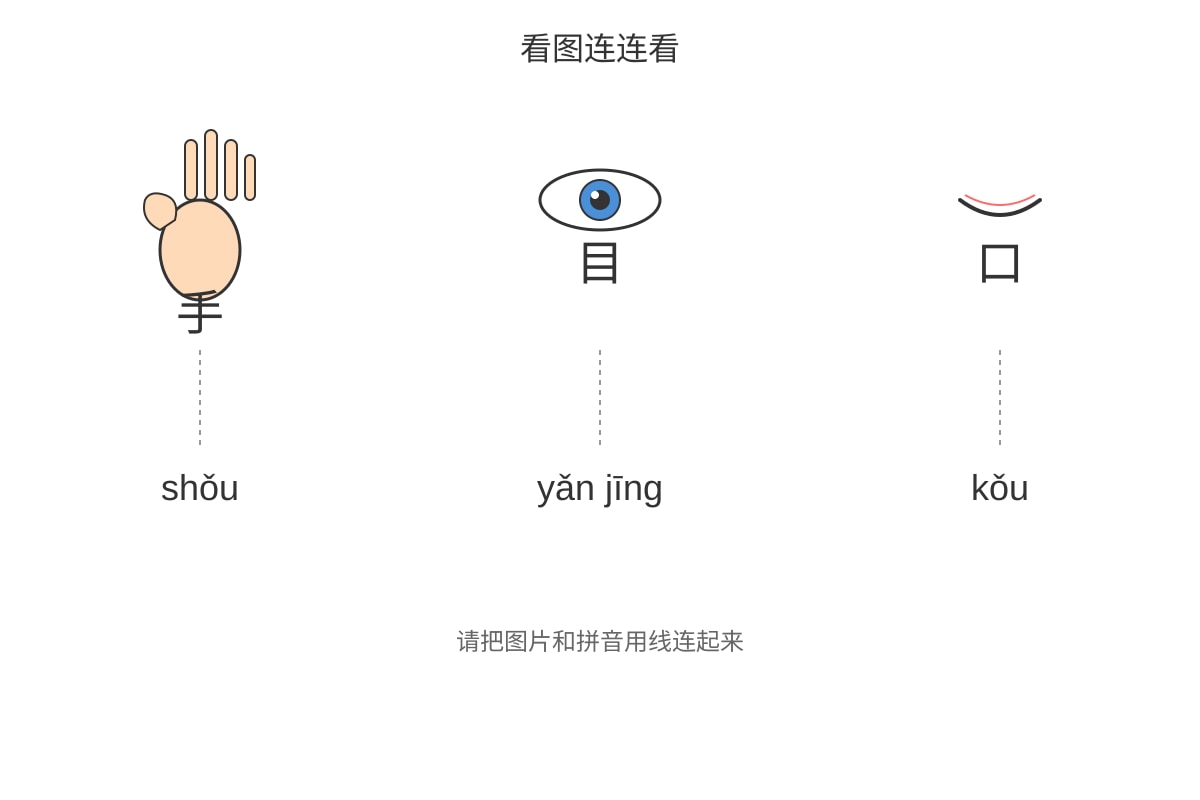
- Picture of a hand — shǒu (手)
- Picture of an eye — yǎn jīng (眼睛)
- Picture of a mouth — kǒu (口)
Teaching note: this is a picture ↔ pinyin matching task. The visual must clearly show a hand, an eye, and a mouth (one of each) so the match is unambiguous.
Question 20 (1 mark)
C. 弟弟 — dì di is the pinyin for 弟弟 (younger brother).
Teaching note: 弟 appears in P1 Lesson 2 as a recognition character. A repeated dì di is the typical P1 family-word pattern.
Total marks: 30 / 30