AI Generated Exam Paper
O Level Tamil Practice Paper 2
Free O Level Tamil Practice Paper 2, LongCat AI version, with questions, answers, and O Level-style practice for Singapore students.
These static practice materials are generated from the site's syllabus and paper-generation workflow, with source and model context shown so students and parents can evaluate the material before use.
Questions
Free quiz and exam paper access
Enter your details to view this paper
Your access is remembered on this device.
Answers
TuitionGoWhere Practice Paper — Tamil O-Level
Answer Key & Marking Scheme
Paper: Practice Paper — Comprehension & Language Usage Total Marks: 70
Section A: Vocabulary & Grammar (15 marks)
Question 1 [1 mark]
Answer: (b) நிறைந்தது
Explanation: "நிறைந்தது" means "was filled." When heavy rain falls, the road becomes filled with water (flooded). "ஓடியது" means "flowed," "வற்றியது" means "dried up," and "உலர்ந்தது" means "became dry" — these do not fit the context of flooding.
Marking: 1 mark for correct option (b).
Question 2 [1 mark]
Answer: (c) நெருங்கியது
Explanation: "நெருங்கியது" means "approached" or "came near." The sentence says the child approached his father with tears. "ஓடிட்டது" means "ran," "அணைத்தது" means "embraced," and "விலகியது" means "moved away" — only "நெருங்கியது" fits the context of approaching someone.
Marking: 1 mark for correct option (c).
Question 3 [1 mark]
Answer: (b) கருணையான
Explanation: "கருணையான" means "compassionate" or "kind-hearted." The sentence describes someone who helps everyone, which matches the meaning of "கருணையான." "பெருமையான" means "great/proud," "பயங்கரமான" means "terrible," and "சுயநல" means "selfish" — these do not fit.
Marking: 1 mark for correct option (b).
Question 4 [1 mark]
Answer: (b) கேட்க
Explanation: "கேட்க" means "to listen." In a classroom context, students must listen carefully. "பேச" means "to speak," "எழுத" means "to write," and "படிக்க" means "to read" — while these are also classroom activities, "கவனமாக கேட்க" (listen carefully) is the most appropriate collocation.
Marking: 1 mark for correct option (b).
Question 5 [1 mark]
Answer: (a) கடன் வாங்கினேன்
Explanation: "கடன் வாங்கினேன்" means "borrowed." When you take a book from a library, you borrow it. "கொடுத்தேன்" means "gave," "எழுதினேன்" means "wrote," and "விற்றேன்" means "sold" — none of these fit the library context.
Marking: 1 mark for correct option (a).
Question 6 [1 mark]
Answer: செய்கிறாள்
Explanation: The sentence requires the present tense form of "செய்" (to do). "தினமும்" (every day) indicates a habitual present action. The correct conjugation for third person singular feminine is "செய்கிறாள்" (she does).
Marking: 1 mark for "செய்கிறாள்."
Question 7 [1 mark]
Answer: போவார்கள்
Explanation: "நாளை" (tomorrow) indicates future tense. The subject "அவர்கள்" (they) requires the third person plural future form of "போ" (to go), which is "போவார்கள்" (they will go).
Marking: 1 mark for "போவார்கள்."
Question 8 [1 mark]
Answer: தயாராக
Explanation: The sentence uses "தயார் செய்துகொண்டிருக்கிறார்கள்" (are preparing). The word "தயார்" needs to be converted to an adverb form to modify the verb "செய்துகொண்டிருக்கிறார்கள்." The correct adverbial form is "தயாராக" (in a prepared manner / getting ready).
Marking: 1 mark for "தயாராக."
Question 9 [1 mark]
Answer: பாடினாள்
Explanation: The sentence describes a completed past action. "அந்த பெண்" (that girl) is third person singular feminine. The past tense of "பாட" (to sing) for this subject is "பாடினாள்" (she sang).
Marking: 1 mark for "பாடினாள்."
Question 10 [1 mark]
Answer: பப்ப
Explanation: The sentence requires the infinitive form of "படி" (to study) to complete "படி மறந்துவிட்டான்" (forgot to study). The infinitive form of "படி" is "பப்ப" (to study). This is a common Tamil grammatical pattern where the infinitive is used after verbs like "மற" (forget).
Marking: 1 mark for "பப்ப."
Question 11 [1 mark]
Answer: அவர் வந்த பிறகு நான் போனேன்.
Explanation: The instruction asks to combine two sentences using "பிறகு" (after/then). The first event is "அவர் வந்தார்" (he came), and the second is "நான் போனேன்" (I went). Using "பிறகு" as a conjunction: "அவர் வந்த பிறகு நான் போனேன்" (After he came, I went).
Marking: 1 mark for correct combination with "பிறகு."
Question 12 [1 mark]
Answer: அவள் நாளை வருவதாக கூறினாள்.
Explanation: This is a direct-to-indirect speech transformation. In Tamil, indirect speech uses "என்று" or "ஆக" after the reported clause. "நான் நாளை வருவேன்" becomes "நாளை வருவதாக" (that she would come tomorrow), and "என்றாள் அவள்" becomes "கூறினாள்" (she said). The pronoun "நான்" changes to third person in indirect speech.
Marking: 1 mark for correct indirect speech transformation.
Question 13 [1 mark]
Answer: விளையாட்டு மழை பெய்ததால் தள்ளிப்போனது.
Explanation: The instruction asks to begin the sentence with "விளையாட்டு" (the match/game). The original sentence is "மழை பெய்ததால் விளையாட்டு தள்ளிப்போனது" (The match was postponed because it rained). Rearranging to start with "விளையாட்டு": "விளையாட்டு மழை பெய்ததால் தள்ளிப்போனது."
Marking: 1 mark for correct sentence restructuring.
Question 14 [1 mark]
Answer: அந்த புத்தகம் எவ்வளவு சுவாரஸ்யமானது!
Explanation: An exclamatory sentence expresses strong feeling. In Tamil, exclamatory sentences often use "எவ்வளவு" (how much) or "ஆச்சரியம்" (wonderful). The adjective "சுவாரஸ்யமானது" (interesting) is retained, and "எவ்வளவு" is added at the beginning to create the exclamatory form: "எவ்வளவு சுவாரஸ்யமானது!" (How interesting that book is!).
Marking: 1 mark for correct exclamatory sentence.
Question 15 [1 mark]
Answer: அந்த பிரச்சனை யாராலும் தீர்க்கப்படவில்லை.
Explanation: The original sentence is in active voice: "யாரும் அந்த பிரச்சனையை தீர்க்க முடியவில்லை" (Nobody could solve that problem). In passive voice, the object "பிரச்சனை" (problem) becomes the subject, and the verb changes to passive form: "அந்த பிரச்சனை யாராலும் தீர்க்கப்படவில்லை" (That problem could not be solved by anyone).
Marking: 1 mark for correct passive voice transformation.
Section B: Comprehension — Passage (30 marks)
Question 16 [2 marks]
Answer: சிங்கப்பூரின் மக்கள் தொகை அதிகரிப்பினால், கழிவுகள் மற்றும் மாசுபாட்டின் அளவு அதிகரித்து வருவதால் சுற்றுச்சூழல் பிரச்சனை ஏற்படுகிறது.
Explanation: The passage states: "நகரத்தின் மக்கள் தொகை அதிகரிப்புடன், கழிவுகள் மற்றும் மாசுபாட்டின் அளவும் அதிகரித்து வருகிறது." Students must identify the cause-and-effect relationship between population growth and environmental problems.
Marking: 2 marks — 1 mark for mentioning population increase, 1 mark for mentioning waste/pollution increase.
Question 17 [2 marks]
Answer: மக்களை சுத்தமான சூழலை பேணுவதற்கு ஊக்குவிப்பதே இந்தப் பிரச்சாரத்தின் நோக்கம்.
Explanation: The passage explicitly states: "இது மக்களை சுத்தமான சூழலை பேணுவதற்கு ஊக்குவித்தது." The purpose of the "Keep Singapore Clean" campaign is to encourage people to maintain a clean environment.
Marking: 2 marks — 1 mark for identifying the campaign name, 1 mark for stating its purpose (encouraging cleanliness).
Question 18 [3 marks]
Answer: மூன்று ஆர் கொள்கை என்பது:
- Reduce (குறை) — கழிவுகளை குறைத்தல், அதிகம் பொருட்களை வாங்காமல் இருத்தல்.
- Reuse (மீண்டும் பயன்படுத்து) — பயன்படுத்திய பொருட்களை மீண்டும் பயன்படுத்துதல்.
- Recycle (மறுசுழற்சி) — பழைய பொருட்களை புதிய பொருட்களாக மாற்றுதல்.
Explanation: The passage mentions: "மூன்னு ஆர் கொள்கையை — Reduce (குறை), Reuse (மீண்டும் பயன்படுத்து), Recycle (மறுசுழற்சி) — கடைப்பிடிக்க வேண்டும்." Students must name and explain all three.
Marking: 3 marks — 1 mark for each of the three R's with a brief explanation.
Question 19 [2 marks]
Answer: பொது போக்குவரத்து முறைகள் மக்களை தனியார் வாகனங்களைப் பயன்படுத்தாமல் இருக்க ஊக்குவிப்பதால், காற்று மாசுபாட்டை குறைக்கின்றன.
Explanation: The passage states that public transport (bus and MRT) encourages people not to use private vehicles, which reduces air pollution. The key point is the reduction in private vehicle usage leading to less air pollution.
Marking: 2 marks — 1 mark for mentioning reduced private vehicle use, 1 mark for mentioning reduced air pollution.
Question 20 [3 marks]
Answer: சிங்கப்பூர் "கார்டன் சிட்டி" என்று அழைக்கப்படுவதற்கு காரணங்கள்:
- நகரத்தின் ஒவ்வொரு பகுதியிலும் பூங்காக்களும் பசுமை இடங்களும் உருவாக்கப்பட்டுள்ளன.
- சிங்கப்பூர் பவானி பூங்கா யுனெஸ்கோ உலகப் பாரம்பரியமாக அறிவிக்கப்ட்டுள்ளது.
Explanation: The passage gives two main reasons: (1) parks and green spaces have been created throughout the city, and (2) the Singapore Botanic Gardens has been designated a UNESCO World Heritage Site. Both reasons highlight the city's greenery.
Marking: 3 marks — 1 mark for each reason (2 marks), 1 mark for clear expression.
Question 21 [2 marks]
Answer: சிங்கப்பூர் பவானி பூங்கா யுனெஸ்கோ உலகப் பாரம்பரியமாக அறிவிக்கப்பட்டுள்ளதால் சிறப்புவாய்ந்தது. இது சிங்கப்பூரின் பசுமை முயற்சிகளின் சின்னமாகும்.
Explanation: The passage states that the Botanic Gardens is a UNESCO World Heritage Site and is a symbol of Singapore's green efforts. This international recognition makes it special.
Marking: 2 marks — 1 mark for UNESCO World Heritage Site, 1 mark for being a symbol of green efforts.
Question 22 [3 marks]
Answer: "நியூவாட்டர்" (NEWater) என்பது மழைநீரை சேகரித்து, சுத்திகரித்து, குடிநீராக மாற்றும் தொழில்நுட்பமாகும். இது சிங்கப்பூர் நீர் பற்றாக்குறையை குறைக்க உதவுகிறது. சிங்கப்பூர் மழைநீரை சேகரித்து, சுத்திகரித்து, குடிநீராக மாற்றுவதன் மூலம் நீர் தேவையை பூர்த்தி செய்கிறது.
Explanation: The passage explains that NEWater is a technology where rainwater is collected, purified, and converted into drinking water. This helps Singapore reduce its water shortage.
Marking: 3 marks — 1 mark for defining NEWater, 1 mark for explaining the process (collecting and purifying rainwater), 1 mark for stating how it helps (reduces water shortage).
Question 23 [3 marks]
Answer: தனிநபர்கள் சுற்றுச்சூழல் பாதுகாப்பில் பின்வருவனவற்றை செய்யலாம்:
- குப்பையை சரியான இடத்தில் போடுதல் — சாலையில் அல்லது பூங்காவில் குப்பையை எறியாமல் இருத்தல்.
- மறுசுழற்சி செய்தல் — காகிதம், பாலிஸ்டீர், மற்றும் கண்ணாடி போன்ற பொருட்களை மறுசுழற்சி செய்வதன் மூலம் கழிவுகளை குறைத்தல்.
Explanation: This is an open-ended question requiring students to suggest individual actions for environmental protection. Acceptable answers include: proper waste disposal, recycling, using public transport, saving water, reducing plastic use, planting trees, etc. Any two reasonable suggestions with brief explanations should be accepted.
Marking: 3 marks — 1 mark for each valid suggestion (2 marks), 1 mark for clear explanation/reasoning.
Common marking note: Accept any two reasonable individual actions. Do not penalize for different but valid answers.
Question 24 [2 marks]
Answer: (a) மாசுபாடு — சுற்றுச்சூழலுக்கு தீங்கு விளைவிக்கும் பொருட்கள் அல்லது வாயுக்கள் கலப்பது / சூழலை அழிக்கும் நிகழ்வு. (b) மறுசுழற்சி — பயன்படுத்திய பொருட்களை மீண்டும் புதிய பொருட்களாக மாற்றுதல்.
Explanation: Students must provide the meaning of the Tamil words. "மாசுபாடு" means pollution (contamination of the environment). "மறுசுழற்சி" means recycling (converting used materials into new products).
Marking: 2 marks — 1 mark for each correct meaning.
Question 25 [3 marks]
Answer: இந்தக் கட்டுரை சிங்கப்பூர் சுற்றுச்சூழல் பாதுகாப்பில் எடுத்துள்ள முயற்சிகளை விளக்குகிறது. சுத்தம் சிங்கப்பூர் பிரச்சாரம், பொது போக்குவரத்து, பூங்காக்கள் உருவாக்கம், மற்றும் நியூவாட்டர் தொழில்நுட்ம் போன்றவை சிங்கப்பூரின் முக்கிய சுற்றுச்சூழல் முயற்சிகளாகும். ஆனாலும், தனிநபர்களின் பங்களிப்பு இன்னும் அவசியமாக உள்ளது.
Explanation: This question tests the student's ability to summarize the main idea of the passage. The summary should cover: (1) Singapore's environmental efforts (campaigns, public transport, gardens, NEWater), and (2) the need for individual contribution.
Marking: 3 marks — 1 mark for mentioning Singapore's environmental efforts, 1 mark for giving specific examples, 1 mark for mentioning the need for individual contribution.
Section C: Comprehension — Visual Text & Applied Understanding (25 marks)
Question 26 [2 marks]
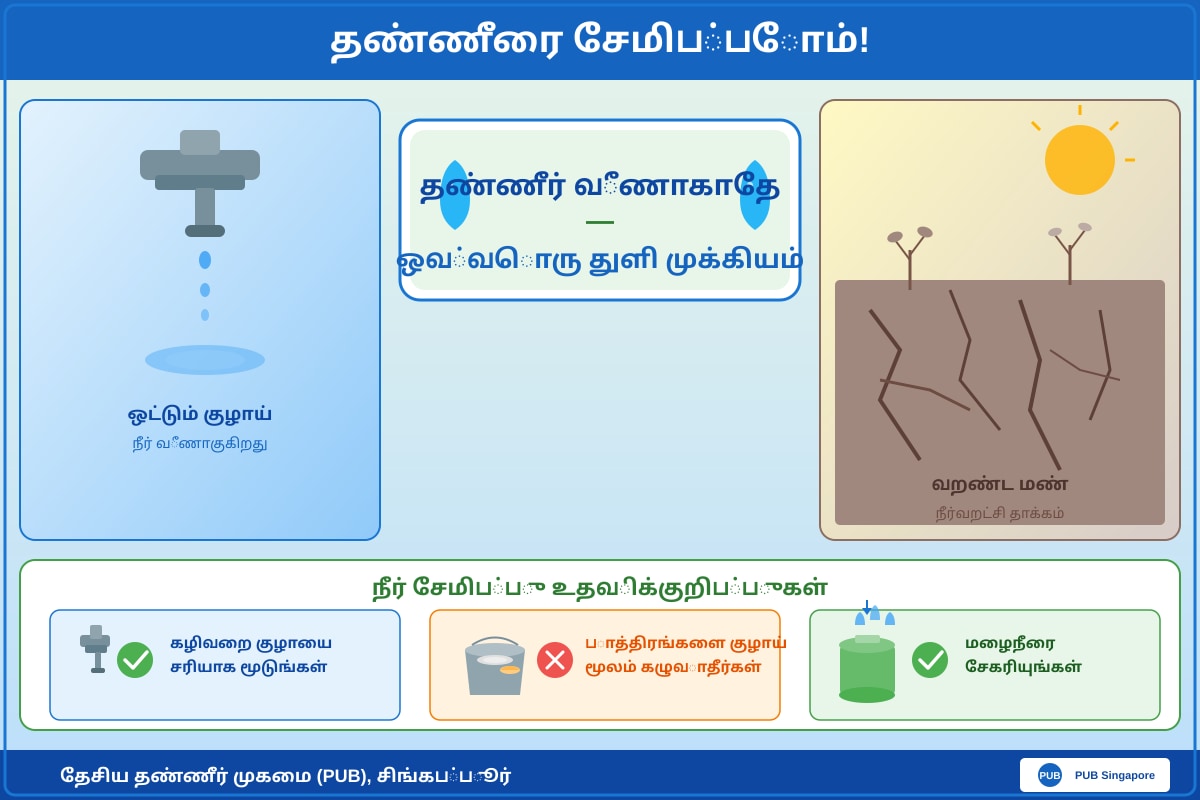
Answer: இந்த சுவரொட்டியின் முக்கிய செய்தி தண்ணீரை சேமிக்க வேண்டும் என்பதாகும். "தண்ணீர் வீணாகாதே — ஒவ்வொரு துளி முக்கியம்" என்ற வாசகம் தண்ணீர் வீணாவதைத் தடுக்க வேண்டும் என்ற கருத்தை வலியுறுத்துகிறது.
Expected visual features: The poster should show the central slogan "தண்ணீர் வீணாகாதே — ஒவ்வொரு துளி முக்கியம்" prominently displayed, along with the header "தண்ணீரை சேமிப்போம்!" and water-related imagery (dripping tap, dry earth).
Explanation: The poster's main message is about water conservation. The slogan "Don't waste water — every drop matters" is the central theme. Students should identify the water-saving message.
Marking: 2 marks — 1 mark for identifying water conservation as the main message, 1 mark for referencing the slogan or specific details from the poster.
Question 27 [2 marks]
Answer: (Example answer — accept any one of the three tips) கழிவறை குழாயை சரியாக மூடுங்கள் — தண்ணீர் ஓடிக்கொண்டே இருக்காத படி குழாயை நன்றாக மூட வேண்டும். இதன் மூலம் தண்ணீர் வீணாகுவதை தடுக்கலாம்.
Expected visual features: The poster should show an icon of a tap with a checkmark next to the Tamil text "கழிவறை குழாயை சரியாக மூடுங்கள்."
Explanation: Students must choose one of the three tips shown on the poster and explain it. The three tips are: (1) close the bathroom tap properly, (2) don't wash dishes under running water, (3) collect rainwater. Any one with a valid explanation is acceptable.
Marking: 2 marks — 1 mark for selecting a correct tip, 1 mark for explaining it clearly.
Question 28 [2 marks]
Answer: தேசிய தண்ணீர் முகமை (PUB), சிங்கப்பூர்.
Expected visual features: The poster footer should clearly show "தேசிய தண்ணீர் முகமை (PUB), சிங்கப்பூர்" along with the PUB logo at the bottom right corner.
Explanation: The poster is issued by PUB (Public Utilities Board), Singapore's national water agency. This is stated at the bottom of the poster.
Marking: 2 marks — 1 mark for PUB, 1 mark for Singapore.
Question 29 [3 marks]
Answer: (Example answer — accept reasonable answers with justification) இந்த சுவரொட்டி எல்லா வயதினருக்கும் ஏற்றது. ஏனெனில், தண்ணீர் சேமிப்பு என்பது எல்லோருக்கும் பொருந்தும் கருத்து. சுவரொட்டியில் உள்ள படங்கள் மற்றும் எளிய தமிழ் வாசகங்கள் குழந்தைகள் முதல் பெரியவர்கள் வரை அனைவருக்கும் புரியும் வகையில் உள்ளன.
Explanation: This is an open-ended question. Students should state which age group they think the poster targets and provide a reason. Acceptable answers include: all ages (because water conservation is universal), children (because of simple visuals), adults (because of practical tips), etc. The key is a reasonable justification.
Marking: 3 marks — 1 mark for stating the target audience, 2 marks for clear justification.
Question 30 [3 marks]
Answer: (Example answer — accept any two reasonable suggestions)
- "தண்ணீர் வீணாகாதீர்கள்" என்ற தலைப்பில் பள்ளி குழாய்களை சரிபார்த்து, கசிவுகளை திருத்தும் பணிகளை மாணவர்கள் செய்ய வேண்டும் என்ற கருத்தை சேர்ப்பேன்.
- மாணவர்கள் தண்ணீரை சேமிக்கும் வழிமுறைகளை குறித்த சிறிய விளக்கங்களையும் படங்களையும் சேர்ப்பேன். உதாரணமாக, குளிக்கும்போது நேரம் குறைப்பது, பாத்திரங்களை தேவையான அளவுக்கு தண்ணீரில் மட்டும் கழுவுதல் போன்றவை.
Explanation: This is a creative question asking students to design their own water conservation poster for their school. Accept any two reasonable suggestions related to water conservation. Examples: fixing leaks, shorter showers, using buckets instead of running water, rainwater harvesting, turning off taps when not in use, etc.
Marking: 3 marks — 1 mark for each valid suggestion (2 marks), 1 mark for clarity and creativity.
Question 31 [2 marks]
Answer: பூங்காவில் மக்கள் குப்பையை எறிந்து வருகிறார்கள். இதனால் பூங்காவின் அழகு பாதிக்கப்பட்டுள்ளது. குளத்தில் மீன்கள் இறக்கத் தொடங்கியுள்ளன.
Explanation: The situation describes two main problems: (1) people are littering in the park, damaging its beauty, and (2) fish in the pond are dying. Students must identify the environmental pollution problem.
Marking: 2 marks — 1 mark for mentioning littering/pollution, 1 mark for mentioning the effect on the park or fish.
Question 32 [3 marks]
Answer: குளத்தில் மீன்கள் இறக்கத் தொடங்கியதற்கு சாத்தியமான காரணங்கள்:
- குப்பை குளத்தில் விழுந்து நீர் மாசுபட்டிருக்கலாம். மாசுபட்ட நீர் மீன்களுக்கு ஆபத்தானது.
- குளத்தின் ஆக்சிஜன் அளவு குறைந்திருக்கலாம். குப்பை மற்றும் கழிவுகள் நீரில் கலந்து ஆக்சிஜனை குறைக்கின்றன.
Explanation: This is an application question requiring students to reason about cause and effect. Acceptable reasons include: water pollution from garbage reducing oxygen levels, toxic waste killing fish, disruption of the ecosystem, etc. Any two plausible scientific/social reasons should be accepted.
Marking: 3 marks — 1 mark for each valid reason (2 marks), 1 mark for clear explanation.
Question 33 [2 marks]
Answer: உள்ளூர் மக்கள் அரசாங்கத்திடம் (அல்லது தேசிய சுற்றுச்சூழல் முகமை / தேசிய பூங்கா சபை (NParks)) பிரச்சனையை காட்டிக் கொள்ள விரும்புகிறார்கள்.
Explanation: The passage states: "உள்ளூர் மக்கள் இந்தப் பிரச்சனையை அரசாங்கத்திடம் காட்டிக் கொள்ள விரும்புகிறார்கள்." Accept "அரசாங்கம்" or specific agencies like NParks or NEA.
Marking: 2 marks — 1 mark for identifying the government as the authority, 1 mark for mentioning a specific agency (NParks/NEA) or clear context.
Question 34 [3 marks]
Answer: (Example answer — accept any two reasonable suggestions)
- பூங்காவில் குப்பை தொட்டிகளை அதிகம் வைத்து, மக்கள் குப்பையை சரியான இடத்தில் போடுவதற்கு வசதியாக இருக்க வேண்டும்.
- பூங்காவில் எச்சரிக்கை பலகைகளை வைத்து, குப்பை எறிவது தண்டனைக்குரிய குற்றம் என்று மக்களுக்கு எச்சரிக்க வேண்டும்.
Explanation: This is a problem-solving question. Students must suggest practical solutions to the littering problem. Acceptable answers include: installing more bins, putting up warning signs, imposing fines, organizing cleanup campaigns, educating the public, increasing patrols, etc.
Marking: 3 marks — 1 mark for each valid suggestion (2 marks), 1 mark for practicality and clarity.
Question 35 [3 marks]
Answer: இந்தப் பிரச்சனை தொடர்ந்தால்:
- பூங்கா முழுவதும் மாசுபட்டு, அதன் இயற்கை அழகு அழிந்துவிடும். மக்கள் பூங்காவுக்கு செல்ல விரும்பாத நிலை ஏற்படும்.
- குளத்தின் உயிரினங்கள் முழுவதும் இறந்துவிடும். நீர் மிகவும் மாசுபட்டு, அபாயகரமான நிலையை எட்டும்.
- பகுதியின் சுற்றுச்சூழல் முழுவதும் பாதிக்கப்பட்டு, உள்ளூர் மக்களுக்கு ஆரோக்கிய பிரச்சனைகள் ஏற்படலாம்.
Explanation: This question tests the student's ability to predict consequences. Acceptable answers include: complete destruction of the park's beauty, death of all aquatic life, health hazards for residents, spread of diseases, loss of biodiversity, etc. Any three reasonable consequences with explanation should be accepted.
Marking: 3 marks — 1 mark for each valid consequence with brief explanation.
Mark Summary
| Section | Marks |
|---|---|
| A: Vocabulary & Grammar (Q1–15) | 15 |
| B: Comprehension Passage (Q16–25) | 30 |
| C: Visual Text & Applied Understanding (Q26–35) | 25 |
| Total | 70 |
End of Answer Key