AI Generated Quiz
O Level Social Studies Source Based Skills Quiz
Free O Level Social Studies Source Based Skills quiz, HY3 AI version, with questions, answers, and O Level-style practice for Singapore students.
These static practice materials are generated from the site's syllabus and paper-generation workflow, with source and model context shown so students and parents can evaluate the material before use.
Questions
Free quiz and exam paper access
Enter your details to view this paper
Your access is remembered on this device.
Answers
O-Level Social Studies Quiz - Source Based Skills (Answer Key)
Total Marks: 40
Topic: Source Based Skills
Caveat: No past-year exam templates were available; questions inferred from syllabus (2261) only.
Section A: Inference (Q1–5)
Q1 [2 marks]
Answer: The government sees itself as needing to adapt policies and work with citizens.
Teaching note: Inference goes beyond stated words. Source A says "anticipate change and stay relevant" → government must not be static. "Citizens and government work together" → shared role. Mark: 1 for adaptation, 1 for partnership.
Q2 [2 marks]
Answer: The committee believes citizens should take part voluntarily to improve society and belonging.
Teaching note: Source B "Join clean-up" + "active citizenship" → participation expected. 1 mark for volunteering, 1 for belonging.
Q3 [2 marks]
Answer: Decisions involve compromises because needs differ; not all can be satisfied fully.
Teaching note: "Trade-offs" = balancing competing demands (Issue 1). 1 mark definition, 1 mark link to Singapore context.
Q4 [2 marks]
Answer: Volunteering strengthens sense of identity as a community member.
Teaching note: Source B "builds belonging" → identity shaped by action. 1 mark for belonging, 1 for identity link.
Q5 [2 marks]
Answer: Fixed policies become outdated and fail when world changes.
Teaching note: Inference from "cannot remain fixed while world shifts". 1 mark for outdated, 1 for mismatch with change.
Section B: Comparison and Reliability (Q6–10)
Q6 [2 marks]
Answer: C is angry/critical; D is positive/official.
Teaching note: Tone = attitude. C "unfair" vs D "support growth". 1 each.
Q7 [2 marks]
Answer: Both discuss immigration rules.
Teaching note: Similarity in subject. 2 marks for correct identification.
Q8 [2 marks]
Answer: Low reliability; letter writer is not policy maker, may be biased.
Teaching note: Provenance: origin = citizen, purpose = complain. 1 for low, 1 for reason.
Q9 [2 marks]
Answer: Low for citizen concerns; it is government's own view, may omit negatives.
Teaching note: Purpose = promote. 1 for low, 1 reason.
Q10 [2 marks]
Answer: Source C; it is a letter from public expressing dissatisfaction.
Teaching note: Provenance: newspaper letter = public voice. 1 source, 1 explanation.
Section C: Utility and Evaluation (Q11–20)
Q11 [2 marks]
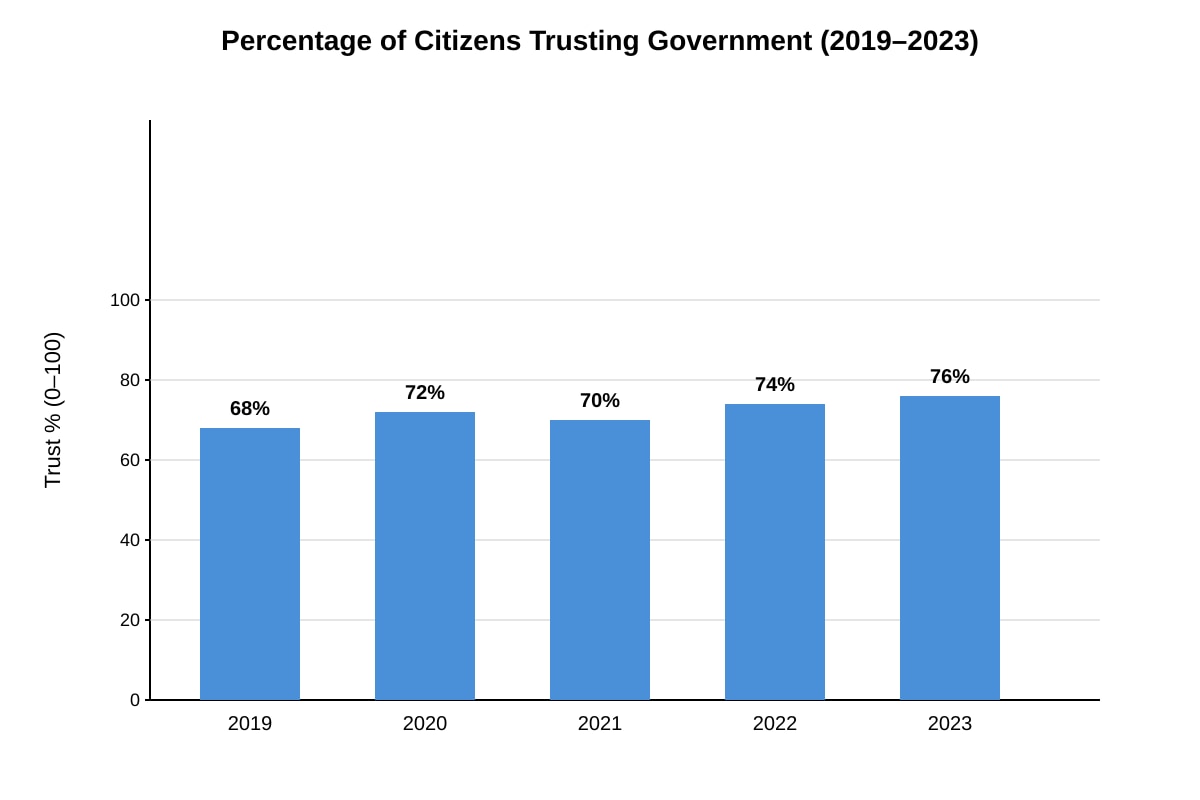
Answer: Trust increased from 68% to 76% over 5 years.
Teaching note: Read chart values. 1 trend, 1 figures.
Q12 [2 marks]
Answer: Useful; shows public trust which reflects leadership success.
Teaching note: Issue 1 good leadership. 1 useful, 1 link.
Q13 [2 marks]
Answer: Useful; directly shows positive diversity experience.
Teaching note: Issue 2. 1 useful, 1 reason.
Q14 [2 marks]
Answer: No; both show citizens acting (B) and government enabling (A).
Teaching note: Evaluation = judgement using 2 sources. 1 no, 1 evidence.
Q15 [2 marks]
Answer: Partly reliable; photo shows event but not deep harmony.
Teaching note: Reliability = trustworthiness. 1 partial, 1 limit.
Q16 [2 marks]
Answer: Not purely negative; D shows economic benefits.
Teaching note: Use C and D. 1 not negative, 1 evidence from D.
Q17 [2 marks]
Answer: Very useful; expert report on global jobs.
Teaching note: Issue 3. 1 useful, 1 reason.
Q18 [2 marks]
Answer: Both aim to build community, but B is local action, G is celebration.
Teaching note: Purpose comparison. 1 each.
Q19 [2 marks]
Answer: Limited; E is trust, F is student view, neither shows joint action clearly.
Teaching note: Utility judged. 1 limited, 1 reason.
Q20 [4 marks]
Answer: Claim supported. Source A: govt anticipates change; B: citizens volunteer; G: festival by communities. All show both needed.
Marking: 1 mark per source used (3 max) + 1 for conclusion. Must name sources and link to individual/govt action. Common mistake: not using 3 sources.