AI Generated Quiz
O Level Social Studies Issue Analysis Quiz
Free O Level Social Studies Issue Analysis quiz, HY3 AI version, with questions, answers, and O Level-style practice for Singapore students.
These static practice materials are generated from the site's syllabus and paper-generation workflow, with source and model context shown so students and parents can evaluate the material before use.
Questions
Free quiz and exam paper access
Enter your details to view this paper
Your access is remembered on this device.
Answers
O-Level Social Studies Quiz - Issue Analysis (Answer Key)
Total Marks: 40
Level: O-Level
Topic: Issue Analysis
Caveat: No past-year paper evidence was available; questions are syllabus-first from LLM-inferred patterns, not exam-derived.
Section A Answers (Q1–5)
Q1 (2 marks)
Answer: The source shows differing needs in society — most want childcare (68%) but many worry about noise (55%), so the government faces trade-offs and cannot satisfy all fully.
Teaching note: Inference means reading beyond text. Here, high demand + concern = conflict of interests. Mark: 1 for identifying differing needs, 1 for mentioning trade-off.
Q2 (2 marks)
Answer: Source B is from a government pamphlet, so it may present policies positively (purpose: to inform/support policy), making it less neutral; students should check if it hides downsides.
Teaching note: Reliability depends on origin/purpose. Government source = official but possibly biased. Mark: 1 origin, 1 purpose/effect.
Q3 (3 marks)
Answer: Source A shows local practical needs (childcare, quiet) and Source B shows systemic need for racial balance. Similar: both address social well-being. Different: A is resident-driven, B is state-driven.
Marking: 1 similarity, 2 differences (or vice versa balanced).
Q4 (2 marks)
Answer: Agree — Source A gives direct citizen trade-off evidence; OR disagree — Source B explains policy intent. One reasoned reason needed.
Mark: 1 stance, 1 reason.
Q5 (3 marks)
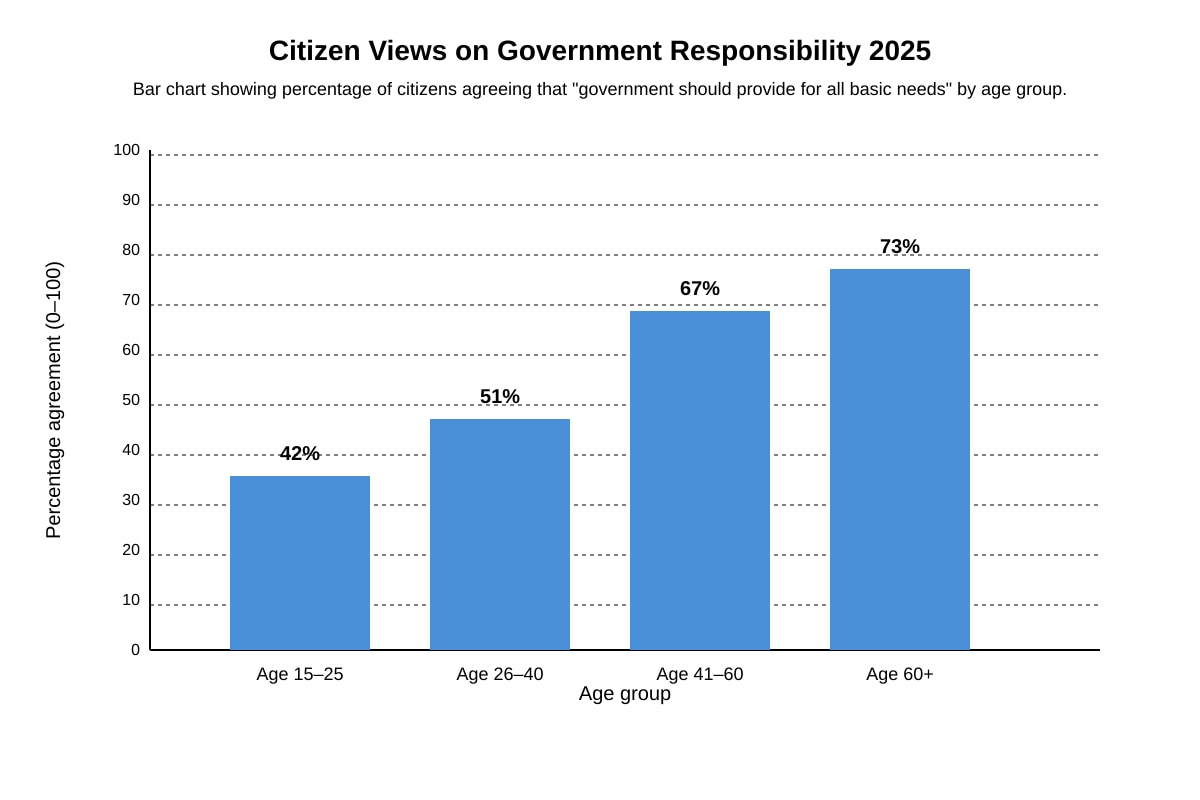
Answer: Surprising: older citizens (60+: 73%) agree more than youth (15–25: 42%) that government should provide basics; expected might be youth want more support. Chart must show bars increasing with age.
Mark: 1 trend, 2 explanation using values.
Section B Answers (Q6–10)
Q6 (2 marks)
Answer: Active citizenship = citizens participating in public affairs, sharing values, volunteering, not just legal status.
Mark: 1 definition, 1 example/elaboration.
Q7 (2 marks)
Answer: Any two: makes laws, enforces laws, maintains law and order, ensures economic/social well-being, protects national interests.
Mark: 1 each.
Q8 (3 marks)
Answer: Trade-off: economic growth from infrastructure vs cost to displaced residents (loss of homes, compensation). Government must balance.
Mark: 1 benefit, 1 cost, 1 balance statement.
Q9 (2 marks)
Answer: Meritocracy rewards effort/skill, gives opportunities to talented regardless of background, supports fairness and stake for all.
Mark: 1 definition, 1 link to governance.
Q10 (3 marks)
Answer: Example: inter-faith dialogue groups reduce prejudice. Effect: builds respect, harmony without laws.
Mark: 1 group, 1 action, 1 effect.
Section C Answers (Q11–20)
Q11 (2 marks)
Answer: "Stake for everyone, opportunities for all" or managing trade-offs with fair access.
Mark: 1 principle, 1 application.
Q12 (2 marks)
Answer: Economic growth via MNCs, or vulnerability to external shocks.
Mark: 1 impact named, 1 context.
Q13 (2 marks)
Answer: Spread of culture (e.g., K-pop) or dilution of local culture.
Mark: 1 point from syllabus.
Q14 (3 marks)
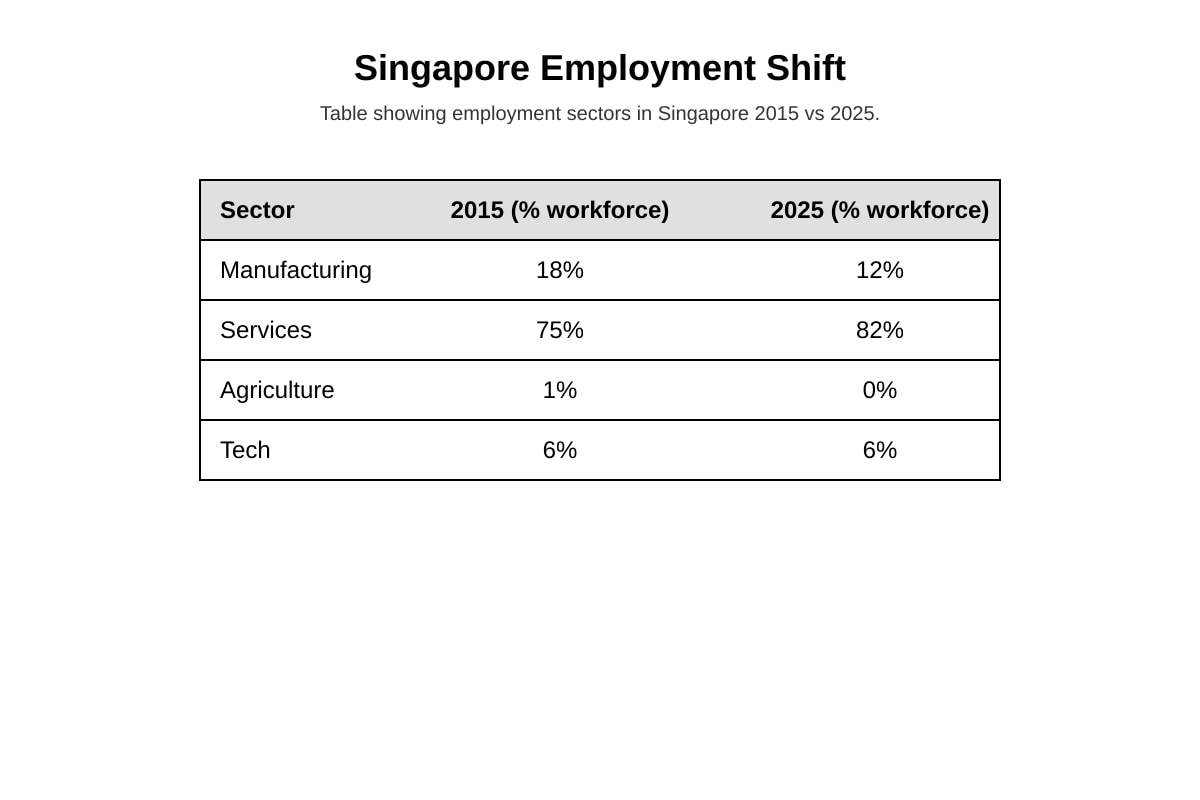
Answer: Manufacturing fell 18%→12%; government may retrain workers (SkillsFuture) or attract high-tech manufacturing. Table shows services rise.
Mark: 1 data note, 2 response reasoned.
Q15 (2 marks)
Answer: Transnational terrorism or cyber threats.
Mark: 1 named.
Q16 (2 marks)
Answer: Assimilation = minorities adopt majority culture; Integration = keep identity while participating.
Mark: 1 each.
Q17 (3 marks)
Answer: Action: start peer mediation club. Effect: resolves conflict, builds empathy.
Mark: 1 action, 2 explanation.
Q18 (2 marks)
Answer: Different groups have different needs/values; costs shared unequally.
Mark: 1 each.
Q19 (3 marks)
Answer: Not always — MNCs bring jobs but can cause profit outflow or local firm squeeze. Syllabus: economic growth and vulnerability.
Mark: 1 stance, 2 explained with syllabus.
Q20 (2 marks)
Answer: Public housing (HDB) for all incomes, or education subsidies.
Mark: 1 concrete policy.