AI Generated Exam Paper
O Level Social Studies Practice Paper 1
Free O Level Social Studies Practice Paper 1, HY3 AI version, with questions, answers, and O Level-style practice for Singapore students.
These static practice materials are generated from the site's syllabus and paper-generation workflow, with source and model context shown so students and parents can evaluate the material before use.
Questions

Free quiz and exam paper access
Enter your details to view this paper
Your access is remembered on this device.
Answers
TuitionGoWhere Practice Paper Answer Key — Social Studies O-Level (Version 1)
Section A: Source-Based Case Study (35 marks)
Q1 [2 marks] Answer: Source A suggests citizens play an active role by volunteering time and participating in grassroots events to build harmony; government supports but citizens drive change. Teaching note: Inference from "real change comes from citizens volunteering." Mark: 1 mark for citizen action, 1 mark for shared/complementary role.
Q2 [1 mark] Answer: Volunteer rate is highest among 55+ (42%) and lowest among 35-44 (24%); or 15-24 (38%) higher than 25-34 (29%). Teaching note: Read chart values. Any one correct trend from fig1.
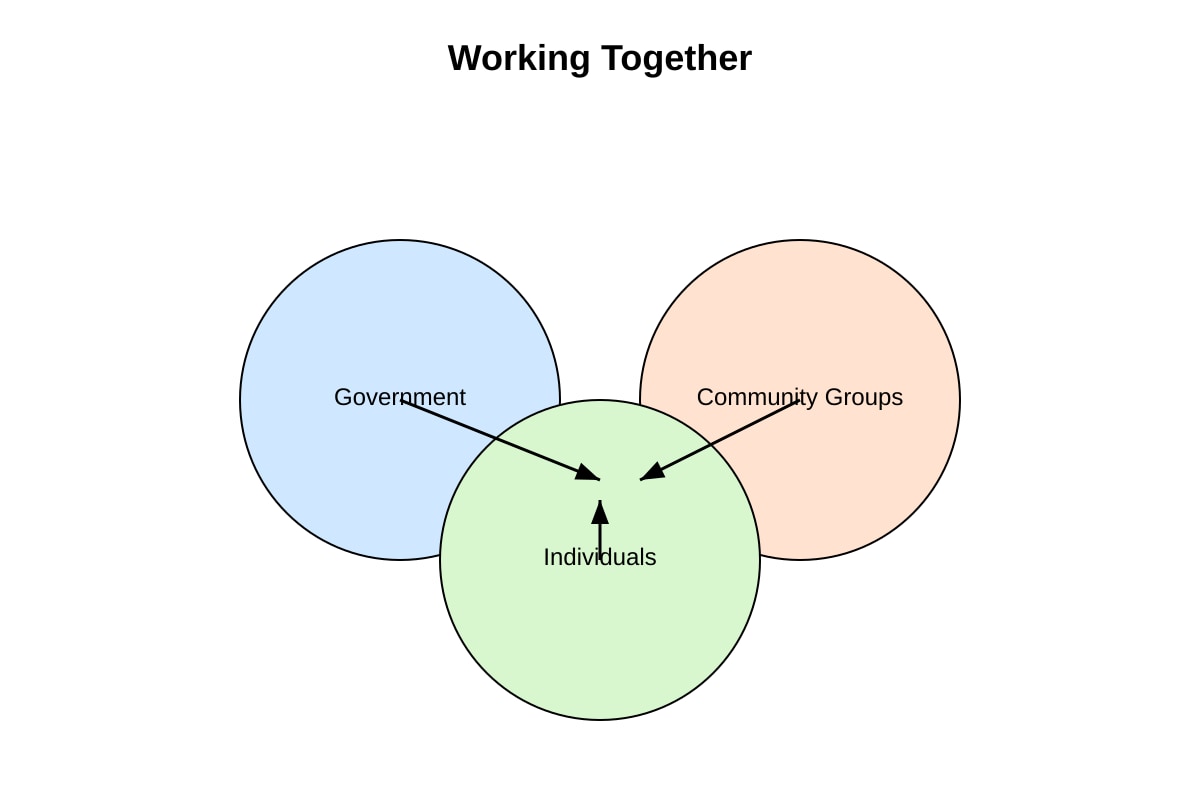
Q3 [2 marks] Answer: It shows government, community groups, and individuals as overlapping with joint arrow to "Working Together," meaning all three must collaborate. Teaching note: Describe visual: three circles overlapping, arrows to centre. 1 mark layout, 1 mark interpretation.
Q4 [3 marks] Answer: Similar: both see citizens as active (A: volunteer; C: want voice). Different: A sees govt-citizen partnership positive; C criticises top-down govt and lacks real consultation. Marking: 1 similarity, 2 differences (or balanced 3 points).
Q5 [3 marks] Answer: Low reliability for broad public opinion: origin is one resident letter (not representative); purpose is to complain, may be biased. But shows minority view. Marking: 1 origin, 1 purpose, 1 limitation/conclusion.
Q6 [2 marks] Answer: Limited utility: shows rates not reasons; no data on motivation. Useful only for scale of youth volunteering. Marking: 1 limit, 1 partial use.
Q7 [2 marks] Answer: Possibly not surprising: 55+ highest fits retirement time; 35-44 low fits family/work load. Or surprising if expect youth highest due to school programmes. Marking: 1 stance, 1 data link.
Q8 [4 marks] Answer: Claim weak. Source A shows citizens initiate volunteering with govt support; Source C says govt plans, but also shows citizens want voice. Evaluation: citizenship includes both follow and shape. Marking: 2 from sources, 2 judgement.
Q9 [2 marks] Answer: Partly no: C says real change needs consultation, not just events; but C agrees citizens should act, just not only govt-led. Marking: 1 contrast, 1 partial.
Q10 [1 mark] Answer: It is a simplified model, not real evidence of action; may omit conflict.
Q11 [2 marks] Answer: Government uses funding + grassroots to engage citizens, strategy of shared responsibility. Marking: 1 funding, 1 engagement strategy.
Q12 [2 marks] Answer: A positive/encouraging; C critical/negative. Marking: 1 each.
Q13 [3 marks] Answer: Useful: A gives real example, D gives concept map. Limit: both pro-government, no critique. Marking: 1 A, 1 D, 1 limit.
Q14 [2 marks] Answer: Yes, because A shows happy participation, C calls it theatre; or no, because both note govt leads. Marking: 1 stance, 1 link.
Q15 [5 marks] Answer: Sources show joint effort (A,D) but tension (C). B shows participation exists. Conclusion: achievable but needs real voice. Marking descriptors: 2 evidence from sources, 2 comparison, 1 overall eval.
Section B (15 marks)
Q16 [1 mark] Answer: Drawing conclusion beyond stated info using clues.
Q17 [2 marks] Answer: Purpose shapes what is included/excluded; e.g., promotion source hides problems → less reliable for neutral fact. Marking: 1 reason, 1 example.
Q18 [2 marks] Answer: Correlation not cause; rate not attitude; maybe free time not mindset. Marking: 1 error type, 1 explanation.
Q19 [3 marks] Answer: Gov report: systematic but may spin; letter: honest but unrepresentative. Both need cross-check. Marking: 1 each.
Q20 [4 marks] Answer: Interviews: deep but few; infographics: broad but shallow. Use both for full picture. Marking: 2 each type.
Total: 50 marks