AI Generated Quiz
O Level Physics Electricity Magnetism Quiz
Free O Level Physics Electricity Magnetism quiz, HY3 AI version, with questions, answers, and O Level-style practice for Singapore students.
These static practice materials are generated from the site's syllabus and paper-generation workflow, with source and model context shown so students and parents can evaluate the material before use.
Questions
Free quiz and exam paper access
Enter your details to view this paper
Your access is remembered on this device.
Answers
O-Level Physics Quiz - Electricity Magnetism (Answer Key)
Total Marks: 40
Topic: Electricity & Magnetism (syllabus-first, AI-generated from Stage 4 templates; not claimed as past-year derived)
Section A: Answers 1–5
Q1 [2 marks]
Answer: The comb becomes charged by friction (electrons transfer from hair to comb). It acquires a negative charge. When brought near neutral paper, it induces opposite charges (positive) on the near side of the paper, causing attraction.
Teaching note: Charging by friction transfers electrons. A charged object polarises a neutral insulator and attracts it.
Marking: 1 mark for charging/friction idea, 1 mark for induced attraction explanation.
Q2 [1 mark]
Answer: A temporary magnet loses its magnetism when the external field is removed (e.g. soft iron); a permanent magnet retains magnetism (e.g. steel).
Teaching note: Material property determines retention.
Q3 [1 mark]
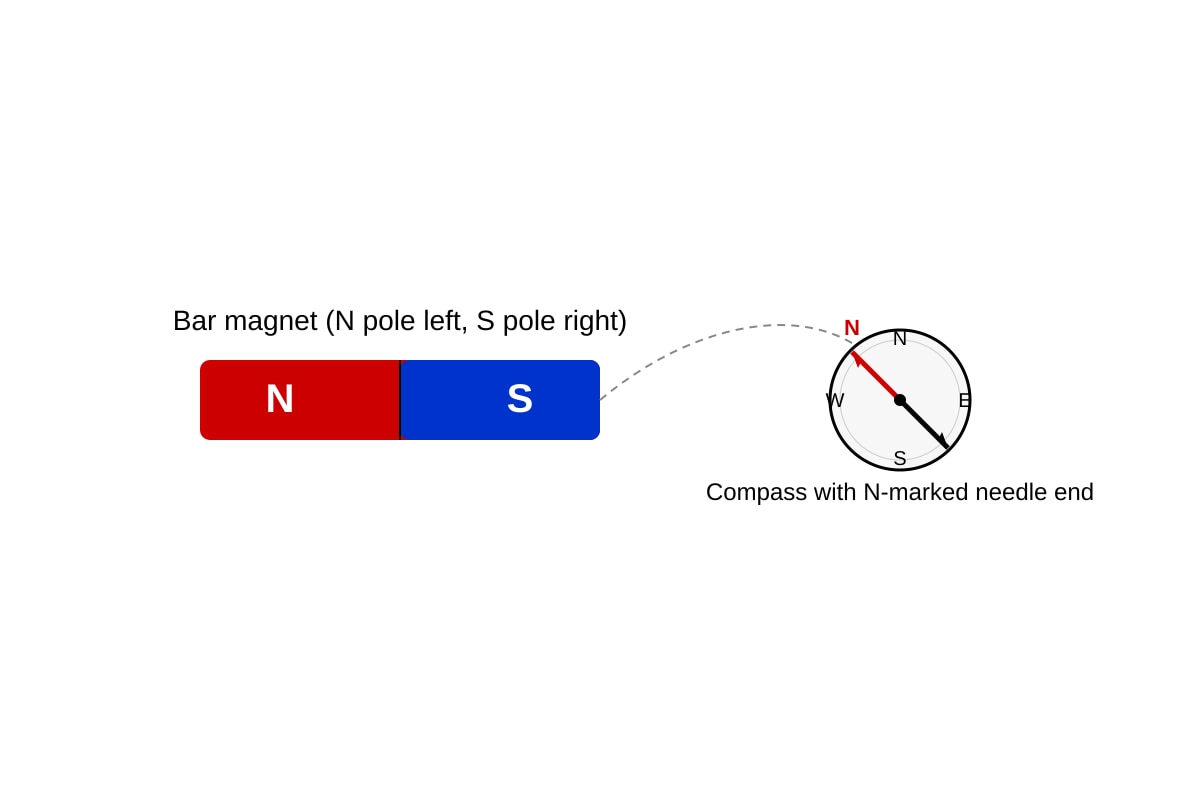
Answer: The compass north-seeking pole points away from the magnet’s N pole, along the field line toward the S pole (to the left, toward magnet’s S).
Image support: Diagram shows field from N (left) to S (right); compass needle N points left.
Q4 [1 mark]
Answer: Any one: refrigerator door seal, magnetic catch, compass, MRI scanner, electric bell.
Teaching note: Accept common applications.
Q5 [2 marks]
Answer: The near side of the sphere gains positive charge (electrons repelled to far side); the far side becomes negative. This is charge separation (induction).
Marking: 1 mark near side positive, 1 mark far side negative / explanation of repulsion.
Section B: Answers 6–13
Q6 [2 marks]
Formula:
Substitution:
Answer:
Teaching: Ohm’s law for resistive load; units must be Ω.
Q7 [2 marks]
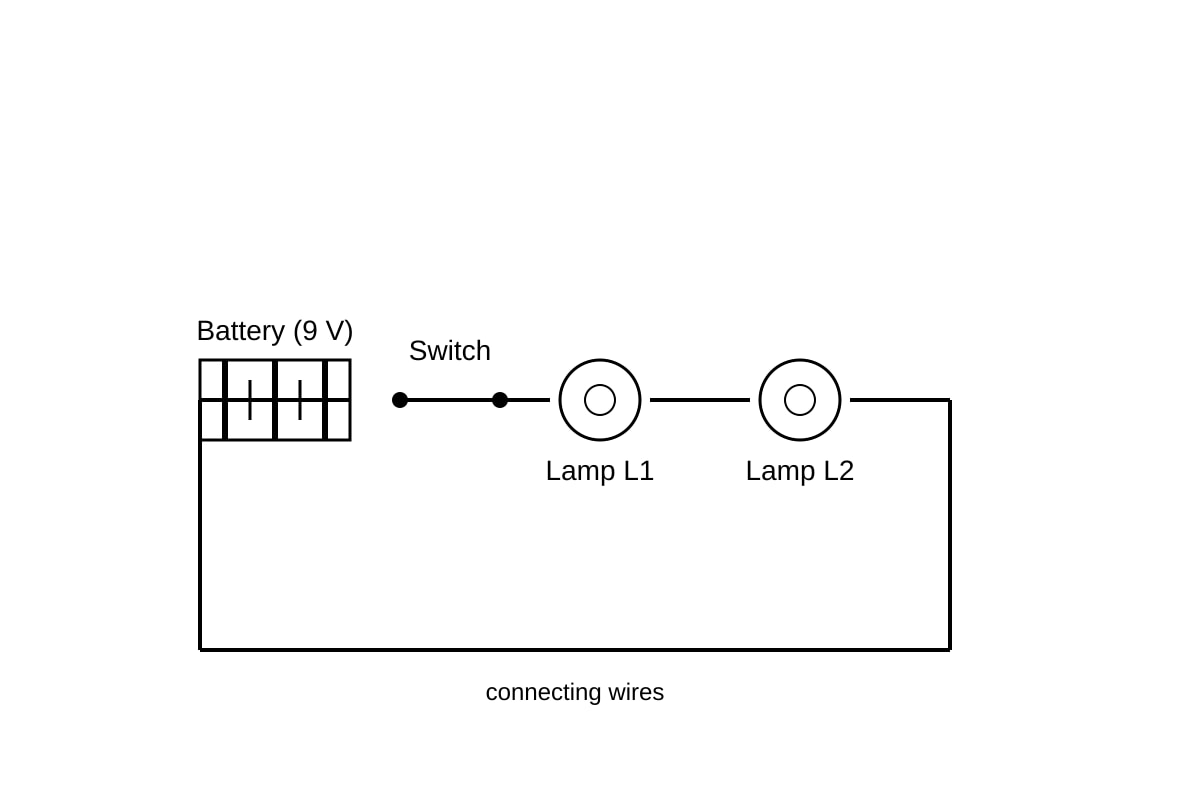
Total resistance:
Current:
Answer:
Teaching: Series adds resistances.
Q8 [3 marks]
New
LED brighter because current increased (doubled).
Marking: 1 mark calc, 1 mark current value, 1 mark brightness reason.
Q9 [2 marks]
Answer:
Q10 [2 marks]
Equal voltmeter readings mean equal voltage across both parallel branches. For parallel components, if voltages are equal (same supply), the combined resistance of wire+resistor in parallel is less than and the wire resistance equals if only those two. Explanation: parallel voltage same; combined .
Marking: 1 mark equal V, 1 mark combined R inference.
Q11 [2 marks]
Answer:
Q12 [1 mark]
Answer: Current through a conductor is directly proportional to voltage across it, provided temperature is constant.
Q13 [2 marks]
Answer:
Section C: Answers 14–20
Q14 [2 marks]
Answer: Concentric circles around the wire, with direction given by right-hand grip rule (thumb = current, fingers = field).
Marking: 1 mark circles, 1 mark direction rule.
Q15 [2 marks]
Any two: increase current, increase number of turns, insert iron core.
(1 mark each)
Q16 [3 marks]
Answer: Pedaling rotates magnet inside coil. Changing magnetic flux induces EMF (Faraday’s law). Faster rotation → greater rate of flux change → higher EMF → more electricity.
Marking: 1 motion, 1 induction, 1 speed link.
Q17 [3 marks]
Any three: speed of motion, number of turns, magnetic field strength, conductor length in field.
(1 mark each)
Q18 [2 marks]
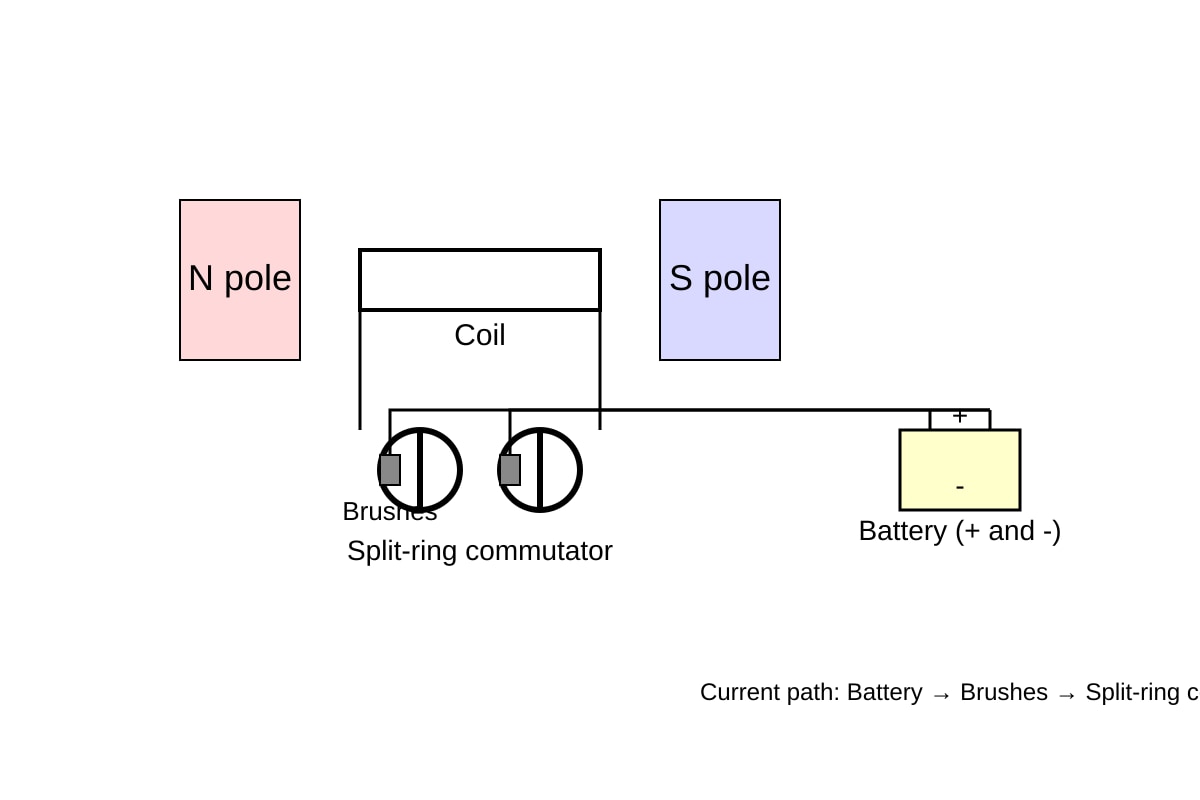
Answer: Reverses current direction in coil every half-turn to maintain same rotation direction.
Marking: 1 mark reverse current, 1 mark maintain rotation.
Q19 [2 marks]
Answer:
Q20 [1 mark]
Answer: To reduce current, reducing energy loss as heat ().