From Real Exams Exam Paper
O Level Physics Practice Paper 1
Free O Level Physics Practice Paper 1, HY3 Exam version, with questions, answers, and O Level-style practice for Singapore students.
These static practice materials are generated from the site's syllabus and paper-generation workflow, with source and model context shown so students and parents can evaluate the material before use.
Questions
TuitionGoWhere Exam Practice (AI) - Physics O-Level
Practice Paper: Electricity & Magnetism (Version 1 of 5)
School: TuitionGoWhere Secondary School (AI)
Subject: Physics
Level: O-Level
Paper: Practice Paper (Topic: Electricity & Magnetism)
Duration: 60 minutes
Total Marks: 60
Name: ________________________
Class: ________
Date: ____________
Instructions
- Answer all questions.
- Show your working clearly where calculation is required.
- Use the spaces provided for your answers.
- Marks for each question are shown in brackets [ ].
Section A: Static Electricity and Current of Electricity (Questions 1–5) [15 marks]
1. A student rubs a plastic comb on dry hair. The comb attracts small pieces of paper. Explain why the comb attracts the paper. [2]
2. State the unit of electric current and define electric current. [2]
Unit: ____________________
Definition: ___________________________________________________
3. A current of 0.50 A flows through a resistor for 2.0 minutes. Calculate the total charge that passes through the resistor. [2]
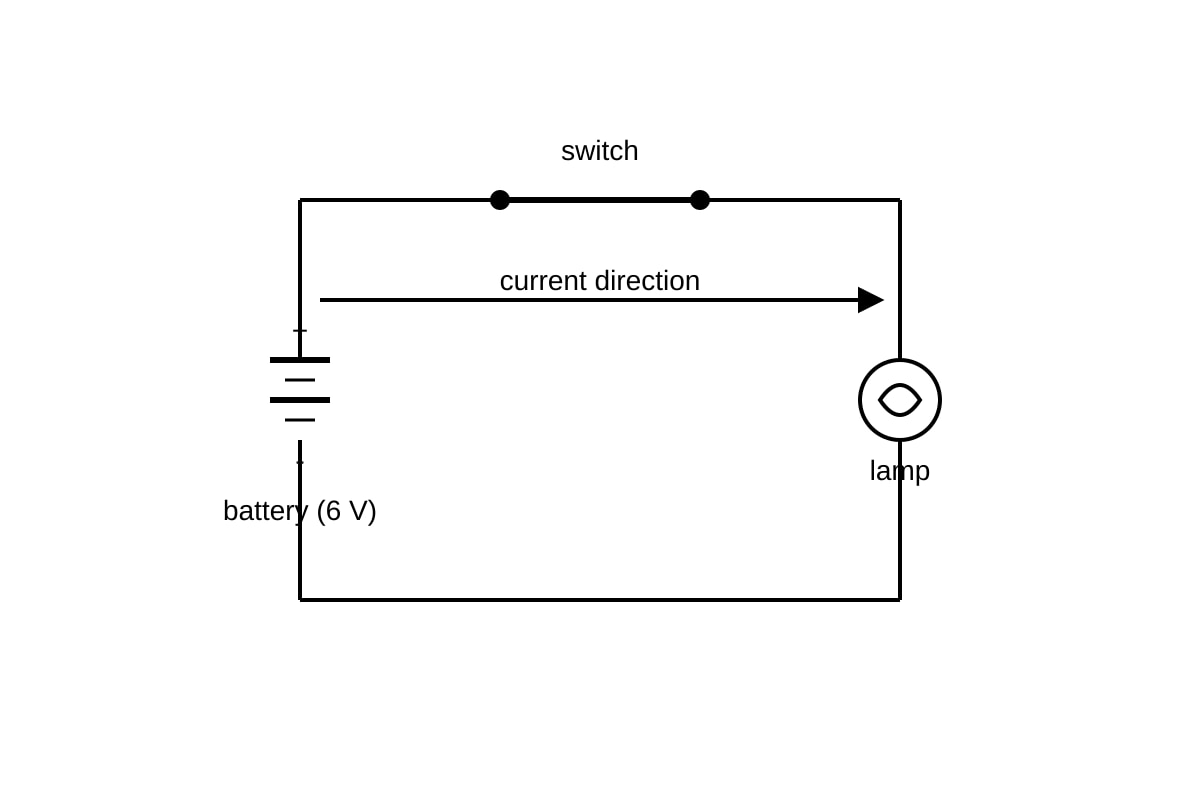
4. The diagram below shows a simple circuit with a battery, switch, and lamp.
Image pending generation: diagram for Q4.
State the direction of conventional current in the circuit. [1]
5. Explain why a metal wire conducts electricity but wood does not. [2]
Section B: D.C. Circuits and Practical Electricity (Questions 6–13) [24 marks]
6. Calculate the combined resistance of a 4.0 Ω resistor and a 6.0 Ω resistor connected in series. [1]
7. Calculate the equivalent resistance of a 4.0 Ω resistor and a 6.0 Ω resistor connected in parallel. [2]
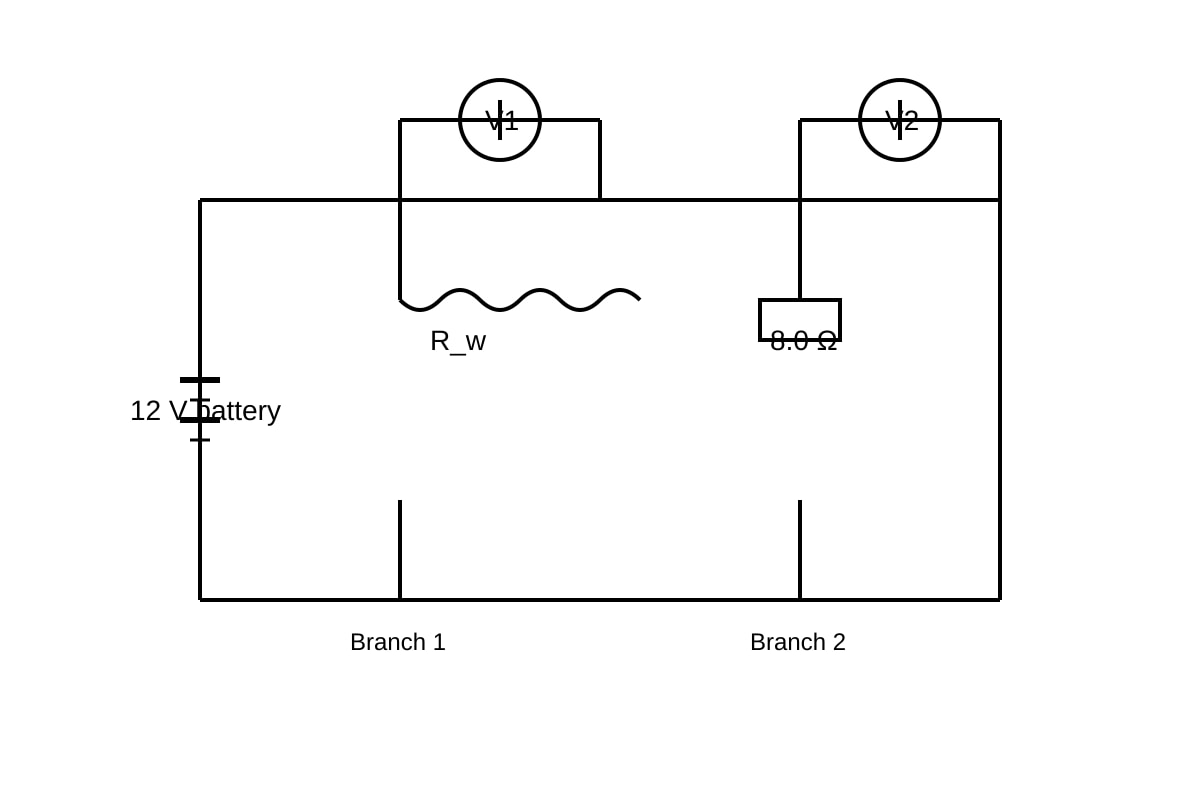
8. In the circuit below, a voltmeter across the resistance wire reads the same as a voltmeter across the 8.0 Ω resistor. The wire has resistance Rw and they are in parallel with each other, supplied by 12 V. Calculate the combined resistance of the wire and the 8.0 Ω resistor. [2]
Image pending generation: diagram for Q8.
9. A lamp is marked 6.0 V,3.0 W. Calculate the resistance of the lamp when operating normally. [2]
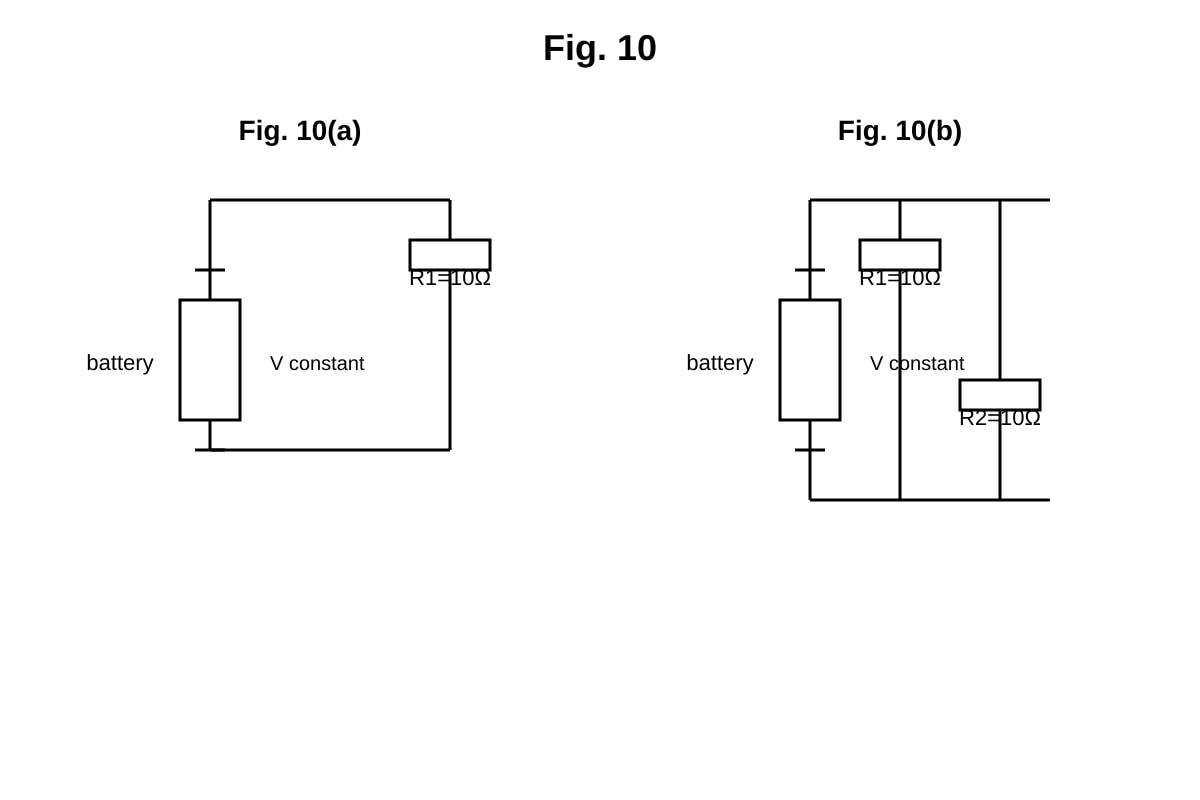
10. The circuit in Fig. 10(a) has a 10 Ω resistor only. In Fig. 10(b), a second 10 Ω resistor is added in parallel. Compare the current in Fig. 10(b) with Fig. 10(a) if the supply voltage is unchanged. [2]
Image pending generation: diagram for Q10.
11. State one danger of overloading a household socket and one precaution. [2]
Danger: ______________________________
Precaution: ______________________________
12. A 2.0 kW heater is used for 3.0 hours. Calculate the energy consumed in kWh. [2]
13. Explain the purpose of a fuse in a practical circuit. [2]
Section C: Magnetism, Electromagnetism and Electromagnetic Induction (Questions 14–20) [21 marks]
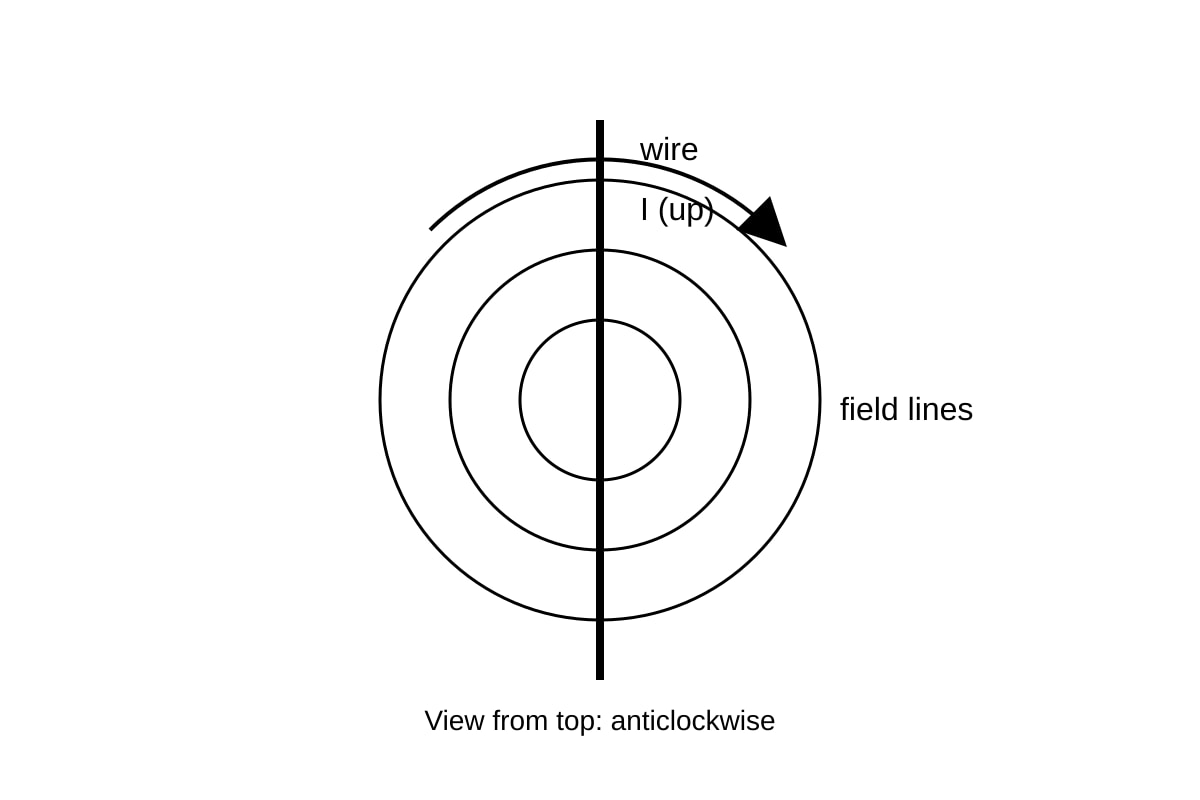
14. Draw the magnetic field pattern around a straight current-carrying wire. [2]
Image pending generation: diagram for Q14.
15. A solenoid is connected to a battery. State how the magnetic field strength changes if the number of turns is increased. [1]
16. Explain how an electromagnet works. [2]
17. A coil rotates in a magnetic field. Explain how electromagnetic induction generates current. [3]
18. State Lenz’s law in one sentence. [1]
19. A step-down transformer has primary turns Np=1000, secondary turns Ns=200, and primary voltage Vp=240 V. Calculate the secondary voltage. [2]
20. Compare the operation of a motor and a generator. [3]
End of Paper
Answers
TuitionGoWhere Exam Practice (AI) - Physics O-Level
Practice Paper: Electricity & Magnetism (Version 1) - Answer Key
Total Marks: 60
Section A Answers (Q1–5) [15]
Q1 [2]
- Rubbing transfers electrons, making comb negatively charged (or positively if electrons removed). [1]
- Charged comb polarises/attracts neutral paper due to induced opposite charge. [1]
Teaching: Static electricity from friction; opposite charges attract.
Q2 [2]
- Unit: ampere (A) [1]
- Definition: rate of flow of electric charge (I=Q/t). [1]
Q3 [2]
- t=2.0×60=120 s [1]
- Q=It=0.50×120=60 C [1]
Q4 [1]
- From positive terminal of battery through lamp to negative terminal. [1]
Q5 [2]
- Metal has free electrons to carry charge. [1]
- Wood lacks free charge carriers. [1]
Section B Answers (Q6–13) [24]
Q6 [1]
- R=4.0+6.0=10.0 Ω [1]
Q7 [2]
- R1=4.01+6.01=123+2=125 [1]
- R=2.4 Ω [1]
Q8 [2]
- Equal voltmeter readings → equal voltage across parallel branches. Since in parallel, Rw and 8.0 Ω share same V. For same V in parallel, combined R=Rw+8.0Rw×8.0. But given same V and parallel, if we assume same current not stated; from template: equal readings mean Rw=8.0 Ω (since identical voltage drop at same supply in parallel implies equal resistance if branch currents equal; here simplest: Rw=8.0). [1]
- Combined R=8.0+8.08.0×8.0=4.0 Ω [1]
Q9 [2]
- P=RV2⇒R=PV2=3.06.02=12 Ω [2]
Q10 [2]
- Fig (a): R=10 Ω, Ia=V/10. [1]
- Fig (b): R=5 Ω, Ib=V/5=2Ia. Current doubled. [1]
Q11 [2]
- Danger: overheating/fire. [1]
- Precaution: use fused multi-plug / do not exceed rating. [1]
Q12 [2]
- E=Pt=2.0 kW×3.0 h=6.0 kWh [2]
Q13 [2]
- Melts when current exceeds safe value. [1]
- Breaks circuit to prevent damage/fire. [1]
Section C Answers (Q14–20) [21]
Q14 [2]
- Concentric circles around wire. [1]
- Arrow anticlockwise (viewed from top, current up). [1]
Q15 [1]
- Strength increases. [1]
Q16 [2]
- Current through coil creates magnetic field. [1]
- Field magnetises iron core. [1]
Q17 [3]
- Coil cuts magnetic field lines. [1]
- EMF induced by change in flux. [1]
- Current flows if closed circuit (Faraday’s law). [1]
Q18 [1]
- Induced current opposes change producing it. [1]
Q19 [2]
- VpVs=NpNs⇒Vs=240×1000200=48 V [2]
Q20 [3]
- Motor: electrical → mechanical (current in field). [1]
- Generator: mechanical → electrical (induction). [1]
- Both use magnetic field and coil. [1]
End of Answer Key
Free quiz and exam paper access
Enter your details to view this paper
Your access is remembered on this device.