AI Generated Quiz
O Level History Conflict International Relations Quiz
Free O Level History Conflict IR quiz, HY3 AI version, with questions, answers, and O Level-style practice for Singapore students.
These static practice materials are generated from the site's syllabus and paper-generation workflow, with source and model context shown so students and parents can evaluate the material before use.
Questions
Free quiz and exam paper access
Enter your details to view this paper
Your access is remembered on this device.
Answers
O-Level History Quiz - Conflict International Relations (Answer Key)
Total Marks: 40
Level: O-Level
Topic: Conflict & International Relations
Section A: Source-Based (Q1–5)
Q1. [5 marks]
Teaching note: Source A is a British cartoon from 1948 showing a Soviet bear behind an "Iron Curtain" and frightened Eastern European states, with the West holding a "Marshall Plan" shield. The cartoonist's purpose is inferred from context.
Answer: The cartoonist published this to warn the British public about Soviet control over Eastern Europe and to support the Western Marshall Plan as protection. (1) The bear labelled USSR behind the Iron Curtain shows Soviet domination. (2) The frightened Poland, Hungary, Czechoslovakia show loss of freedom. (3) The Western shield "Marshall Plan" suggests aid is a defence. (4) In 1948, Czech coup and Berlin Blockade made this fear real. (5) Purpose = propaganda for Western policy.
Mark breakdown: 1 mark each for 4 valid points + 1 for clear purpose inference. Common mistake: describing only what is drawn, not why published.
Q2. [5 marks]
Teaching note: Source B is Marshall's 1947 speech; purpose = justify aid, avoid appearing aggressive.
Answer: Marshall's purpose was to present US aid as humanitarian, not anti-Soviet. (1) "not against any country or doctrine" shows he denied imperial aim. (2) "hunger, poverty, desperation" = focus on recovery. (3) "full cooperation" invites governments to join. (4) Context: 1947 Europe ruined, US feared communism spreading via poverty. (5) Speech built support for Marshall Plan in Congress and Europe.
Mark breakdown: 5 points × 1 mark. Trap: saying he wanted war.
Q3. [6 marks]
Teaching note: Compare B (US says aid is neutral) and C (USSR says it is imperialist trap).
Answer: Source C does not prove B wrong because they show different perspectives, not fact. (1) B says aid is against poverty, not countries. (2) C calls it imperialist control — Soviet biased view. (3) C is Pravda (state paper), so expected to attack US. (4) B is a speech with no force demanded. (5) Disagreement shows Cold War rivalry, not that one is false. (6) Conclusion: C shows Soviet suspicion, not proof B lied.
Mark breakdown: 3 marks for extracting both views, 2 for bias context, 1 for judgement. Trap: saying C proves B wrong.
Q4. [6 marks]
Teaching note: Source D is a 1955 alliance table; usefulness = clear but limited.
Answer: Useful as it shows two clear rival blocs by 1955 with leaders and members. (1) Provenance: factual table, post-events. (2) Content: dates, members confirm division. (3) Limitation: no reasons for joining. (4) No info on tensions before 1949. (5) Bias low as it is data. (6) Conclusion: partially useful for division, not for causes.
Mark breakdown: 2 for provenance/content, 2 for limits, 2 for balanced judgement.
Q5. [8 marks]
Teaching note: Use all sources + knowledge. View = Soviet aggression main cause.
Answer: Sources partly support but not fully. A shows USSR bear dominating E. Europe (support). C shows USSR sees US as threat (suggests defensive). B shows US aid as neutral (not aggressive). D shows both sides armed (shared blame). Knowledge: Stalin's takeover of E. Europe 1945–48, Berlin Blockade = Soviet action; but US Truman Doctrine also provoked. Conclusion: sources show Soviet control but also Western response; view is half-supported.
Mark descriptors: 8 = uses ≥3 sources + knowledge, balanced; 5–6 = 2 sources, some judgement; 3 = lists sources only.
Section B: Knowledge (Q6–13)
Q6. [1] To keep peace / prevent war through collective security.
Q7. [1] Absence of USA / failure in Manchuria or Abyssinia / no army. (any one)
Q8. [2] Munich let Hitler take Sudetenland without Czech say; showed League could not stop aggression; encouraged Hitler. (1 reason + explain = 2)
Q9. [2] A state of hostility between USA and USSR without direct large-scale fighting; based on ideology and arms race.
Q10. [1] NATO led by USA; Warsaw Pact led by USSR.
Q11. [3] USSR cut road/rail to West Berlin (1); West responded with airlift, not war (1); showed divide and risk of clash (1).
Q12. [2] League failed in 1930s (1); UN made stronger with US, army, veto rules (1).
Q13. [3] Agree: US backed South, USSR/China backed North (1). Disagree: civil war roots (1). Conclusion: proxy but not only (1).
Section C: Applied (Q14–20)
Q14. [3] UN approved force (1); US provided most troops (1); USSR absent due boycott, so UN used by West (1).
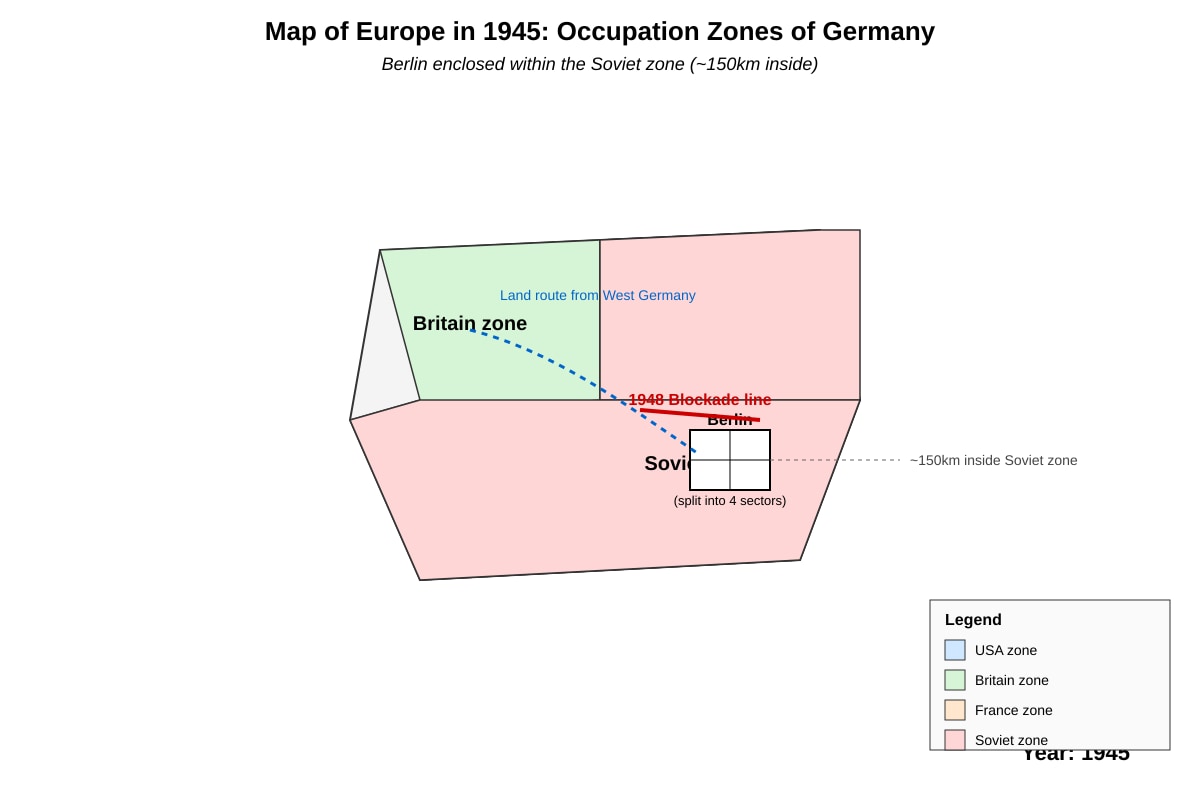
Q15. [3] Map shows Berlin inside Soviet zone (1); all land routes crossed Soviet area (1); blockade could starve city without attack, hard to supply except air (1). Image need: see placeholder Q15-fig1.
Q16. [2] Vietnam War; USA vs USSR/China (or Malayan Emergency; Britain vs MCP/communist). 1+1.
Q17. [2] Malayan Communist Party fought for independence (1); Britain saw as Cold War threat, used emergency powers (1).
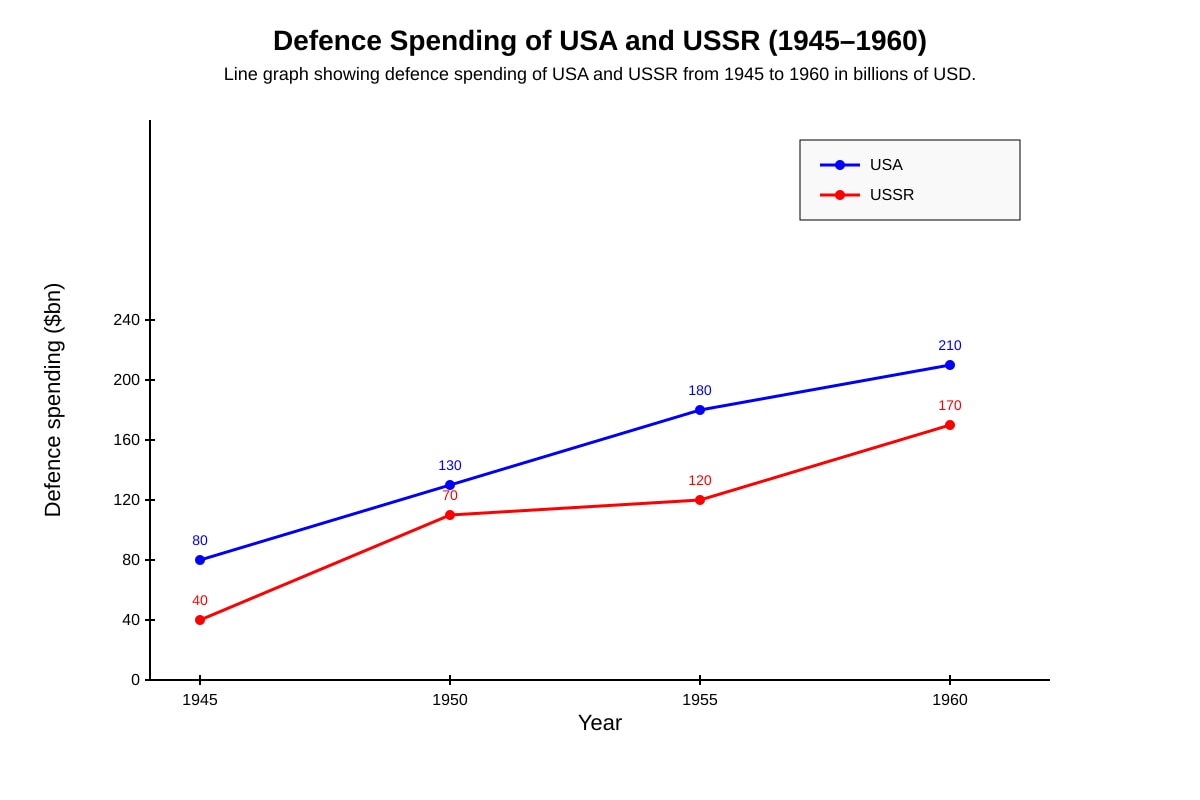
Q18. [3] Both lines rise (1); USSR nears US by 1960 (1); more arms = more conflict risk (1). Image need: Q18-fig1 values.
Q19. [2] USSR placed nuclear missiles in Cuba (1); US blockade nearly caused launch (1).
Q20. [3] Agree: no USSR, less ideology war (1). Disagree: ethnic, resource wars continue (1). Conclusion: less ideological, not less conflict (1).