From Real Exams Quiz
O Level History Source Based Skills Quiz
Free O Level History Source Based Skills quiz, HY3 Exam version, with questions, answers, and O Level-style practice for Singapore students.
These static practice materials are generated from the site's syllabus and paper-generation workflow, with source and model context shown so students and parents can evaluate the material before use.
Questions
O-Level History Quiz - Source Based Skills
Name: ___________________________
Class: ___________________________
Date: ___________________________
Score: ___________________________
Duration: 60 minutes
Total Marks: 40
Instructions:
This quiz tests your source-based skills for O-Level History. Read each source carefully. Answer all 20 questions. Use the sources and your own knowledge where asked. Write your answers in the spaces provided.
Section A: Single Source Analysis (Questions 1–7)
Source A
"The signing of the 1824 Anglo-Dutch Treaty was a necessary step to avoid conflict between two trading empires. Our merchants in the Straits Settlements can now trade without fear of Dutch interference."
— Letter from a British trader in Singapore, 1825
1. Study Source A. Why do you think the British trader wrote this letter? Explain your answer. [5]
Source B
A cartoon published in a London newspaper in 1936 shows a large figure labelled "League of Nations" holding a tiny broken sword, while a crowd of men labelled "Aggressor States" laugh in the background.
2. Study Source B. Why did the cartoonist publish this cartoon? Explain your answer. [5]
Source C
"We joined the Nazi Party because Hitler promised us jobs and a proud Germany. The unemployment after the Great Depression destroyed our families."
— Memoir of a German worker, 1938
3. Study Source C. How useful is this source as evidence of why Germans supported the Nazi Party? Explain your answer. [6]
Source D
"The Vietnam War was a noble cause to stop the spread of communism in Southeast Asia. Our soldiers fought bravely to protect the free world."
— Speech by a US military officer, 1968
4. Study Source D. Why do you think the US military officer gave this speech? Explain your answer. [5]
Source E
A Japanese government report from 1932 stating: "The Manchurian incident was caused by local Chinese bandits. Japan's action was purely to restore order and protect its citizens."
5. Study Source E. How useful is this source as evidence of Japan's reason for invading Manchuria? Explain your answer. [6]
Source F
"The Federated Malay States brought modern roads and schools. But the Malay rulers lost real power to the British Residents."
— History textbook written in Malaya, 1950
6. Study Source F. Why do you think the textbook author included both positive and negative points? Explain your answer. [5]
Source G
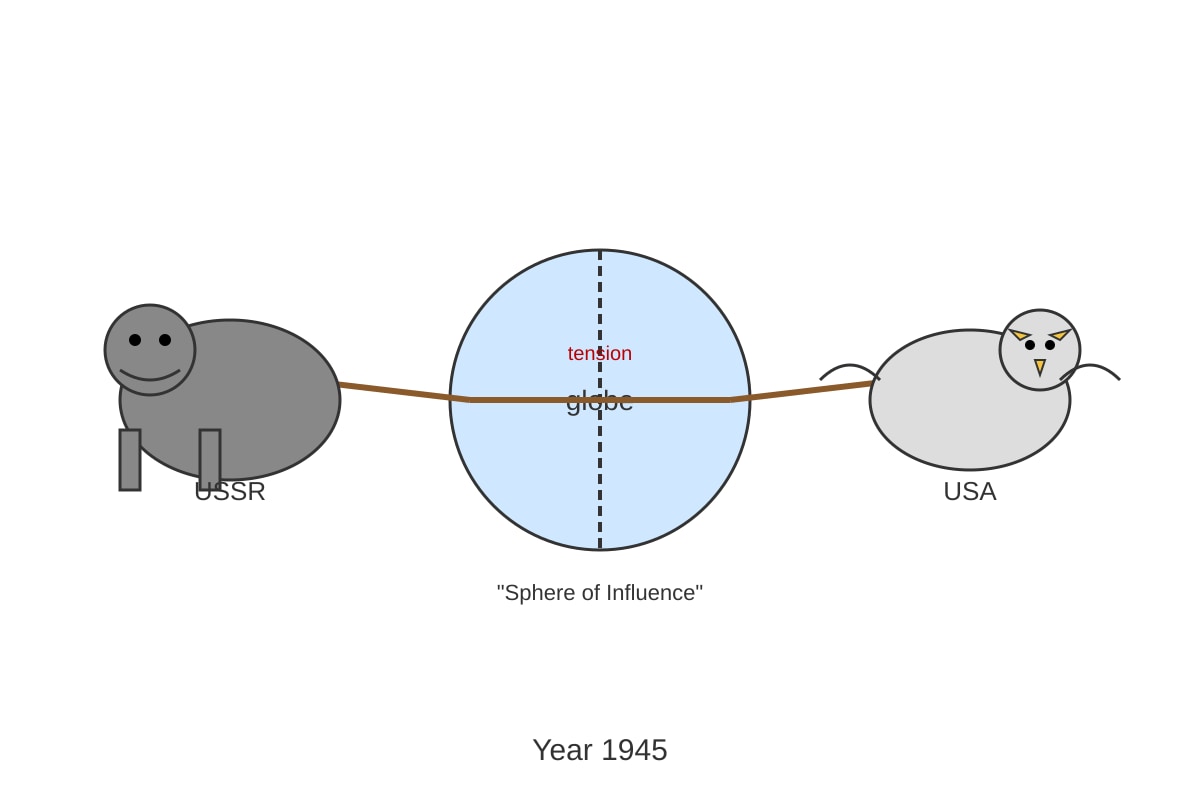
Image pending generation: cartoon for 7.
7. Study Source G (cartoon). Why did the cartoonist publish this cartoon? Explain your answer. [5]
Section B: Comparative Source Analysis (Questions 8–13)
Source H
"Hitler's policies gave Germans full employment by 1939. The autobahns and rearmament lifted the economy."
— German propaganda leaflet, 1939
Source I
"Ordinary Jews were arrested and sent to camps. Political opponents vanished. Fear ruled daily life."
— Diary of a German teacher, 1938
8. Study Sources H and I. How far does Source I prove that Source H was wrong about Nazi Germany? Explain your answer. [6]
Source J
"The League failed because the USA never joined. Without the world's richest power, sanctions meant nothing."
— British historian, 1935
Source K
"The League failed because Britain and France were selfish and did not enforce collective security."
— French newspaper, 1936
9. Study Sources J and K. How far would the creators of these sources have agreed with each other? Explain your answer. [6]
Source L
"Decolonisation in Malaya was peaceful because the British prepared locals for self-rule through councils."
— British colonial report, 1957
Source M
"The Malayan Emergency showed violence. Communists fought the British for eight years before independence."
— Singapore newspaper, 1960
10. Study Sources L and M. How different are these two sources about decolonisation in Malaya? Explain your answer. [6]
Source N
"Stalin's blockade of Berlin was to force the West out of the city."
— US radio broadcast, 1948
Source O
"The Berlin Blockade was a defensive move against Western plans to rebuild Germany's army."
— Soviet newspaper, 1948
11. Study Sources N and O. How far does Source O prove that Source N was wrong? Explain your answer. [6]
Source P
"Rubber plantations made Malaya rich but workers lived in poor quarters."
— Photo caption, 1920
Source Q
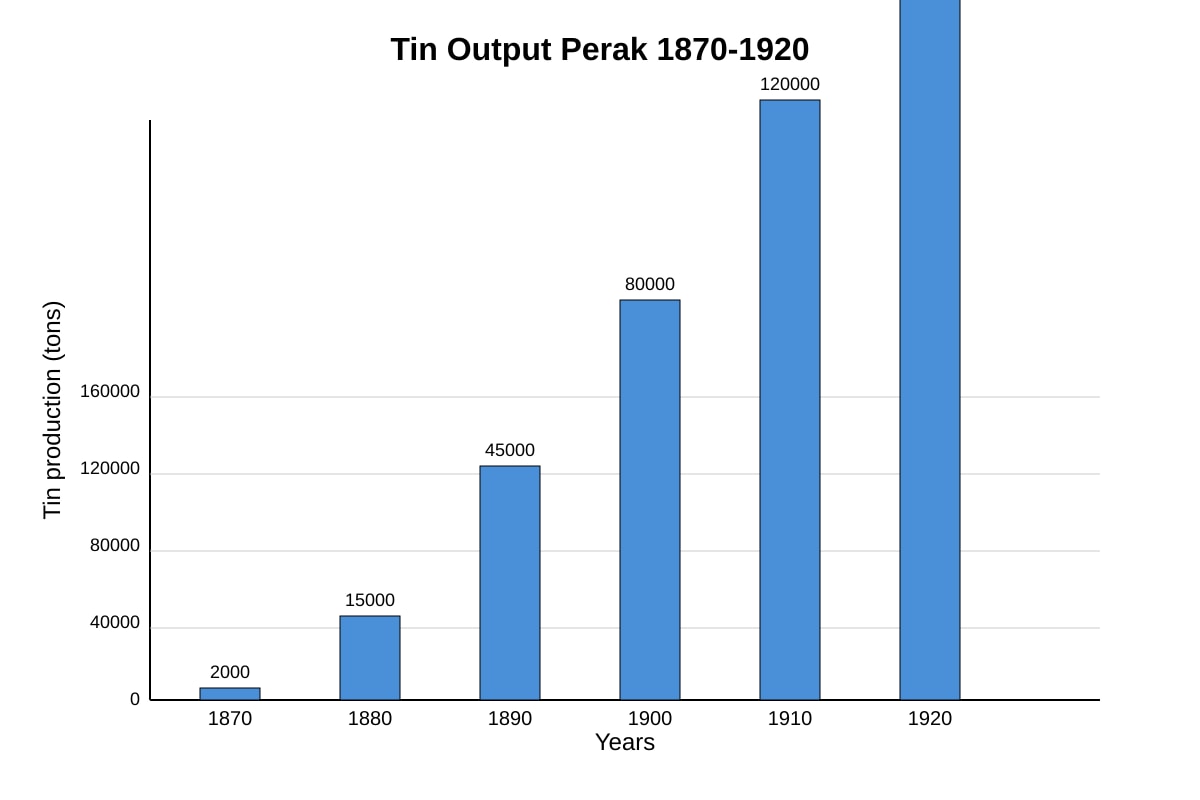
Image pending generation: graph for 12.
12. Study Source P and Source Q (graph). How far do these sources agree about economic change in British Malaya? Explain your answer. [5]
Source R
"The Treaty of Versailles was too harsh and caused German anger."
— German newspaper, 1919
Source S
"The Treaty of Versailles was fair punishment for starting the war."
— French magazine, 1919
13. Study Sources R and S. How far would the creators have agreed about the Treaty of Versailles? Explain your answer. [5]
Section C: Multi-Source Synthesis (Questions 14–20)
Source T
"Hitler broke the Treaty of Versailles by rebuilding the army in 1935."
— British diplomat's note, 1935
Source U
"The Great Depression made Germans desperate enough to follow any strong leader."
— Economist's article, 1934
Source V
"Old generals wanted to restore Germany's honour after 1918 defeat."
— Memoir of a Wehrmacht officer, 1952
Source W
"Churchill warned in 1933 that Hitler meant war but no one listened."
— Biography of Churchill, 1960
14. Study Sources T, U, V, W. "Hitler alone was to blame for Germany's road to World War II." How far do these sources support this view? Use the sources and your knowledge to explain your answer. [8]
Source X
"The USA sent troops to Vietnam to contain communism as part of Cold War strategy."
— US government paper, 1965
Source Y
"Vietnamese saw the war as a fight for national independence from foreigners."
— Interview with villager, 1970
Source Z
"The war divided American society with protests at home."
— News report, 1969
15. Study Sources X, Y, Z. "The Vietnam War was only about Cold War politics." How far do these sources support this view? Use the sources and your knowledge to explain your answer. [8]
16. Study Sources A, F, L. "British policy in Southeast Asia always benefited locals." How far do these sources support this view? Use the sources and your knowledge to explain your answer. [8]
17. Study Sources B, J, N. "The League of Nations and collective security failed because of aggressive dictators." How far do these sources support this view? Use the sources and your knowledge to explain your answer. [8]
18. Study Sources C, H, U. "Economic suffering was the main reason for the rise of authoritarian regimes." How far do these sources support this view? Use the sources and your knowledge to explain your answer. [8]
19. Study Sources E, O, T. "Japan and Germany acted aggressively because they were threatened by others." How far do these sources support this view? Use the sources and your knowledge to explain your answer. [8]
20. Study Sources G, X, Z. "The Cold War was a struggle between two superpowers that affected ordinary people." How far do these sources support this view? Use the sources and your knowledge to explain your answer. [8]
Answers
O-Level History Quiz - Source Based Skills (Answer Key)
Total Marks: 40
Duration: 60 minutes
Section A: Single Source Analysis (Q1–7)
Q1. [5 marks]
Teaching note: A single-source purpose question asks WHY a source was created, not what it says.
- The British trader wrote to justify or support the 1824 Anglo-Dutch Treaty (1 mark).
- He was a merchant who benefited from peaceful trade (1 mark).
- He wanted to reassure others or persuade critics that the treaty protected British interests (1 mark).
- Context: After 1824, British and Dutch spheres were divided, reducing conflict (1 mark).
- He used the letter to express relief and promote continued trade without Dutch interference (1 mark).
Common mistake: Stating only "to describe the treaty" without inferring motive.
Q2. [5 marks]
- Cartoonist published to criticise the League's weakness (1 mark).
- The broken sword shows the League could not enforce decisions (1 mark).
- Laughing aggressors show dictators ignored the League (1 mark).
- Purpose: warn the public that collective security had failed by 1936 (1 mark).
- Used humour/satire to shape opinion on appeasement (1 mark).
Marking: 5 marks for 5 clear points linking visual to motive.
Q3. [6 marks]
Usefulness = provenance + content + bias + limit.
- Useful: firsthand memoir of a worker, shows real motive (jobs, pride) (2 marks).
- Provenance: written 1938, under Nazi rule, may be pressured to praise (1 mark).
- Bias: only one view, ignores terror/persecution (1 mark).
- Limit: does not show why middle-class or Jews supported or opposed (1 mark).
- Conclusion: partially useful for economic/social appeal but not full picture (1 mark).
Teaching: Always balance usefulness with limitation.
Q4. [5 marks]
- Officer gave speech to justify US involvement (1).
- To maintain public support for war (1).
- To frame war as noble anti-communist duty (1).
- Context: Cold War containment policy (1).
- Persuade soldiers/families it was worthwhile (1).
Q5. [6 marks]
- Useful: official report shows Japan's stated reason (2).
- Provenance: Japanese gov 1932, biased, wants to hide aggression (1).
- Content: blames "bandits", hides military plan (1).
- Limit: no Chinese view, no evidence of bandits (1).
- Partial: tells us excuse used, not real cause (1).
Q6. [5 marks]
- Author included both to appear balanced (1).
- Shows development came with cost to Malay power (1).
- Textbook after 1945 could criticise British safely (1).
- Educate readers on mixed legacy (1).
- Context: nationalist feeling rising by 1950 (1).
Q7. [5 marks]
Based on placeholder: Cartoon shows USSR bear and USA eagle pulling globe, 1945.
- Cartoonist published to show emerging superpower divide (1).
- Rope = tension/competition (1).
- 1945 = start of Cold War rivalry (1).
- Satirise how two powers controlled world (1).
- Warn of future conflict (1).
Section B: Comparative Source Analysis (Q8–13)
Q8. [6 marks]
- H says economy improved; I says terror existed (1).
- I does not prove H wrong on jobs (1).
- Both can be true: jobs + fear (1).
- I shows dark side H hides (1).
- Not "wrong" but incomplete (1).
- Context: Nazi Germany had both recovery and repression (1).
Q9. [6 marks]
- Both agree League failed (1).
- J blames USA absence; K blames Brit/Fr selfishness (1).
- Different cause, same conclusion (1).
- Would partly agree on failure (1).
- Disagree on responsibility (1).
- Context: 1935–36 crises (1).
Q10. [6 marks]
- L says peaceful via councils; M says violence via Emergency (1).
- Different: method and tone (1).
- L is colonial view, M is local news (1).
- Both about decolonisation path (1).
- Not contradictory: prepare then fight (1).
- Show complexity (1).
Q11. [6 marks]
- N says USSR offensive; O says defensive (1).
- O contradicts N's motive (1).
- But O is Soviet bias (1).
- Does not prove N factually wrong (1).
- Different perspectives of same event (1).
- Context: 1948 blockade (1).
Q12. [5 marks]
- P says rich from rubber; Q shows tin rose (1).
- Both show economic growth (1).
- P adds social cost; Q only output (1).
- Agree on growth, differ on impact (1).
- Context: British Malaya export economy (1).
Q13. [5 marks]
- R says too harsh; S says fair (1).
- Opposite views (1).
- German vs French perspective (1).
- Would not agree (1).
- Context: winner/loser of WWI (1).
Section C: Multi-Source Synthesis (Q14–20)
Q14. [8 marks]
Statement: Hitler alone to blame.
- T: Hitler broke treaty (supports blame) (1).
- U: Depression helped him (others' fault) (1).
- V: generals wanted honour (shared) (1).
- W: others ignored warning (not alone) (1).
- Knowledge: Versailles, Weimar weakness (1).
- Judgement: not alone, many factors (1).
- Sources show shared/causal context (1).
- Conclusion: partially support, but not alone (1).
Q15. [8 marks]
- X: Cold War containment (supports) (1).
- Y: national independence (against) (1).
- Z: divided US society (broader impact) (1).
- Knowledge: Viet Minh, colonialism (1).
- Not only Cold War (1).
- Vietnamese nationalism key (1).
- Sources mixed (1).
- Judge: partly, but oversimplifies (1).
Q16. [8 marks]
- A: trade benefit (supports) (1).
- F: schools but lost power (mixed) (1).
- L: peaceful prep (supports) (1).
- Knowledge: exploitation, plural society (1).
- Not always benefit (1).
- Local elite gained, masses less (1).
- Sources show limits (1).
- Judge: not always (1).
Q17. [8 marks]
- B: aggressors laughed (supports) (1).
- J: USA absent (other cause) (1).
- N: USSR blockade (supports) (1).
- Knowledge: 1930s crises (1).
- Dictators key but not only (1).
- Structural flaw too (1).
- Sources partly support (1).
- Judge: yes but incomplete (1).
Q18. [8 marks]
- C: unemployment (supports) (1).
- H: jobs via Nazis (supports) (1).
- U: depression desperation (supports) (1).
- Knowledge: inflation, 1929 (1).
- Strong support (1).
- But ideology also (1).
- Sources back claim (1).
- Judge: mainly yes (1).
Q19. [8 marks]
- E: bandits forced Japan (supports) (1).
- O: West threatened USSR (supports) (1).
- T: Hitler broke treaty (against) (1).
- Knowledge: expansion aims (1).
- Not threatened, aggressive (1).
- Sources are excuses (1).
- Judge: do not support (1).
- Conclusion: sources are biased defence (1).
Q20. [8 marks]
- G: two powers split world (supports) (1).
- X: US strategy (supports) (1).
- Z: protests at home (affected people) (1).
- Knowledge: proxy wars (1).
- Ordinary impacted (1).
- Superpower struggle clear (1).
- Sources support (1).
- Judge: fully support (1).
Free quiz and exam paper access
Enter your details to view this paper
Your access is remembered on this device.