AI Generated Quiz
O Level English Composition Situational Writing Quiz
Free O Level English Situational Writing quiz, Qwen3.7 AI version, with questions, answers, and O Level-style practice for Singapore students.
These static practice materials are generated from the site's syllabus and paper-generation workflow, with source and model context shown so students and parents can evaluate the material before use.
Questions
Free quiz and exam paper access
Enter your details to view this paper
Your access is remembered on this device.
Answers
O-Level English Quiz - Composition Situational Writing (Answer Key)
General Marking Note: For Situational Writing, marks are awarded for:
- Content (CR): Addressing all bullet points in the prompt.
- Language (LA): Accuracy, tone, and register.
- Format (F): Correct layout for the specific text type.
Section A: Analysis of Visual Stimulus and Task Requirements
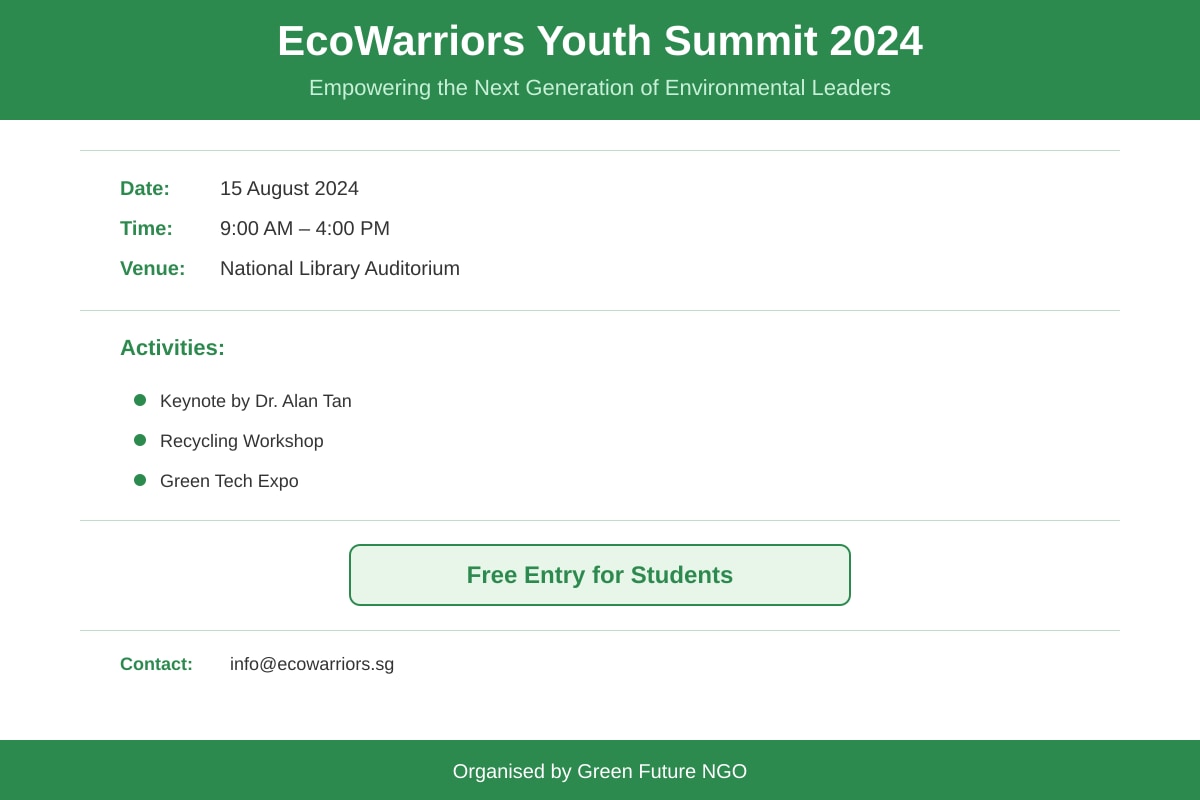
1. Role: President of the Environmental Club. [1]
- Explanation: The scenario explicitly states "You are the President...". Identifying the role helps determine the level of authority and responsibility in the tone.
2. Target Audience: Club members (students/peers). [1]
- Explanation: The task is to write to "club members". This implies a peer-to-peer relationship, though with a leadership dynamic.
3. Purpose: To encourage/persuade members to attend the EcoWarriors Youth Summit. [1]
- Explanation: The key verb is "encourage". The writer wants to drive action (attendance).
4. Tone: Semi-formal / Persuasive / Enthusiastic. [1]
- Explanation: Since the audience is peers (club members), it should not be overly stiff (formal) but must remain respectful and organized (semi-formal). It needs enthusiasm to persuade.
5. Format: Email. [1]
- Explanation: The task specifies "write an email". Key features: To, From, Subject Line, Salutation, Body, Sign-off.
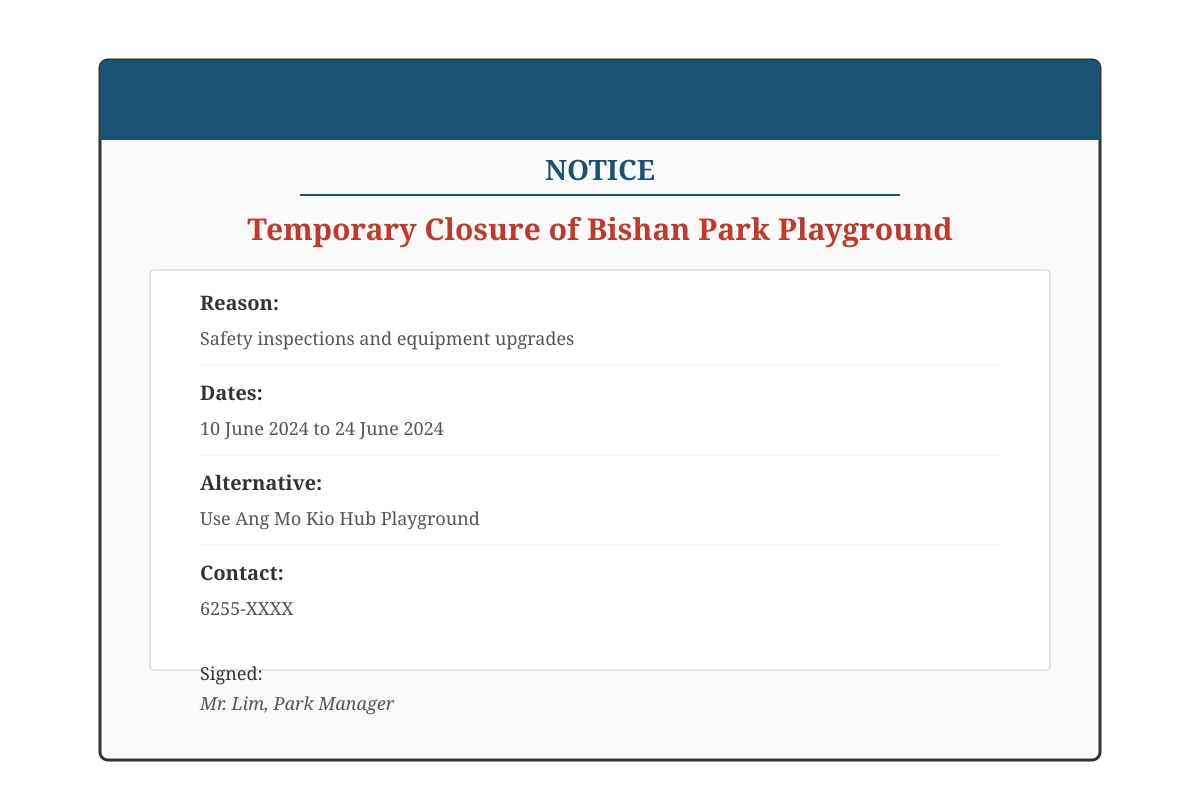
6. Recipient: Mr. Lim, Park Manager (City Council Parks Department). [1]
- Explanation: The scenario states "write a formal letter to the Park Manager, Mr. Lim".
7. Salutation: Dear Mr. Lim, [1]
- Explanation: For a formal letter where the name is known, use "Dear [Title] [Surname],".
8. Complimentary Close: Yours sincerely, [1]
- Explanation: When the salutation uses the recipient's name (Dear Mr. Lim), the close is "Yours sincerely". If it were "Dear Sir/Madam", it would be "Yours faithfully".
9. Content Points: [2]
-
- Reference the temporary closure dates (10–24 June 2024).
-
- Ask for specific details regarding the "safety inspections and equipment upgrades" (e.g., what exactly is being upgraded?).
- Explanation: The letter must show you read the notice (dates) and have a clear reason for writing (clarification on upgrades).
10. Reason for Formal Tone: To show respect and maintain professional standards when addressing a government official/manager. [1]
- Explanation: Formal tone establishes credibility and respect in official correspondence.
Section B: Content Selection and Organisation
11. Introduction Focus: State the purpose of the proposal clearly (seeking approval/funding for the Charity Fun Run). [1]
- Explanation: The introduction must immediately inform the reader what the document is about and what is being requested.
12. Essential Content Points: [3]
-
- Event Details: Date, time, venue, and route of the fun run.
-
- Financials: Estimated budget, funding required, and how funds will be raised/used.
-
- Benefits: How this benefits the school (CCAs points, community service hours) and the orphanage.
- Explanation: A proposal needs logistics, money, and justification.
13. Structure of Benefits Section: Use bullet points or clear paragraphs to highlight distinct advantages (e.g., community impact, student engagement). [1]
- Explanation: Clarity is key in proposals. Bullet points make benefits easy to scan for the decision-maker.
14. Importance of Budget Breakdown: To demonstrate financial responsibility and transparency, showing exactly how the requested funds will be spent. [1]
- Explanation: Principals need to know the money is being used wisely. A vague budget is often rejected.
15. Closing for Proposal: A polite request for consideration/approval, e.g., "I hope you will consider this proposal favourably." [1]
- Explanation: The closing should reiterate the request politely and professionally.
16. Primary Goal of Review: To inform readers about the experience and provide a recommendation (whether to visit or not). [1]
- Explanation: Reviews are evaluative. They help others make decisions.
17. Positive Aspects (Invented): [2]
-
- Comfortable seating/ambiance.
-
- Good variety of snacks/drinks.
- Explanation: Even in a negative review, mentioning positives adds credibility and balance.
18. Presenting Criticism: Be specific and objective. Instead of "It was bad," say "The Wi-Fi speed was insufficient for research, dropping connection every 10 minutes." [1]
- Explanation: Constructive criticism provides evidence, not just emotion.
19. Recommendation: "I would only recommend this cafe for casual reading, not for serious study sessions requiring internet access." [1]
- Explanation: The recommendation must align with the criticisms raised.
20. Importance of Catchy Title: To grab the reader’s attention and indicate the topic/tone of the review immediately. [1]
- Explanation: In a newsletter, many articles compete for attention. A good title draws the reader in.