From Real Exams Quiz
O Level English Comprehension Quiz
Free O Level English Comprehension quiz, HY3 Exam version, with questions, answers, and O Level-style practice for Singapore students.
These static practice materials are generated from the site's syllabus and paper-generation workflow, with source and model context shown so students and parents can evaluate the material before use.
Questions
Free quiz and exam paper access
Enter your details to view this paper
Your access is remembered on this device.
Answers
O-Level English Quiz - Comprehension: Answer Key
Total Marks: 50
Section A: 5 marks | Section B: 20 marks | Section C: 25 marks
Section A Answers (Q1–5)
Q1. (1 mark)
Answer: March
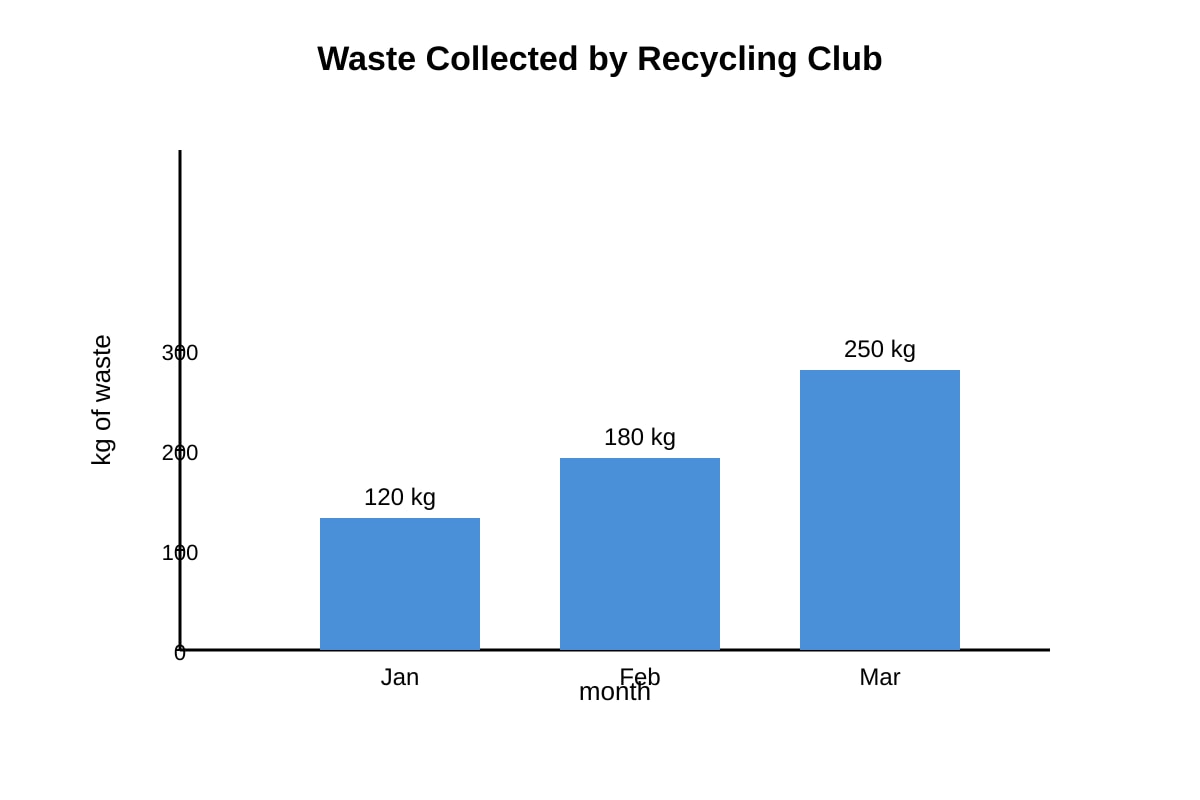
Teaching note: Read the bar chart values — Jan 120 kg, Feb 180 kg, Mar 250 kg. The highest bar is March. Common mistake: picking Feb due to misreading the y-axis.
Q2. (1 mark)
Answer: Any one from Text 1, e.g., "to protect the environment" / "to make friends" / "to reduce waste".
Teaching note: Locate a reason stated on the poster. Accept only reasons present in Text 1.
Q3. (1 mark)
Answer: The club collected more waste each month (progress/improvement).
Teaching note: The values increase Jan→Mar, showing growth. Mark for stating increasing trend.
Q4. (1 mark)
Answer: To keep something safe from harm / to prevent damage to the environment.
Teaching note: In context, "protect" means guarding the environment from waste harm.
Q5. (1 mark)
Answer: It shows real data proving the club is successful, making the poster's invitation more convincing.
Teaching note: Visual supports textual message by providing evidence.
Section B Answers (Q6–15)
Q6. (1 mark)
Answer: "She had promised her brother Danial she would help him fix the fence"
Teaching note: This shows she puts others first by keeping a promise to help.
Q7. (2 marks)
Mark breakdown: 1 mark for each identified evidence.
Answer: (a) Message from friend "Come to the mall now" pulls her away; (b) She whispered she wants to be free but promised to help.
Teaching note: Shows internal conflict between duty and desire.
Q8. (1 mark)
Answer: Conflicted / wistful / longing (accept resigned).
Teaching note: Tone reveals desire vs duty. Not "happy" or "angry".
Q9. (2 marks)
Mark breakdown: 1 mark stating irony, 1 mark explaining why.
Answer: It is ironic because she says she always puts others first, yet she is tempted to abandon her brother for her own freedom.
Teaching note: Gap between stated self-view and actual wish = irony.
Q10. (1 mark)
Answer: His expression gave no clear emotion / unreadable = unclear.
Teaching note: Literal meaning: cannot be read/interpreted.
Q11. (2 marks)
Answer: e.g., "free" (freedom) and "help" (duty) — or "others" and "myself".
Teaching note: One word showing freedom, one showing duty.
Q12. (2 marks)
Mark breakdown: 1 mark identifying contrast, 1 mark language method.
Answer: Friend's message is urgent/casual ("Come now, everyone's here"), Danial's is quiet/calm ("You said you'd help"). Writer uses tone difference to contrast social pull vs family duty.
Teaching note: Contrast via tone and word choice.
Q13. (2 marks)
Mark breakdown: 1 mark atmosphere, 1 mark link to feeling.
Answer: Suggests tension/calm-before-storm; reflects Siti's unease and pending decision.
Teaching note: Personification of storm mirrors emotion.
Q14. (1 mark)
Answer: "his face unreadable" / "he said quietly" (not angry).
Teaching note: Quiet tone shows no anger.
Q15. (2 marks)
Mark breakdown: 1 mark setting link, 1 mark feeling link.
Answer: Storm clouds and wind show approaching pressure; mirrors Siti's rising conflict and unease.
Teaching note: Pathetic fallacy — weather reflects mood.
Section C Answers (Q16–20)
Q16. (1 mark)
Answer: "schools should teach self-regulation rather than impose strict bans"
Teaching note: Supports balanced approach, not total ban.
Q17. (1 mark)
Answer: Controlling one's own behaviour / managing own use.
Teaching note: Self-regulation = student manages self.
Q18. (2 marks)
Mark breakdown: 1 mark each view.
Answer: Parents see phones as distraction; teachers see controlled use aids research. Writer places views side by side.
Teaching note: Contrasting stakeholder perspectives.
Q19. (2 marks)
Mark breakdown: 1 mark bad, 1 mark good.
Answer: Bad: reduces attention, disturbs sleep. Good: enables learning via apps.
Teaching note: Both effects cited in paragraph 1.
Q20. Summary (19 marks)
Marking descriptors:
- Content (8 marks): Points from Text 4 — HPB says excess screen harms attention/sleep; screens help learning; report urges balance not bans; teach self-regulation; parents vs teachers views; students manage wisely.
- Use of own words (5 marks): Paraphrase, no copy.
- Organisation (4 marks): Logical flow, ~80 words.
- Precision (2 marks): Clear, no irrelevant.
Sample answer (teaching):
Schools are updating rules because studies show too much screen use lowers focus and sleep quality, though devices aid learning. A report advises balance, not bans, and urges teaching students to control usage. While some parents see phones as distracting, educators note guided use builds research ability. Thus, pupils should learn wise device management. (78 words)
Teaching note: Show students how to merge paragraphs 1–2, drop examples, use synonyms.