AI Generated Exam Paper
O Level English Practice Paper 5
Free O Level English Practice Paper 5, HY3 AI version, with questions, answers, and O Level-style practice for Singapore students.
These static practice materials are generated from the site's syllabus and paper-generation workflow, with source and model context shown so students and parents can evaluate the material before use.
Questions
TuitionGoWhere Practice Paper - English O-Level
TuitionGoWhere Practice Paper (AI) — Version 5
Subject: English
Level: O-Level
Paper: Practice Paper (Comprehension Focus)
Duration: 1h 50min
Total Marks: 50
Name:
Class:
Date:
Instructions:
- This practice paper is generated from LLM-inferred templates based on syllabus patterns. It is NOT an official past-year paper.
- Answer all questions in the spaces provided.
- Read each passage carefully before answering.
- Section marks are shown at the end of each section. Question marks add up to the Total Marks exactly.
Passage A (for Section A)
Text 1:
The new community library opened last month to a quiet reception. According to the town council, over 300 residents signed up for membership in the first two weeks. A survey conducted by the library showed that 60% of visitors were students aged 10–18. The remaining visitors were mostly retirees who welcomed a cool, quiet place to read.
Text 2:
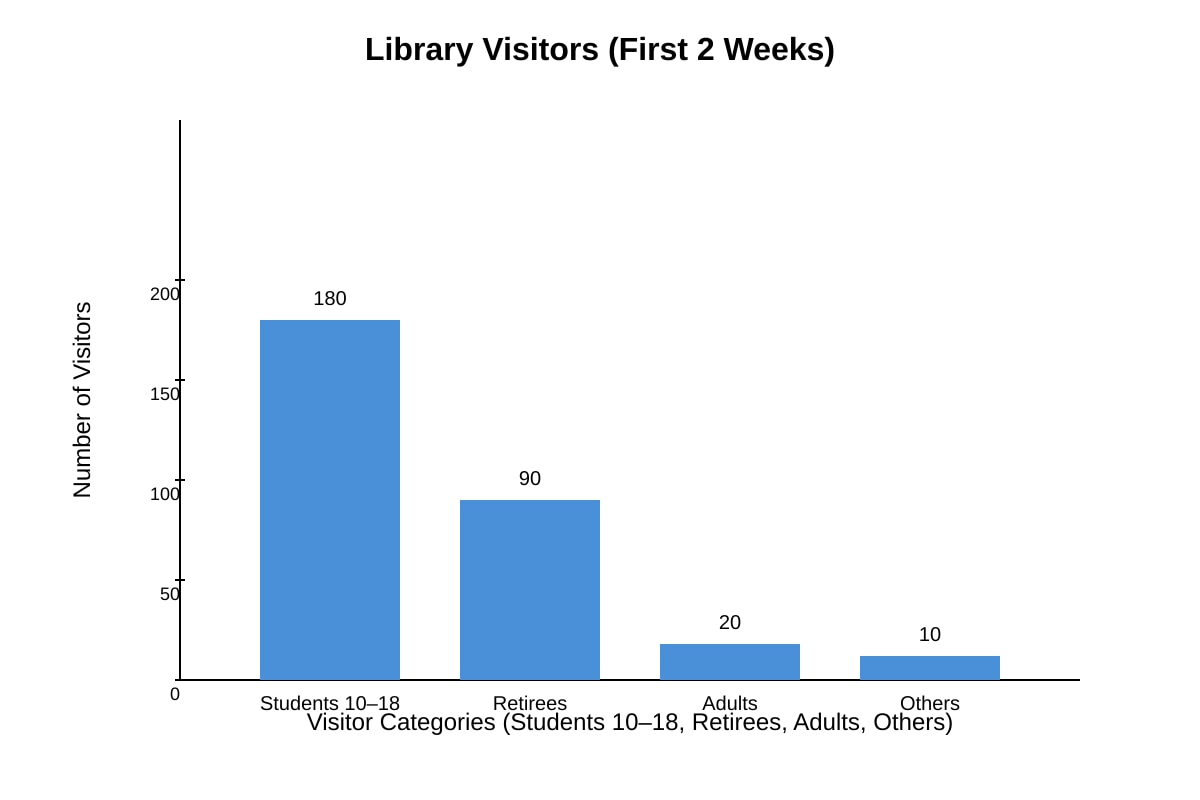
Image pending generation: chart for Q1.
The chart above supports the survey findings from Text 1.
Section A (5 marks)
1. Using the chart linked to Text 2, identify one piece of evidence that shows students aged 10–18 were the largest group of visitors. [1]
2. From Text 1, identify one detail that shows the library received a "quiet reception". [1]
3. What does the phrase "cool, quiet place" in Text 1 suggest about the retirees' reason for visiting? [1]
4. Based on Text 1 and Text 2, give one reason why the library's opening could be considered successful. [1]
5. Explain how the writer uses the statistic "300 residents" to inform the reader. [1]
Section A Total: 5 marks
Passage B (for Section B)
Text 3:
(1) The rain had not stopped for three days. (2) Rivers that were once gentle streams now swallowed the bridges whole. (3) Amina watched from her window as the water crept toward her gate. (4) She remembered her father's words: "The river gives, but it also takes." (5) By nightfall, the village was cut off, yet Amina felt a strange calm. (6) "We have survived before," she whispered, "and we will again."
Section B (20 marks)
6. In paragraph 1 (line 1), what evidence is there that the weather was extreme? [1]
7. Identify two words from lines 2–3 that show the danger faced by the village. [2]
8. What does the phrase "swallowed the bridges whole" (line 2) suggest about the river? [2]
9. Explain the irony in paragraph 4 (line 4) where Amina remembers her father's words. [2]
10. What is the tone of Amina's comment in line 6? Support with evidence. [2]
11. How does the writer create a contrast between line 1 and line 5? [2]
12. In paragraph 5, what does the word "calm" suggest about Amina's character? [1]
13. Explain why Amina says "We have survived before" (line 6). Use evidence from the text. [2]
14. Identify one example from paragraph 3 that shows Amina's observation of the flood. [1]
15. How does the writer use imagery in line 2 to create impact? [2]
16. What does the writer mean by "the river gives, but it also takes" (line 4)? [2]
17. Find an expression in paragraph 5 that has a contrasting idea to paragraph 3. [1]
18. Explain how the structure of the passage (short sentences) affects the reader. [2]
19. Identify the mood created in the final paragraph and support with a quote. [2]
20. Summarise in your own words the main threat described in Text 3. (Not assessed in summary word count; 2 marks) [2]
Section B Total: 20 marks
Passage C (for Section C)
Text 4:
(1) Social media has changed how young people relate to news. (2) A 2022 study found that 75% of teens get news from platforms like Instagram and TikTok rather than newspapers. (3) Critics argue this leads to shallow understanding, as posts are brief and lack context. (4) However, supporters say it increases awareness of global issues among youth. (5) Schools should teach media literacy so students can judge sources critically. (6) Without such skills, misinformation may spread unchecked.
Section C (25 marks)
21. From paragraph 2, identify one statistic that shows the shift in news consumption. [1]
22. What does "shallow understanding" (paragraph 3) suggest about the critics' view? [2]
23. Explain how the writer presents both sides of the argument in paragraphs 3–4. [2]
24. How does the writer use the word "however" (paragraph 4) to effect contrast? [2]
25. Identify two separate words from paragraph 5 that show the writer's suggested action. [2]
26. In paragraph 6, what evidence is there that misinformation is a risk? [1]
27. Explain the writer's purpose in paragraph 5. [2]
28. Compare the tone of paragraph 3 and paragraph 4. [3]
29. How does the use of "75%" in paragraph 2 strengthen the writer's point? [2]
30. Summary Writing: Using your own words, summarise the main views about social media and news in Text 4 in about 80 words. [8]
Section C Total: 25 marks
Total Marks: 50
Answers
TuitionGoWhere Practice Paper - English O-Level (Answer Key)
Version 5 — AI Generated (Not official)
Section A Answers (5 marks)
Q1. [1] Students 10–18 bar is highest at 180 visitors (from chart Q1-fig1).
Teaching note: Read the bar chart values; the tallest bar = largest group. Expected visual: bar labelled Students 10–18 with height 180.
Q2. [1] "opened last month to a quiet reception" — implies low immediate public attention.
Mark: 1 for quoting/paraphrasing the phrase.
Q3. [1] It suggests retirees wanted relief from heat and a peaceful environment.
Mark: 1 for linking "cool, quiet" to comfort/escape.
Q4. [1] 300 signed up in 2 weeks / chart shows strong student uptake.
Mark: 1 for valid reason from data.
Q5. [1] It informs the reader of concrete membership numbers to show real community interest.
Mark: 1 for explaining statistic as factual support.
Section A subtotal: 5
Section B Answers (20 marks)
Q6. [1] "rain had not stopped for three days" shows continuous extreme weather.
Q7. [2] "swallowed", "crept" (or "bridges", "gate" as danger markers) — 1 each.
Q8. [2] Suggests river became violently powerful, consuming structures; literal: engulfed bridges. 1 for power, 1 for effect.
Q9. [2] Irony: father says river "gives and takes" — now it "takes" by flooding. 1 for quote, 1 for explanation of contrast.
Q10. [2] Tone: hopeful/resolute. Evidence: "we will again". 1 tone, 1 evidence.
Q11. [2] Contrast: line 1 "rain not stopped" (chaos) vs line 5 "strange calm" (peace). 1 each side.
Q12. [1] Suggests she is composed under pressure.
Q13. [2] Because village survived past floods (implied by "before"). 1 reason, 1 evidence.
Q14. [1] "watched from her window as water crept toward gate".
Q15. [2] Imagery "swallowed bridges whole" exaggerates river force, creating fear. 1 technique, 1 effect.
Q16. [2] Means river provides (water/life) but also destroys (floods). 1 each.
Q17. [1] "strange calm" contrasts "crept toward gate".
Q18. [2] Short sentences increase tension, pace reader. 1 structure, 1 effect.
Q19. [2] Mood: hopeful. Quote: "we will again". 1 mood, 1 quote.
Q20. [2] Main threat: rising flood cutting off village. 1 threat, 1 own words.
Section B subtotal: 20
Section C Answers (25 marks)
Q21. [1] "75% of teens get news from platforms..."
Q22. [2] Critics think brief posts = poor depth. 1 view, 1 reason.
Q23. [2] Para3 critic view, Para4 supporter view via "However". 1 each.
Q24. [2] "However" signals opposite point, shifting from negative to positive. 1 word, 1 function.
Q25. [2] "teach", "judge" (from para5). 1 each.
Q26. [1] "misinformation may spread unchecked".
Q27. [2] Purpose: urge media literacy education. 1 purpose, 1 link.
Q28. [3] Para3 critical/negative, Para4 positive/defensive. 1 tone each, 1 comparison.
Q29. [2] Exact figure adds credibility to claim. 1 number, 1 effect.
Q30. [8] Summary (~80 words):
Marking descriptors: Use own words (2), cover both critic & supporter (2), include school action (2), concise & clear (2).
Model: A 2022 study shows most teens use social media for news, not papers. Critics say this causes shallow understanding due to brief posts, but supporters believe it raises global awareness. Schools should teach media literacy to help students assess sources and stop misinformation. (78 words)
Section C subtotal: 25
Total: 50 marks
Free quiz and exam paper access
Enter your details to view this paper
Your access is remembered on this device.