From Real Exams Exam Paper
O Level English Practice Paper 3
Free O Level English Practice Paper 3, HY3 Exam version, with questions, answers, and O Level-style practice for Singapore students.
These static practice materials are generated from the site's syllabus and paper-generation workflow, with source and model context shown so students and parents can evaluate the material before use.
Questions
TuitionGoWhere Exam Practice (AI) - English O-Level Practice Paper
School: TuitionGoWhere Exam Practice (AI)
Subject: English
Level: O-Level
Paper: Practice Paper 2 – Comprehension (Version 3 of 5)
Duration: 1h 50min
Total Marks: 50
Name: ___________________________
Class: ___________________________
Date: ___________________________
Instructions
- This practice paper follows the O-Level English Paper 2 comprehension structure.
- Read all passages carefully before answering.
- Write your answers in the spaces provided.
- Section A is worth 5 marks, Section B 20 marks, Section C 25 marks.
- Use your own words where asked.
Section A (5 marks)
Texts 1 and 2 below include a short written extract and a visual. Answer Questions 1–5.
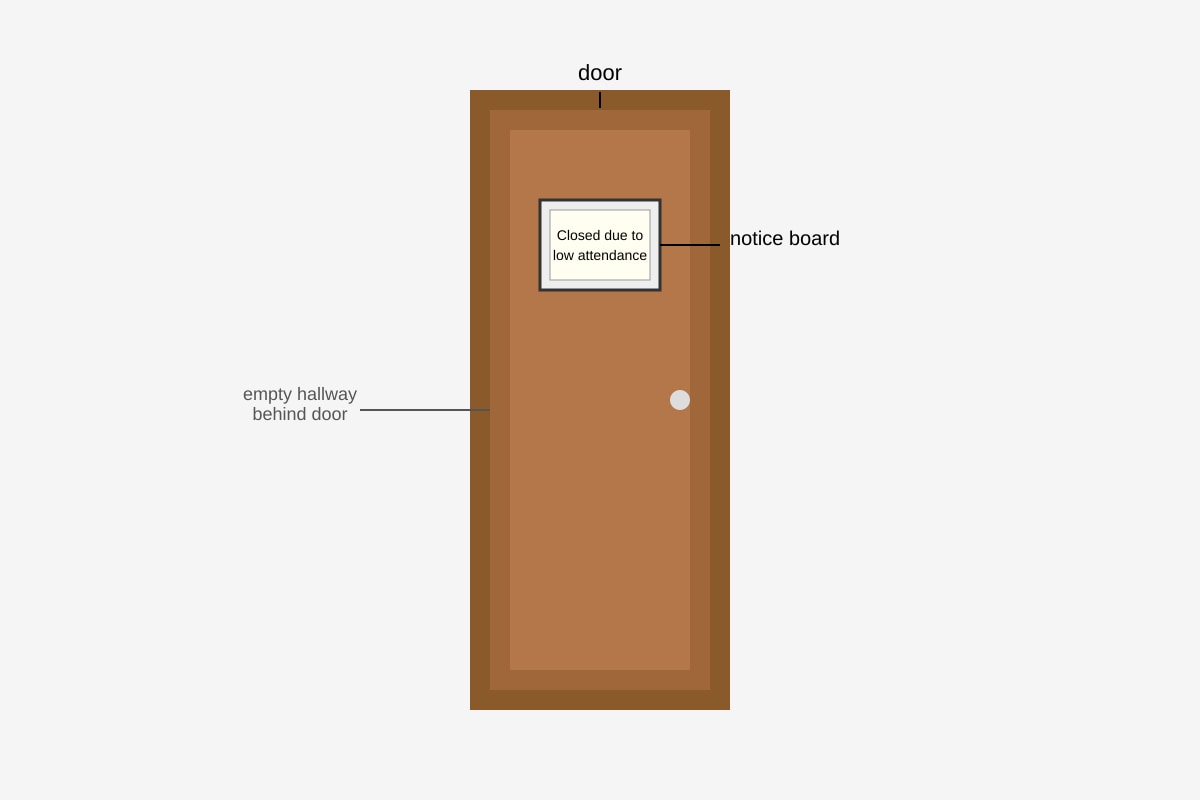
Text 1 The community centre was once busy with evening classes, but now the rooms sit empty. A notice on the door reads: "Closed due to low attendance." Residents say they miss the activities.
Image pending generation: source_image for Q1.
Text 2 A survey of 200 residents showed 78% wanted the centre reopened, while 22% felt it was not needed.
| Response | Percentage |
|---|---|
| Reopen | 78% |
| Not needed | 22% |
-
From Text 1, identify one detail that shows the centre is no longer used. [1]
-
What does the notice in Text 1 say is the reason for closure? [1]
-
According to Text 2, how many residents out of 200 wanted the centre reopened? [1]
-
Using Text 2, what fraction of residents felt the centre was not needed? [1]
-
What is the tone of the residents' comment "they miss the activities" in Text 1? [1]
Section B (20 marks)
Read Text 3, a recount. Answer Questions 6–15.
Text 3 (1) My grandmother used to tell me stories of her childhood by the sea. (2) She spoke of catching fish with her bare hands and running freely on the sand. (3) "Those were the happiest days," she would sigh. (4) When I visited her last summer, the beach was gone, replaced by a concrete wall. (5) She stood silently, her eyes fixed on the grey barrier. (6) I realised then how much she had lost.
-
From paragraph 1 (lines 1–3), identify one example showing the grandmother's happy memories. [1]
-
In line 3, what does the word "sigh" suggest about the grandmother's feeling? [1]
-
Identify two separate words from lines 4–5 that show a contrast between past and present. [2]
-
What evidence is there in line 4 that the beach no longer exists? [1]
-
Explain how the writer creates a contrast between sentence (2) and sentence (4). [1]
-
At the end of paragraph 1, what is the tone of the narrator's comment in line 6? [1]
-
Explain the irony in paragraph 1, with reference to lines 1–3 and line 4. [2]
-
What does the writer mean by the phrase "grey barrier" in line 5? [1]
-
In line 5, what does "her eyes fixed" suggest about the grandmother's state of mind? [1]
-
Identify one piece of evidence from line 5 that shows the grandmother's reaction to change. [1]
-
Find an expression in line 4 that has a contrasting idea to "happiest days" in line 3. [1]
-
What does the narrator mean by "how much she had lost" in line 6? [2]
-
Explain how the language in line 3 ("Those were the happiest days") creates a nostalgic tone. [2]
-
From lines 4–5, identify two examples that the narrator can use to support the view that the grandmother was saddened by the change. [2]
-
Using lines 1–6, explain how the writer shows the impact of development on personal memory. [2]
Answers
TuitionGoWhere Exam Practice (AI) - English O-Level Practice Paper
Paper: Practice Paper 2 – Comprehension (Version 3 of 5)
Answer Key & Marking Scheme
Section A (5 marks)
Q1. "the rooms sit empty" or "Closed due to low attendance" or "empty hallway behind door" from image. [1]
Teaching note: Look for a detail proving non-use. The text says rooms are empty; the image shows empty hallway.
Q2. Low attendance. [1]
Teaching note: The notice explicitly states "Closed due to low attendance".
Q3. 156 residents (78% of 200 = 0.78 × 200 = 156). [1]
Teaching note: Calculate 78% of 200. Show working: 200 × 78/100 = 156.
Q4. 22/100 = 11/50. [1]
Teaching note: 22% = 22/100 simplified to 11/50.
Q5. Nostalgic / regretful / wistful. [1]
Teaching note: "miss" indicates longing for past; tone is nostalgic. Avoid "angry".
Section B (20 marks)
Q6. "catching fish with her bare hands" or "running freely on the sand" or "Those were the happiest days". [1]
Q7. A feeling of longing / sadness / resignation. "Sigh" is an audible exhale showing emotion. [1]
Q8. Past: "sea" / "sand" / "happiest"; Present: "concrete wall" / "grey barrier" / "gone". Any two contrasting words e.g. "sea" and "concrete wall". [2] – 1 mark each.
Q9. "the beach was gone" directly states it no longer exists. [1]
Q10. Sentence (2) describes freedom and nature; sentence (4) states the beach is replaced by concrete. Writer uses juxtaposition of past joy and present loss. [1]
Q11. Sober / reflective / sombre. [1]
Q12. Irony: She recalls "happiest days" by the sea (lines 1–3), but in line 4 the sea is gone. This is ironic because the place of joy is destroyed, opposite of happy memory. [2] – 1 for identifying contrast, 1 for explaining why ironic.
Q13. The concrete wall / structure that replaced the beach. Metaphor for loss. [1]
Q14. Deep focus / shock / inability to look away from change. [1]
Q15. "stood silently" or "eyes fixed on the grey barrier". [1]
Q16. "the beach was gone" or "concrete wall". [1]
Q17. She lost her childhood place and happy memories due to development. [2] – 1 for physical loss, 1 for emotional/memory loss.
Q18. Use of "happiest" (superlative) and past tense "were" shows distance from present; tone is nostalgic. [2] – 1 for word choice, 1 for effect.
Q19. "stood silently", "eyes fixed on the grey barrier". [2] – 1 each.
Q20. Writer contrasts vivid past (lines 1–3) with barren present (4–5) and narrator's realisation (6) to show development erases memory. [2] – 1 for contrast, 1 for impact.
Free quiz and exam paper access
Enter your details to view this paper
Your access is remembered on this device.