From Real Exams Exam Paper
O Level English Practice Paper 2
Free O Level English Practice Paper 2, HY3 Exam version, with questions, answers, and O Level-style practice for Singapore students.
These static practice materials are generated from the site's syllabus and paper-generation workflow, with source and model context shown so students and parents can evaluate the material before use.
Questions
Free quiz and exam paper access
Enter your details to view this paper
Your access is remembered on this device.
Answers
TuitionGoWhere Exam Practice (AI) - English O-Level Practice Paper (Version 2) Answer Key
Paper: Practice Paper 2 – Comprehension
Total Marks: 50
Section A (5 marks)
Q1. [1 mark]
Answer: Red bin.
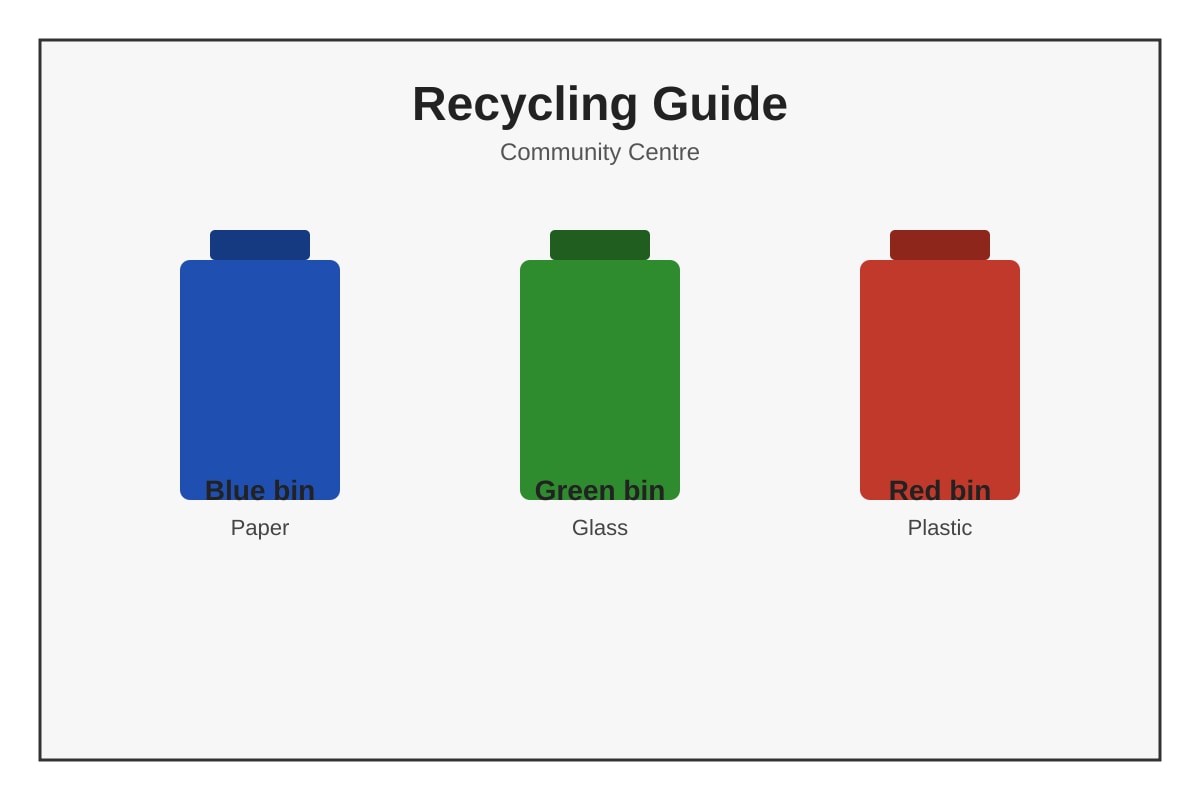
Teaching note: The poster (Q1-fig1) labels red = Plastic. Student must read the visual placeholder labels. Common mistake: choosing green because glass feels "hard" like plastic; always check the stated key.
Q2. [1 mark]
Answer: 72%.
Teaching note: Text 2 states "72% of households used the correct bin within the first two weeks." Direct literal retrieval.
Q3. [1 mark]
Answer: Confused / uncertain / inexperienced (initially).
Teaching note: Mrs Lim says "At first I mixed everything up," showing she was initially unsure. Tone descriptor should reflect confusion, not criticism.
Q4. [1 mark]
Answer: Any one: coloured bins, picture chart, labels under bins, heading "Recycling Guide".
Teaching note: Visual feature must help understanding. Accept "the picture chart mentioned by Mrs Lim" if linked to poster.
Q5. [1 mark]
Answer: The survey result (72%) provides numerical evidence that most residents succeeded, showing the programme worked.
Teaching note: Connect data to claim of success. Marking: 1 mark for stating survey shows high correct usage.
Section B (20 marks)
Q6. [1 mark]
Answer: "the trail had turned to mud" OR "the cold creeping into my shoes" OR "slipped for the third time" (brother).
Teaching note: Literal detail from Para 1 showing difficulty. Accept any clear example.
Q7. [1 mark]
Answer: Stay aware / think positively / be mentally prepared while being careful physically.
Teaching note: "Mind up" = alert, thoughtful. Not just "look up."
Q8. [1 mark]
Answer: "I forgot the mud entirely" / "whistled" (brother) / description of bright valley.
Teaching note: Shows shift from cold discomfort to wonder.
Q9. [2 marks]
Answer: Writer contrasts muddy, cold trail (Para 1) with bright, silent valley (Para 3). Technique: juxtaposition. Effect: shows change in experience.
Marking: 1 mark contrast identified, 1 mark effect/technique.
Q10. [1 mark]
Answer: Ability to wait calmly / accept slow progress.
Teaching note: In context, mountain teaches slow, careful movement.
Q11. [1 mark]
Answer: Reflective / thoughtful / calm.
Teaching note: End line is quiet realisation, not excited.
Q12. [2 marks]
Answer: Any two: mud, cold, slipped, rain, dawn (if negative).
Marking: 1 mark each word.
Q13. [2 marks]
Answer: Ironic because rain (physical discomfort) ended but lesson (mental gain) remained; opposite of expectation that only bad remains.
Marking: 1 mark identify contrast, 1 mark explain why ironic.
Q14. [1 mark]
Answer: "I forgot the mud entirely" shows he looked at bird (eyes down→up) and thought beyond walk.
Teaching note: Links Para 2 advice to Para 3 action.
Q15. [1 mark]
Answer: Peaceful and beautiful after rain; contrast to earlier mud.
Teaching note: Adjective analysis.
Q16. [2 marks]
Answer: Brother laughs/slippes showing narrator more serious; contrast highlights narrator's initial gloom then growth.
Marking: 1 mark brother behaviour, 1 mark narrator development.
Q17. [1 mark]
Answer: "bright and silent" valley / "bird few travellers ever see".
Teaching note: Opposite of mud.
Q18. [2 marks]
Answer: Calm ("moved ahead without complaint"), wise ("mountain teaches patience"), guiding (pointing bird).
Marking: 1 mark action, 1 mark speech.
Q19. [1 mark]
Answer: "bird few travellers ever see" / "valley bright and silent".
Teaching note: Supports worthwhile view.
Q20. [5 marks]
Summary (max 80 words):
The narrator learned from a rainy, muddy hike. Initially uncomfortable, he followed guide Sulin's advice to stay aware. At the ridge, he saw a rare bird and forgot his discomfort. Sulin later explained the mountain teaches patience. The narrator realised the experience, though hard, gave lasting learning beyond the weather.
Marking descriptors:
- Use of own words (1)
- Covers key points: difficulty, guide's advice, valley moment, patience lesson (3)
- Within 80 words, organised (1)
Common mistake: copying phrases like "the trail had turned to mud" without change.