AI Generated Quiz
O Level Combined Science Life Sciences Quiz
Free O Level Combined Sci Life Sciences quiz, HY3 AI version, with questions, answers, and O Level-style practice for Singapore students.
These static practice materials are generated from the site's syllabus and paper-generation workflow, with source and model context shown so students and parents can evaluate the material before use.
Questions

Free quiz and exam paper access
Enter your details to view this paper
Your access is remembered on this device.
Answers
O-Level Combined Science Quiz - Life Sciences (Answer Key)
Total Marks: 40
Topic: Life Sciences (Biology)
Section A
1. [1] Mitochondrion (or mitochondria).
Teaching note: Aerobic respiration occurs in the mitochondria, where glucose and oxygen are used to release energy as ATP. Common mistake: confusing with chloroplast (plant photosynthesis site).
2. [1] Diffusion is passive (no energy needed) and moves down concentration gradient; active transport requires energy and moves against gradient.
Accept any one clear difference.
Teaching note: Diffusion needs no ATP; active transport uses ATP from respiration.
3. [1] Lowers blood glucose level (by promoting glucose uptake into cells / storage as glycogen).
Teaching note: Insulin is secreted when glucose is high; it reduces blood sugar.
4. [1] Transpiration.
Teaching note: Water vapour leaves leaf stomata; this is transpiration.
5. [1] Protein synthesis.
Teaching note: Ribosomes read mRNA to build proteins.
Section B
6. [4]
(a) [2] Osmosis is the net movement of water molecules from a region of higher water potential (dilute solution) to lower water potential (concentrated solution) through a partially permeable membrane.
(b) [2] It swells and may burst (lysis). Because water enters by osmosis (outside is hypotonic), increasing internal pressure.
Teaching note: Animal cells have no wall; pure water is low solute, high water potential.
7. [3]
(a) [1] Grass.
(b) [1] Secondary consumer (or 3rd trophic level).
(c) [1] Snake population decreases due to less food.
Teaching note: Grass producer (1st), grasshopper primary consumer, frog secondary.
8. [3]
(a) [1] Optimum temperature.
(b) [2] High temp denatures enzyme (breaks bonds, changes shape of active site), so substrate no longer fits.
Teaching note: Beyond optimum, protein structure unfolds.
9. [3] Best pH = 7 (shortest time 4 min) [1]. Average for pH5 & 9 = (12+9)/2 = 10.5 min [2].
Working: (12 + 9) ÷ 2 = 21 ÷ 2 = 10.5 min.
Teaching note: Lower time = faster digestion = better pH.
10. [3] Oxygenated blood returns from lungs to left atrium → left ventricle → aorta → body. [3 marks: 1 each for chamber, vessel, path]
Teaching note: Double circulation; left side pumps to body.
11. [3]
(a) [1] Carbon dioxide and water (accept light).
(b) [2] Carbon dioxide + water → glucose + oxygen (with light/chlorophyll).
Teaching note: Endothermic reaction in chloroplasts.
12. [3] Thin walls (short diffusion distance) [1]; many alveoli (large surface area) [1]; moist lining (gases dissolve) [1].
Teaching note: Adaptations follow FICK principles.
13. [2] Genotype Aa.
Teaching note: Carrier has one recessive allele but unaffected (dominant masks).
14. [2] Removes urea (excretion) [1]; regulates water and ion balance (osmoregulation) [1].
Teaching note: Nephron filters blood.
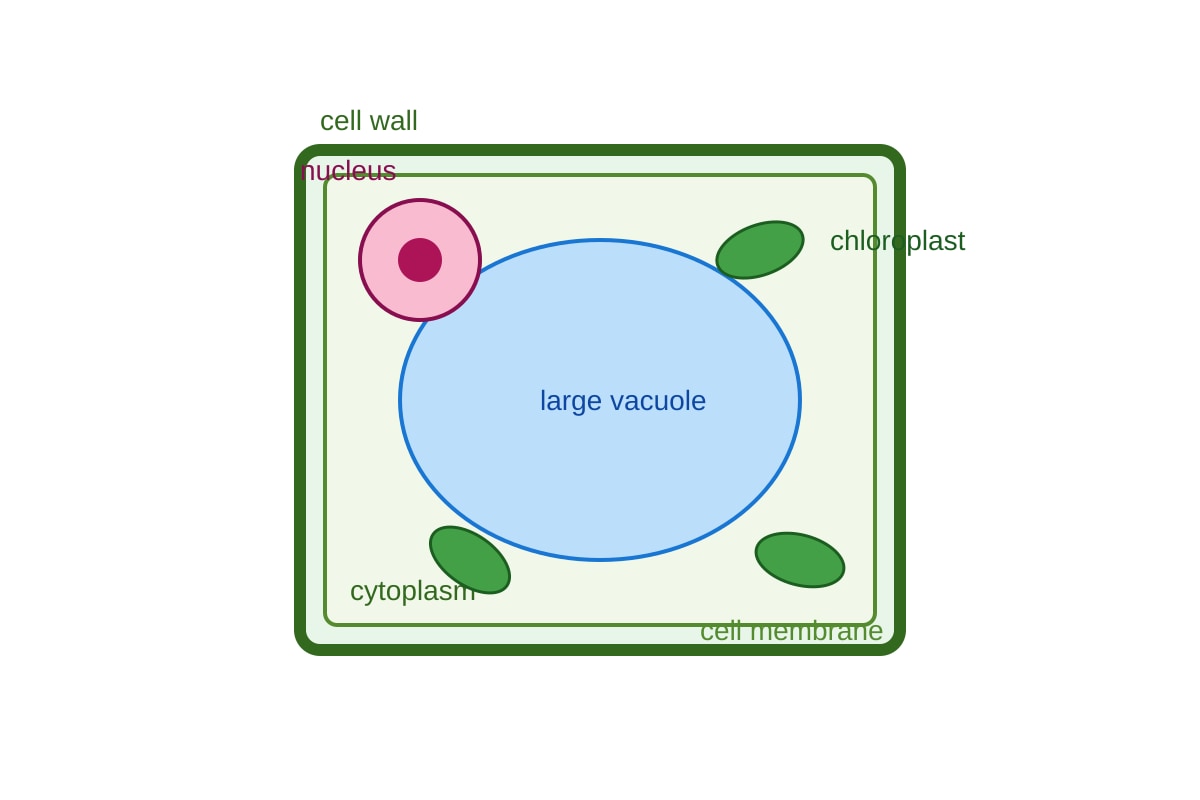
15. [2] Cell wall and chloroplast (or large vacuole) [1+1].
Teaching note: Animal cells lack rigid wall and plastids.
Section C
16. [3]
(a) [1] 14:00.
(b) [2] Daylight allows photosynthesis in pond plants producing O₂; at night respiration uses O₂ so level falls.
Image note: Graph peaks midday, matches photosynthesis rate.
17. [3]
(a) [1] Eutrophication.
(b) [2] Algae block light, die, bacteria decompose using O₂ → fish suffocate.
Teaching note: Nutrient runoff causes bloom.
18. [3]
(a) [2] Drop = (5.0 − 4.2)/5.0 × 100 = 0.8/5.0 × 100 = 16%.
(b) [1] Glucagon (or adrenaline).
Working shown line by line.
19. [3] Mitosis: 2 daughter cells, same chromosome number (diploid) [1.5]; Meiosis: 4 daughter cells, half chromosome number (haploid) [1.5].
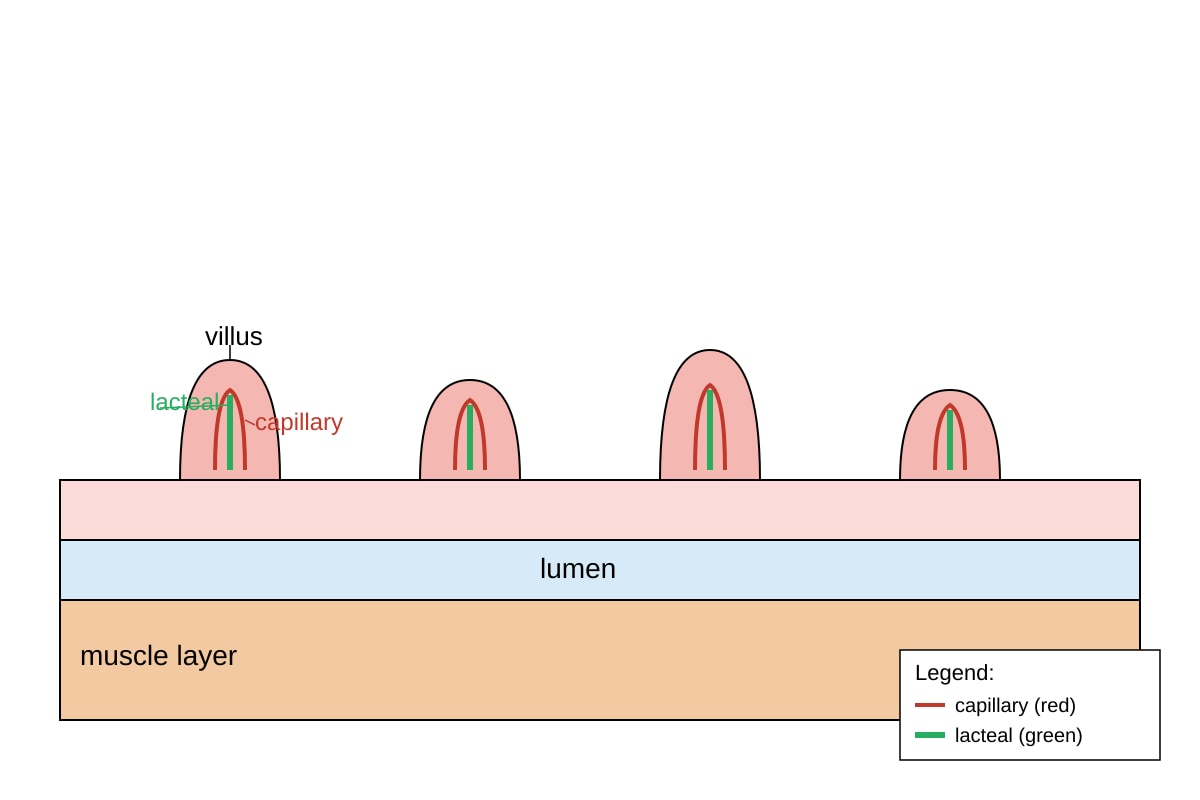
20. [2] Villi and microvilli (or long thin shape, folded wall) [1+1].
Image note: Diagram shows villi projecting into lumen increasing area.