O-Level Combined Science Quiz - Life Sciences
Name: ___________________________
Class: ___________________________
Date: ___________________________
Score: _______ / 40
Duration: 50 minutes
Total Marks: 40
Topic: Life Sciences (Biology component of O-Level Combined Science)
Instructions:
- Answer all 20 questions.
- Section A: Multiple-choice style short items (1 mark each).
- Section B: Structured short-answer questions (2 marks each).
- Section C: Data/interpretation and extended response (3–4 marks each).
- Write your answers in the spaces provided.
- Use SI units and correct biological terms.
Section A (Questions 1–5, 1 mark each)
1. Which organelle is responsible for aerobic respiration in a human cell?
2. State the process by which water moves from a region of high water potential to low water potential through a partially permeable membrane.
3. Name the pigment in chloroplasts that absorbs light for photosynthesis.
4. What is the basic unit of inheritance that determines a trait?
5. Which blood vessel carries oxygenated blood from the lungs to the heart?
Section B (Questions 6–10, 2 marks each)
6. Explain why enzymes are described as "specific" in their action.
7. A student places red blood cells in pure water. Describe what happens and give a reason.
8. State two structural features of a leaf that adapt it for photosynthesis.
(i) __________________________________________________
(ii) __________________________________________________
9. Define "diffusion" and give one example in the human body.
10. Name the type of cell division that produces gametes and state the chromosome number change.
Section C (Questions 11–20)
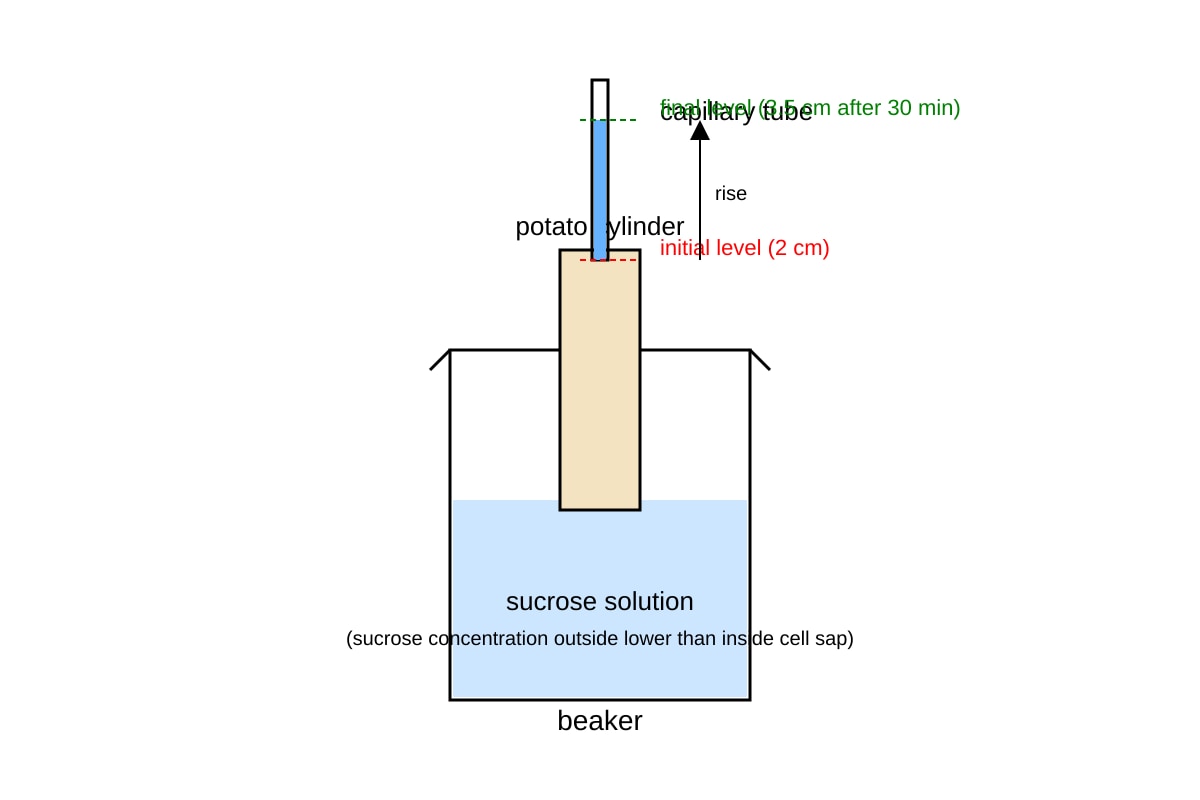
11. The diagram below shows a simple experiment on osmosis using a potato cylinder in sucrose solution.
Generated experimental_setup for Q11.
(a) What does the rise in liquid level indicate about the net movement of water? [1]
(b) Explain the result using the term "water potential". [2]
12. A person has a diet lacking in vitamin C. State one deficiency disease and one symptom. [2]
Disease: ________________________________________
Symptom: ________________________________________
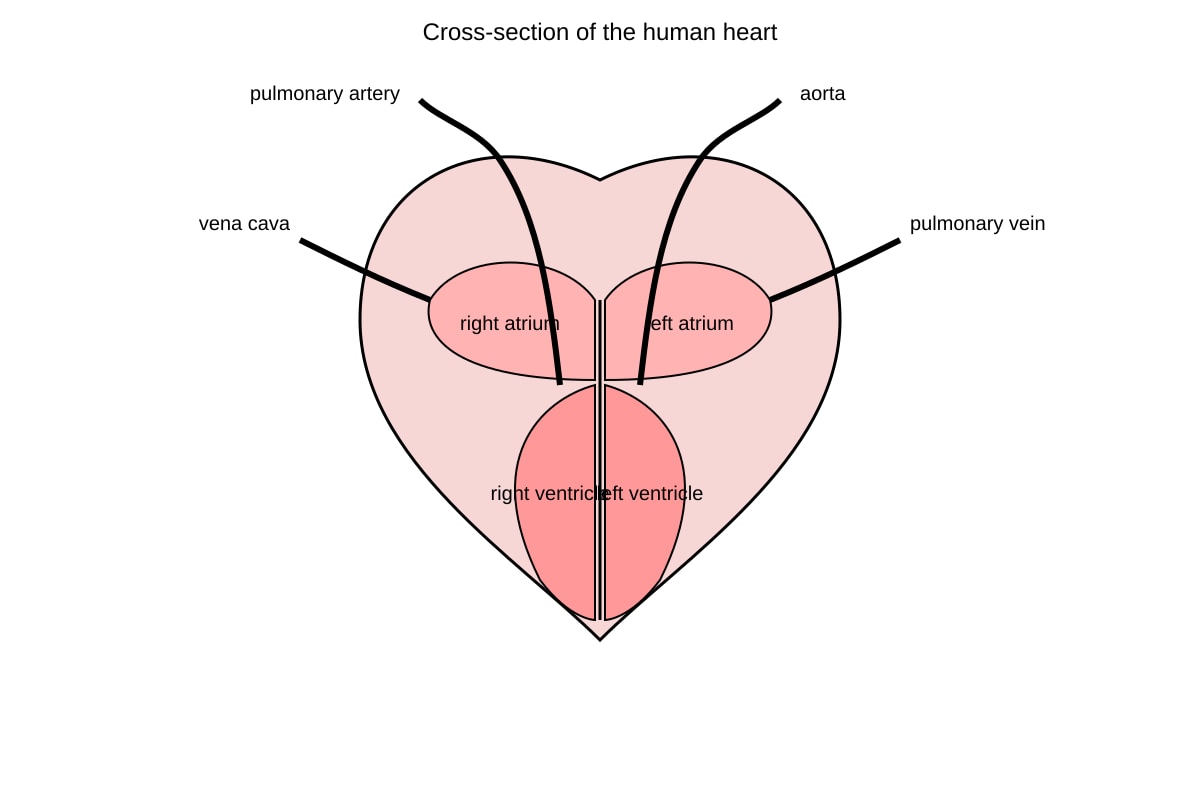
13. The figure shows a cross-section of the human heart.
Generated diagram for Q13.
(a) Name chamber X that pumps blood to the body. [1]
(b) State one feature of the ventricle walls that shows higher pressure on the left side. [1]
14. Describe how carbon dioxide is transported from tissues to the lungs. [3]
15. A plant is placed in darkness for 48 hours then tested for starch. Explain why the darkness treatment is needed. [2]
16. The table shows enzyme activity at different pH values.
| pH | Rate of reaction (arbitrary units) |
|---|
| 3 | 10 |
| 5 | 25 |
| 7 | 40 |
| 9 | 20 |
| 11 | 5 |
(a) State the optimum pH for this enzyme. [1]
(b) Explain the effect of pH on enzyme structure. [2]
17. Compare mitosis and meiosis in terms of (i) number of divisions and (ii) genetic similarity. [3]
(i) __________________________________________________
(ii) __________________________________________________
18. A kidney nephron filters blood. State the process occurring at the Bowman's capsule and one substance reabsorbed. [2]
Process: ________________________________________
Substance: ______________________________________
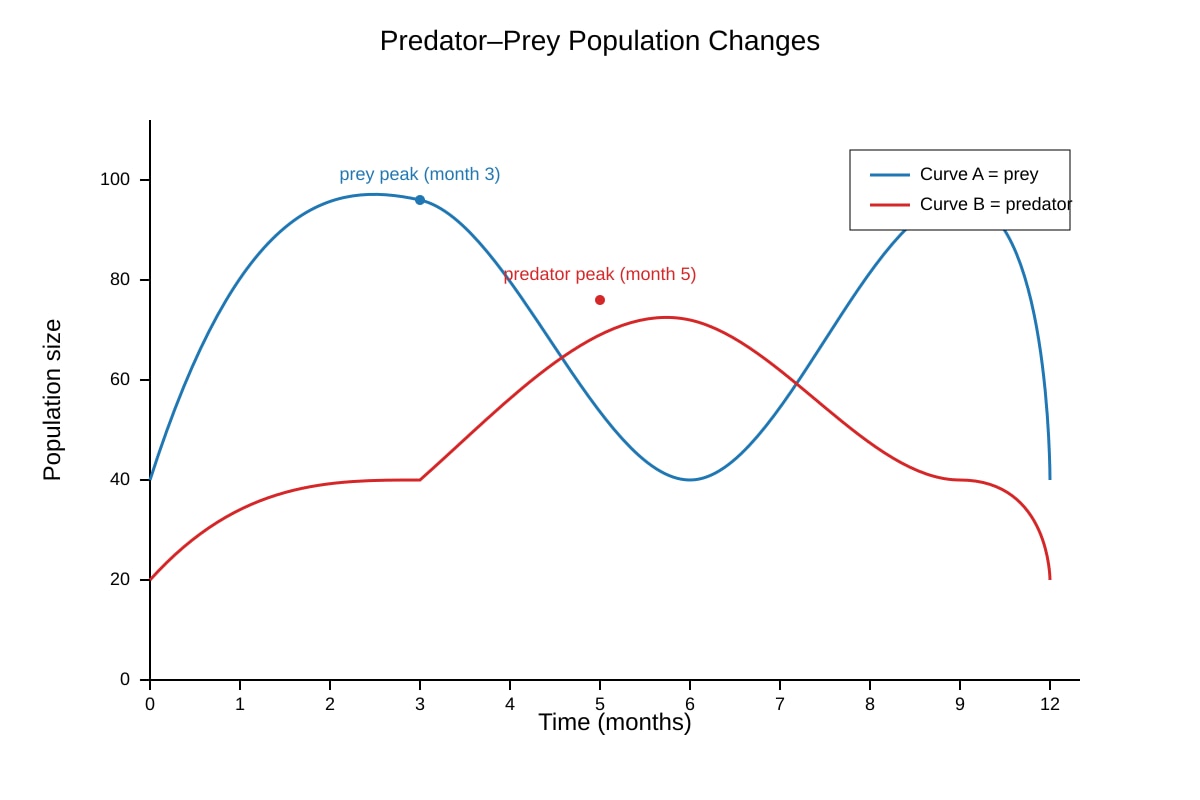
19. The graph shows population changes in a predator–prey relationship.
Generated graph for Q19.
(a) Describe the pattern shown. [2]
(b) Explain the lag in predator numbers. [2]
20. A couple have a child with cystic fibrosis (recessive allele f). Both parents are unaffected. Draw a genetic cross to show how this is possible and state the parents' genotypes. [4]
Genotypes: __________________ × __________________
Cross:
</stage3_quiz_answers_md>
O-Level Combined Science Quiz - Life Sciences (Answer Key)
Total Marks: 40
Topic: Life Sciences
Section A Answers (1 mark each)
1. Mitochondrion (or mitochondria)
Teaching note: Aerobic respiration occurs in the mitochondria, where glucose and oxygen produce ATP, carbon dioxide, and water. Common mistake: confusing with chloroplast (photosynthesis).
2. Osmosis
Teaching note: Osmosis is diffusion of free water molecules through a partially permeable membrane. Must mention "partially permeable membrane" for full definition elsewhere; here state the name.
3. Chlorophyll
Teaching note: Chlorophyll (mainly chlorophyll a and b) absorbs red and blue light, reflecting green.
4. Gene
Teaching note: A gene is a segment of DNA coding for a trait. Not "allele" (variant of gene) unless specified.
5. Pulmonary vein
Teaching note: Unlike other veins, pulmonary vein carries oxygenated blood from lungs to left atrium. Common mistake: aorta (carries from heart to body).
Section B Answers (2 marks each)
6. Enzymes are specific because their active site has a unique shape that fits only one substrate (lock-and-key / induced fit). [2]
Marking: 1 mark for active site shape, 1 mark for substrate fit / one substrate only.
7. The red blood cells swell and may burst (haemolyse). [1] Reason: water enters by osmosis because pure water has higher water potential than cell sap. [1]
Teaching note: External solution is hypotonic; net water movement inward.
8. Any two: broad flat surface / chloroplasts present / stomata for gas exchange / thin cuticle / veins for transport. [1+1]
Marking: 1 mark per correct structural feature linked to function.
9. Diffusion: movement of particles from high to low concentration (down gradient) without energy. [1] Example: oxygen from alveoli to blood. [1]
Teaching note: Must be passive; example in body like CO₂ removal or nutrient absorption.
10. Meiosis. [1] Chromosome number halved from diploid (2n) to haploid (n). [1]
Teaching note: Gametes have half chromosome number so zygote restores 2n after fertilisation.
Section C Answers
11. (a) Net movement of water into the potato cells / into the cylinder. [1]
(b) Water potential inside potato cell sap was higher than outside sucrose solution? Actually if level rises, water entered potato, meaning outside solution had lower water potential (more negative) than inside. [1] Water moved from higher (less negative) to lower (more negative) water potential by osmosis. [1]
Correction: Rise in capillary means water left cylinder? Wait: if potato gains water, sap dilutes, pressure pushes up capillary. So outside sucrose was hypertonic (lower ψ) to inside. Correct: outside lower ψ, water moved out of cylinder? No—rise indicates fluid pushed up from inside, meaning water entered cells, increasing pressure. Thus outside was hypotonic (higher ψ) than inside. But typical: potato in weak solution gains water. Given values: level rises => water entered potato from beaker, so beaker solution had higher water potential than cell sap. [1] Water moves from high to low ψ. [1]
Marking: 2 marks for correct explanation with term.
12. Disease: scurvy. [1] Symptom: bleeding gums / slow wound healing / loose teeth. [1]
Teaching note: Vitamin C needed for collagen; deficiency = scurvy.
13. (a) Left ventricle. [1]
(b) Left ventricle wall thicker than right. [1]
Teaching note: Left pumps to whole body at higher pressure.
14. CO₂ diffuses from tissues into blood. [1] Some dissolved in plasma, some as bicarbonate ions (HCO₃⁻), some bound to haemoglobin. [1] Carried to lungs where it diffuses into alveoli. [1]
Marking: 3 marks for three transport forms / pathway.
15. Darkness stops photosynthesis. [1] So starch is used up / removed, ensuring any starch later found is from new photosynthesis. [1]
Teaching note: "Destarching" plant.
16. (a) pH 7. [1]
(b) pH affects ionic bonds and shape of enzyme (active site). [1] Extreme pH denatures enzyme, reducing rate. [1]
Teaching note: Optimal pH = peak rate; beyond that structure unfolds.
17. (i) Mitosis: one division; Meiosis: two divisions. [1+1]
(ii) Mitosis: genetically identical; Meiosis: genetically different (due to crossing over / independent assortment). [1]
Total 3 marks.
18. Process: ultrafiltration. [1] Substance reabsorbed: glucose / amino acids / water / salts. [1]
19. (a) Prey population cycles with peaks; predator follows with delay. [1] Both oscillate. [1]
(b) Predators take time to reproduce and increase after prey rise. [1] When predators high, prey reduced, then predators decline. [1]
Total 4 marks.
20. Genotypes: Ff × Ff. [1]
Cross:
Gametes: F, f from each.
Offspring: FF, Ff, Ff, ff. [2 for correct Punnett]
ff = cystic fibrosis (affected). [1]
Total 4 marks.
Teaching note: Both carriers unaffected because dominant F.
</stage3_quiz_answers_md>
<stage3_quiz_md>
O-Level Combined Science Quiz - Life Sciences
Name: ___________________________
Class: ___________________________
Date: ___________________________
Score: _______ / 40
Duration: 50 minutes
Total Marks: 40
Topic: Life Sciences (Biology component of O-Level Combined Science)
Instructions:
- Answer all 20 questions.
- Section A: Multiple-choice style short items (1 mark each).
- Section B: Structured short-answer questions (2 marks each).
- Section C: Data/interpretation and extended response (3–4 marks each).
- Write your answers in the spaces provided.
- Use SI units and correct biological terms.
Section A (Questions 1–5, 1 mark each)
1. Which organelle is responsible for aerobic respiration in a human cell?
2. State the process by which water moves from a region of high water potential to low water potential through a partially permeable membrane.
3. Name the pigment in chloroplasts that absorbs light for photosynthesis.
4. What is the basic unit of inheritance that determines a trait?
5. Which blood vessel carries oxygenated blood from the lungs to the heart?
Section B (Questions 6–10, 2 marks each)
6. Explain why enzymes are described as "specific" in their action.
7. A student places red blood cells in pure water. Describe what happens and give a reason.
8. State two structural features of a leaf that adapt it for photosynthesis.
(i) __________________________________________________
(ii) __________________________________________________
9. Define "diffusion" and give one example in the human body.
10. Name the type of cell division that produces gametes and state the chromosome number change.
Section C (Questions 11–20)
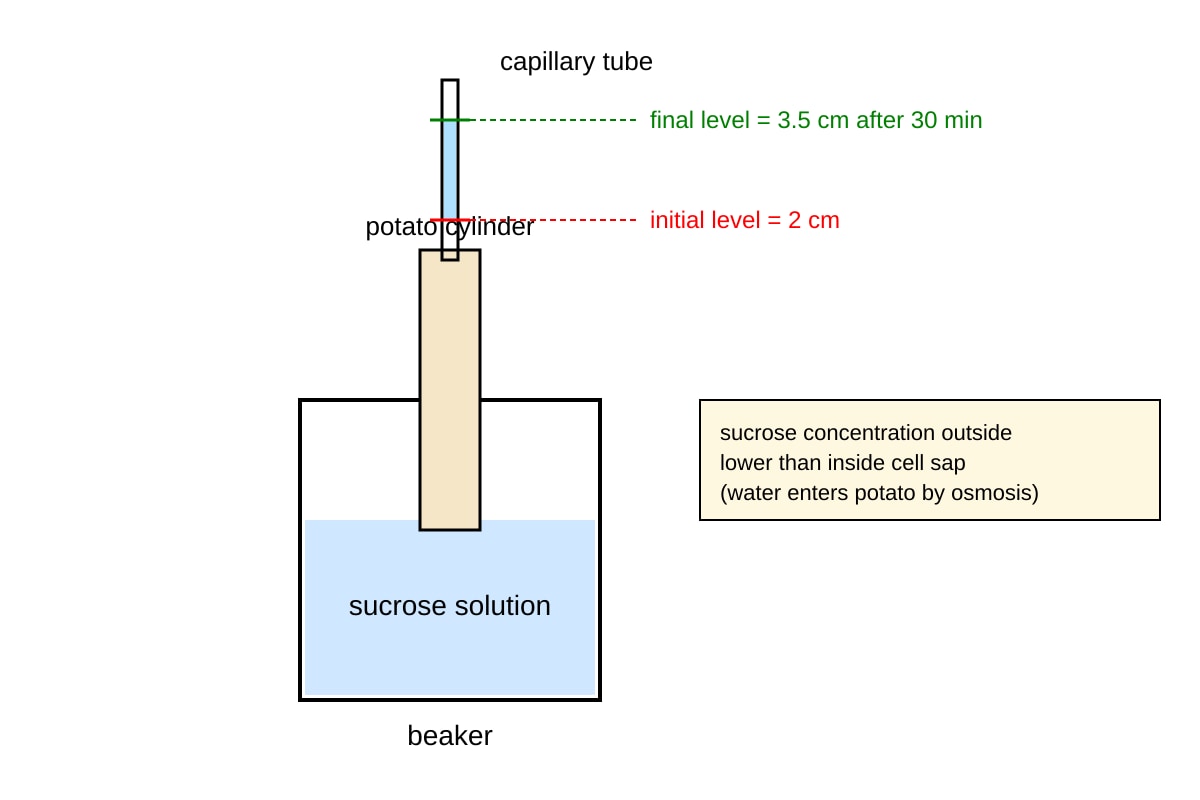
11. The diagram below shows a simple experiment on osmosis using a potato cylinder in sucrose solution.
Generated experimental_setup for Q11.
(a) What does the rise in liquid level indicate about the net movement of water? [1]
(b) Explain the result using the term "water potential". [2]
12. A person has a diet lacking in vitamin C. State one deficiency disease and one symptom. [2]
Disease: ________________________________________
Symptom: ________________________________________
13. The figure shows a cross-section of the human heart.
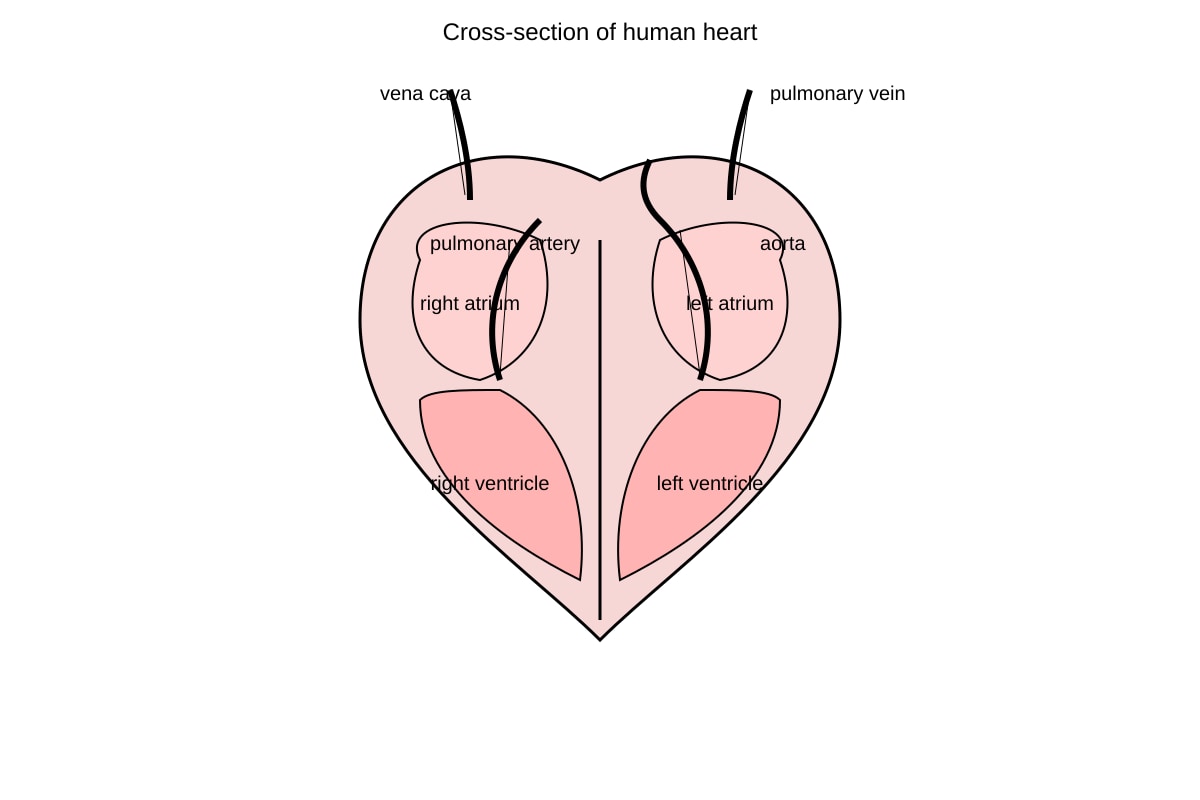
Generated diagram for Q13.
(a) Name chamber X that pumps blood to the body. [1]
(b) State one feature of the ventricle walls that shows higher pressure on the left side. [1]
14. Describe how carbon dioxide is transported from tissues to the lungs. [3]
15. A plant is placed in darkness for 48 hours then tested for starch. Explain why the darkness treatment is needed. [2]
16. The table shows enzyme activity at different pH values.
| pH | Rate of reaction (arbitrary units) |
|---|
| 3 | 10 |
| 5 | 25 |
| 7 | 40 |
| 9 | 20 |
| 11 | 5 |
(a) State the optimum pH for this enzyme. [1]
(b) Explain the effect of pH on enzyme structure. [2]
17. Compare mitosis and meiosis in terms of (i) number of divisions and (ii) genetic similarity. [3]
(i) __________________________________________________
(ii) __________________________________________________
18. A kidney nephron filters blood. State the process occurring at the Bowman's capsule and one substance reabsorbed. [2]
Process: ________________________________________
Substance: ______________________________________
19. The graph shows population changes in a predator–prey relationship.
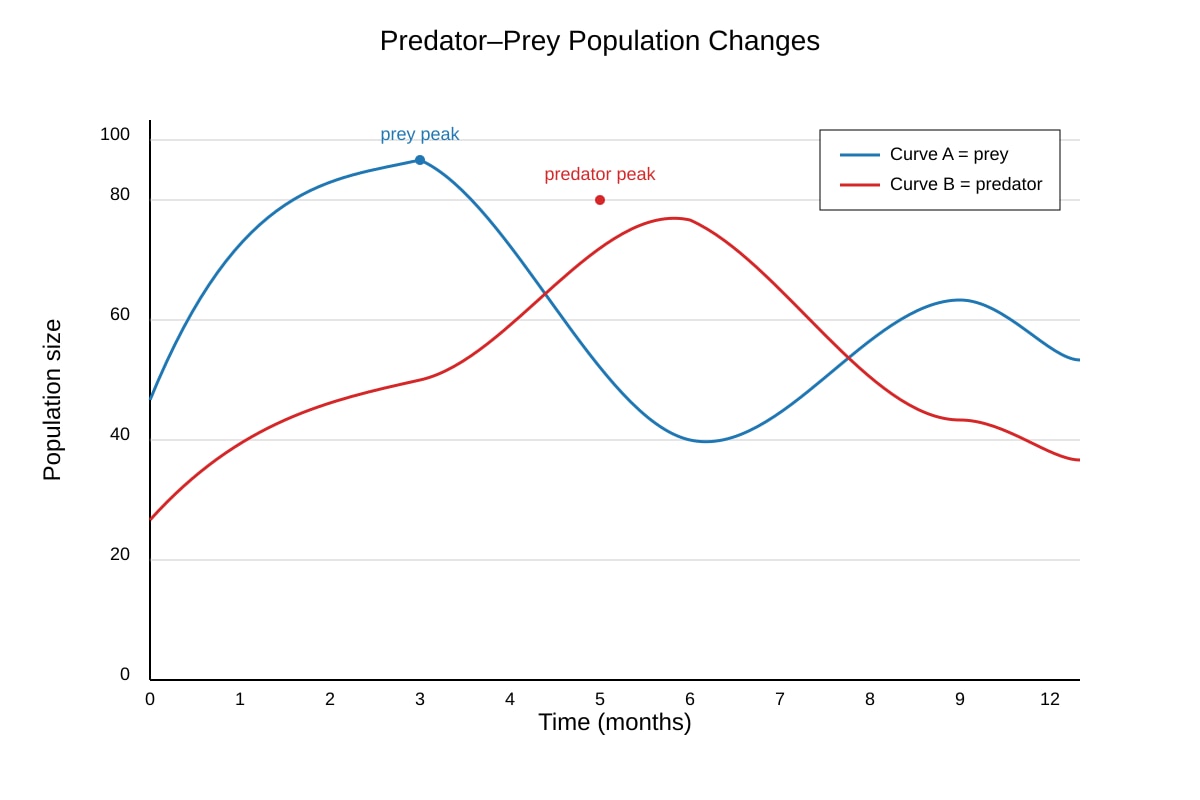
Generated graph for Q19.
(a) Describe the pattern shown. [2]
(b) Explain the lag in predator numbers. [2]
20. A couple have a child with cystic fibrosis (recessive allele f). Both parents are unaffected. Draw a genetic cross to show how this is possible and state the parents' genotypes. [4]
Genotypes: __________________ × __________________
Cross: