From Real Exams Quiz
O Level Combined Science Chemistry Materials Quiz
Free O Level Combined Sci Chemistry Materials quiz, HY3 Exam version, with questions, answers, and O Level-style practice for Singapore students.
These static practice materials are generated from the site's syllabus and paper-generation workflow, with source and model context shown so students and parents can evaluate the material before use.
Questions
Free quiz and exam paper access
Enter your details to view this paper
Your access is remembered on this device.
Answers
O-Level Combined Science Quiz - Chemistry Materials: Answer Key
Total Marks: 40
Topic: Chemistry Materials
Section A (1 mark each)
1. C
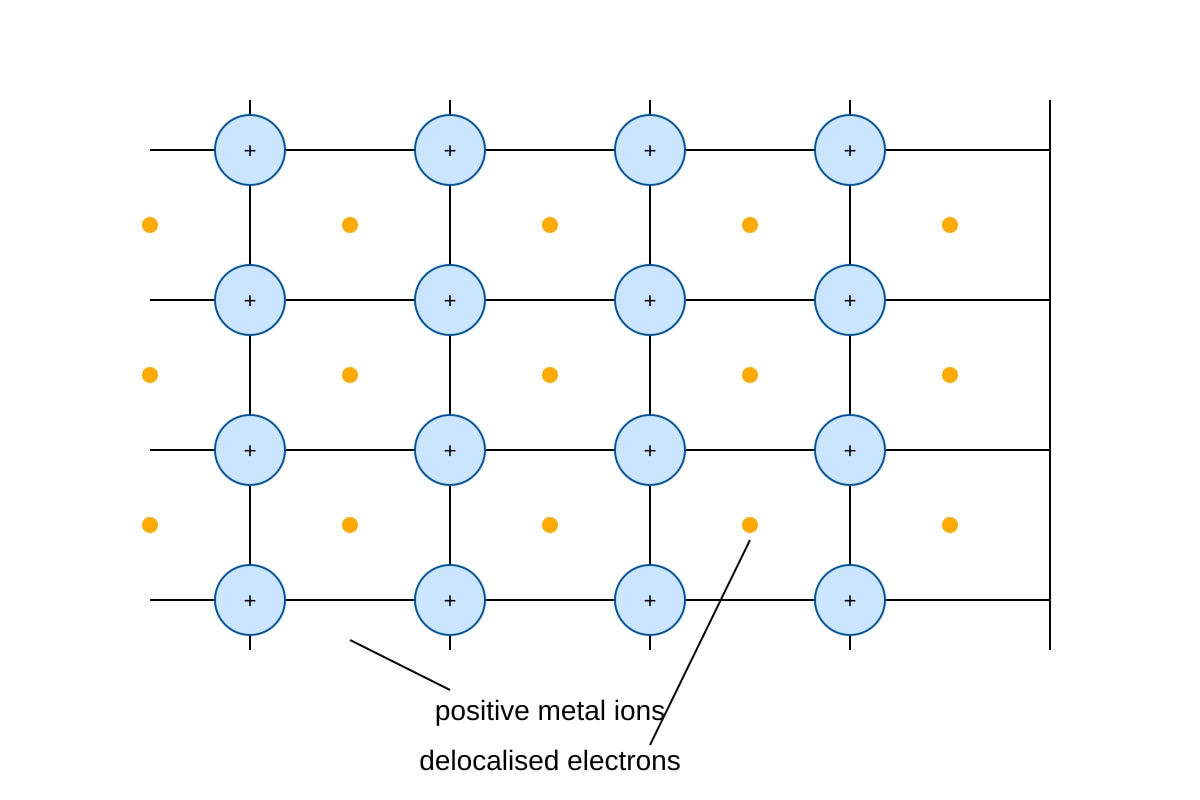
Metals have metallic bonding with delocalised electrons allowing layers to slide, making them malleable and ductile. A and B are false; D describes ionic/covalent brittle solids.
2. B
Poly(ethene) is made by addition polymerisation where ethene double bonds open and join without losing atoms.
3. C
Cellulose is a natural polymer from plants. Others are synthetic.
4. B
–CH₂–CH₂– is the repeating unit of poly(ethene), an addition polymer of ethene CH₂=CH₂.
5. B
Alloys are mixtures of metals or metal + non-metal (e.g., steel). They are usually harder and conduct electricity.
Section B (2 marks each unless stated)
6. [2]
Property: high melting point (or hard, brittle, conduct when molten).
Explanation: Strong electrostatic forces between oppositely charged ions in a lattice require much energy to overcome.
(Mark: 1 for property, 1 for bonding reason)
7. [2]
Diagram must show: regular rows of circles labelled "positive metal ions" and several dots labelled "delocalised electrons" between them.
Mark: 1 for lattice of positive ions, 1 for delocalised electrons labelled.
8. [1]
Chloroethene (CH₂=CHCl).
9. [2]
Diamond has a giant covalent network where each carbon atom is covalently bonded to four others tetrahedrally. Breaking many strong covalent bonds needs high energy → high mp.
(1 for network description, 1 for bond strength energy link)
10. [2]
Type: addition polymer (e.g., poly(ethene)). Reason: melts and sweet smell are typical of thermosoftening addition plastics.
(1 type, 1 reason)
Section C
11. [4]
(a) [2] Y (metal) has delocalised electrons free to move and carry charge; X (ionic) has ions fixed in lattice, no mobile charge in solid.
(b) [2] Z is simple molecular; weak intermolecular forces need little energy to overcome, so low mp.
12. [3]
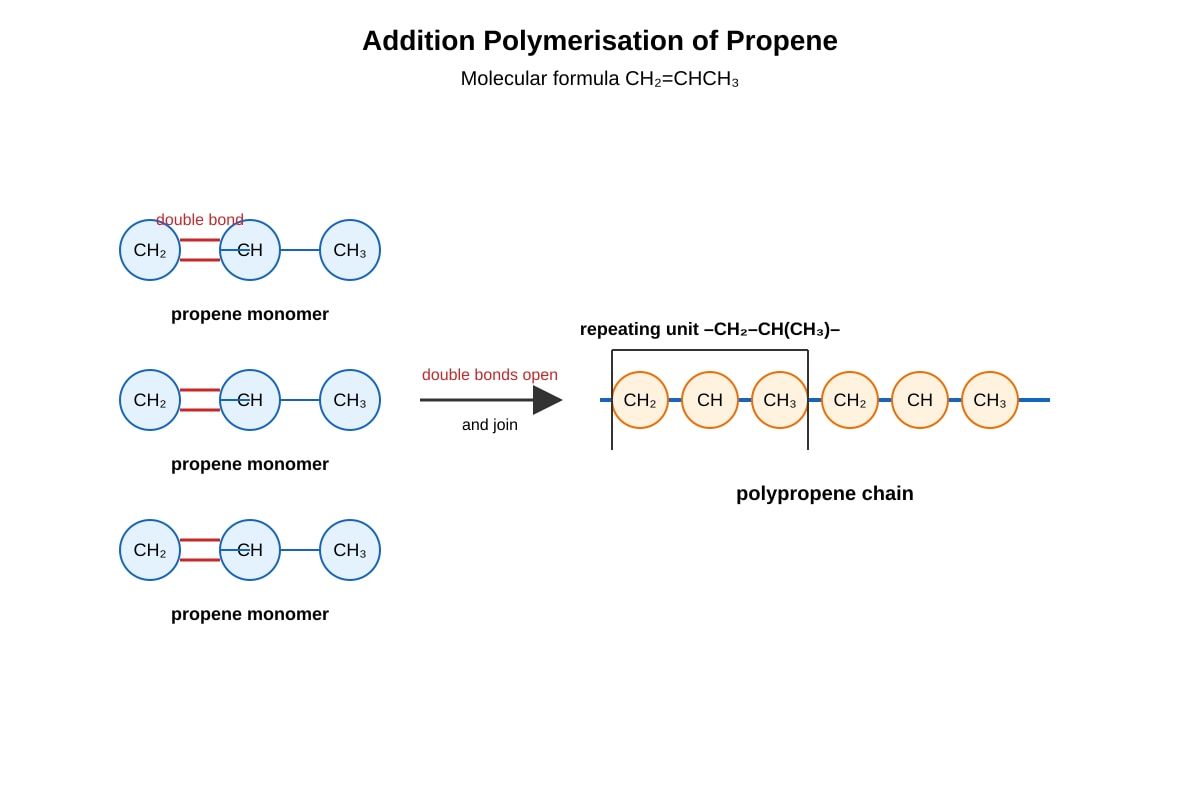
Propene CH₂=CHCH₃ double bond breaks; monomers join end-to-end; repeating unit –CH₂–CH(CH₃)–.
Marks: 1 double bond opens, 1 chain forms, 1 correct repeating unit shown.
13. [3]
Uses: bags, pipes, insulation (any 2). Issue: non-biodegradable, persists in landfill/ocean, harms wildlife.
(2 for uses, 1 for issue)
14. [3]
(a) [1] 0.050 mol ethene → 0.050 mol repeating units (1:1).
(b) [2] mass = 0.050 mol × 28 g/mol = 1.4 g.
Working: n × M_r = 0.05 × 28 = 1.4 g.
15. [3]
Graphite: layers of hex rings, delocalised electrons between layers. Diamond: 3D network. Difference: graphite conducts electricity, diamond does not.
(2 structure compare, 1 property diff)
16. [2]
Stainless steel (iron + Cr/Ni) is hard, corrosion-resistant. Suitable as cutlery because it stays sharp and does not rust.
(1 property, 1 suitability)
17. [2]
Type: condensation polymer / thermosetting (e.g., melamine). Reason: cross-linked network prevents melting, chars on heating.
(1 type, 1 reason)
18. [2]
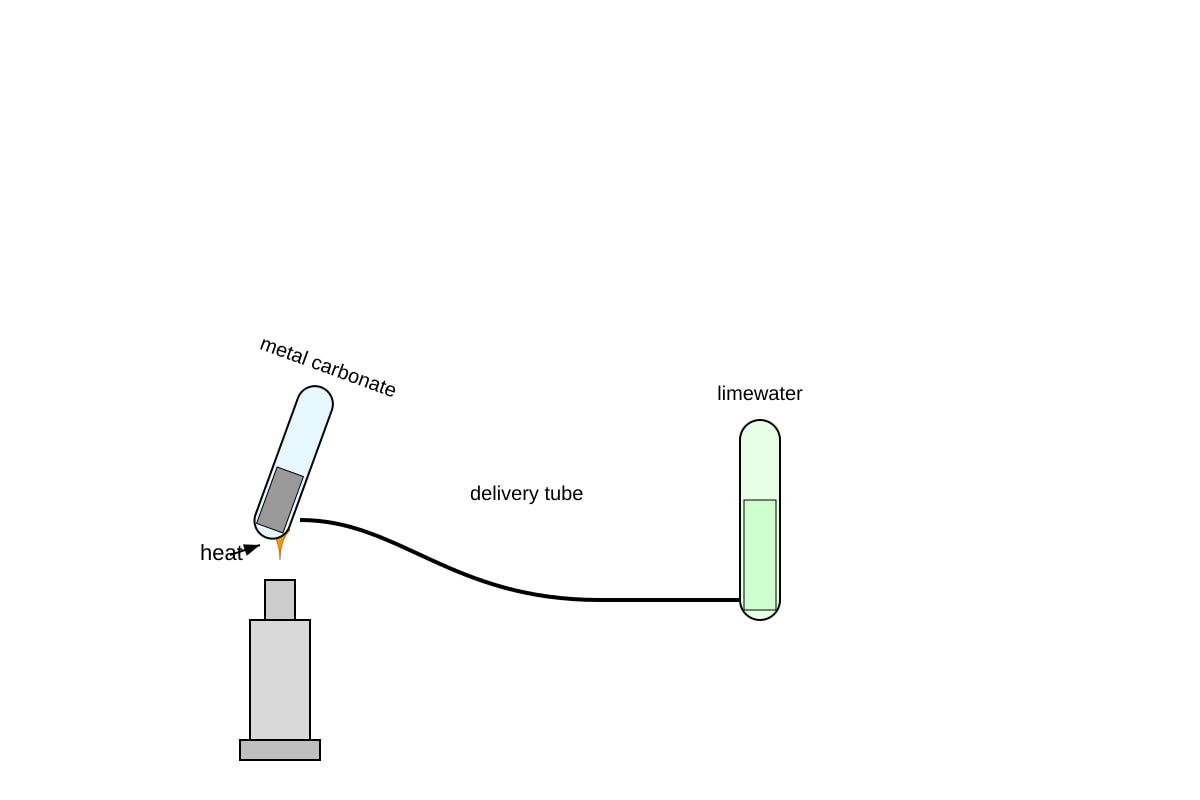
(a) [1] Limewater turns milky/cloudy.
(b) [1] Copper(II) carbonate / calcium carbonate (any decomposing carbonate).
19. [3]
Heat with alkali: nylon (condensation) may release amine/ammonia; poly(ethene) no reaction. Or hydrolysis test: nylon breaks down, PE does not.
(1 test, 2 expected diff)
20. [3]
(a) [1] Shape-memory alloy (e.g., Nitinol).
(b) [2] Application: dental braces / glasses frame. Property: returns to set shape on heating.
(1 app, 1 property link)
Common mistakes flagged:
- Confusing addition vs condensation polymers.
- Forgetting delocalised electrons in metals.
- Using "ions move" for solid ionic conductivity (they don't).
- Omitting units in calculation Q14.