AI Generated Exam Paper
O Level Combined Science Practice Paper 4
Free O Level Combined Sci Practice Paper 4, HY3 AI version, with questions, answers, and O Level-style practice for Singapore students.
These static practice materials are generated from the site's syllabus and paper-generation workflow, with source and model context shown so students and parents can evaluate the material before use.
Questions
TuitionGoWhere Practice Paper - Combined Science O-Level
TuitionGoWhere Practice Paper (AI) — Version 4
Subject: Combined Science (Physical Sciences focus)
Level: O-Level
Paper: Practice Paper (AI-generated, not official format)
Duration: 1 hour 15 minutes
Total Marks: 65
Name: ________________________
Class: ____________
Date: ____________
Instructions:
- This practice paper contains 20 questions on Physical Sciences topics suitable for O-Level Combined Science.
- Answer all questions in the spaces provided.
- Show all working clearly where calculation is required.
- Marks for each question are shown in brackets [ ].
- Use g=10 m/s2 unless stated otherwise.
Section A: Energy and Forces (Questions 1–7) [22 marks]
1. State the principle of conservation of energy. [2]
2. A metal sphere of mass 0.4 kg is dropped from a height of 8.0 m. Calculate the kinetic energy of the sphere just before it hits the ground. Assume air resistance is negligible. [3]
3. A girl of weight 500 N runs up a flight of 25 steps in 12 s. Each step has a height of 0.15 m. Calculate the average power developed by the girl. [3]
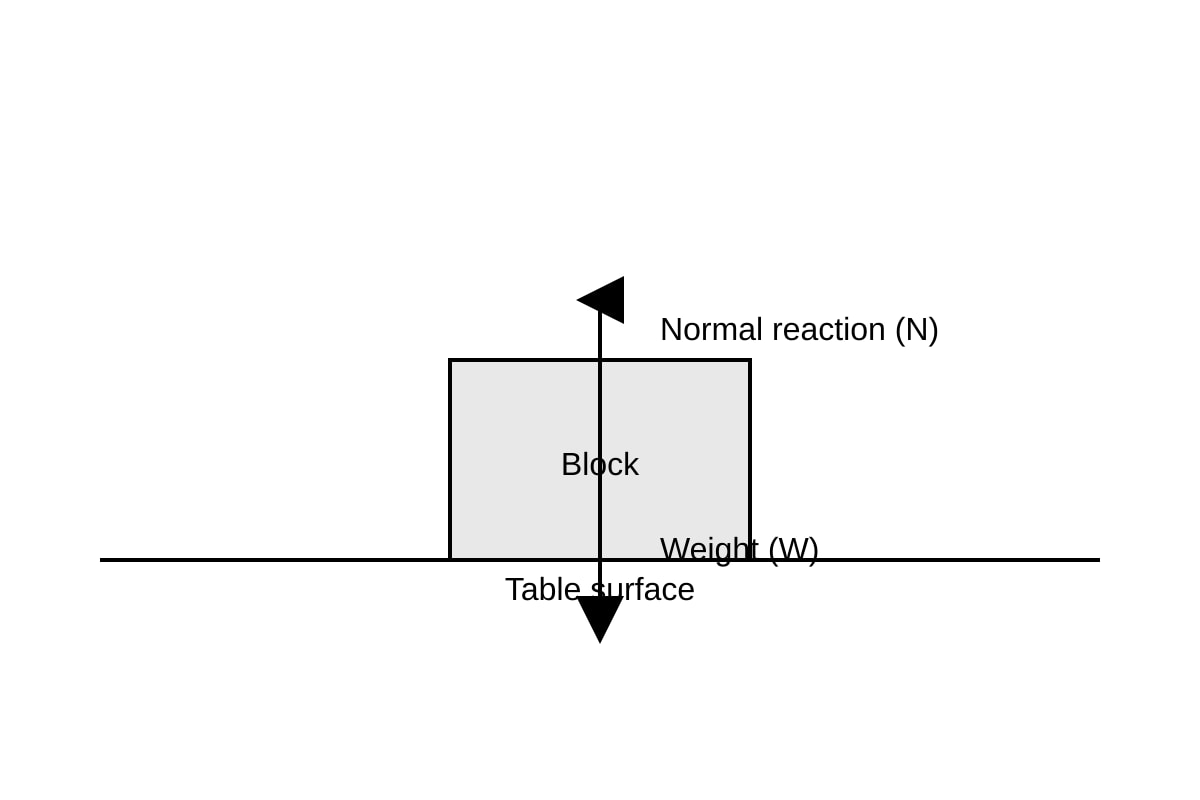
4. Fig. 1 shows a block of mass 2.0 kg at rest on a horizontal table.
Image pending generation: diagram for Q4.
Draw a free-body diagram to show the forces acting on the block. [2]
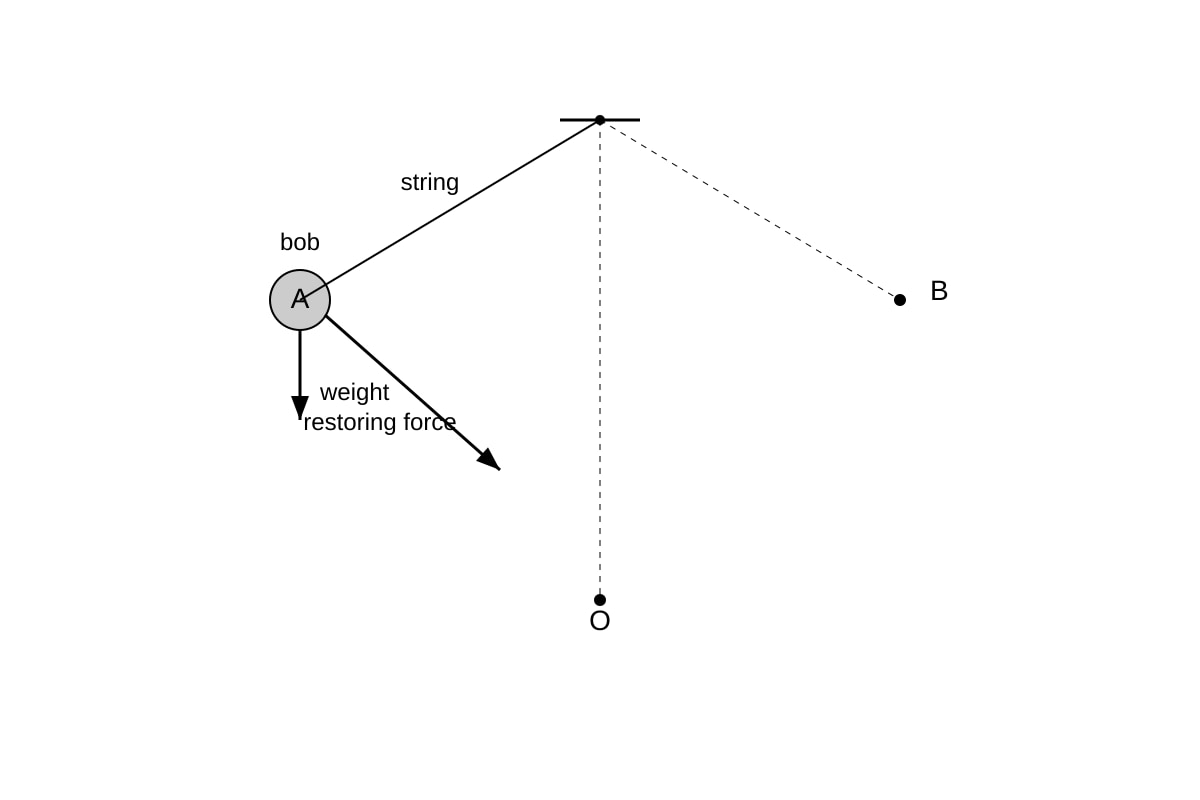
5. A pendulum consists of a metal bob suspended by a string, as shown in Fig. 2. At position A (highest point) the bob is momentarily at rest.
Image pending generation: diagram for Q5.
State the type of energy the bob has at position A. [1]
6. Explain why metals are good conductors of heat. [2]
7. A 1.5 kg block is pushed up a frictionless incline of height 1.2 m. Calculate the work done against gravity to reach the top. [3]
Section B: Waves and Electricity (Questions 8–14) [23 marks]
8. Sound waves of frequency 500 Hz travel through air at 340 m/s. Calculate the wavelength. [2]
9. State one practical use of ultrasound in medicine. [1]
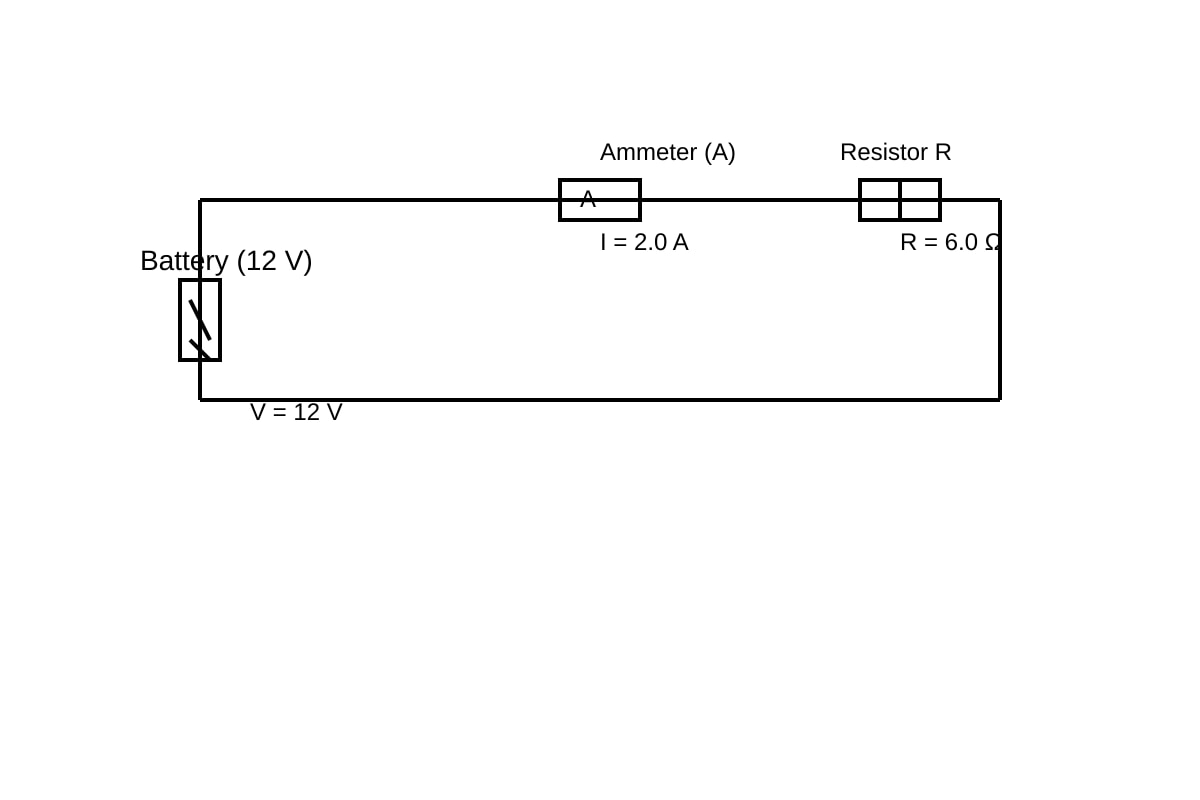
10. Fig. 3 shows a simple circuit with a battery, a resistor of 6.0 Ω, and an ammeter reading 2.0 A.
Image pending generation: circuit for Q10.
Calculate the potential difference across the resistor. [2]
11. Two resistors of 4.0 Ω and 6.0 Ω are connected in series to a 10 V supply. Calculate the total resistance and the current in the circuit. [3]
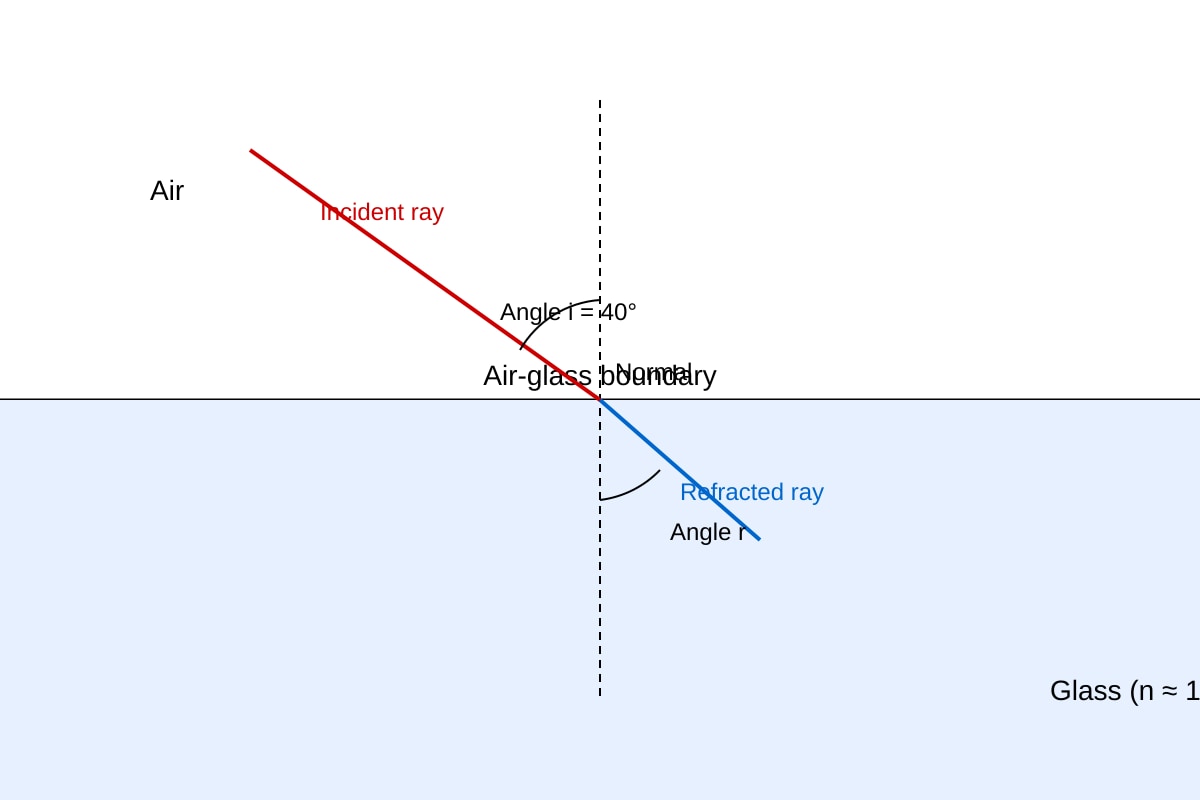
12. Fig. 4 shows a ray of light entering a glass block from air at an angle of incidence 40∘.
Image pending generation: diagram for Q12.
State what happens to the speed of light as it enters the glass. [1]
13. Name the part of the electromagnetic spectrum used in remote controls. [1]
14. A heater rated 1000 W is used for 15 minutes. Calculate the electrical energy consumed in kWh. [3]
Section C: Thermal and Integrated Physical (Questions 15–20) [20 marks]
15. A metal rod is heated at one end. Describe how heat is transferred along the rod. [2]
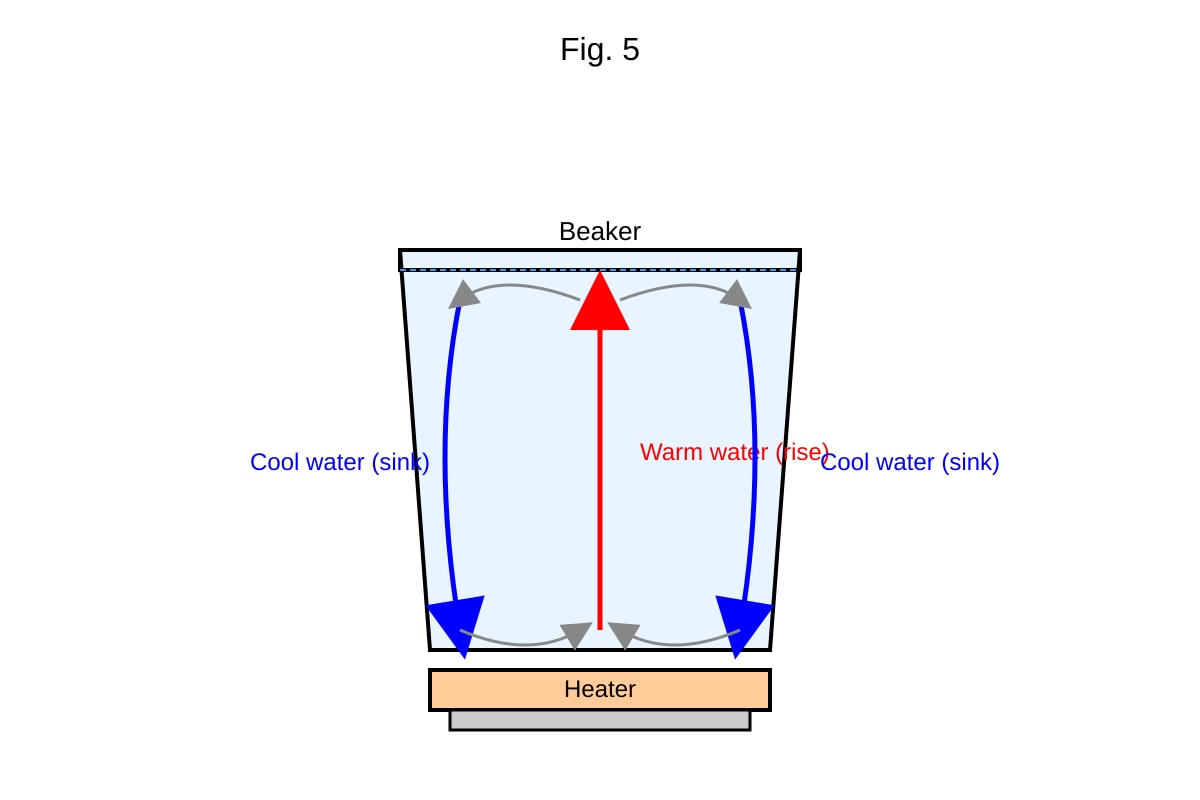
16. Fig. 5 shows a container of water heated from below.
Image pending generation: diagram for Q16.
Name the process shown by the arrows in the water. [1]
17. A car of mass 1200 kg moves at a constant speed of 20 m/s. Calculate its kinetic energy. [2]
18. A student measures the temperature of 200 g of water heated by a 50 W heater for 4 minutes. The specific heat capacity of water is 4200 J/(kg⋅°C). Calculate the temperature rise. [4]
19. State one difference between conduction and radiation of heat. [2]
20. A 2.0 kg object is lifted vertically by a force of 30 N through 4.0 m. Calculate the work done by the force. [3]
End of Paper
Answers
TuitionGoWhere Practice Paper — Combined Science O-Level (Version 4) Answer Key
Total Marks: 65
Section A: Energy and Forces (22 marks)
Q1 [2]
Energy cannot be created or destroyed, only converted from one form to another (or total energy in a closed system is conserved).
Teaching note: Student must mention both "not created/destroyed" and "converted/transformed". Missing either loses 1 mark.
Q2 [3]
- PE at top = mgh=0.4×10×8.0=32 J [1]
- By conservation of energy, KE at bottom = PE at top (air resistance negligible) [1]
- KE = 32 J [1]
Common mistake: Using g=9.8 not 10; not stating assumption.
Q3 [3]
- Total height = 25×0.15=3.75 m [1]
- Work = Weight × height = 500×3.75=1875 J [1]
- Power = Work / time = 1875/12=156.25 W [1]
Marking: Accept 156 W.
Q4 [2]
Free-body diagram: block with downward arrow W (20 N) and upward arrow N (20 N) from centre. [2]
Note: Both forces equal length, labelled.
Q5 [1]
Gravitational potential energy. [1]
Q6 [2]
Metals have free electrons that move and transfer kinetic energy quickly from hot to cold end; also lattice vibrations. [2] for both ideas.
Q7 [3]
- Work = mgh=1.5×10×1.2=18 J [3]
(Height is vertical, incline length not needed.)
Section B: Waves and Electricity (23 marks)
Q8 [2]
λ=v/f=340/500=0.68 m [2]
Q9 [1]
Scanning / imaging of foetus or organs. [1]
Q10 [2]
V=IR=2.0×6.0=12.0 V [2]
Q11 [3]
- Rtotal=4.0+6.0=10.0 Ω [1]
- I=V/R=10/10.0=1.0 A [2]
Q12 [1]
Speed decreases (light slows in denser medium). [1]
Q13 [1]
Infrared. [1]
Q14 [3]
- Time = 15 min=0.25 h [1]
- Energy = P×t=1000 W=1.0 kW; 1.0×0.25=0.25 kWh [2]
Section C: Thermal and Integrated (20 marks)
Q15 [2]
Heat transferred by vibration of particles and movement of free electrons from hot end to cold end. [2]
Q16 [1]
Convection. [1]
Q17 [2]
KE = 21mv2=0.5×1200×202=240000 J [2]
Q18 [4]
- m=200 g=0.2 kg [1]
- Energy = Pt=50×(4×60)=12000 J [1]
- ΔT=E/(mc)=12000/(0.2×4200)=14.3∘C [2]
Q19 [2]
Conduction needs matter (particles), radiation travels through vacuum as EM waves. [2]
Q20 [3]
Work = F×d=30×4.0=120 J [3]
Total = 22 + 23 + 20 = 65 marks. ✓
Free quiz and exam paper access
Enter your details to view this paper
Your access is remembered on this device.