AI Generated Exam Paper
O Level Combined Science Practice Paper 3
Free O Level Combined Sci Practice Paper 3, HY3 AI version, with questions, answers, and O Level-style practice for Singapore students.
These static practice materials are generated from the site's syllabus and paper-generation workflow, with source and model context shown so students and parents can evaluate the material before use.
Questions
TuitionGoWhere Practice Paper - Combined Science O-Level
TuitionGoWhere Practice Paper (AI) — Version 3 of 5
Subject: Combined Science
Level: O-Level
Paper: Practice Paper (Physical Sciences Focus)
Duration: 1 hour 15 minutes
Total Marks: 65
Name: ___________________________
Class: ___________________________
Date: ___________________________
Instructions:
- This practice paper covers Physical Sciences topics from the O-Level Combined Science syllabus (Physics component).
- Answer all questions in the spaces provided.
- Show all working clearly where calculations are required.
- Use a calculator where necessary. Take g=10 m/s2 unless stated otherwise.
- This is an AI-generated syllabus-first practice paper (Version 3). It is not derived from any official past-year paper.
Section A: Energy and Forces (Marks: 22)
1. State the principle of conservation of energy. [2]
2. A metal sphere of mass 0.4 kg is dropped from a height of 8 m. Calculate the kinetic energy of the sphere just before it hits the ground. State one assumption made. [3]
3. A girl of weight 500 N runs up a flight of 25 steps in 12 s. Each step has a height of 12 cm. Calculate the average power developed by the girl. [3]
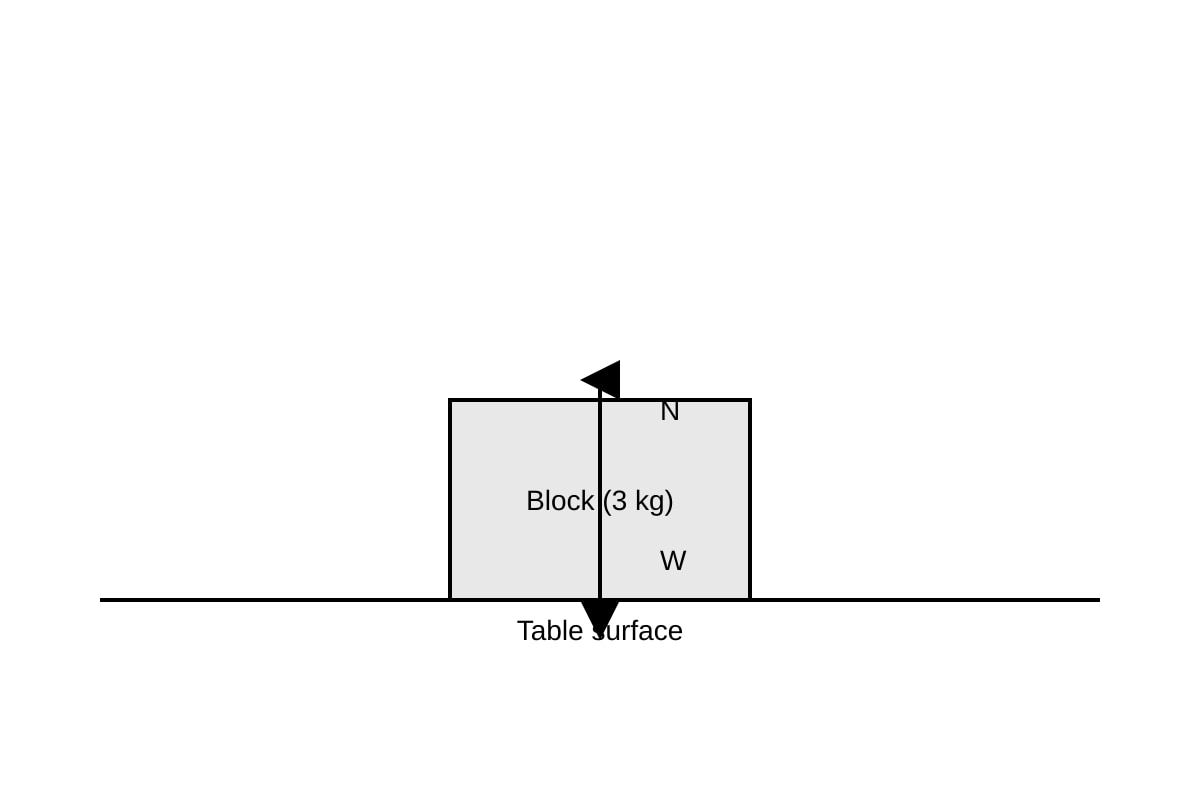
4. Fig. 1 shows a block of mass 3 kg at rest on a horizontal table.
Image pending generation: diagram for Q4.
Draw a free-body diagram to show the forces acting on the block. [2]
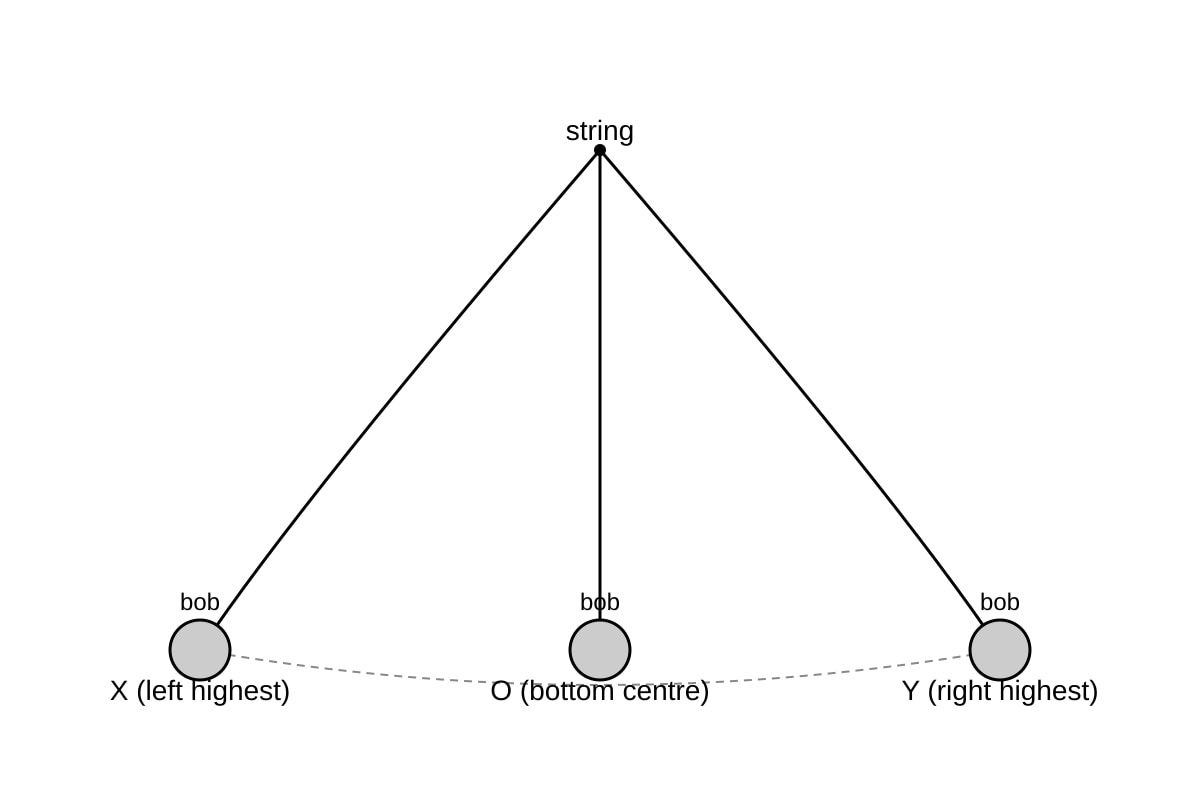
5. A pendulum consists of a metal bob attached to a string, as shown in Fig. 2. At position X the bob is at the highest point of the swing.
Image pending generation: diagram for Q5.
State the type of energy the bob has at X and describe how the energy changes as it moves to O. [2]
6. A 2 kg block is pulled along a rough horizontal surface by a constant force of 10 N and moves at constant velocity. Calculate the frictional force acting on the block. [2]
7. A metal rod is heated at one end. Explain how heat is conducted through the rod. [2]
8. A crane lifts a load of weight 2000 N through a height of 15 m in 20 s. Calculate the useful work done and the power output of the crane. [3]
Section B: Thermal Physics and Waves (Marks: 21)
9. State one difference between conduction and convection in terms of particle movement. [1]
10. Sound waves of frequency 500 Hz travel through air at 340 m/s. Calculate the wavelength of the sound waves. [2]
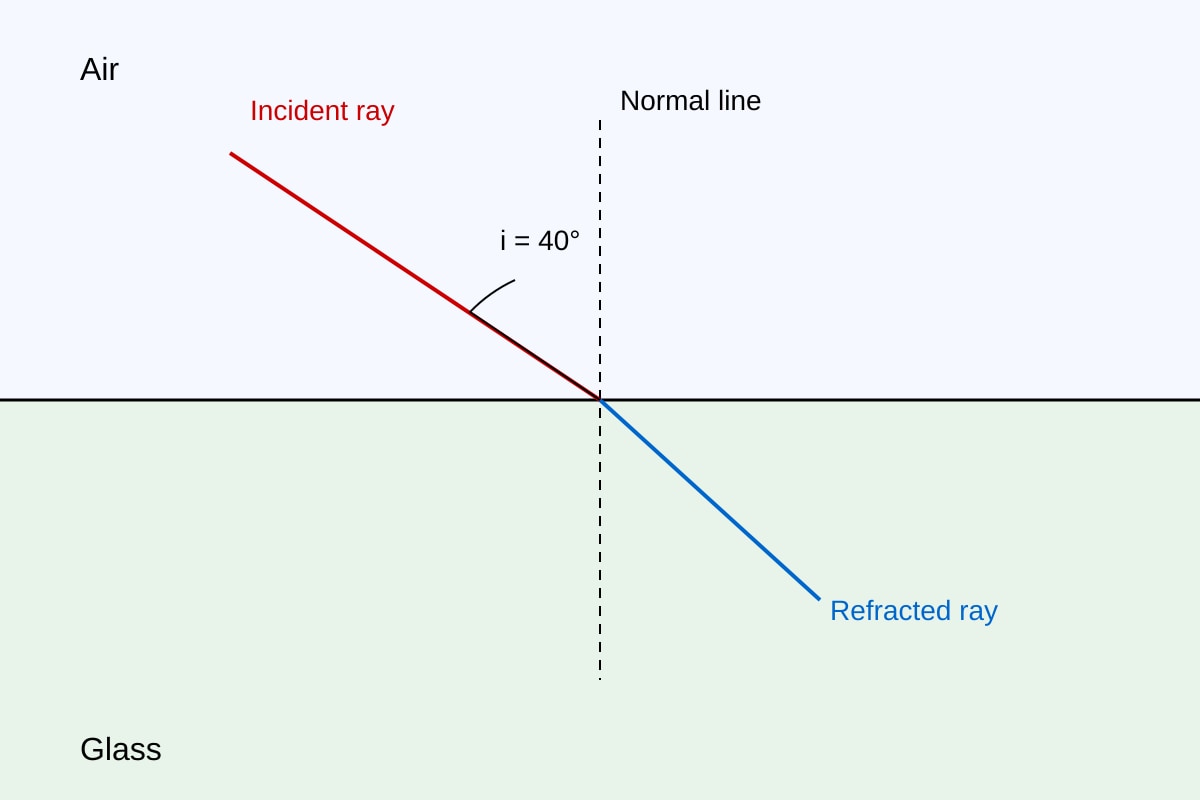
11. Fig. 3 shows a ray of light entering a glass block from air.
Image pending generation: diagram for Q11.
State what happens to the speed and direction of the light ray as it enters the glass. [2]
12. A student places a beaker of water on a hot plate. The temperature rises from 25∘C to 85∘C. The mass of water is 0.20 kg and specific heat capacity of water is 4200 J/(kg⋅∘C). Calculate the thermal energy gained by the water. [3]
13. Name two properties of electromagnetic waves that are common to all types in the spectrum. [2]
14. Explain why metals are better thermal conductors than wood. [2]
15. A wave has a speed of 6 m/s and wavelength 0.5 m. Calculate its frequency. [2]
16. State one everyday application of infrared radiation and one danger of ultraviolet radiation. [2]
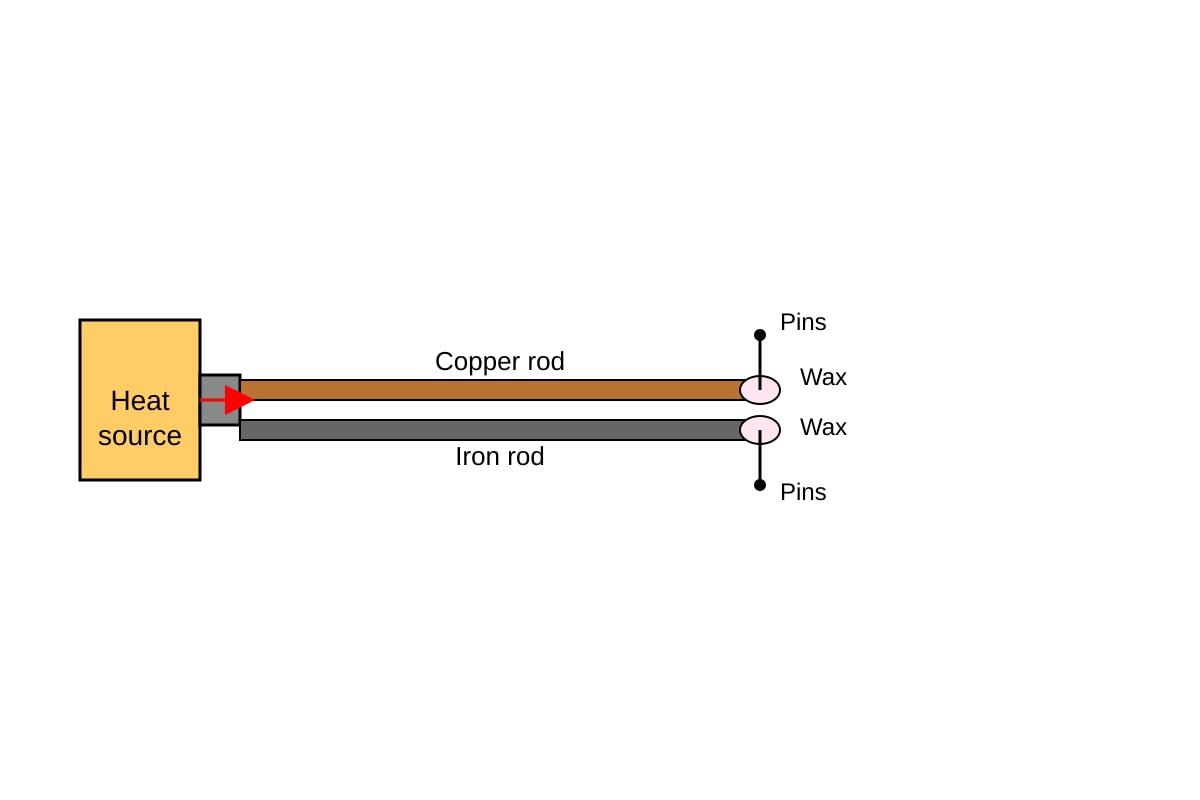
17. Fig. 4 shows a setup to investigate conduction.
Image pending generation: experimental_setup for Q17.
Predict which pin falls first and explain your answer. [3]
Section C: Electricity and Magnetism (Marks: 22)
18. State Ohm's law. [1]
19. A resistor of 6 Ω is connected to a 12 V battery. Calculate the current flowing and the power dissipated. [3]
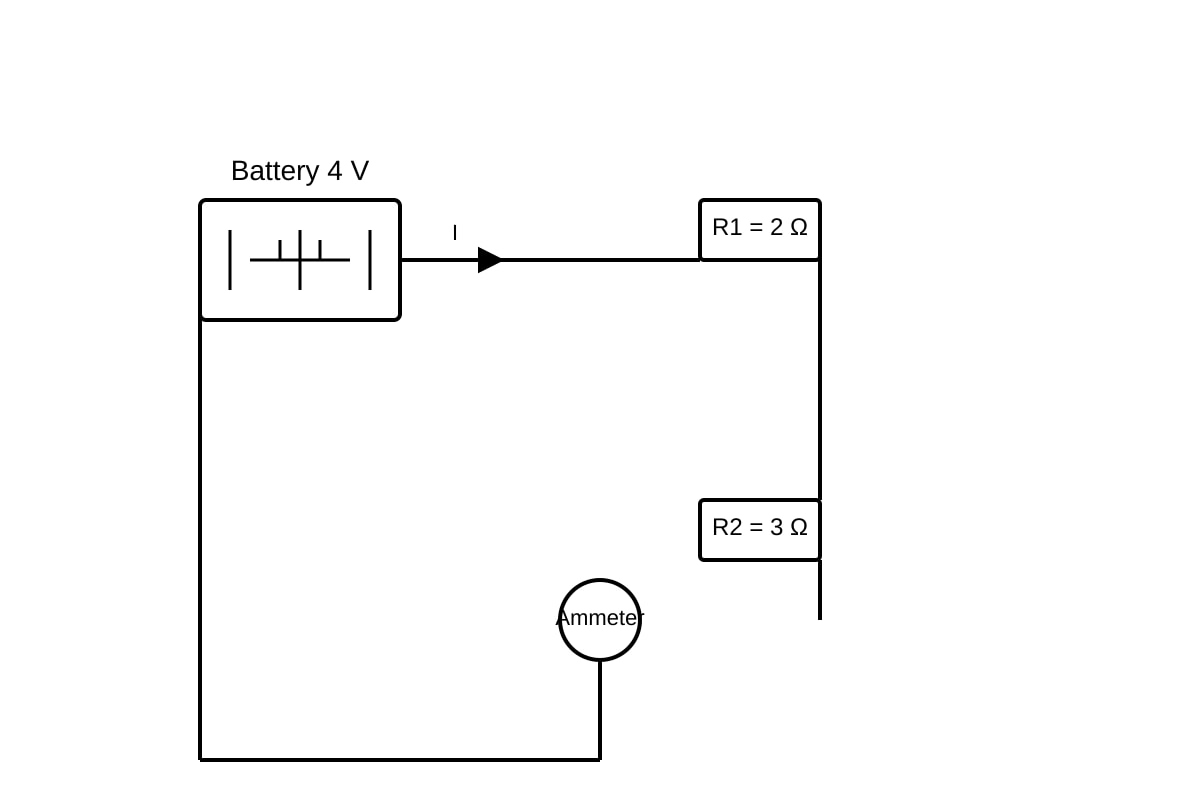
20. Fig. 5 shows a circuit with two resistors in series.
Image pending generation: diagram for Q20.
Calculate the total resistance and the current in the circuit. [3]
21. A parallel circuit has two branches with resistors 4 Ω and 6 Ω connected to a 12 V supply. Calculate the total resistance of the circuit. [3]
22. Explain how an electromagnet works. [2]
23. A transformer has 100 turns on the primary coil and 400 turns on the secondary coil. The primary voltage is 6 V. Calculate the secondary voltage. [2]
24. State two safety features in a household electrical circuit. [2]
25. A charge of 0.5 C passes through a bulb in 10 s. Calculate the current and the number of electrons if charge of one electron is 1.6×10⁻¹⁹ C. [3]
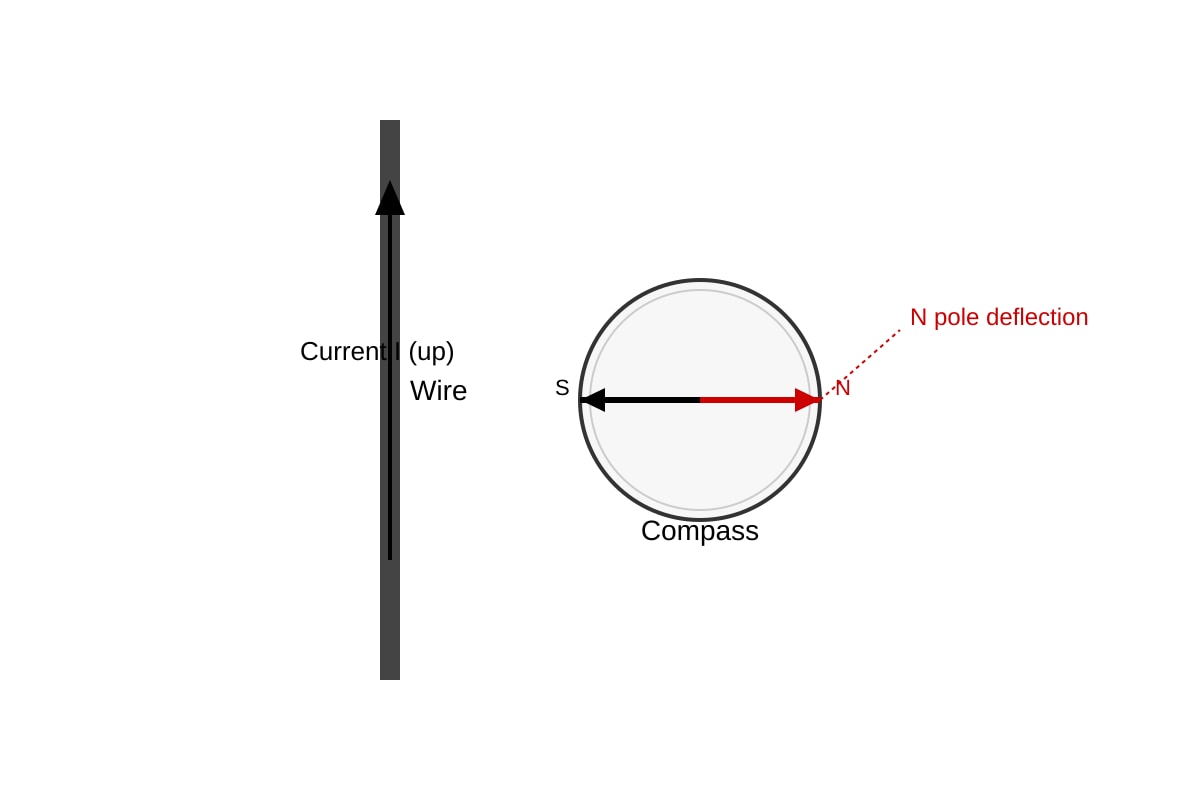
26. Fig. 6 shows a magnetic compass near a wire carrying current.
Image pending generation: diagram for Q26.
State the direction of the magnetic field at the position of the compass and explain. [2]
27. A motor uses 240 V and draws 2.0 A. It runs for 30 min. Calculate the electrical energy consumed in kWh. [3]
End of Practice Paper — Total Marks: 65
Answers
TuitionGoWhere Practice Paper — Combined Science O-Level (Answers)
Version 3 of 5 — Answer Key
Section A: Energy and Forces (22 marks)
1. [2 marks]
- Energy cannot be created or destroyed. [1]
- It can only be converted from one form to another (or total energy in a closed system is constant). [1] Teaching note: Conservation of energy means the total amount stays the same; only the form changes (e.g. KE to PE). Common mistake: saying "energy is lost" — it is transformed, not lost.
2. [3 marks]
- Assumption: air resistance negligible. [1]
- PE=mgh=0.4×10×8=32 J [1]
- By conservation, KE=32 J at ground. [1] Method: g=10, drop means all PE becomes KE. Mark for stating assumption, correct substitution, correct final.
3. [3 marks]
- Total height =25×0.12=3.0 m [1]
- Work =500×3.0=1500 J [1]
- Power =1500/12=125 W [1] Note: Convert cm to m (12 cm = 0.12 m). Use weight directly, not mass.
4. [2 marks]
- Weight arrow down labelled W. [1]
- Normal arrow up labelled N, same length. [1] Expected visual: Block with two equal opposite vertical arrows from centre.
5. [2 marks]
- At X: gravitational potential energy (GPE). [1]
- As it moves to O, GPE decreases and kinetic energy increases. [1] Concept: Highest point = max PE, lowest = max KE.
6. [2 marks]
- Constant velocity → resultant force = 0. [1]
- Friction = applied force = 10 N. [1]
7. [2 marks]
- Particles vibrate and pass kinetic energy to neighbours. [1]
- Free electrons in metal move and transfer energy quickly. [1] For metal rod specifically, free electrons key.
8. [3 marks]
- Work =2000×15=30000 J [1]
- Power =30000/20=1500 W [1]
- Units stated. [1]
Section B: Thermal Physics and Waves (21 marks)
9. [1 mark]
- Conduction: no bulk movement of particles; convection: bulk movement of fluid.
10. [2 marks]
- v=fλ⇒λ=v/f=340/500=0.68 m [2]
11. [2 marks]
- Speed decreases. [1]
- Direction bends towards normal. [1]
12. [3 marks]
- ΔT=85−25=60∘C [1]
- Q=mcΔT=0.20×4200×60=50400 J [2]
13. [2 marks]
- Travel at speed of light in vacuum. [1]
- Transverse waves / can transfer energy. [1]
14. [2 marks]
- Metals have free electrons. [1]
- These transfer thermal energy rapidly. [1]
15. [2 marks]
- f=v/λ=6/0.5=12 Hz [2]
16. [2 marks]
- Application: remote control / cooking. [1]
- Danger: skin cancer / eye damage. [1]
17. [3 marks]
- Copper pin falls first. [1]
- Copper better conductor. [1]
- Wax melts sooner at copper end. [1]
Section C: Electricity and Magnetism (22 marks)
18. [1 mark]
- Current through metal conductor constant temp is directly proportional to voltage.
19. [3 marks]
- I=V/R=12/6=2 A [1.5]
- P=VI=12×2=24 W [1.5]
20. [3 marks]
- RT=2+3=5 Ω [1.5]
- I=4/5=0.8 A [1.5]
21. [3 marks]
- 1/RT=1/4+1/6=5/12 [2]
- RT=12/5=2.4 Ω [1]
22. [2 marks]
- Current through coil creates magnetic field. [1]
- Iron core magnifies it. [1]
23. [2 marks]
- Vs=Vp×Ns/Np=6×400/100=24 V [2]
24. [2 marks]
- Fuse. [1] Earth wire. [1]
25. [3 marks]
- I=Q/t=0.5/10=0.05 A [1.5]
- n=0.5/(1.6×10−19)=3.125×1018 [1.5]
26. [2 marks]
- Field circles wire; at compass right side, direction is into/according to right-hand grip. [1]
- Compass deflects showing field present. [1]
27. [3 marks]
- E=Pt=240×2.0×0.5 h=240 Wh=0.24 kWh [3] Convert 30 min = 0.5 h.
Total: 65 marks
Free quiz and exam paper access
Enter your details to view this paper
Your access is remembered on this device.