From Real Exams Exam Paper
O Level Combined Science Practice Paper 4
Free O Level Combined Sci Practice Paper 4, HY3 Exam version, with questions, answers, and O Level-style practice for Singapore students.
These static practice materials are generated from the site's syllabus and paper-generation workflow, with source and model context shown so students and parents can evaluate the material before use.
Questions
Free quiz and exam paper access
Enter your details to view this paper
Your access is remembered on this device.
Answers
TuitionGoWhere Exam Practice (AI) — Combined Science O-Level
Practice Paper: Physical Sciences (Version 4) — Answer Key
Total Marks: 60
Section A: Energy and Forces (21 marks)
Q1 [2]
Answer: Energy cannot be created or destroyed, only converted from one form to another (or total energy in a closed system is conserved).
Teaching note: Principle of conservation of energy. Must include both “not created/destroyed” and “converted/transformed”. Common mistake: omitting transformation.
Marking: 1 mark for “cannot be created/destroyed”, 1 mark for “converted/transformed”.
Q2 [3]
Total height = 15 × 0.20 = 3.0 m
Work done = Weight × height = 600 × 3.0 = 1800 J
Power = Work / time = 1800 / 12 = 150 W
Answer: 150 W
Teaching note: Convert step height to m. Use weight directly (not mass). Power = work ÷ time.
Marking: 1 mark height, 1 mark work, 1 mark power.
Q3 [2]
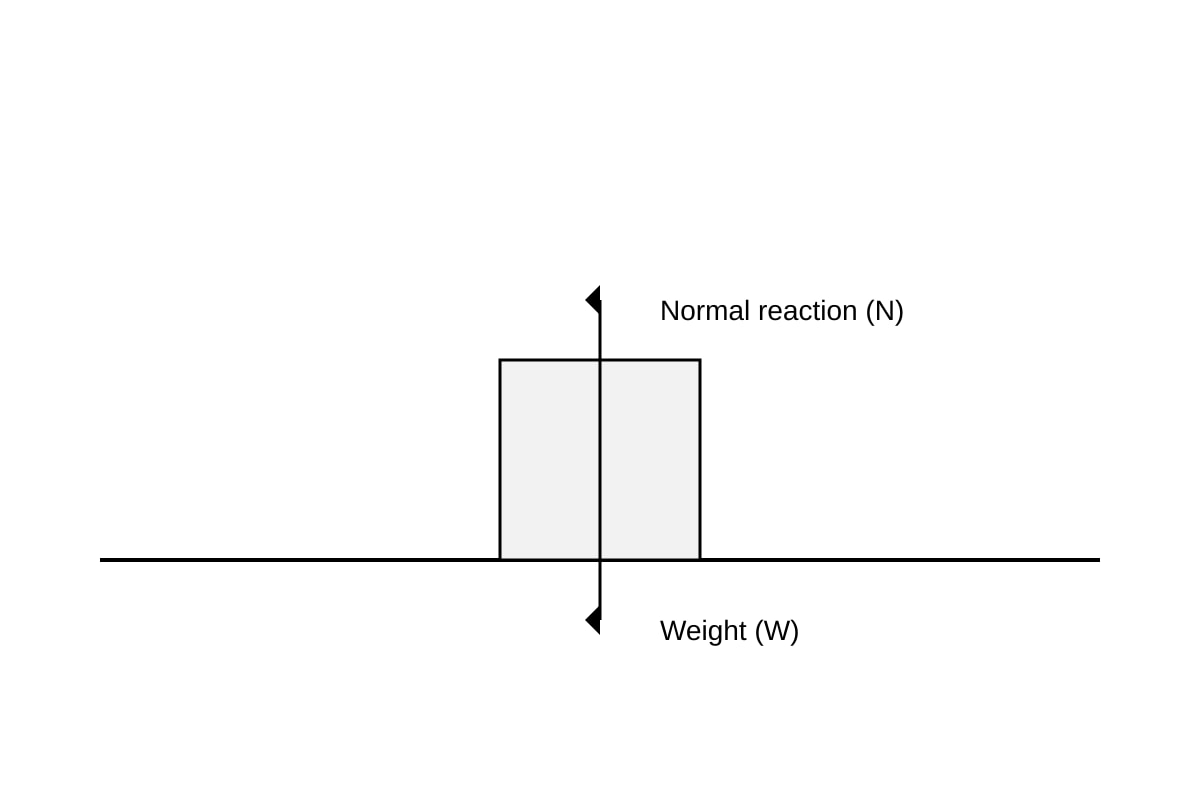
Answer: Diagram with block, upward N from centre, downward W from centre, equal arrows.
Teaching note: At rest on table, forces balanced. Weight = mg downward, normal reaction upward.
Marking: 1 mark correct forces labelled, 1 mark directions/correct balance.
Q4 [1]
Answer: B
Teaching note: Conduction in metals via free electrons and particle vibration. Not convection/radiation.
Marking: 1 mark for B.
Q5 [1]
Answer: Gravitational potential energy
Teaching note: At highest point, stationary → KE zero, GPE maximum.
Marking: 1 mark.
Q6 [2]
Answer: Gravitational potential energy transforms to kinetic energy (and a little heat due to air resistance, often ignored).
Teaching note: As it descends, GPE decreases, KE increases.
Marking: 1 mark GPE→KE, 1 mark mention of energy change.
Q7 [3]
Work done = F × d = 50 × 4.0 = 200 J
Power = W / t = 200 / 5.0 = 40 W
Answer: Work = 200 J, Power = 40 W
Teaching note: Work = force × distance in direction of force. Power = work ÷ time.
Marking: 1 mark work, 1 mark power, 1 mark units.
Section B: Thermal and Wave Physics (19 marks)
Q8 [2]
Answer: Metals have free electrons that transfer kinetic energy quickly; wood lacks free electrons.
Teaching note: Conduction mechanism. Metals = free electrons + lattice vibration.
Marking: 1 mark free electrons, 1 mark comparison.
Q9 [2]
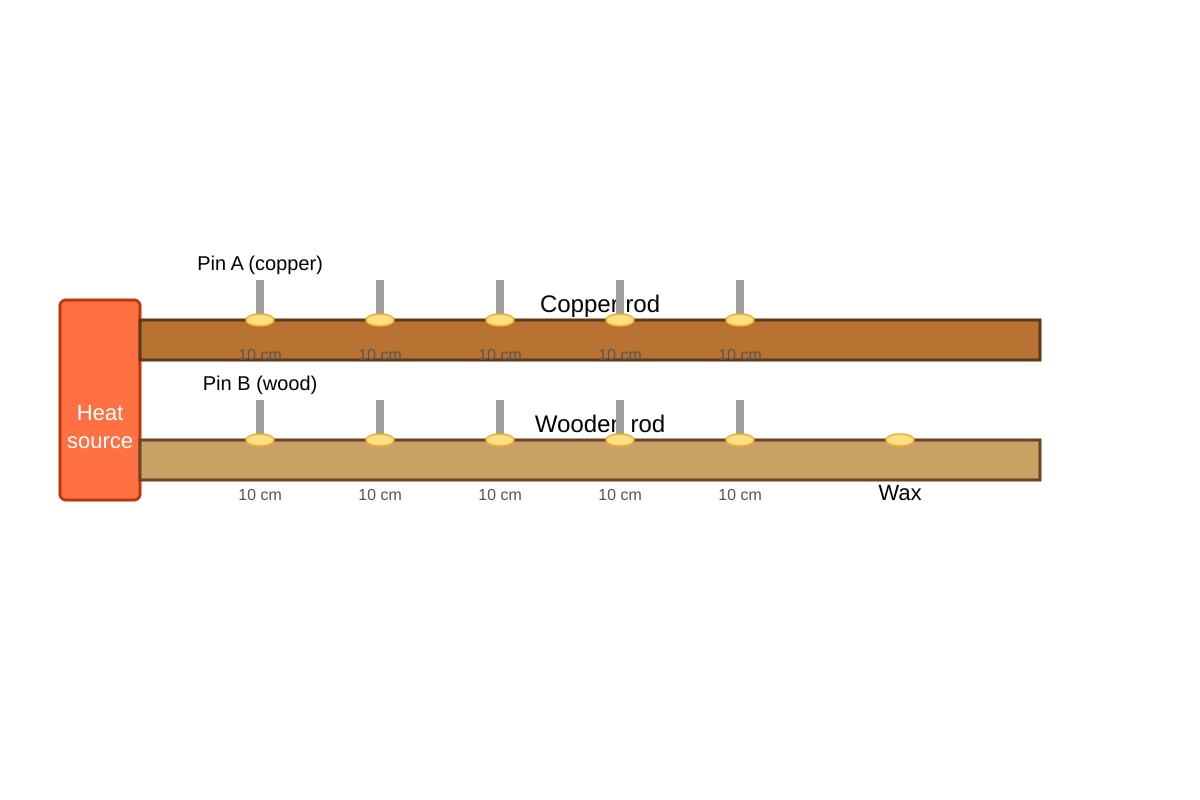
Answer: Pin A (on copper) drops first because copper conducts heat faster.
Teaching note: Wax melts sooner on better conductor.
Marking: 1 mark pin A/copper, 1 mark reason.
Q10 [1]
Answer: Transverse: oscillations perpendicular to direction of travel; longitudinal: parallel. (State one difference)
Teaching note: E.g., direction of vibration relative to wave travel.
Marking: 1 mark.
Q11 [2]
m
Answer: 0.66 m (or 0.664 m)
Teaching note: Rearrange wave speed equation.
Marking: 1 mark formula, 1 mark answer.
Q12 [2]
Answer: Speed decreases; direction bends towards normal.
Teaching note: Light enters denser medium (glass), slows, refracts toward normal.
Marking: 1 mark speed, 1 mark direction.
Q13 [2]
Answer: X-rays and gamma rays (accept UV for some imaging).
Teaching note: Medical imaging uses high-frequency EM.
Marking: 1 mark each.
Q14 [3]
,
cm
Answer: 15 cm
Teaching note: Lens formula, real image positive v.
Marking: 1 mark substitution, 1 mark rearrange, 1 mark answer.
Section C: Electricity and Magnetism (20 marks)
Q15 [1]
Answer: Current through a metal conductor is directly proportional to potential difference at constant temp.
Teaching note: Ohm’s law statement.
Marking: 1 mark.
Q16 [3]
A
W
Answer: I = 0.50 A, P = 3.0 W
Teaching note: Use Ohm’s law then power.
Marking: 1 mark current, 1 mark power calc, 1 mark units.
Q17 [2]
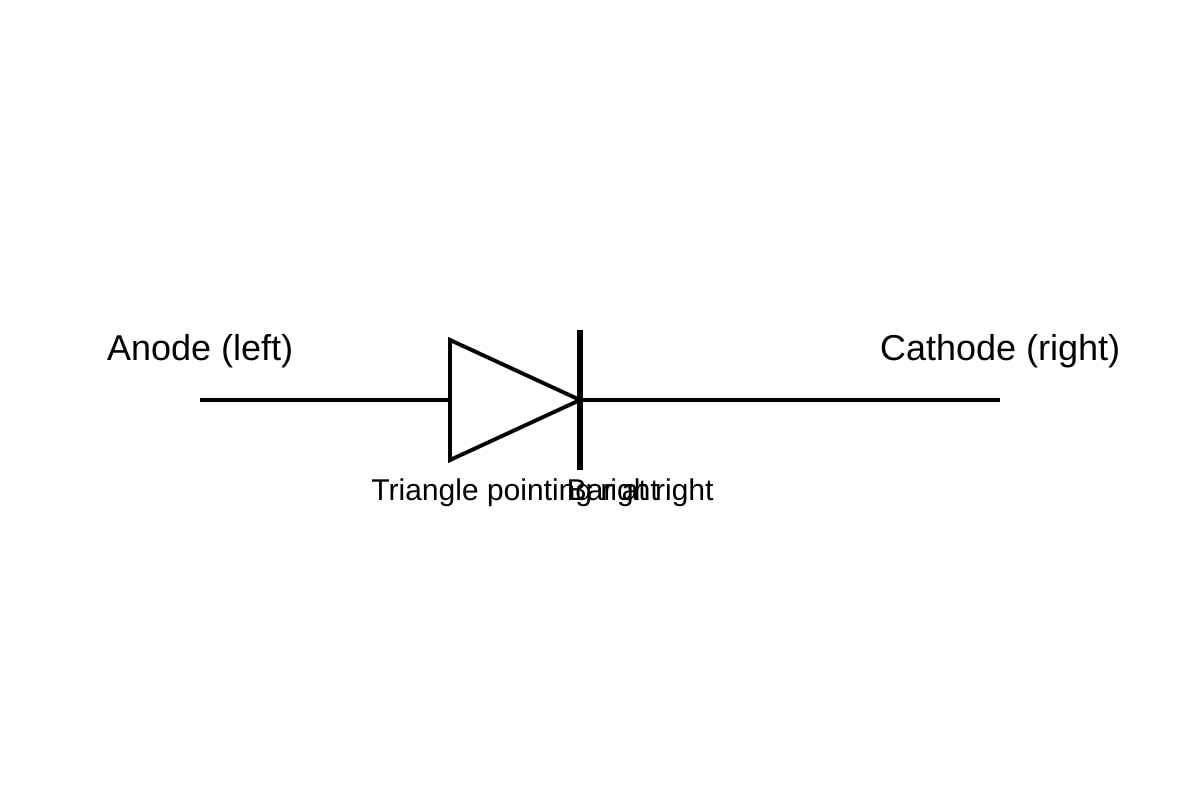
Answer: Symbol triangle+bar; function: allows current in one direction only.
Teaching note: Diode is one-way valve for current.
Marking: 1 mark symbol, 1 mark function.
Q18 [3]
Ω
A
Answer: R = 10 Ω, I = 1.0 A
Teaching note: Series adds resistance.
Marking: 1 mark total R, 1 mark current, 1 mark unit.
Q19 [2]
Answer: Electromagnetic induction; increase speed/field strength/turns.
Teaching note: Rotating coil in magnetic field induces emf.
Marking: 1 mark principle, 1 mark factor.
Q20 [4]
V
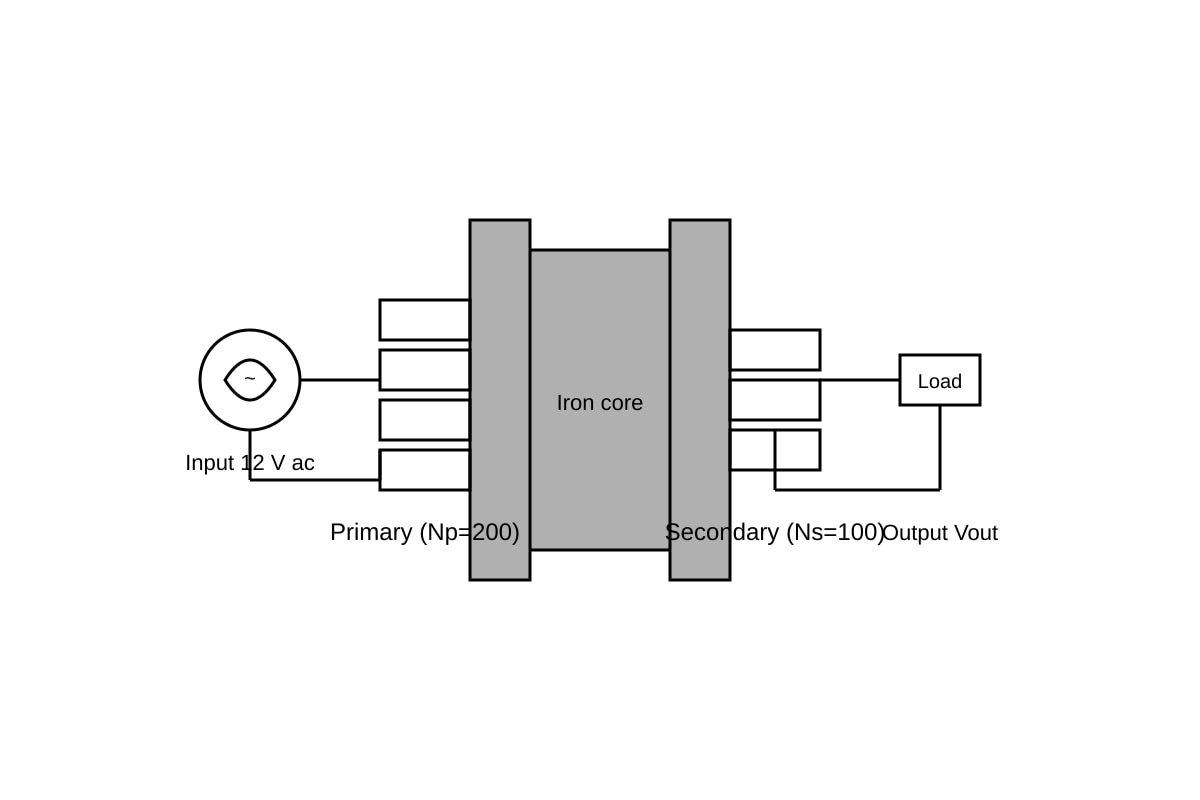
Answer: 6.0 V
Teaching note: Transformer ratio. Step-down as Ns<Np.
Marking: 1 mark ratio, 1 mark substitution, 1 mark calc, 1 mark unit.