AI Generated Quiz
O Level Biology Human Physiology Quiz
Free O Level Biology Human Physiology quiz, HY3 AI version, with questions, answers, and O Level-style practice for Singapore students.
These static practice materials are generated from the site's syllabus and paper-generation workflow, with source and model context shown so students and parents can evaluate the material before use.
Questions
Free quiz and exam paper access
Enter your details to view this paper
Your access is remembered on this device.
Answers
O-Level Biology Quiz - Human Physiology (Answer Key)
Total Marks: 40
Topic: Human Physiology (syllabus-first, AI-inferred from Stage 4 templates; not claimed as past-year derived)
Section A
1. Pulmonary vein. [1]
Teaching note: The pulmonary vein is unique among veins because it carries oxygenated blood (from lungs to left atrium). Most veins carry deoxygenated blood. Common mistake: naming aorta (that is an artery from heart to body).
2. Absorbs water from undigested food / forms faeces. [1]
Teaching note: The large intestine (colon) reabsorbs water and minerals; this prevents dehydration and solidifies waste.
3. Excretion (or ultrafiltration and reabsorption in nephron). [1]
Teaching note: Urea is a nitrogenous waste from protein breakdown; kidneys filter it from blood. Accept "excretion" as the broad process.
4. Carbon dioxide (). [1]
Teaching note: Body cells respire aerobically producing which diffuses into blood, to lungs, and is exhaled. Oxygen moves opposite direction.
5. Insulin. [1]
Teaching note: Insulin from pancreas beta-cells lowers blood glucose by promoting glucose uptake and conversion to glycogen.
Section B
6. [4] Mark breakdown: enzyme 1 named + substrate + product [2]; enzyme 2 named + substrate + product [2].
Example: Amylase acts on starch → maltose (in mouth/duodenum) [2]; Protease (e.g. pepsin) acts on protein → peptides (in stomach) [2].
Teaching note: Enzymes are biological catalysts; each has specific substrate. Must state role (speeds digestion) implicitly via substrate→product. Common trap: listing enzyme without substrate/product pair loses marks.
7. [3]
- Biconcave shape → large surface area for oxygen diffusion [1]
- No nucleus → more space for haemoglobin [1]
- Contains haemoglobin → binds oxygen [1]
Teaching note: Structure-function link is key in O-Level physiology. Red cells trade nucleus for haemoglobin capacity.
8. [4]
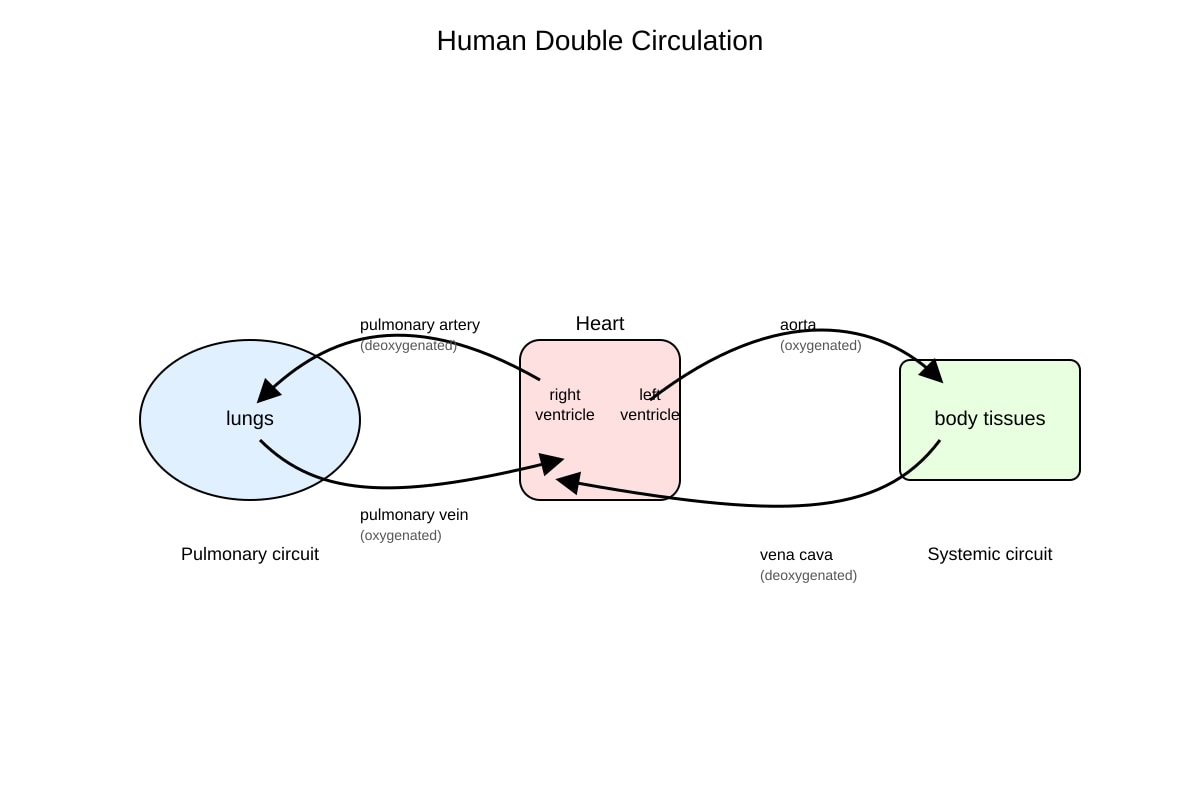
- Pulmonary circuit: heart → lungs → heart; deoxygenated blood to lungs, oxygenated back [2]
- Systemic circuit: heart → body → heart; oxygenated to body, deoxygenated back [2]
Teaching note: Double circulation = two loops; right side pumps to lungs, left side to body. Diagram must show arrows matching this.
9. [3]
- More protein → more amino acid deamination in liver [1]
- Produces more urea → higher solute in blood [1]
- Kidney reabsorbs water by osmosis, urine becomes more concentrated (or volume less) [1]
Teaching note: Do not confuse volume with concentration. Urea is the osmotic agent pulling water retention.
10. [3]
- Blood glucose rises after meal [1]
- Insulin secreted by pancreas [1]
- Glucose converted to glycogen in liver / stored [1]
Teaching note: Negative feedback; opposite occurs via glucagon when low.
11. [3]
- Provides oxygen and nutrients to fetus [1]
- Removes and wastes [1]
- Allows exchange without mixing blood (via umbilical cord) [1]
Teaching note: Placenta is organ of exchange, not connection of bloodstreams.
12. [4]
- Nervous system increases breathing rate (medulla) [1]
- Sympathetic nerves raise heart rate [1]
- More alveoli ventilated, uptake rises [1]
- Meets higher ATP demand of muscles [1]
Teaching note: Coordination of systems maintains internal balance (homeostasis) during exercise.
13. [4]
- Stimulus (tap) stretches tendon [1]
- Sensory neuron sends impulse to spinal cord [1]
- Motor neuron triggers quadriceps contraction [1]
- Leg extends; no brain involvement (fast) [1]
Teaching note: Reflex arc bypasses brain for speed; protects from harm.
14. [3]
- Glucose often lower in lumen than cell [1]
- Must move against gradient [1]
- Active transport uses ATP from respiration [1]
Teaching note: After meal, co-transport helps, but baseline uptake needs energy.
15. [2]
- Sweating (evaporation cools) [1]
- Vasodilation (blood near surface loses heat) [1]
Teaching note: Also hair flattening; accept any two valid.
Section C
16. [3]
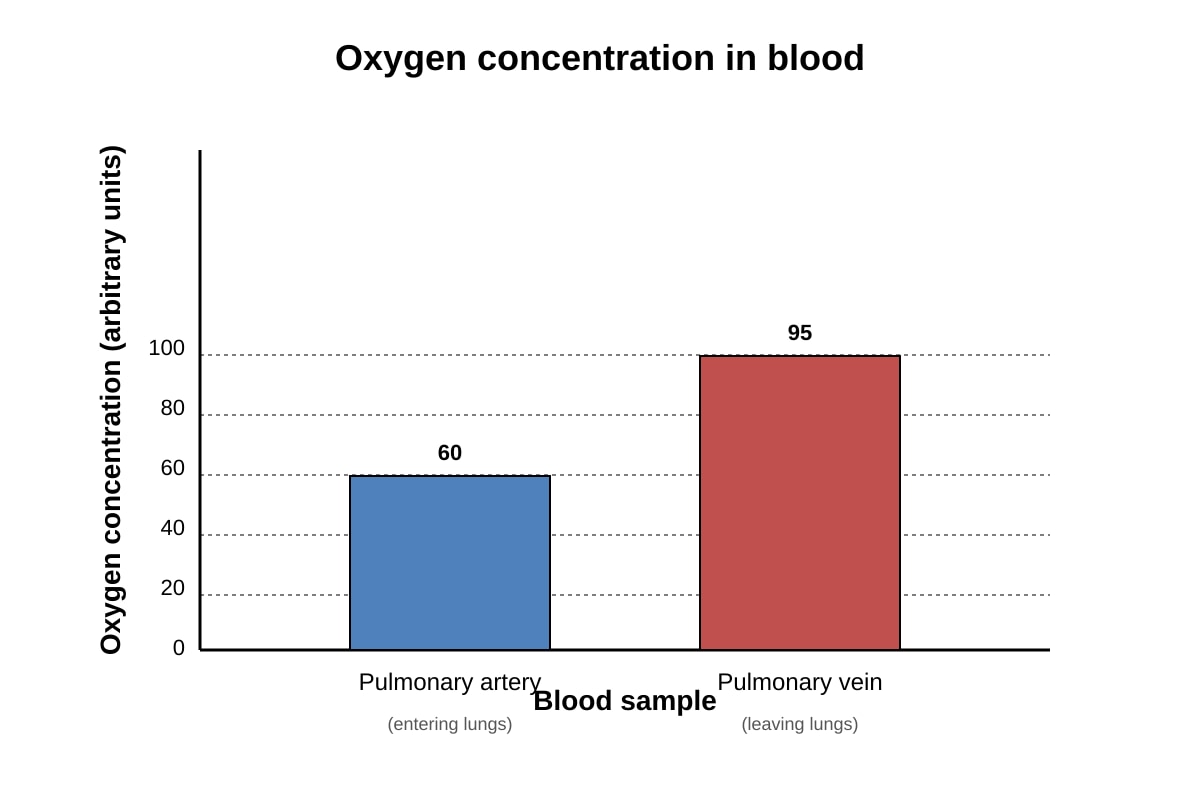
- Oxygen rises from 60 to 95 units [1]
- Alveoli have high , blood low [1]
- Diffusion into blood, binds haemoglobin [1]
Teaching note: Graph shows pulmonary vein > artery confirming gas exchange efficiency.
17. [3]
- Activity needs more ATP [1]
- Muscles need more , produce more [1]
- Faster heart pumps more blood to supply demand [1]
Teaching note: Data interpretation: correlation of rate with metabolism.
18. [4]
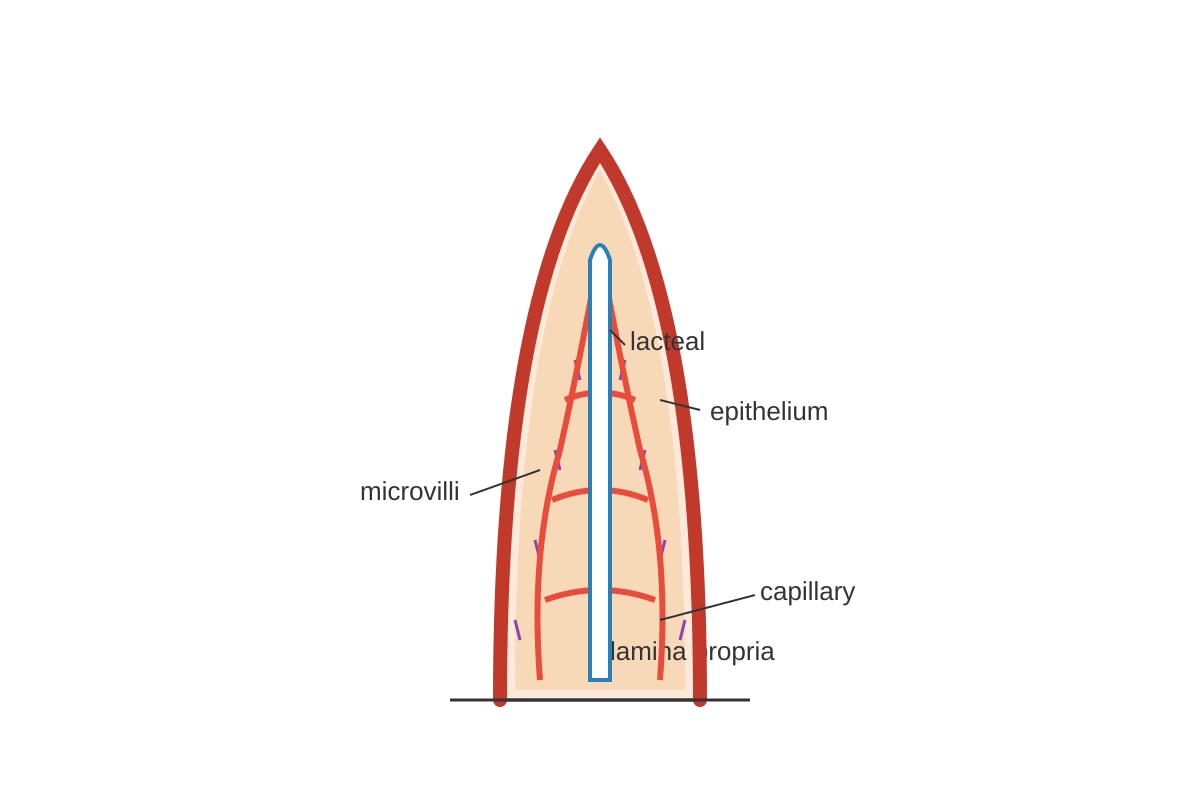
- Microvilli increase surface area [1]
- Thin epithelium short diffusion path [1]
- Capillaries remove glucose/amino acids quickly [1]
- Lacteal absorbs fats [1]
Teaching note: Villus structure maximises absorption via area and transport.
19. [3]
- Evaporation needs latent heat from skin → cools [1]
- Water leaves body → loses heat [1]
- Also loses salts / water balance affected [1]
Teaching note: Thermoregulation via latent heat; secondary effect is dehydration risk.
20. [4]
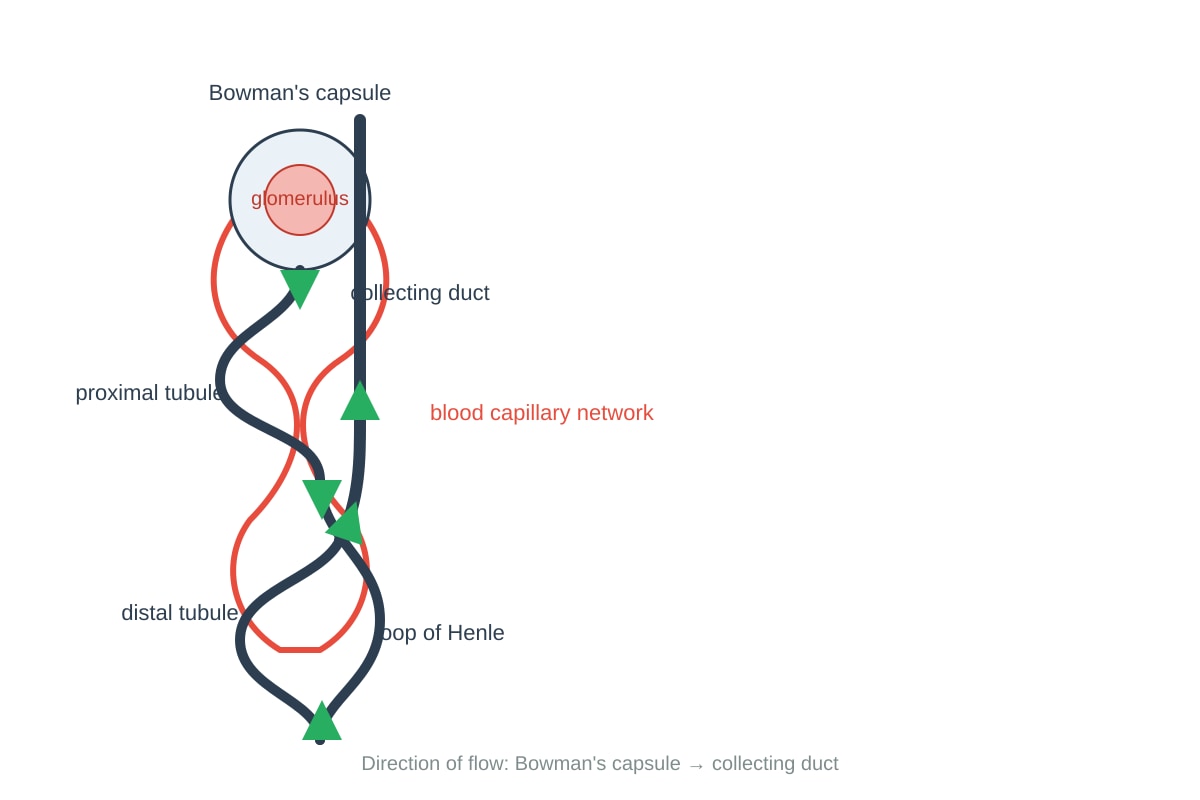
- Ultrafiltration at glomerulus (pressure forces water/salts/urea out) [2]
- Reabsorption of glucose/water in tubule [2]
Teaching note: Nephron filters then selectively recovers; urine = waste + excess.