AI Generated Quiz
O Level Biology Cells Biomolecules Quiz
Free O Level Biology Cells Biomolecules quiz, HY3 AI version, with questions, answers, and O Level-style practice for Singapore students.
These static practice materials are generated from the site's syllabus and paper-generation workflow, with source and model context shown so students and parents can evaluate the material before use.
Questions
Free quiz and exam paper access
Enter your details to view this paper
Your access is remembered on this device.
Answers
O-Level Biology Quiz - Cells Biomolecules: Answer Key
Total Marks: 40
Topic: Cells Biomolecules (Stage 5 AI-generated from LLM-inferred templates; not claimed as past-year derived)
Q1. [1] Cell wall (or chloroplast, or large vacuole).
Teaching note: Plant cells have a rigid cell wall made of cellulose visible under light microscope; animal cells lack this. Accept any one correct plant-only structure.
Q2. [2]
(a) [1] Controls all cell activities / contains genetic material (DNA).
(b) [1] Involved in cell division / produces ribosomes (in nucleolus).
Teaching note: The nucleus is the control centre; it stores DNA which directs protein synthesis and replication.
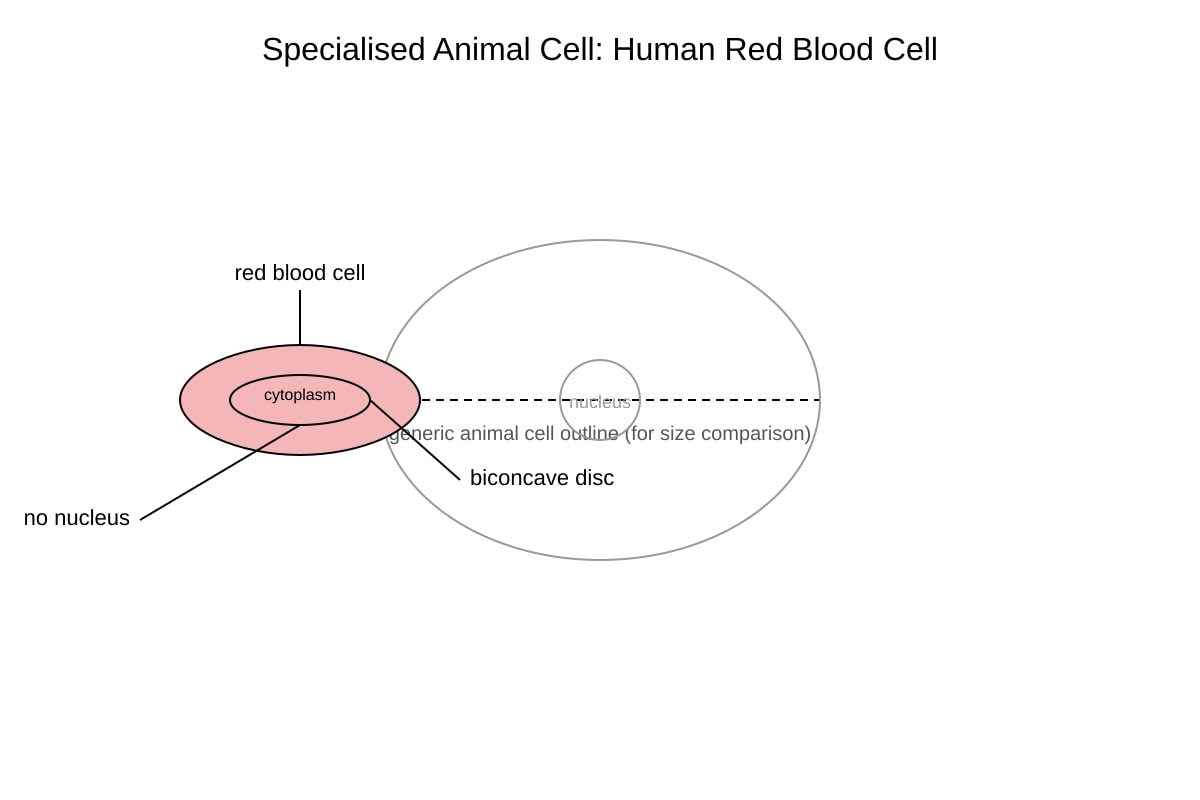
Q3. [2] Red blood cell has no nucleus, allowing more space for haemoglobin to carry oxygen / biconcave shape increases surface area for gas exchange.
Marking: 1 mark for identified feature, 1 mark for linked function.
Common mistake: Stating "small size" without function link.
Q4. [2]
(a) [1] Bacterial cell has cell wall of peptidoglycan; animal cell has no cell wall (or cellulose in plants).
(b) [1] Bacterial cell has plasmids / nucleoid (no membrane-bound nucleus); animal cell has nucleus.
Teaching note: Bacteria are prokaryotic; animals are eukaryotic.
Q5. [1] Mitochondria are too small to be resolved by light (below resolution limit of ~200 nm).
Teaching note: Electron beams have shorter wavelength, giving higher resolution.
Q6. [2] Movement of particles from a region of high concentration to a region of low concentration (down concentration gradient) due to random motion.
Marking: 1 for direction, 1 for gradient/Random motion.
Q7. [2]
(a) [1] Cells become turgid / take in water.
(b) [1] Water moves by osmosis into cells where solute concentration is higher (lower water potential).
Teaching note: Distilled water is hypotonic to potato cytoplasm.
Q8. [6]
- Osmosis: movement of water across partially permeable membrane down water potential gradient [1]
- Active transport: movement of substances against concentration gradient [1]
- Osmosis needs no energy; active transport needs ATP [1]
- Osmosis involves water only; active transport uses carrier proteins for ions/molecules [1]
- Example osmosis: water uptake by root hair cells [1]
- Example active transport: mineral ion uptake by root hair cells [1]
Teaching note: Contrast must include energy, gradient, membrane, and examples.
Q9. [3] Mineral ion concentration in soil is lower than in root hair cell / ions must enter against gradient [1]; active transport uses ATP from respiration [1]; allows plants to absorb needed ions even when scarce [1].
Q10. [3] (a) No [1] (b) No [1] (c) Yes [1]
Q11. [1] Carbon (C), Hydrogen (H), Oxygen (O), Nitrogen (N) – sometimes Sulphur (S).
Accept C, H, O, N.
Q12. [4] Starch – Iodine solution; Reducing sugar – Brick-red precipitate; Protein – Biuret solution; Fat – White emulsion. [1 each]
Q13. [3] (a) Glucose [1] (b) Amino acid [1] (c) Fatty acid [1]
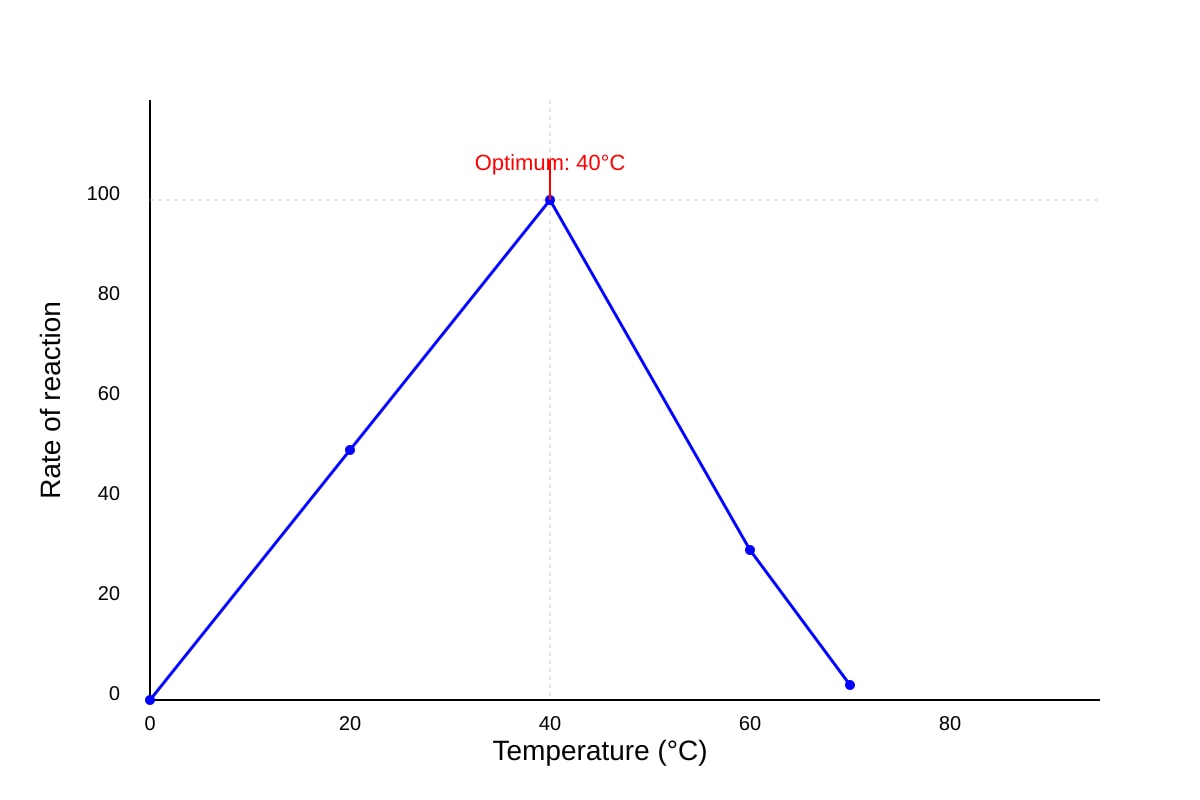
Q14. [4] Amylase active site is complementary in shape to starch (lock-and-key) so only starch binds [2]; Factors: temperature – rate rises to optimum then denatures [1]; pH – extreme pH changes active site shape [1].
Common trap: Not explaining specificity.
Q15. [3] (a) 40 °C [1] (b) Above optimum, enzyme denatures; active site loses shape; fewer enzyme-substrate complexes [2].
Q16. [3] Substrate fits into enzyme's active site like key in lock [1]; enzyme-substrate complex forms [1]; reaction occurs lowering activation energy, products released [1].
Q17. [1] Protein is present.
Q18. [2] (a) Polysaccharide (or carbohydrate) [1] (b) Energy storage in liver/muscle [1].
Q19. [4] Enzymes are biological catalysts speeding digestion [1]; Amylase breaks starch → maltose (mouth) [1]; Pepsin breaks protein → peptides (stomach) [1]; (or lipase, protease etc.) [1].
Marking: catalyst role + 2 named examples with substrate/product.
Q20. [3] More protein → more deamination in liver → more urea in blood [1]; higher solute concentration in filtrate [1]; kidney reabsorbs less water / urine more concentrated (or volume changes) [1].
Note: Link protein → urea → osmotic effect.