AI Generated Exam Paper
O Level Biology Practice Paper 5
Free O Level Biology Practice Paper 5, HY3 AI version, with questions, answers, and O Level-style practice for Singapore students.
These static practice materials are generated from the site's syllabus and paper-generation workflow, with source and model context shown so students and parents can evaluate the material before use.
Questions
Free quiz and exam paper access
Enter your details to view this paper
Your access is remembered on this device.
Answers
TuitionGoWhere Practice Paper — Answer Key (Version 5)
Subject: Biology
Level: O-Level
Total Marks: 60
Section A: Multiple Choice and Short Answer
1. C — Protein [1]
Teaching note: Proteins contain C, H, O and N (sometimes S). Starch/glucose/fat contain only C, H, O.
2. ribosome [1]
Teaching note: Ribosomes are the site of protein synthesis; visible under electron microscope.
3. Cell wall (or chloroplast / large vacuole) [1]
Teaching note: Plant cells have cell wall, chloroplasts, large vacuole not seen in animal cells under light microscope.
4. B — Iodine solution [1]
Teaching note: Iodine + starch → blue-black. Benedict's is for reducing sugar, biuret for protein, ethanol for fat.
5. water [1]
Teaching note: Osmosis is water movement across partially permeable membrane, down water potential gradient.
6. Glucose uptake in villi / ion uptake by root hair [1]
Teaching note: Active transport moves substances against gradient using ATP; e.g., glucose absorbed in intestine.
7. active site [1]
Teaching note: Lock-and-key: substrate fits enzyme active site like key in lock.
8. glucose [1]
Teaching note: Cellulose, starch, glycogen are polysaccharides of glucose monomers.
9. mitosis [1]
Teaching note: Mitosis produces 2 identical diploid cells; meiosis produces gametes.
10. allow more space for haemoglobin / carry more oxygen [1]
Teaching note: Mature mammalian RBC lose nucleus to maximise haemoglobin capacity.
11. B — Insulation and long-term energy storage [1]
Teaching note: Fats store energy long-term and insulate; carbs are immediate source.
12. plant [1]
Teaching note: Large central sap vacuole is characteristic of plant cells.
13. reducing sugars [1]
Teaching note: Benedict's + reducing sugar → brick-red precipitate on heating.
14. respiration / aerobic respiration [1]
Teaching note: Mitochondria are powerhouses where ATP is made.
15. high [1]; low [1]
Teaching note: Diffusion is passive movement down concentration gradient.
16. C, H, O [1]
Teaching note: Carbohydrates have formula ratio ~ (CH₂O)ₙ.
17. surface area (for absorption) [1]
Teaching note: Root hair extension increases SA for water/mineral uptake.
18. protein [1]
Teaching note: Biuret reagent turns purple with peptide bonds.
Section A total: 18 marks
Section B: Structured Response
19. [2]
- Bacterial cell has cell wall of peptidoglycan; animal cell has no cell wall (or cellulose in plants) [1]
- Bacterial cell has plasmids / nucleoid region; animal cell has nucleus with chromosomes [1]
Marking: 1 mark per clear different feature with comparison.
20. [4]
- Amylase active site complementary in shape to starch only → specific [1]
- Factor 1: Temperature — rate rises to optimum (~37 °C) then denatures [1]
- Factor 2: pH — optimum near neutral; extreme pH changes active site shape [1]
- (Extra: substrate conc. until saturation) [1 if third factor]
Teaching note: Specificity from shape; factors alter 3D structure or collision rate.
21. [2]
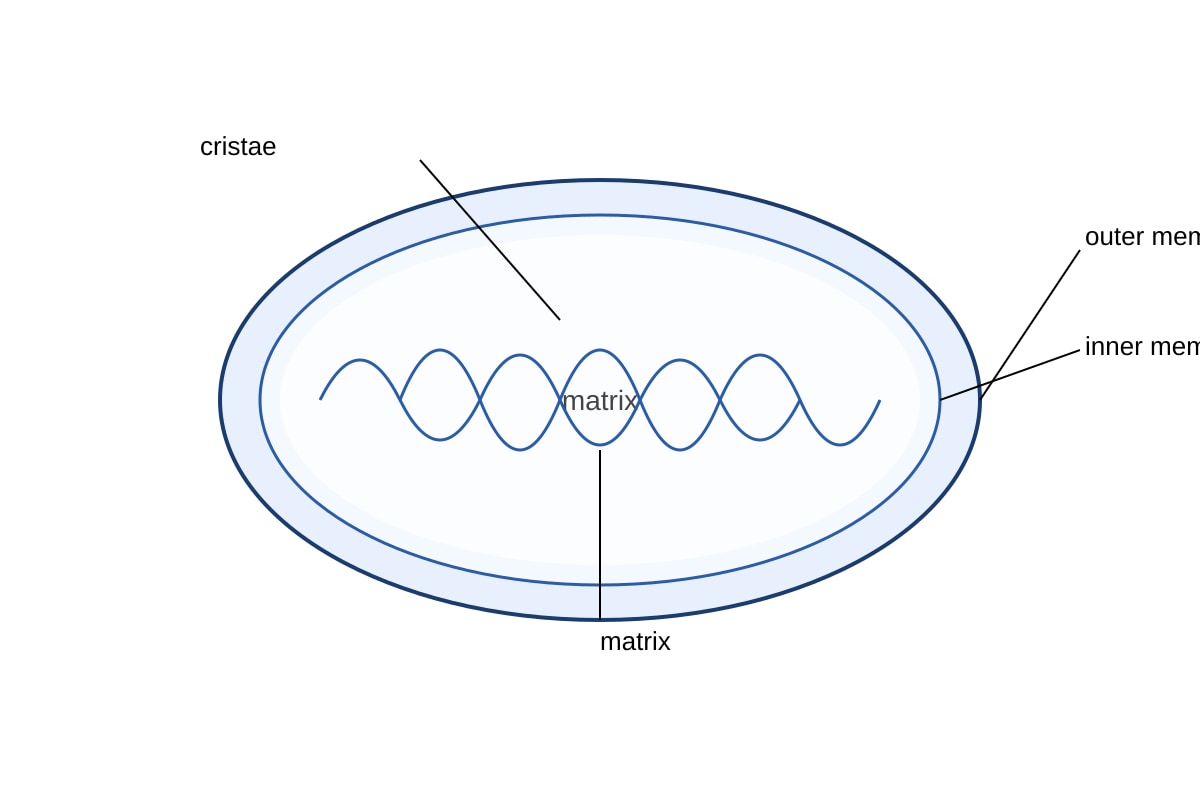
- Cristae: large surface area for respiratory enzymes [1]
- Matrix: contains enzymes for Krebs cycle [1]
Based on image: Labelled cristae and matrix must be identified.
22. [6]
- Osmosis: water only, down gradient, no energy [1]
- Active transport: ions/molecules, against gradient, needs ATP [1]
- Osmosis through partially permeable membrane; active transport via carrier proteins [1]
- Example osmosis: water into root hair cell [1]
- Example active transport: mineral ions into root hair [1]
- Contrast summary [1]
Teaching note: Clear energy and gradient difference is key.
23. [4]
- Enzymes are biological catalysts speeding digestion [1]
- Amylase: starch → maltose (mouth) [1]
- Pepsin: protein → peptides (stomach) [1]
- (Or lipase: fats → fatty acids+glycerol) [1]
Marking: catalyst role + 2 named enzyme-substrate-product sets.
24. [3]
- Water enters RBC by osmosis (outside has higher water pot) [1]
- Cell swells as no wall [1]
- May burst (haemolysis) [1]
25. [3]
- More protein → more deamination in liver [1]
- More urea in blood [1]
- Kidney reabsorbs water → urine more concentrated (or volume less) [1]
26. [4]
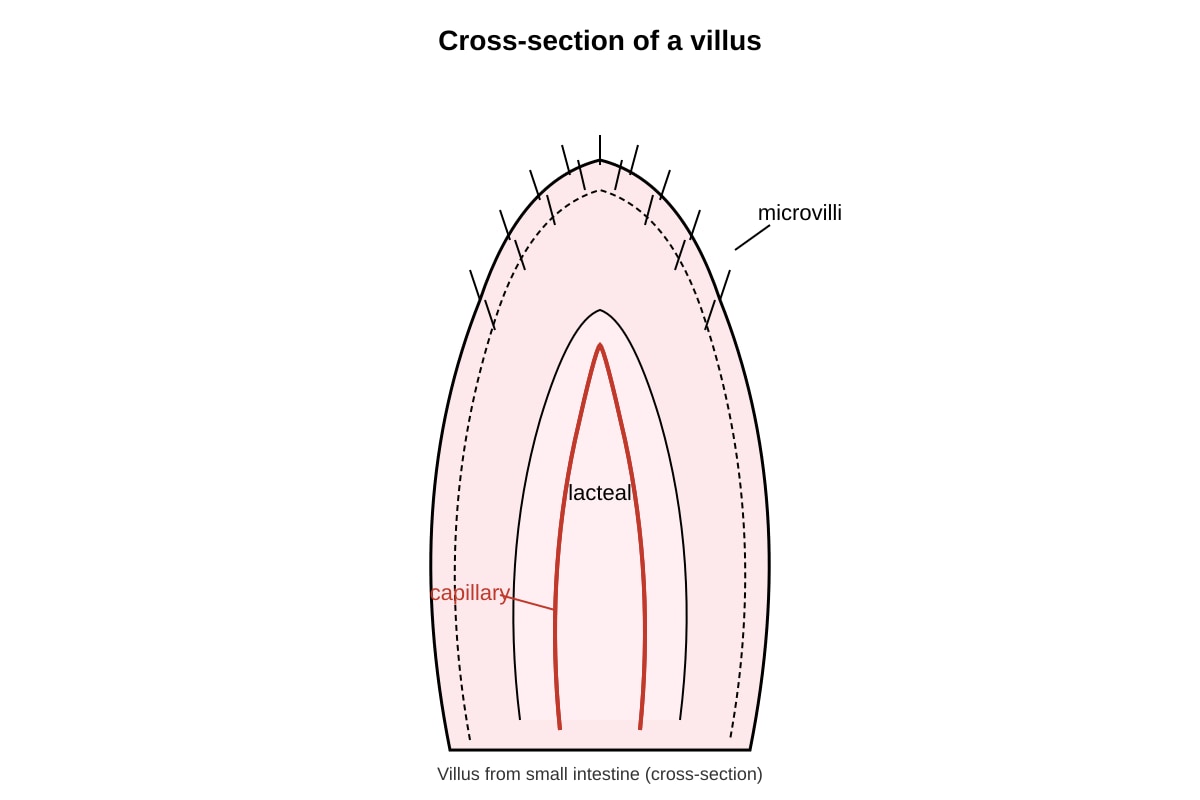
- Microvilli increase surface area [1]
- Thin epithelium short diffusion path [1]
- Capillary network removes nutrients quickly [1]
- Lacteal absorbs fats [1]
Image: villus with listed structures.
27. [3]
- Air gives O₂ for aerobic respiration [1]
- Respiration makes ATP [1]
- ATP used for active transport of ions [1]
28. [2]
- Ethanol test [1]
- White emulsion indicates fat [1]
29. [2]
- Muscle needs energy to contract [1]
- Many mitochondria produce ATP via respiration [1]
Section B total: 30 marks
Section C: Application and Data
30. [4]
- P: starch [1]
- Q: reducing sugar [1]
- R: protein [1]
- S: fat [1]
31. [4]
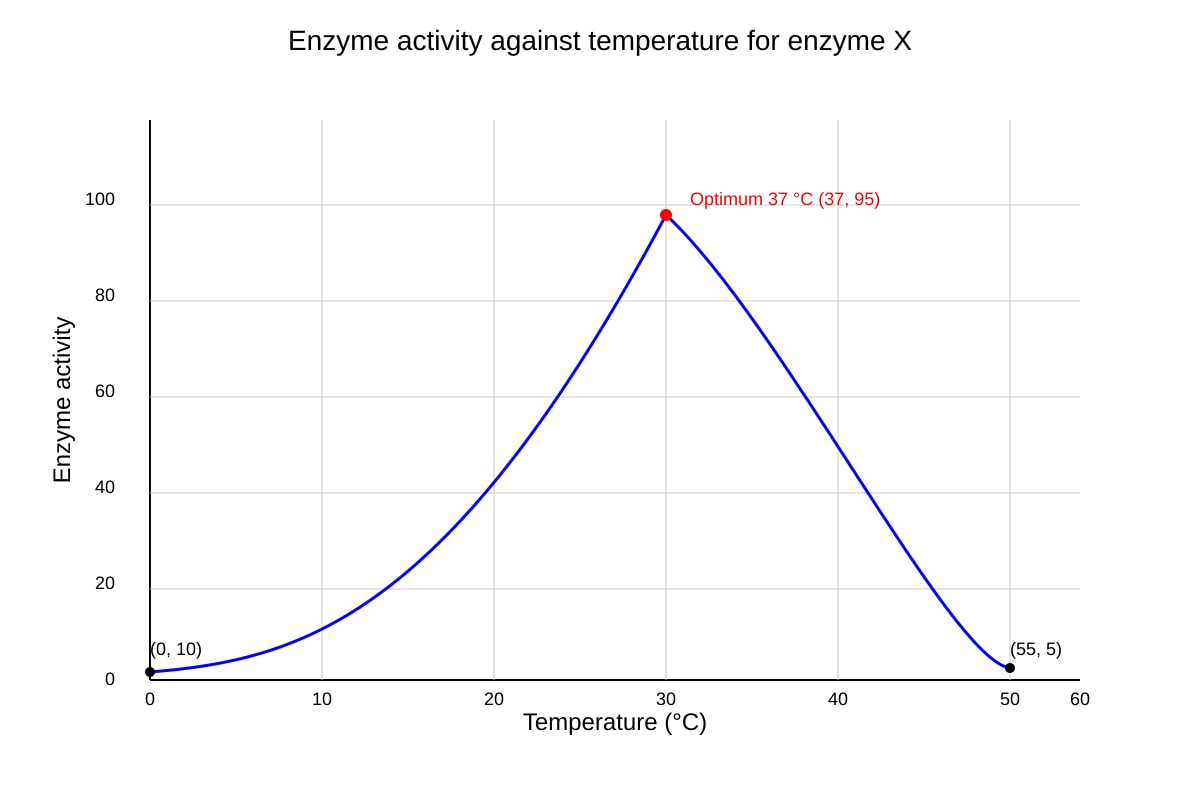
(a) 37 °C [1]
(b) Above 45 °C enzyme denatures; H-bonds break, active site loses shape [2]
(c) Active site changes shape / destroyed [1]
Graph: optimum at 37 °C, decline shown.
32. [4]
- Condensation reaction joins glycerol + 3 fatty acids [2]
- Releases water; forms triglyceride [1]
- Function: long-term energy store / insulation [1]
Section C total: 12 marks
Overall total: 60 marks