AI Generated Exam Paper
O Level Biology Practice Paper 5
Free O Level Biology Practice Paper 5, DeepSeek AI version, with questions, answers, and O Level-style practice for Singapore students.
These static practice materials are generated from the site's syllabus and paper-generation workflow, with source and model context shown so students and parents can evaluate the material before use.
Questions


Free quiz and exam paper access
Enter your details to view this paper
Your access is remembered on this device.
Answers
TuitionGoWhere Practice Paper - Biology O-Level
Answer Key and Marking Scheme
Version 5 of 5
Paper: Practice Paper — Theme I: Cells and The Chemistry of Life
Total Marks: 80
Section A: Multiple Choice (20 marks)
One mark per correct answer.
| Question | Answer | Explanation |
|---|---|---|
| 1 | C | Chloroplasts are present in plant cells (for photosynthesis) but absent in animal cells. Both cell types have a nucleus, cell membrane, and mitochondria. |
| 2 | C | The organelle with a folded inner membrane (cristae) and double membrane is the mitochondrion, the site of aerobic respiration. |
| 3 | B | Distilled water has a higher water potential than the potato cell sap. Water enters the cells by osmosis, making them firm and turgid. |
| 4 | A | Carbohydrates contain C, H, O; proteins contain C, H, O, N (and sometimes S); fats contain C, H, O. |
| 5 | B | Benedict's test gives a brick-red precipitate when reducing sugars (e.g., glucose) are present and heated. |
| 6 | C | Oxygen moves from the alveoli (high concentration) to the blood (low concentration) by diffusion down a concentration gradient. |
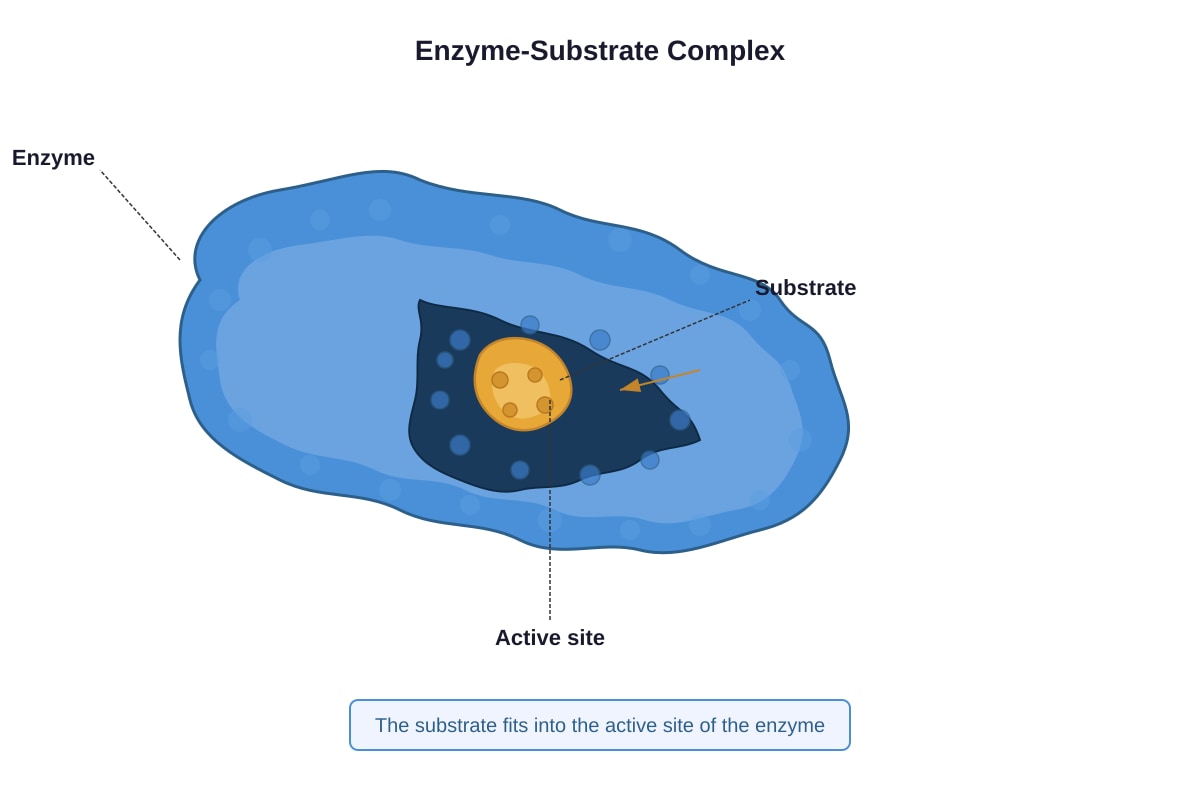
| 7 | B | The lock-and-key hypothesis states that the active site of an enzyme has a specific three-dimensional shape complementary to the substrate. |
| 8 | C | In a concentrated salt solution (lower water potential), water leaves the red blood cell by osmosis, causing it to shrink and become crenated. |
| 9 | B | The smooth endoplasmic reticulum synthesises lipids and is involved in detoxification of drugs and poisons. |
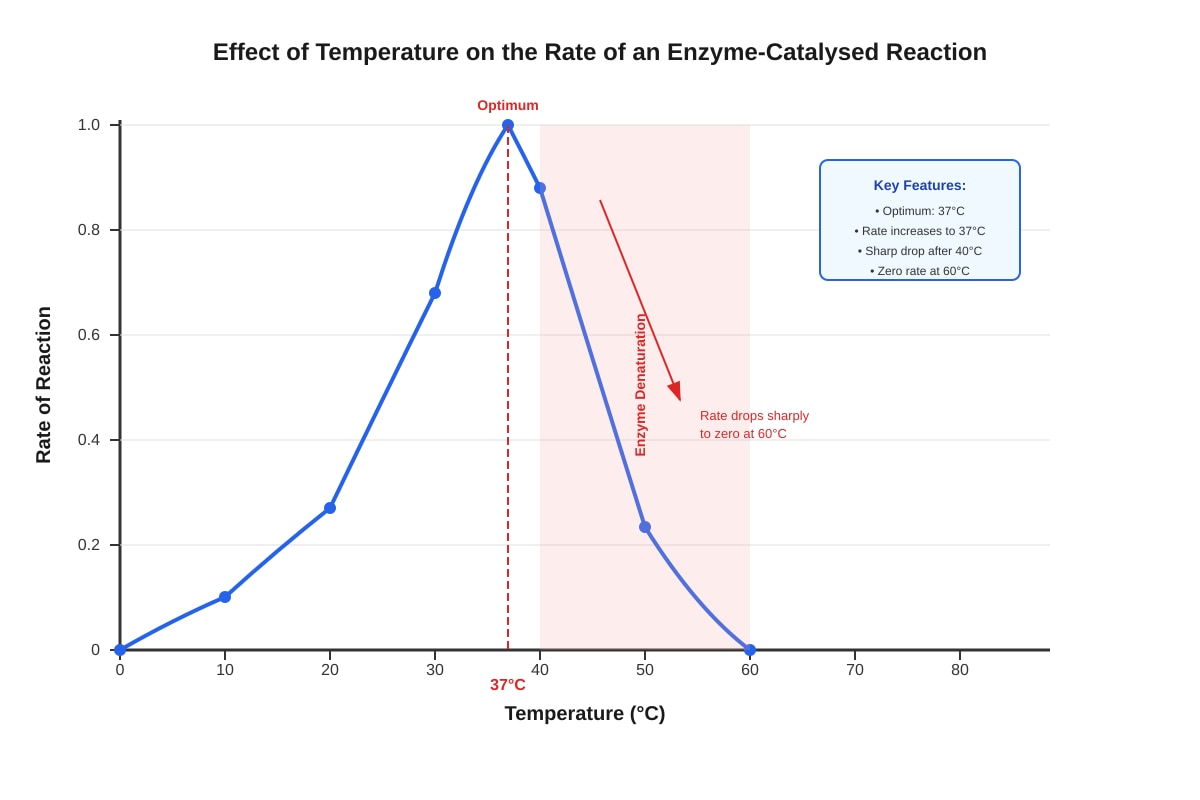
| 10 | C | Above the optimum temperature, the enzyme is denatured — the active site loses its specific shape and can no longer bind the substrate. |
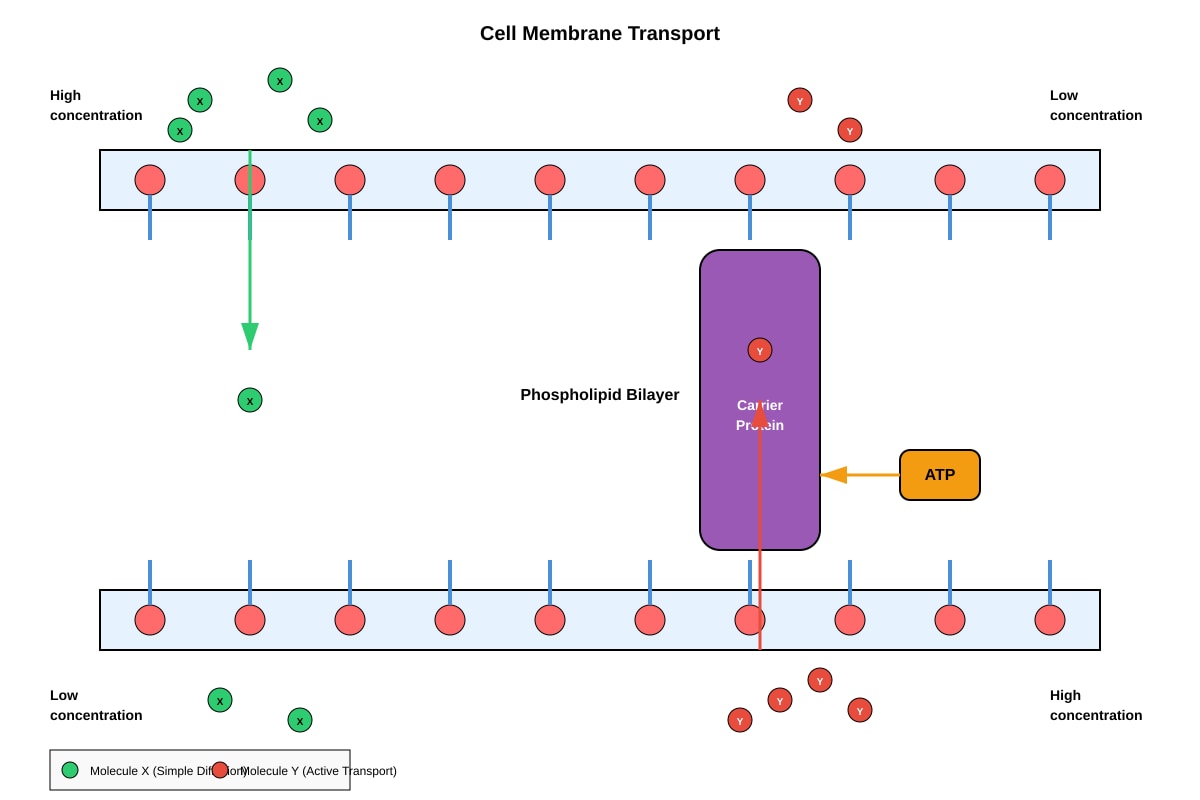
| 11 | C | Active transport moves mineral ions against the concentration gradient using energy (ATP) and carrier proteins. |
| 12 | C | A large central vacuole and rigid cell wall are characteristic features of plant cells. |
| 13 | C | Glycogen is a polysaccharide (polymer) made of many glucose units joined together; it is the storage carbohydrate in animals. |
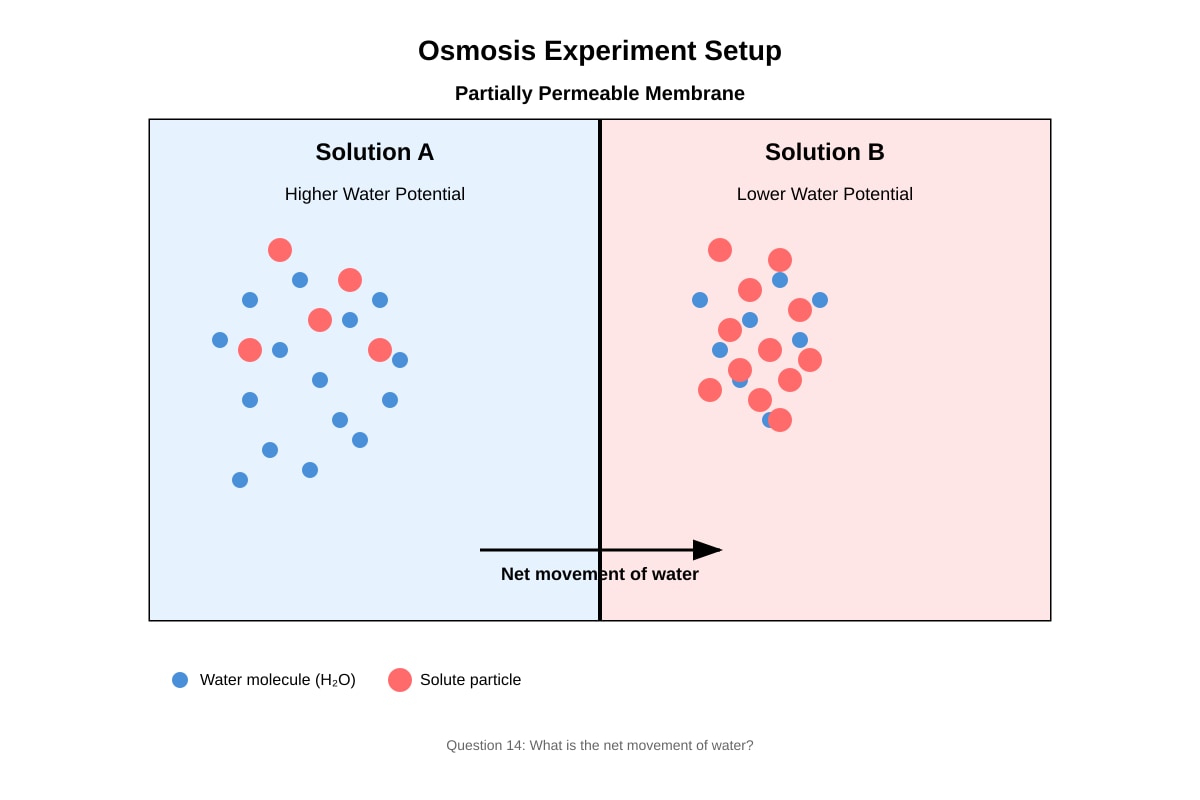
| 14 | B | Water moves by osmosis from a region of higher water potential (Solution A) to a region of lower water potential (Solution B) across a partially permeable membrane. |
| 15 | C | The Golgi body modifies, sorts, and packages proteins into vesicles for secretion from the cell. |
| 16 | D | Iodine solution turns blue-black in the presence of starch. |
| 17 | C | Maltose is a disaccharide made of two glucose units. Glucose and fructose are monosaccharides; glycogen is a polysaccharide. |
| 18 | B | When the enzyme-substrate complex forms, the activation energy of the reaction is lowered, allowing the reaction to proceed more easily. |
| 19 | B | When a plant cell is placed in a solution of lower water potential, water leaves the cell by osmosis. The cytoplasm shrinks away from the cell wall — this is plasmolysis. |
| 20 | C | Enzymes are specific — each enzyme catalyses only one type of reaction because its active site is complementary to a specific substrate. |
Section B: Structured Questions (40 marks)
Question 21 (7 marks)
(a) Identify two structures visible in the plant cell that are not present in the animal cell. [2]
Award 1 mark for each correct structure:
- Cell wall [1]
- Chloroplast(s) [1]
- Large (central/sap) vacuole [1] (accept any two)
(b) State one function for each of the structures you identified in part (a). [2]
Award 1 mark for each correct function matching the structure named in (a):
- Cell wall: Provides structural support / maintains cell shape / prevents cell from bursting [1]
- Chloroplast: Site of photosynthesis / absorbs light energy to produce glucose [1]
- Large vacuole: Stores water and dissolved substances / maintains turgor pressure [1]
(c) Explain why the plant cell does not burst when placed in distilled water, whereas an animal cell would. [3]
Marking points:
- In distilled water, water enters both cells by osmosis because the external solution has a higher water potential than the cell contents [1]
- The animal cell has no cell wall, so the cell membrane stretches and eventually bursts (lyses) as water continues to enter [1]
- The plant cell has a rigid cellulose cell wall that prevents over-expansion; the cell becomes turgid but the cell wall exerts an opposing pressure that stops further water entry [1]
Question 22 (8 marks)
(a) State the optimum pH for amylase activity based on the results. [1]
- pH 7 [1] (accept pH 7 because the shortest digestion time indicates the fastest rate/highest enzyme activity)
(b) Explain why the time for starch digestion is longer at pH 4 than at pH 7. [3]
Marking points:
- pH 7 is the optimum pH for amylase; at this pH, the active site has the correct shape for the substrate to bind [1]
- At pH 4, the pH is below the optimum; the hydrogen ion concentration alters the charges on the amino acids in the enzyme [1]
- This changes the shape of the active site, so the starch substrate cannot fit as effectively; fewer enzyme-substrate complexes form, reducing the rate of reaction [1]
(c) Explain why no digestion occurred at pH 13. [2]
Marking points:
- pH 13 is far above the optimum pH for amylase [1]
- The enzyme has been denatured — the extreme alkaline conditions have permanently altered the three-dimensional shape of the active site, so the substrate can no longer bind [1]
(d) Suggest and explain one variable, other than pH, that must be kept constant in this investigation. [2]
Award 1 mark for naming a valid variable and 1 mark for a correct explanation:
- Temperature [1]: Temperature affects enzyme activity; if temperature varies, it would affect the rate of reaction and the results would not be valid / would not show the effect of pH alone [1]
- OR Concentration/volume of starch solution [1]: If the amount of substrate varies, the time taken for digestion would differ regardless of pH [1]
- OR Concentration/volume of amylase solution [1]: Different enzyme concentrations would give different rates of reaction [1] (Accept any valid controlled variable with correct explanation)
Question 23 (8 marks)
(a) Name the processes by which molecules X and Y move across the membrane. [2]
- Molecule X: Diffusion (simple diffusion) [1]
- Molecule Y: Active transport [1]
(b) State two differences between the processes named in part (a). [2]
Award 1 mark for each correct difference (any two):
| Diffusion | Active Transport |
|---|---|
| Movement down a concentration gradient (high to low) | Movement against a concentration gradient (low to high) |
| Does not require energy (ATP) | Requires energy (ATP) |
| Does not require carrier proteins (for simple diffusion) | Requires carrier proteins |
| Passive process | Active process |
(c) Explain why molecule Y requires a carrier protein to cross the membrane. [2]
Marking points:
- Molecule Y is moving against its concentration gradient (from low to high concentration) [1]
- The carrier protein binds to molecule Y, changes shape using energy from ATP, and transports it across the membrane [1]
(d) A metabolic poison that stops ATP production is added to the cells. Predict and explain the effect on the movement of molecule Y. [2]
Marking points:
- The movement of molecule Y would stop/decrease [1]
- Active transport requires energy in the form of ATP; without ATP production, the carrier proteins cannot change shape to move molecule Y against its concentration gradient [1]
Question 24 (7 marks)
(a) Name the chemical elements present in a fat molecule. [1]
- Carbon (C), hydrogen (H), and oxygen (O) [1] (all three required)
(b) State two functions of fats in living organisms. [2]
Award 1 mark for each correct function (any two):
- Long-term energy storage [1]
- Thermal insulation (e.g., adipose tissue under skin) [1]
- Protection of vital organs (e.g., around kidneys) [1]
- Component of cell membranes (phospholipids) [1]
- Source of metabolic water (when oxidised) [1]
(c) Describe the test for fats and state the positive result. [2]
Marking points:
- Add ethanol to the food sample and shake/mix thoroughly [1]
- Pour the ethanol mixture into water; a white (milky) emulsion indicates the presence of fats [1] (Accept: Add a few drops of the ethanol mixture to water)
(d) Name the enzyme that digests fats and state the products of fat digestion. [2]
- Enzyme: Lipase [1]
- Products: Glycerol and fatty acids [1] (both required for the mark)
Question 25 (8 marks)
(a) Name the monomer units that make up proteins. [1]
- Amino acids [1]
(b) Describe the test for proteins and state the positive result. [2]
Marking points:
- Add Biuret solution (sodium hydroxide solution followed by copper sulfate solution) to the sample [1]
- A colour change from blue to purple/violet indicates the presence of protein [1]
(c) Explain why a change in the tertiary structure of an enzyme can prevent it from functioning. [3]
Marking points:
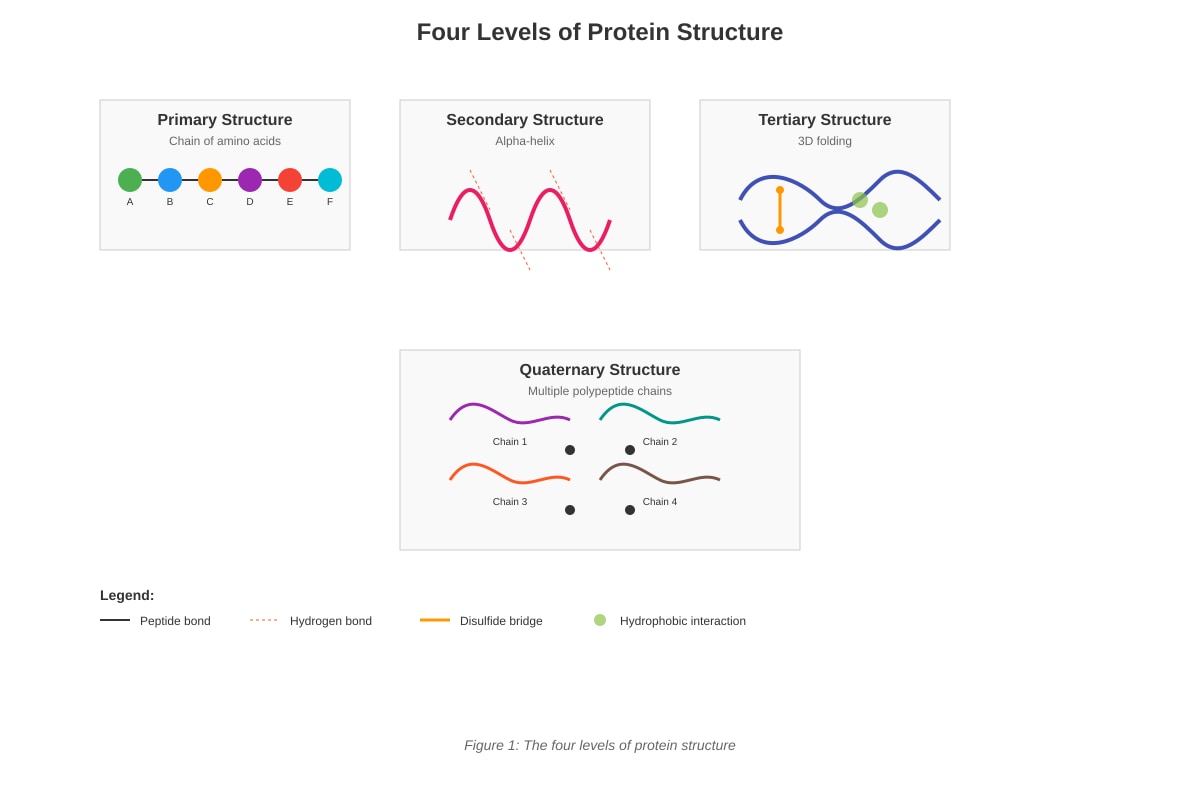
- The tertiary structure is the specific three-dimensional folding/shape of the polypeptide chain, held by bonds (hydrogen bonds, ionic bonds, disulfide bridges) between R-groups [1]
- The active site of an enzyme has a specific shape determined by the tertiary structure [1]
- If the tertiary structure changes (e.g., due to high temperature or extreme pH), the active site loses its complementary shape; the substrate can no longer bind to form an enzyme-substrate complex, so the enzyme cannot catalyse the reaction [1]
(d) State two functions of proteins in living organisms, other than acting as enzymes. [2]
Award 1 mark for each correct function (any two):
- Structural component (e.g., collagen in skin/bones, keratin in hair/nails) [1]
- Transport (e.g., haemoglobin transports oxygen) [1]
- Hormones (e.g., insulin regulates blood glucose) [1]
- Antibodies for immune defence [1]
- Muscle contraction (actin and myosin) [1]
- Cell membrane proteins (carrier proteins, channels) [1]
Section C: Free Response Questions (20 marks)
Question 26 (20 marks)
(a) Describe the structure of a typical animal cell as seen under an electron microscope. Include the functions of four named organelles in your answer. [8]
Marking scheme — award marks for:
Structure description (up to 4 marks):
- Cell/plasma membrane: outer boundary, composed of phospholipid bilayer with embedded proteins [1]
- Nucleus: contains genetic material (DNA/chromatin), surrounded by nuclear envelope with nuclear pores [1]
- Cytoplasm: jelly-like substance containing organelles, site of many metabolic reactions [1]
- Mitochondria: rod-shaped organelles with double membrane; inner membrane folded into cristae [1]
- Rough endoplasmic reticulum: network of flattened membrane sacs studded with ribosomes [1]
- Smooth endoplasmic reticulum: network of tubular membranes without ribosomes [1]
- Golgi body/apparatus: stack of flattened membrane sacs (cisternae) [1]
- Ribosomes: small particles (70S/80S), either free in cytoplasm or attached to RER [1] (Award up to 4 marks for accurate structural descriptions of at least four organelles)
Functions of four organelles (up to 4 marks):
- Nucleus: controls cell activities / contains genetic information for protein synthesis [1]
- Mitochondrion: site of aerobic respiration / produces ATP (energy) [1]
- Rough endoplasmic reticulum: synthesises and transports proteins [1]
- Golgi body: modifies, sorts, and packages proteins for secretion [1]
- Smooth endoplasmic reticulum: synthesises lipids / detoxification [1]
- Ribosomes: site of protein synthesis (translation) [1]
- Cell membrane: controls movement of substances into and out of the cell / selectively permeable [1] (Award 1 mark for each correct function of a named organelle, up to 4 marks)
(b) Explain how the structure of a red blood cell, a muscle cell, and a root hair cell are each adapted for their specific functions. [8]
Marking scheme:
Red blood cell (up to 3 marks):
- Biconcave disc shape increases surface area to volume ratio for faster diffusion of oxygen [1]
- No nucleus, so more space for haemoglobin to carry oxygen [1]
- Contains haemoglobin, which binds reversibly to oxygen for transport [1]
- Flexible/elastic membrane allows it to squeeze through narrow capillaries [1]
Muscle cell (up to 3 marks):
- Contains many mitochondria to provide ATP (energy) for muscle contraction [1]
- Contains protein filaments (actin and myosin) that slide past each other for contraction [1]
- Elongated/spindle shape allows for contraction and relaxation [1]
- May have multiple nuclei for efficient protein synthesis and control [1]
Root hair cell (up to 3 marks):
- Long, narrow extension (root hair) greatly increases surface area for absorption of water and mineral ions [1]
- Many mitochondria provide ATP for active transport of mineral ions against concentration gradient [1]
- Thin cell wall reduces diffusion distance for water and ions [1]
- Cell membrane contains carrier proteins for active transport of specific ions [1]
(Award up to 3 marks for each cell type; maximum 8 marks total across all three)
(c) Discuss the importance of cell differentiation in multicellular organisms. [4]
Marking scheme:
- Cell differentiation is the process by which unspecialised cells (stem cells) develop into specialised cells with specific structures and functions [1]
- Differentiation allows cells to perform specific functions efficiently (division of labour) [1]
- Different cell types can work together to form tissues, organs, and organ systems [1]
- This enables complex multicellular organisms to carry out all life processes (e.g., red blood cells for oxygen transport, nerve cells for impulse transmission, muscle cells for movement) [1]
- Without differentiation, all cells would be identical and unable to perform the diverse functions needed for survival [1] (Award up to 4 marks for a well-developed discussion)
Question 27 (20 marks)
(a) Explain the lock-and-key hypothesis of enzyme action. Use a named example of an enzyme and its substrate to illustrate your answer. [8]
Marking scheme:
Explanation of lock-and-key hypothesis (up to 5 marks):
- The enzyme has a specific region called the active site [1]
- The active site has a specific three-dimensional shape that is complementary to the shape of the substrate molecule [1]
- The substrate fits into the active site like a key fits into a lock, forming an enzyme-substrate complex [1]
- Formation of the enzyme-substrate complex lowers the activation energy required for the reaction [1]
- The reaction occurs, converting substrate(s) into product(s) [1]
- The products are released from the active site; the enzyme remains unchanged and can be reused [1]
- The enzyme is specific — it can only catalyse one type of reaction because only a specific substrate fits its active site [1] (Award up to 5 marks for a clear, logical explanation)
Named example (up to 3 marks):
- Example: Amylase and starch [1]
- Starch (substrate) has a shape complementary to the active site of amylase [1]
- Amylase breaks down starch into maltose (product) [1]
- OR Example: Catalase and hydrogen peroxide [1]; hydrogen peroxide fits into catalase's active site [1]; catalase breaks hydrogen peroxide into water and oxygen [1]
- OR Example: Lipase and fats [1]; fat molecules fit into lipase's active site [1]; lipase breaks fats into glycerol and fatty acids [1] (Award up to 3 marks for a correctly named enzyme, substrate, and product with link to the hypothesis)
(b) Describe and explain the effects of temperature and pH on the rate of enzyme activity. Include reference to the terms 'optimum', 'denaturation', and 'activation energy' in your answer. [8]
Marking scheme:
Effect of temperature (up to 4 marks):
- At low temperatures, the rate of enzyme activity is low because enzyme and substrate molecules have low kinetic energy, so collisions are infrequent [1]
- As temperature increases, kinetic energy increases; more frequent successful collisions between enzyme and substrate, so rate increases [1]
- The rate reaches a maximum at the optimum temperature (around 37–40°C for most human enzymes) [1]
- Above the optimum temperature, the rate decreases sharply because the enzyme is denatured — the high temperature breaks bonds (hydrogen bonds, ionic bonds) maintaining the tertiary structure, changing the shape of the active site permanently [1]
- The substrate can no longer fit into the active site, so no enzyme-substrate complexes form [1] (Award up to 4 marks)
Effect of pH (up to 4 marks):
- Each enzyme has an optimum pH at which it works most efficiently (e.g., pH 7 for most intracellular enzymes; pH 2 for pepsin in the stomach) [1]
- At pH values above or below the optimum, the rate of enzyme activity decreases [1]
- Changes in pH alter the concentration of hydrogen ions (H⁺), which affects the ionic bonds and hydrogen bonds that maintain the enzyme's tertiary structure [1]
- This changes the shape of the active site; the substrate can no longer bind effectively [1]
- At extreme pH values, the enzyme is denatured — the change in active site shape is permanent [1]
- The term 'activation energy' refers to the energy barrier that must be overcome for a reaction to occur; enzymes lower the activation energy, but when denatured, they can no longer do this [1] (Award up to 4 marks; must include all three required terms: optimum, denaturation, activation energy)
(c) A student claims that "enzymes are only important in digestion." Evaluate this statement using examples of enzyme functions in other biological processes. [4]
Marking scheme:
- The statement is incorrect/incomplete — enzymes are essential in many biological processes beyond digestion [1]
- Example 1: Respiration — enzymes in the mitochondria (e.g., those in the Krebs cycle and electron transport chain) catalyse reactions in aerobic respiration to produce ATP [1]
- Example 2: Photosynthesis — enzymes (e.g., RuBisCO) catalyse the reactions of the Calvin cycle in the stroma of chloroplasts to produce glucose [1]
- Example 3: DNA replication — enzymes such as DNA polymerase catalyse the synthesis of new DNA strands during cell division [1]
- Example 4: Protein synthesis — enzymes are involved in transcription (RNA polymerase) and translation in ribosomes [1]
- Example 5: Liver metabolism — enzymes catalyse detoxification reactions and the conversion of excess amino acids in deamination [1]
- Conclusion: Enzymes are biological catalysts essential for virtually all metabolic reactions in living organisms, not just digestion [1] (Award up to 4 marks for a well-reasoned evaluation with at least two valid examples)
END OF ANSWER KEY
This answer key was generated by TuitionGoWhere AI for educational purposes. Mark allocations follow O-Level Biology (6093) assessment standards.