AI Generated Exam Paper
O Level Biology Practice Paper 4
Free O Level Biology Practice Paper 4, HY3 AI version, with questions, answers, and O Level-style practice for Singapore students.
These static practice materials are generated from the site's syllabus and paper-generation workflow, with source and model context shown so students and parents can evaluate the material before use.
Questions

Free quiz and exam paper access
Enter your details to view this paper
Your access is remembered on this device.
Answers
TuitionGoWhere Practice Paper — Biology O-Level (Answer Key)
Version 4 of 5 — Topic: Cells and Biomolecules
Total Marks: 60
Section A (20 marks)
1. [2 marks]
Answer: Carbon (C), Hydrogen (H), Oxygen (O), Nitrogen (N) — sometimes Sulphur (S).
Teaching note: Proteins are made of amino acids which contain C, H, O, N; some also contain S in cysteine. Award 1 mark for C,H,O,N and 1 mark for mention of S or full correct set.
2. [2 marks]
Answer: Chloroplast.
Teaching note: Chloroplasts contain chlorophyll and are the site of photosynthesis. 1 mark for name, 1 mark implied context if explained; accept "chloroplasts" plural.
3. [2 marks]
Answer: Plant cell has a cell wall / large permanent vacuole / chloroplasts; animal cell does not.
Teaching note: Any one visible difference under light microscope. 1 mark for feature in plant, 1 mark for contrast with animal.
4. [2 marks]
Answer: Blue-black.
Teaching note: Iodine solution turns blue-black in presence of starch. 1 mark for colour, 1 mark for correct test context.
5. [2 marks]
Answer: Diffusion is the net movement of particles from a region of higher concentration to a region of lower concentration.
Teaching note: Must include movement down concentration gradient. 1 mark movement, 1 mark gradient stated.
6. [2 marks]
Answer: Active transport.
Teaching note: Mineral ions move against gradient using energy (ATP). 1 mark name, 1 mark context.
7. [2 marks]
Answer: Starch.
Teaching note: Amylase hydrolyses starch to maltose. 1 mark substrate, 1 mark enzyme context.
8. [2 marks]
Answer: Amino acid.
Teaching note: Proteins are polymers of amino acids. 1 mark monomer, 1 mark link.
9. [2 marks]
Answer: Fats (lipids).
Teaching note: Fats insulate and store energy long-term. 1 mark biomolecule, 1 mark function.
10. [2 marks] Answer: Denaturation.
Teaching note: Permanent shape change destroys active site. 1 mark term, 1 mark meaning.
Section B (20 marks)
11. [4 marks total]
(a) [1] Reducing sugar.
(b) [1] Biuret test (protein) or ethanol test (fat).
(c) [2] Biuret: reagent = biuret solution, colour change = purple. (Or ethanol: white emulsion.)
Teaching note: Benedict’s brick-red = reducing sugar. Milk has protein/fat. Award 1+1+2.
12. [3 marks]
Answer: Red blood cell has no nucleus to allow more space for haemoglobin / to carry more oxygen. [3]
Marking: 1 for no nucleus, 1 for more space, 1 for more oxygen transport.
13. [3 marks]
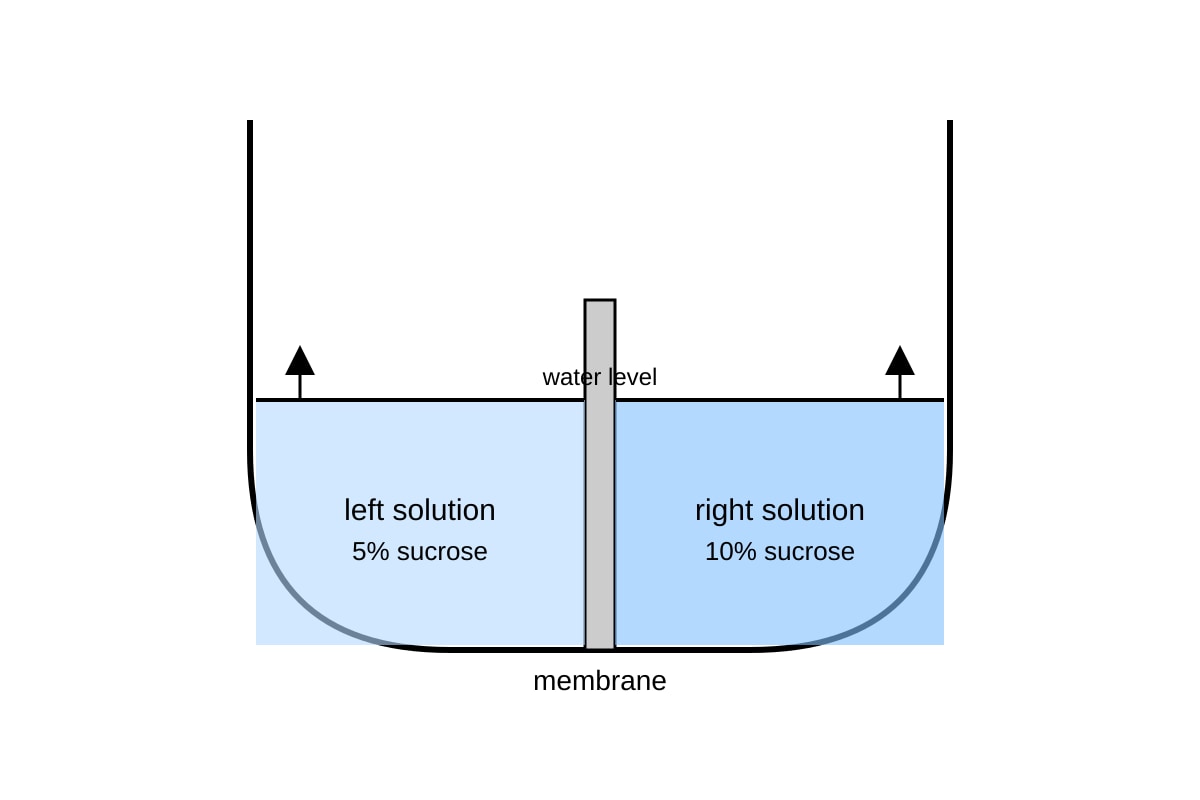
Answer: Net water moves from left (5%) to right (10%) by osmosis. [1] Right side has lower water potential due to higher solute concentration. [1] Water moves down water potential gradient across partially permeable membrane. [1]
Teaching note: Osmosis is water to higher solute. Common mistake: saying "to higher concentration of sugar" without water potential term.
14. [4 marks]
Answer: (1) Bacterial cell has peptidoglycan cell wall; animal cell has no wall. [2] (2) Bacterial cell has plasmids; animal cell does not. [2]
Other accept: 70S vs 80S ribosomes, nucleoid vs nucleus. Award 2 per clear difference.
15. [3 marks]
Answer: More protein → more deamination in liver → more urea in blood. [1] Urea increases solute concentration of filtrate. [1] Kidney reabsorbs less water / urine more dilute OR if water conserved, concentration changes. [1]
Teaching note: Link protein→urea→osmoregulation.
16. [4 marks]
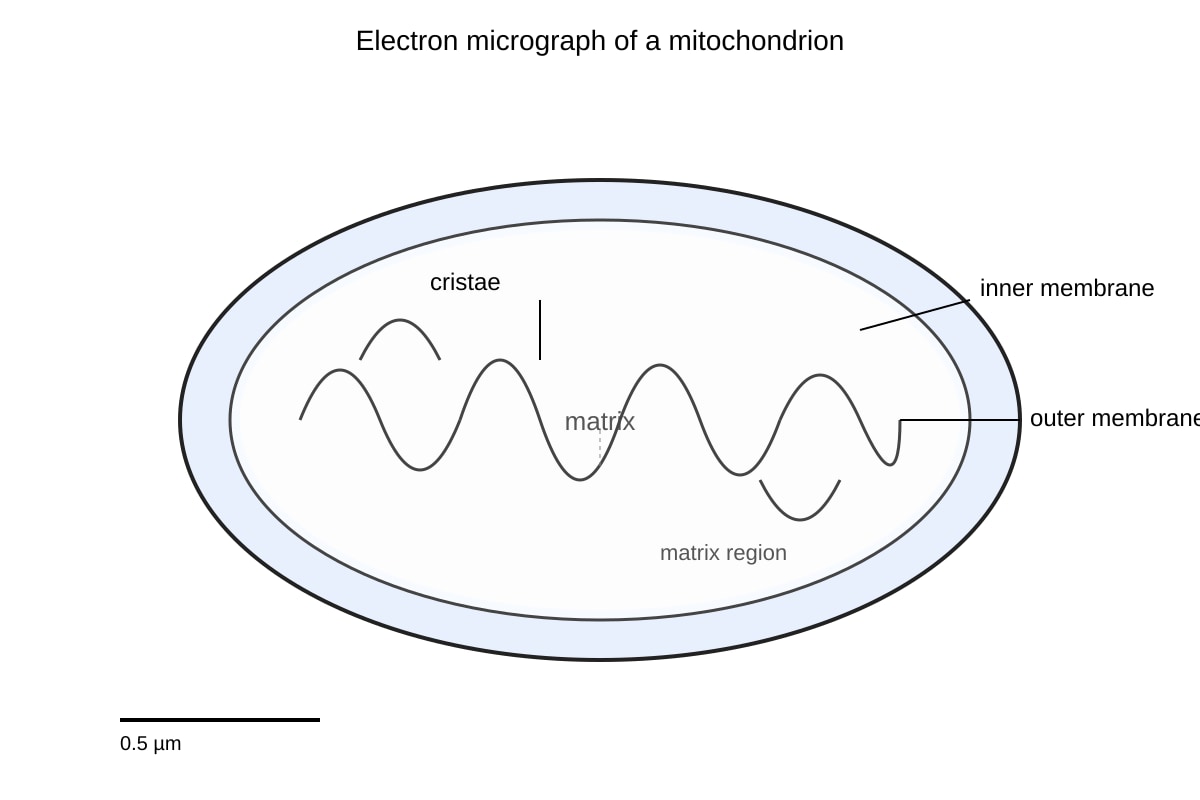
Answer: Cristae give large surface area for respiratory enzymes. [2] Matrix contains enzymes for Krebs cycle. [2]
Teaching note: Structure-function. 2 marks per feature correctly linked.
Section C (20 marks)
17. [5 marks]
Answer:
- Osmosis: water only, down gradient, no energy. [1]
- Active transport: substances against gradient, needs ATP. [1]
- Both through membranes. [1]
- Example osmosis: water into root hair. [1]
- Example active: mineral ions into root hair. [1]
18. [5 marks]
Answer: Lipase active site complementary to lipid/fat. [1] Specificity: only lipids bind. [1] Factors: temperature (optimum then denature) [1]; pH (optimum, extreme denatures) [1]; substrate concentration (increase rate to saturation) [1].
19. [5 marks]
(a) [1] Correct points plotted and line drawn.
(b) [1] 40 °C.
(c) [3] At 50–60 °C enzyme denatures; active site lost; reaction slows. [1+1+1]
Teaching note: Plot from table. Optimum at peak. High temp breaks H-bonds.
20. [6 marks]
Answer: Enzymes are biological catalysts speeding digestion. [1] Amylase: starch→maltose (mouth). [1+1] Pepsin: protein→peptides (stomach). [1+1] Link to breakdown for absorption. [1]
Marking descriptors: catalyst role, named enzyme, substrate, product, location.