AI Generated Exam Paper
O Level Biology Practice Paper 2
Free O Level Biology Practice Paper 2, HY3 AI version, with questions, answers, and O Level-style practice for Singapore students.
These static practice materials are generated from the site's syllabus and paper-generation workflow, with source and model context shown so students and parents can evaluate the material before use.
Questions
TuitionGoWhere Practice Paper - Biology O-Level
TuitionGoWhere Practice Paper (AI) — Version 2 of 5
Subject: Biology
Level: O-Level
Paper: Practice Paper (AI-Inferred)
Duration: 1 hour 15 minutes
Total Marks: 60
Name: ________________________
Class: ________________________
Date: ________________________
Instructions:
- Answer all questions in the spaces provided.
- Use blue or black pen.
- Marks for each question are shown in brackets.
- Section marks and total marks are given at the end of each section.
- This practice paper is generated from LLM-inferred templates based on syllabus focus (Cells & Biomolecules). It is not an official examination paper.
Section A: Multiple Choice and Short Answer (1–8)
1. Which of the following molecules contains only carbon, hydrogen and oxygen? [1]
A. Protein
B. Starch
C. Amino acid
D. Enzyme
2. State the term for the movement of water molecules from a region of high water potential to a region of low water potential through a partially permeable membrane. [1]
3. The following test was carried out on a food sample:
- Benedict's solution was added and heated.
- A brick-red precipitate formed.
Name the type of biomolecule present in the sample. [1]
4. Give one structural feature of a red blood cell that adapts it for oxygen transport. [1]
5. Which organelle is the site of protein synthesis? [1]
A. Mitochondrion
B. Ribosome
C. Chloroplast
D. Nucleus
6. Describe one difference between diffusion and active transport. [2]
7. A student placed a plant cell into a concentrated sugar solution. State what happens to the cell contents and give a reason. [2]
8. Name the reagent used to test for the presence of starch. [1]
Section A Total: 10 marks
Section B: Structured Questions (9–14)
9. Explain how the structure of a root hair cell is adapted for the uptake of mineral ions from the soil. [3]
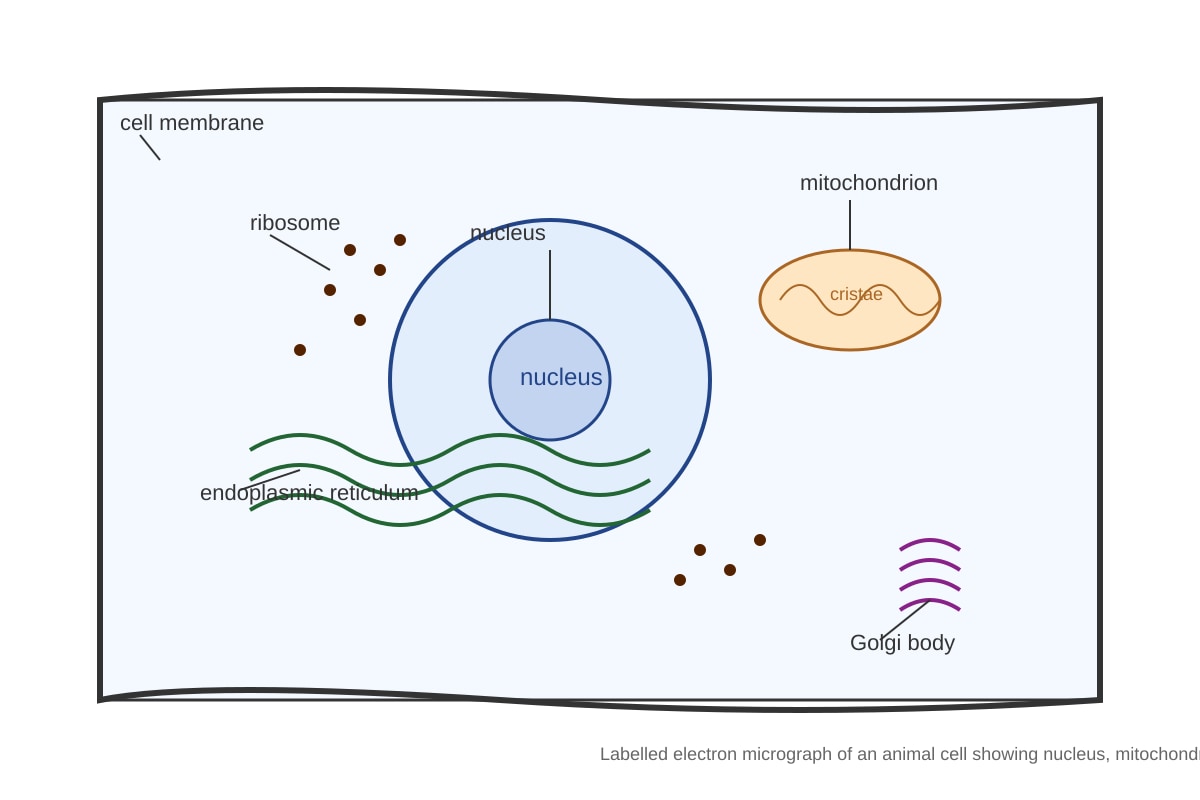
10. The diagram below shows an animal cell as seen under an electron microscope.
Image pending generation: diagram for Q10.
(a) Name structures X and Y indicated on the diagram. [2]
(b) State one function of structure Y. [1]
11. A learner tested a leaf sample with iodine solution and it turned blue-black.
(a) What biomolecule does this result indicate? [1]
(b) State the role of this biomolecule in living organisms. [1]
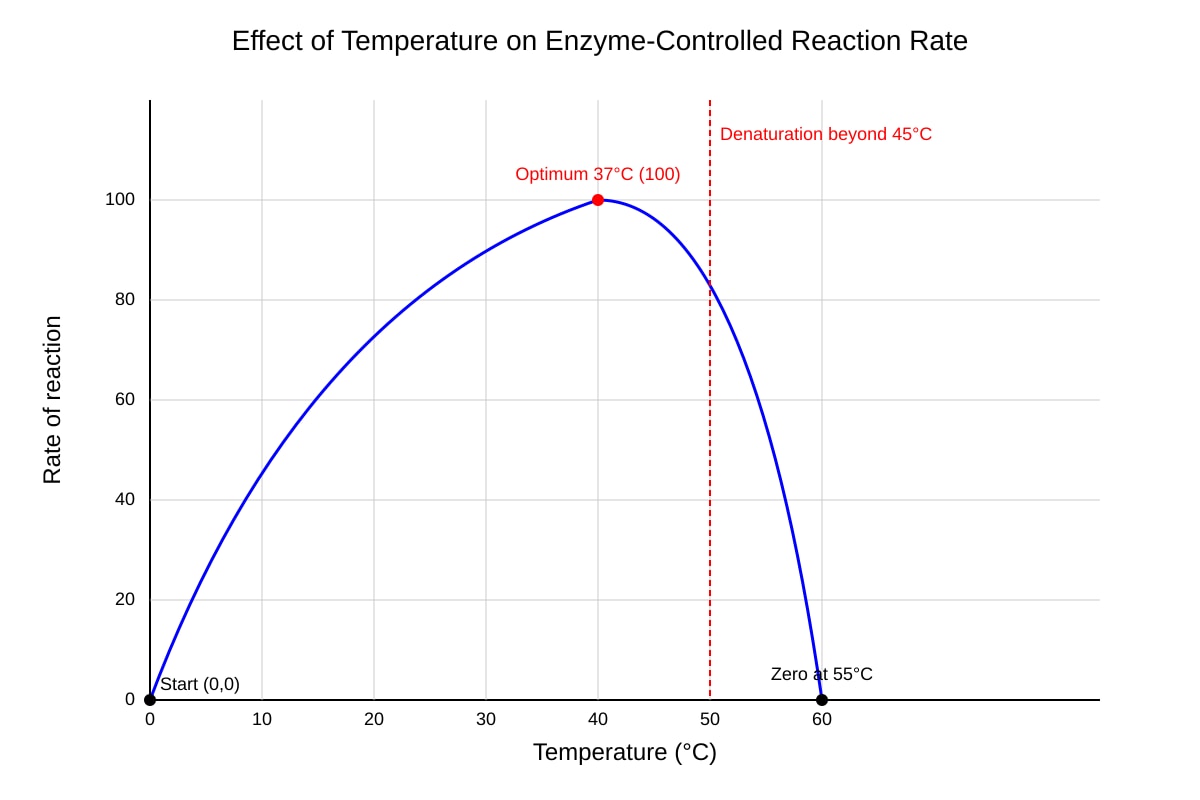
12. The graph shows the effect of temperature on the rate of an enzyme-controlled reaction.
Image pending generation: graph for Q12.
(a) State the optimum temperature for this enzyme. [1]
(b) Explain why the rate falls to zero at high temperature. [2]
13. Compare osmosis and diffusion. Include one similarity and two differences. [4]
14. A food sample was tested as follows:
- Crushed in ethanol, then water added → white emulsion formed.
(a) Name the biomolecule present. [1]
(b) State two functions of this biomolecule in humans. [2]
Section B Total: 20 marks
Section C: Extended Response (15–20)
15. Describe the roles of enzymes in human digestion. Give two named examples with their substrates and products. [4]
16. Explain how increased protein intake can affect the concentration of a person's urine. [3]
17. The electron micrograph shows a mitochondrion. Explain how three features of this organelle are related to its function in respiration. [3]
18. Compare and contrast active transport with diffusion in plant cells. Include examples of each. [6]
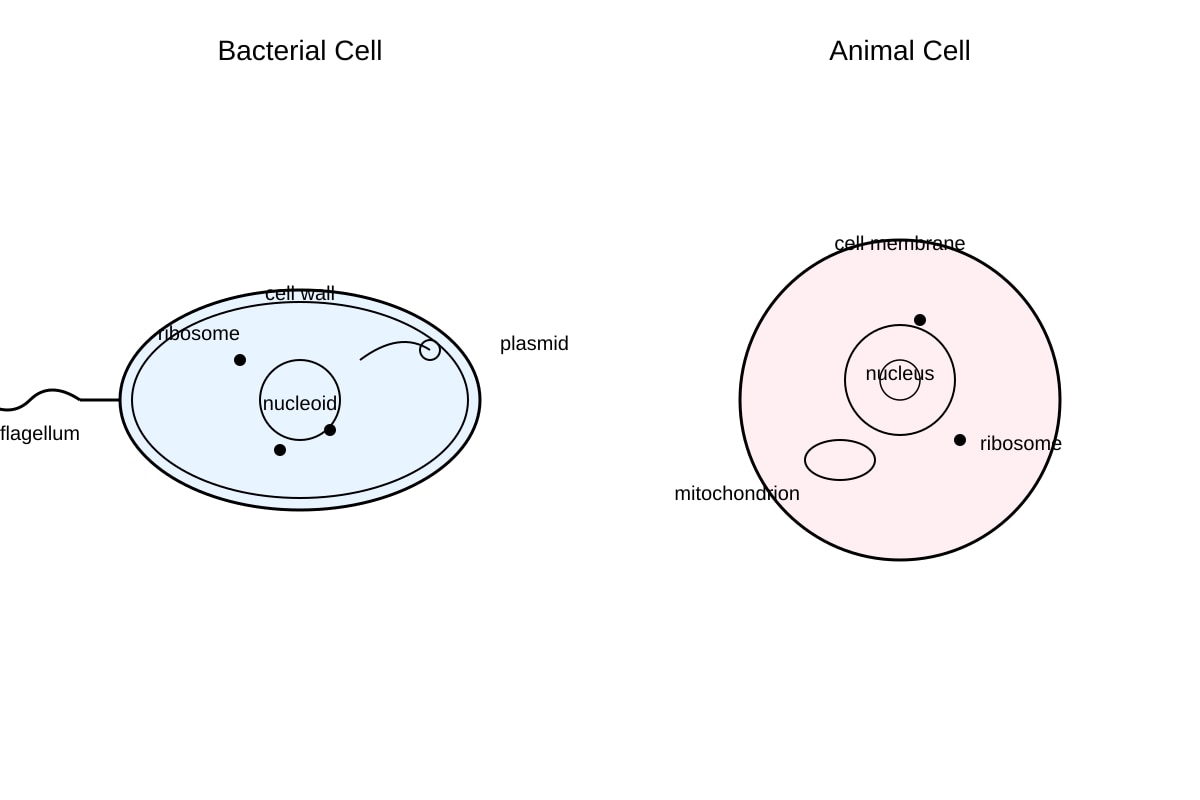
19. A bacterial cell and an animal cell are shown below.
Image pending generation: diagram for Q19.
Describe two features of a bacterial cell that are different from an animal cell. [2]
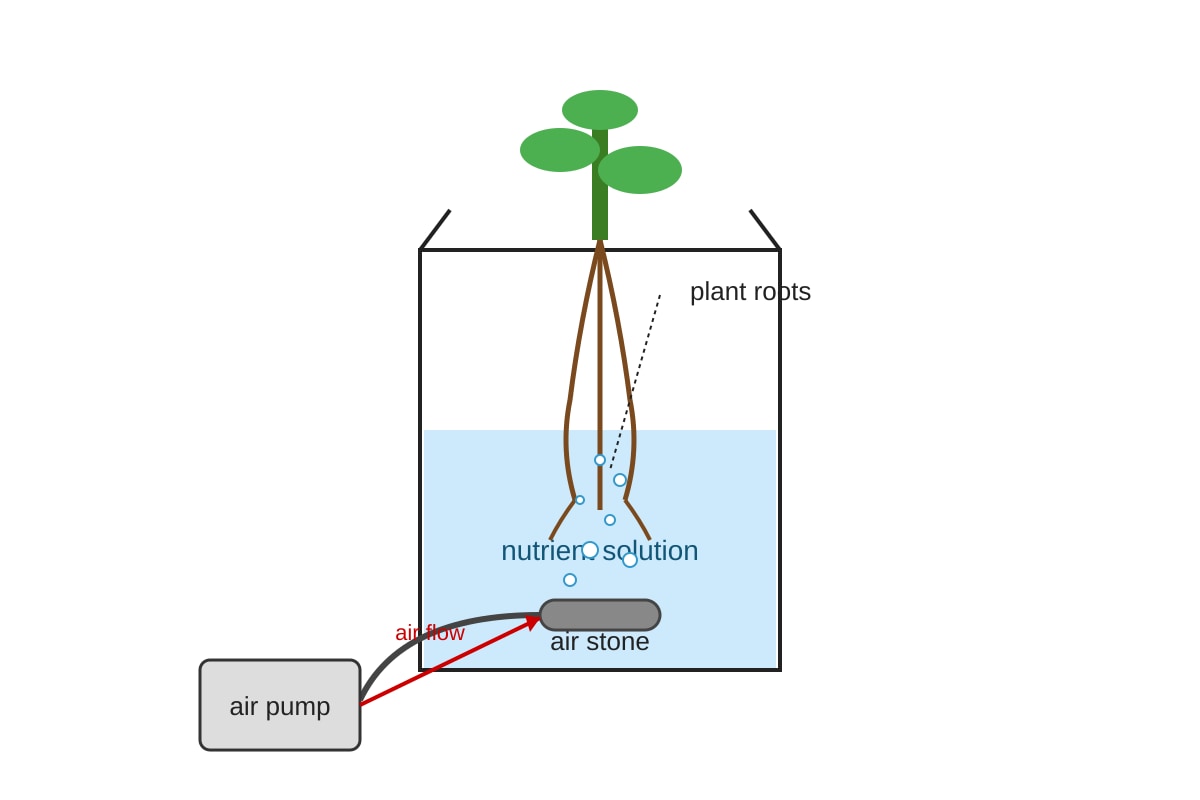
20. The figure shows an experimental setup where air is pumped through a nutrient solution containing plant roots.
Image pending generation: experimental_setup for Q20.
Explain the advantage to the root cells of pumping air through the nutrient solution. [3]
Section C Total: 30 marks
Total Marks: 60
Answers
TuitionGoWhere Practice Paper — Biology O-Level (Answers)
Version: 2 of 5
Subject: Biology
Level: O-Level
Total Marks: 60
Section A Answers (1–8)
1. B [1]
Starch is a carbohydrate made of C, H, O only. Proteins and amino acids contain N; enzymes are proteins.
Teaching note: Biomolecules: carbohydrates (C,H,O), fats (C,H,O), proteins (C,H,O,N).
2. Osmosis [1]
Definition: net movement of water through partially permeable membrane down water potential gradient.
3. Reducing sugar [1]
Benedict's solution gives brick-red with reducing sugars (e.g., glucose).
4. No nucleus / biconcave shape / contains haemoglobin [1]
Any one. Biconcave increases surface area; no nucleus allows more haemoglobin space.
5. B [1]
Ribosomes are the site of translation (protein synthesis).
6. [2]
Diffusion: down gradient, no energy. Active transport: against gradient, needs ATP.
[1] for each correct contrast.
7. [2]
Cell contents shrink (plasmolysis) because water leaves by osmosis to lower water potential outside. [1] reason [1].
8. Iodine solution [1]
Section A: 10 marks
Section B Answers (9–14)
9. [3]
- Large surface area from hair extension for absorption [1]
- Many mitochondria for ATP [1]
- Carrier proteins for active transport of ions [1]
10. [3]
(a) X = mitochondrion, Y = ribosome (or vice versa per diagram) [1 each]
(b) Y (ribosome) makes proteins [1]
11. [2]
(a) Starch [1]
(b) Immediate energy source / storage [1]
12. [3]
(a) 37°C [1]
(b) High temp denatures enzyme, active site lost, no E-S complex [2]
13. [4]
Similarity: both passive, down gradient [1]
Diff 1: osmosis water only, diffusion any substance [1]
Diff 2: osmosis needs membrane, diffusion may not [1]; clear example [1]
14. [3]
(a) Fat/lipid [1]
(b) Insulation, energy store, cushion organs [2 for any two]
Section B: 20 marks
Section C Answers (15–20)
15. [4]
Enzymes are biological catalysts [1]; amylase: starch→maltose (mouth) [1]; pepsin: protein→peptides (stomach) [1]; speeds digestion [1].
16. [3]
More protein → more deamination in liver → more urea [1]; urea raises blood solute [1]; kidney reabsorbs water, urine more concentrated [1].
17. [3]
Cristae: large area for enzymes [1]; matrix: enzymes for Krebs [1]; double membrane: compartmentalisation [1].
18. [6]
Active: against gradient, ATP, carriers (root ion uptake) [3]; diffusion: down gradient, no energy (gas exchange) [3].
19. [2]
Bacterial cell wall (peptidoglycan) vs none [1]; plasmids present vs absent [1].
20. [3]
Air gives O₂ for aerobic respiration [1]; ATP for active transport [1]; more ion uptake [1].
Section C: 30 marks
Free quiz and exam paper access
Enter your details to view this paper
Your access is remembered on this device.