AI Generated Exam Paper

O Level Biology Practice Paper 1

Free AI-Generated O Level Biology Practice Paper 1 practice paper with questions and answers for Singapore students. This page is rendered as a direct URL so the questions and answers can be discovered without pressing in-page buttons.

These static practice materials are generated from the site's syllabus and paper-generation workflow, with source and model context shown so students and parents can evaluate the material before use.

O Level Biology AI Generated Generated by Claude Sonnet 4 Updated 2026-06-03

Questions

TuitionGoWhere Practice Paper - Biology O-Level

TuitionGoWhere Practice Paper (AI)

Subject: Biology
Level: O-Level
Paper: Paper 2
Duration: 1 hour 45 minutes
Total Marks: 80

Name: _________________ Class: _______ Date: _________


Instructions to Candidates

  • Answer all questions in the spaces provided
  • Show your working clearly for all calculations
  • Use appropriate biological terminology
  • Draw diagrams where requested using a pencil
  • The number of marks is given in brackets [ ] at the end of each question or part question

Section A [40 marks]

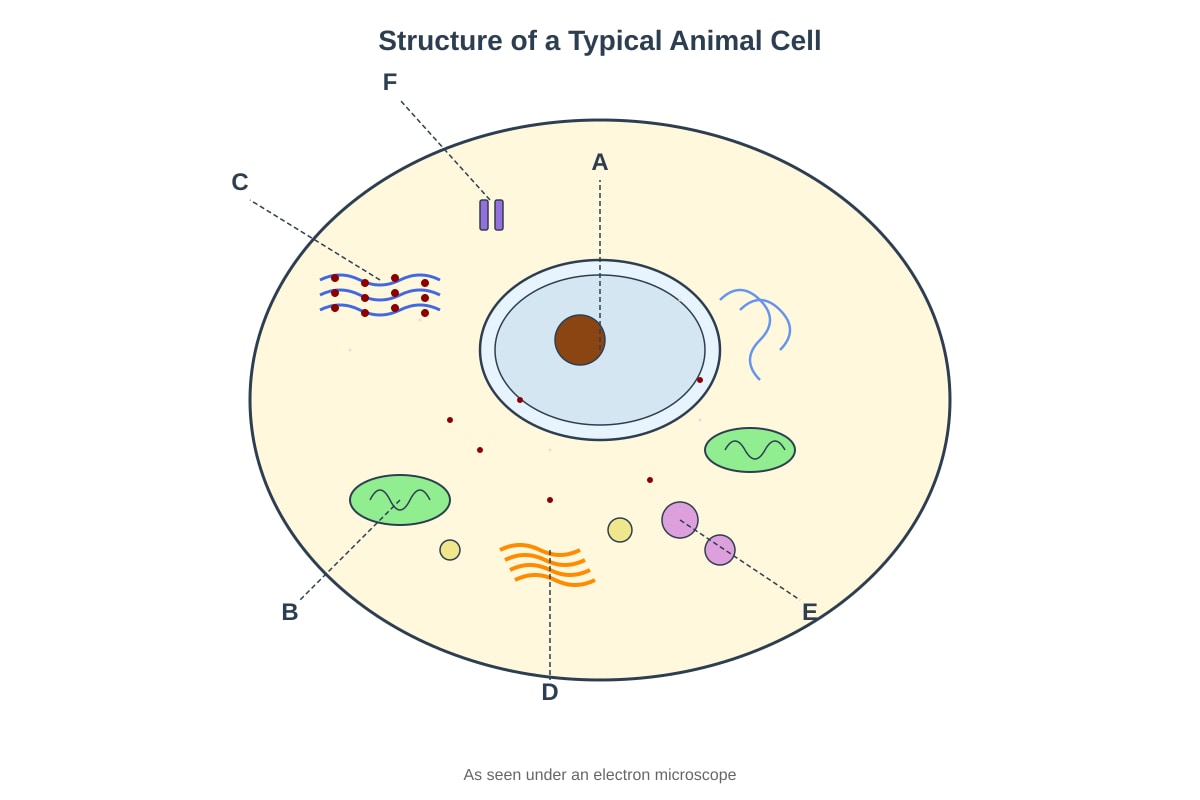
1. The diagram shows the structure of a typical animal cell as seen under an electron microscope.

[Diagram would show animal cell with organelles labeled A-F]

(a) Name the organelles labeled A, C, and E. [3]

A: _________________________________

C: _________________________________

E: _________________________________

(b) State the function of organelle B. [1]


(c) Explain why organelle A has a folded inner membrane. [2]


(d) Name two organelles that would be present in a plant cell but not in this animal cell. [2]

(i) _________________________________

(ii) _________________________________

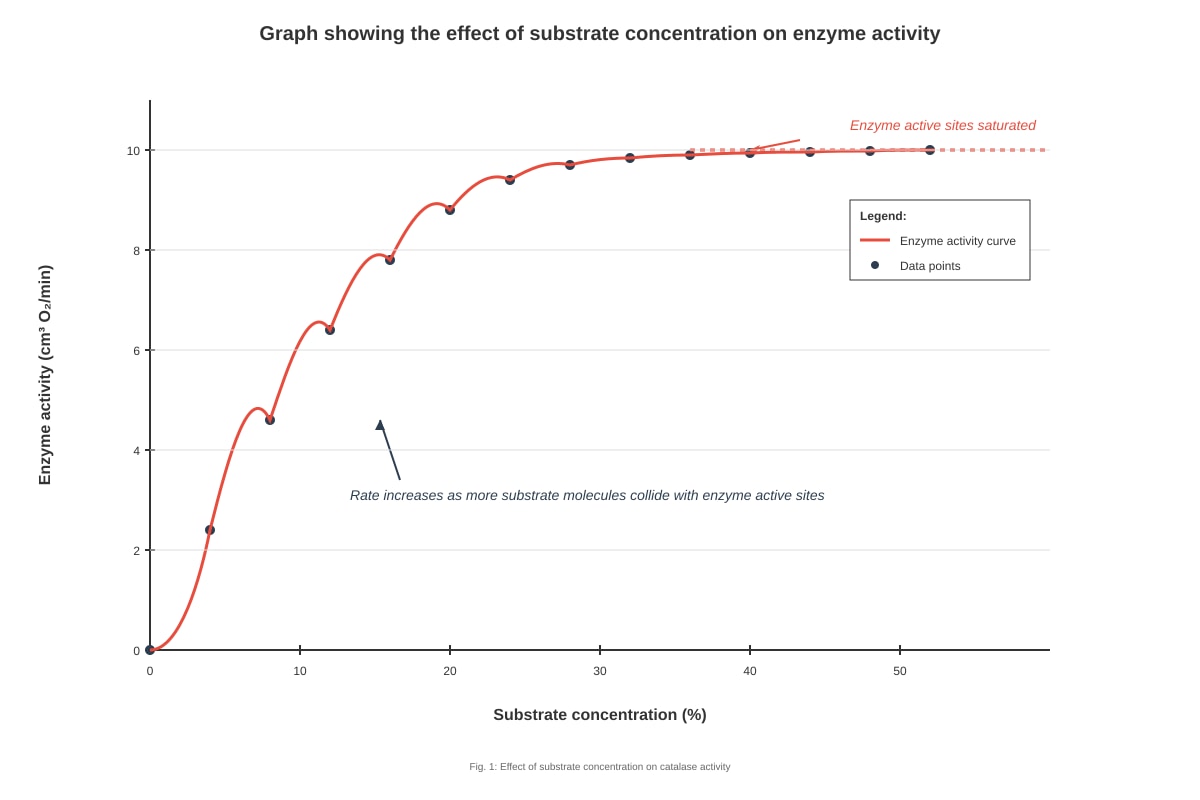
2. An investigation was carried out to determine the effect of substrate concentration on enzyme activity. The enzyme catalase was used to break down hydrogen peroxide. The results are shown in the graph below.

[Graph would show enzyme activity vs substrate concentration with typical saturation curve]

(a) Describe the relationship between substrate concentration and enzyme activity shown in the graph. [3]


(b) Explain why the enzyme activity levels off at high substrate concentrations. [2]


(c) The experiment was repeated at a higher temperature. On the graph, sketch the curve you would expect to see. [2]

(d) State two factors, other than temperature and substrate concentration, that could affect the activity of catalase. [2]

(i) _________________________________

(ii) _________________________________

3. The table shows the results of food tests carried out on four different food samples.

Food SampleIodine TestBenedict's TestBiuret TestEthanol Test
ABlue-blackBlueBlueClear
BYellowBrick-redBlueClear
CYellowBluePurpleClear
DYellowBlueBlueWhite emulsion

(a) Which food sample contains starch? Give a reason for your answer. [2]

Sample: _________________________________

Reason: _________________________________

(b) Which food sample contains protein? Give a reason for your answer. [2]

Sample: _________________________________

Reason: _________________________________

(c) Describe how you would carry out the Benedict's test for reducing sugars. [4]


(d) State what food sample D contains and explain the result of the ethanol test. [3]

Food present: _________________________________

Explanation: _________________________________


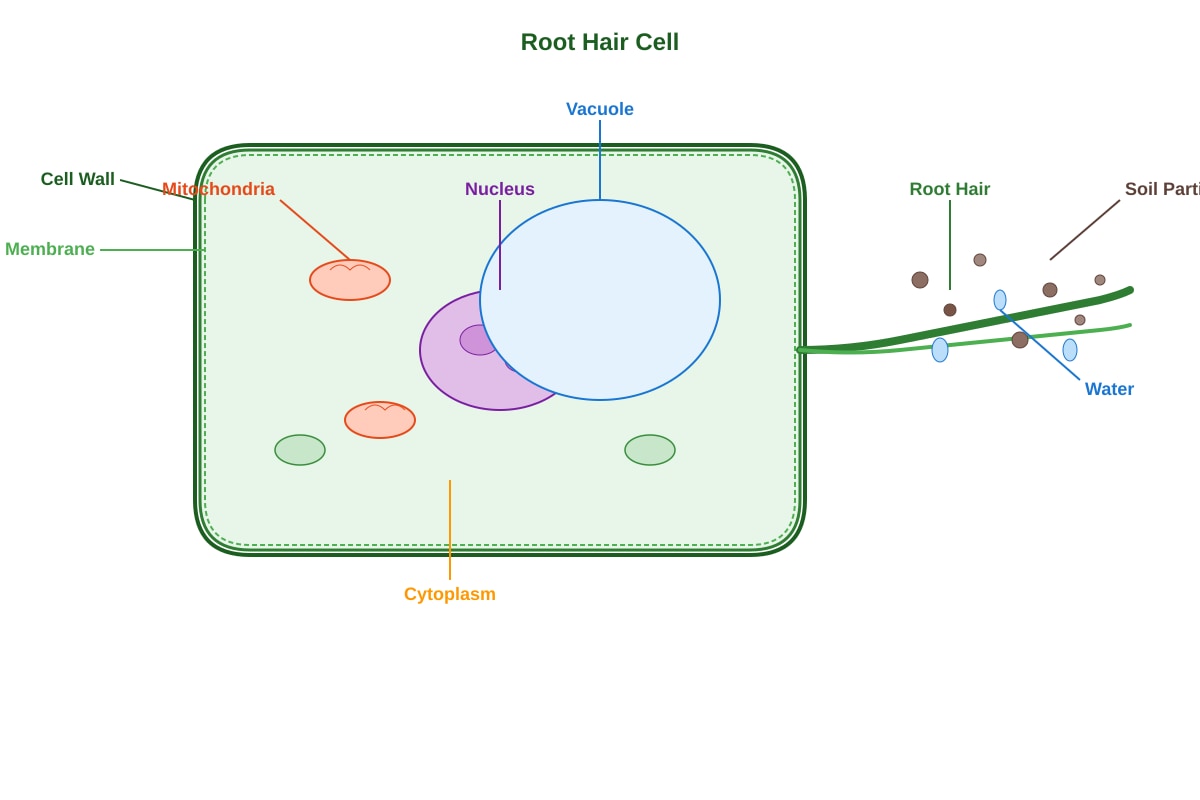
4. The diagram shows a root hair cell from a plant.

[Diagram would show root hair cell with labeled parts]

(a) Explain how the structure of a root hair cell is adapted for its function. [4]


(b) Name the process by which mineral ions are absorbed by root hair cells. [1]


(c) Explain why this process requires energy. [2]


(d) Describe what would happen to the root hair cell if it was placed in a concentrated salt solution. [3]


Section B [40 marks]

5. Enzymes are biological catalysts that speed up metabolic reactions in living organisms.

(a) Explain the lock and key hypothesis of enzyme action. [4]


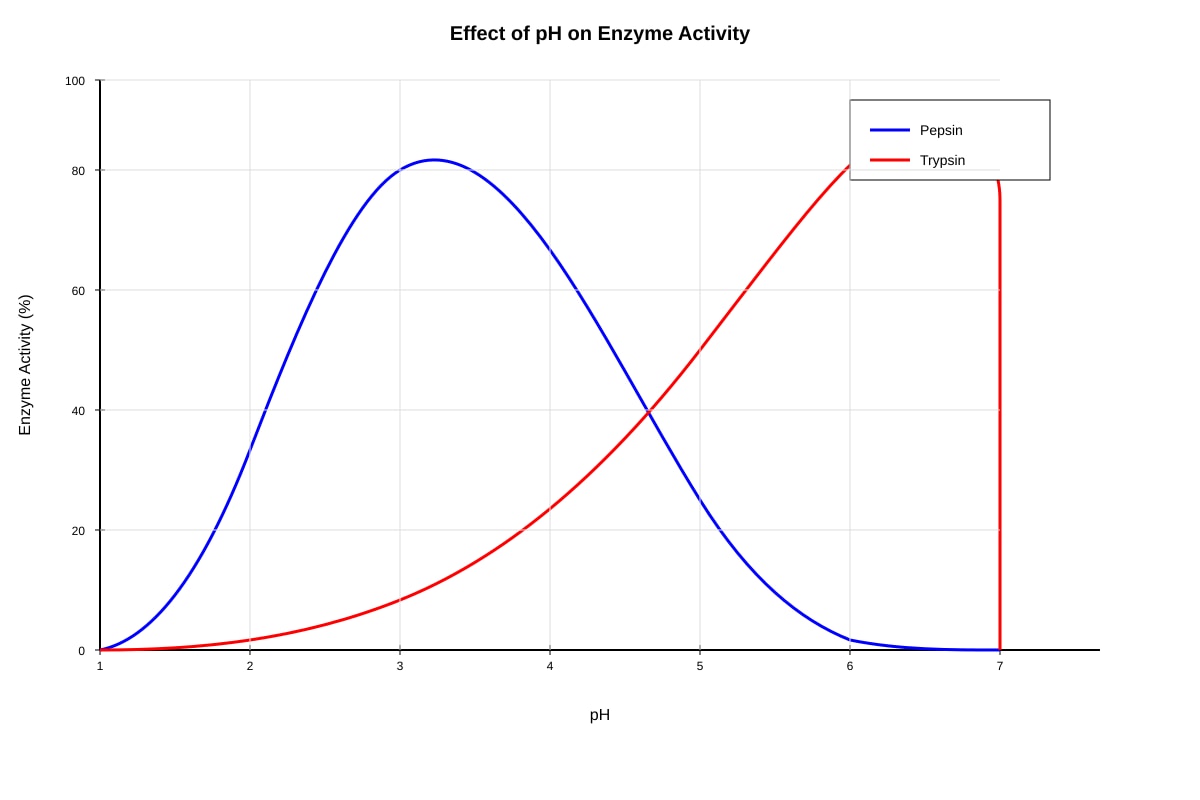
(b) The graph shows the effect of pH on the activity of two enzymes, pepsin and trypsin.

[Graph would show pH vs enzyme activity for both enzymes]

(i) State the optimum pH for pepsin. [1]


(ii) State the optimum pH for trypsin. [1]


(iii) Explain why pepsin and trypsin have different optimum pH values. [3]


(c) Describe what happens to an enzyme when it is denatured. [2]


(d) Apart from pH and temperature, state two other factors that can affect enzyme activity. [2]

(i) _________________________________

(ii) _________________________________

6. A student investigated the process of osmosis using potato cylinders in different concentrations of sucrose solution.

(a) Define osmosis. [2]


(b) The student's results are shown in the table below.

Sucrose concentration (mol/dm³)Initial mass (g)Final mass (g)Change in mass (g)Percentage change in mass
0.02.152.48+0.33+15.3
0.22.182.31+0.13+6.0
0.42.202.18-0.02-0.9
0.62.162.05-0.11-5.1
0.82.192.01-0.18-8.2

(i) Calculate the percentage change in mass for the potato cylinder in 0.4 mol/dm³ sucrose solution. Show your working. [2]


(ii) Plot a graph of sucrose concentration against percentage change in mass. [4]

[Grid would be provided]

(iii) Use your graph to estimate the concentration of sucrose solution that would produce no change in mass. [1]


(c) Explain why the potato cylinders gained mass in distilled water (0.0 mol/dm³). [3]


(d) Explain why the potato cylinders lost mass in high concentrations of sucrose solution. [3]


7. Describe the structure and function of the following biological molecules:

(a) Carbohydrates [6]


(b) Proteins [6]


(c) Explain why both carbohydrates and proteins are important in the human diet. [4]


END OF PAPER

Answers

TuitionGoWhere Practice Paper - Biology O-Level - Answer Key

Total Marks: 80


Section A [40 marks]

1. (a) [3] A: Mitochondrion C: Nucleus
E: Ribosome

(b) [1] Protein synthesis / Makes proteins

(c) [2]

  • Folded inner membrane increases surface area (1)
  • More space for respiratory enzymes / More efficient respiration (1)

(d) [2] Any two from:

  • Chloroplast
  • Cell wall
  • Large permanent vacuole

2. (a) [3]

  • As substrate concentration increases, enzyme activity increases (1)
  • Rate of increase slows down at higher concentrations (1)
  • Eventually levels off/reaches maximum rate (1)

(b) [2]

  • All enzyme active sites are occupied/saturated (1)
  • Enzyme concentration becomes the limiting factor (1)

(c) [2]

  • Curve should be higher initially (1)
  • Should level off at same or slightly higher maximum (1)

(d) [2] Any two from:

  • pH
  • Enzyme concentration
  • Presence of inhibitors
  • Presence of cofactors

3. (a) [2] Sample: A Reason: Iodine test gave blue-black result

(b) [2] Sample: C Reason: Biuret test gave purple result

(c) [4]

  • Add Benedict's solution to food sample (1)
  • Heat in water bath at 80-100°C (1)
  • Positive result shows brick-red precipitate (1)
  • Negative result remains blue (1)

(d) [3] Food present: Fat/Lipid Explanation: Ethanol dissolves fat, when added to water forms white emulsion (2)

4. (a) [4] Any four from:

  • Long projection increases surface area for absorption
  • Thin cell wall allows easy diffusion
  • Many mitochondria provide energy for active transport
  • Large vacuole maintains water potential gradient
  • Cell membrane contains carrier proteins

(b) [1] Active transport

(c) [2]

  • Mineral ions absorbed against concentration gradient (1)
  • Energy from ATP needed to move substances against gradient (1)

(d) [3]

  • Water moves out of cell by osmosis (1)
  • Cell membrane pulls away from cell wall (1)
  • Cell becomes plasmolysed (1)

Section B [40 marks]

5. (a) [4]

  • Enzyme has active site with specific shape (1)
  • Substrate has complementary shape to active site (1)
  • Substrate binds to active site forming enzyme-substrate complex (1)
  • Product(s) formed and released, enzyme unchanged (1)

(b) (i) [1] pH 2 (accept 1.5-2.5)

(ii) [1] pH 8 (accept 7.5-8.5)

(iii) [3]

  • Pepsin works in acidic stomach conditions (1)
  • Trypsin works in alkaline small intestine conditions (1)
  • Each enzyme evolved to work in its specific environment (1)

(c) [2]

  • Active site changes shape (1)
  • Substrate can no longer bind to active site (1)

(d) [2] Any two from:

  • Substrate concentration
  • Enzyme concentration
  • Presence of inhibitors
  • Presence of cofactors

6. (a) [2]

  • Movement of water molecules (1)
  • Through partially permeable membrane from high to low water potential (1)

(b) (i) [2] Calculation: (-0.02/2.20) × 100 = -0.9% (2 marks for correct answer with working)

(ii) [4]

  • Correct axes labels with units (1)
  • Appropriate scale (1)
  • Correct plotting of points (1)
  • Best fit line (1)

(iii) [1] Approximately 0.35-0.4 mol/dm³

(c) [3]

  • Water potential of potato cells lower than distilled water (1)
  • Water moves into cells by osmosis (1)
  • Down water potential gradient (1)

(d) [3]

  • Water potential of sucrose solution lower than potato cells (1)
  • Water moves out of cells by osmosis (1)
  • Down water potential gradient (1)

7. (a) Carbohydrates [6] Structure:

  • Made of carbon, hydrogen, oxygen (1)
  • Simple sugars (monosaccharides) like glucose (1)
  • Complex carbohydrates (polysaccharides) like starch, glycogen (1)

Function:

  • Immediate source of energy (1)
  • Energy storage (starch in plants, glycogen in animals) (1)
  • Structural support (cellulose in plant cell walls) (1)

(b) Proteins [6] Structure:

  • Made of carbon, hydrogen, oxygen, nitrogen (and sometimes sulfur) (1)
  • Built from amino acids joined by peptide bonds (1)
  • Complex 3D structure determined by amino acid sequence (1)

Function:

  • Enzymes catalyse metabolic reactions (1)
  • Structural proteins (collagen, keratin) (1)
  • Transport proteins (haemoglobin), antibodies, hormones (1)

(c) [4] Carbohydrates:

  • Provide energy for cellular respiration (1)
  • Essential for brain and nervous system function (1)

Proteins:

  • Needed for growth and repair of tissues (1)
  • Cannot be stored, must be obtained regularly from diet (1)