From Real Exams Exam Paper
O Level Biology Practice Paper 2
Free O Level Biology Practice Paper 2, HY3 Exam version, with questions, answers, and O Level-style practice for Singapore students.
These static practice materials are generated from the site's syllabus and paper-generation workflow, with source and model context shown so students and parents can evaluate the material before use.
Questions
Free quiz and exam paper access
Enter your details to view this paper
Your access is remembered on this device.
Answers
TuitionGoWhere Exam Practice (AI) — Biology O-Level Practice Paper (Version 2) Answer Key
Total Marks: 60
Level: O-Level
Topic focus: Cells & Biomolecules
Section A: Cell Structure and Organisation (15 marks)
Q1 [1]
Answer: Cell wall (or chloroplast / large vacuole).
Teaching note: Plant cells have a rigid cell wall made of cellulose; animal cells lack this. Any one correct plant-only structure earns the mark.
Q2 [2]
Answers:
(a) Bacterial cells have a cell wall made of peptidoglycan; animal cells have no cell wall. [1]
(b) Bacterial cells contain plasmids (small DNA rings); animal cells do not. [1]
(Alternative: bacteria have 70S ribosomes, animal 80S; or nucleoid vs nucleus.)
Teaching note: Must state the difference clearly, not just list a feature both may share.
Q3 [3]
Mark breakdown:
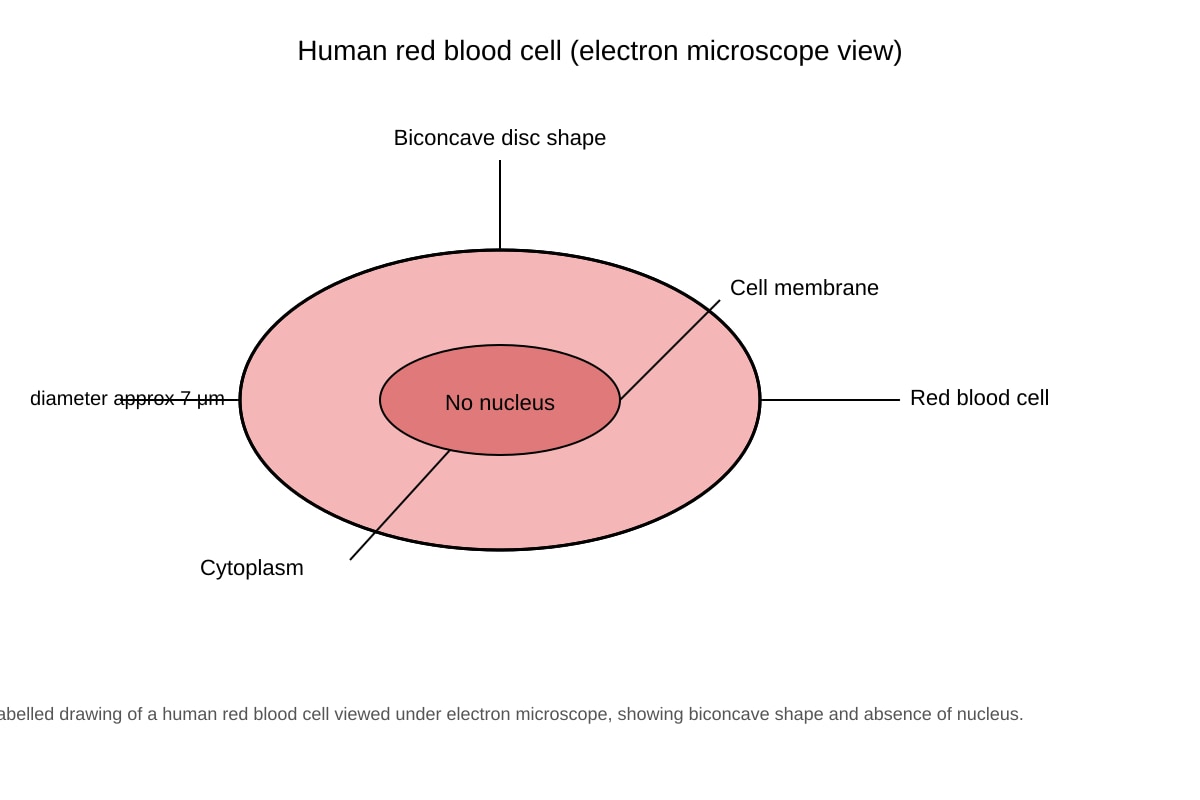
- No nucleus → more space for haemoglobin [1]
- Biconcave shape → increased surface area for oxygen diffusion [1]
- Contains haemoglobin → binds oxygen [1]
Teaching note: Red blood cells specialised for O₂ transport; structure matches function. Image must show biconcave disc and absent nucleus.
Q4 [1]
Answer: Ribosome.
Teaching note: Ribosomes are the site of translation (protein synthesis); visible under EM, not LM clearly.
Q5 [2]
Answer: Plant cell [1]; reason: presence of cell wall, large vacuole, and chloroplasts are plant-cell features not found in animal cells [1].
Teaching note: Any one stated feature as reason is sufficient with correct identification.
Section B: Movement of Substances (15 marks)
Q6 [2]
Answer: Diffusion is the net movement of particles from a region of higher concentration to a region of lower concentration [1] down a concentration gradient [1].
Teaching note: Must include direction and gradient; no membrane required.
Q7 [3]
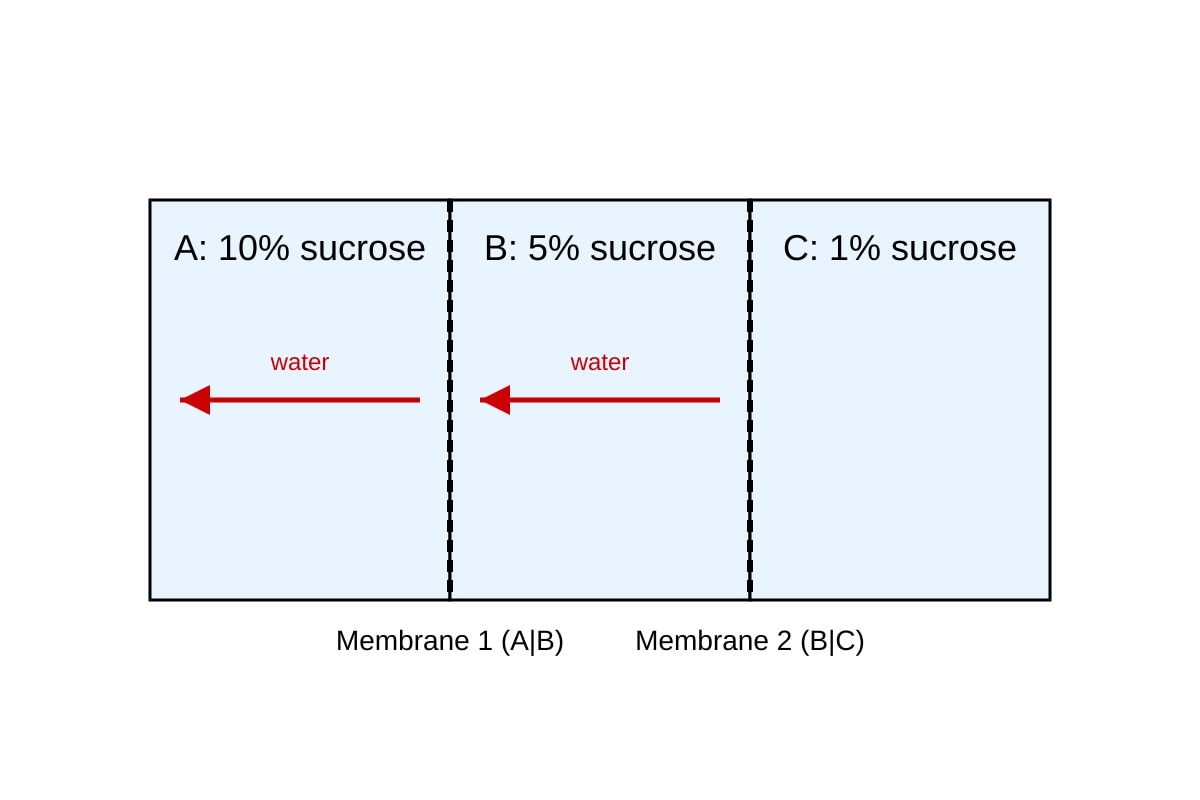
(a) Across membrane 1 (A|B): water moves B → A (from 5% to 10% sucrose) [1]
(b) Across membrane 2 (B|C): water moves C → B (from 1% to 5%) [1]
(c) Process: Osmosis [1]
Teaching note: Osmosis = water across partially permeable membrane from low to high solute concentration. Diagram labels confirm values.
Q8 [2]
Answer: Active transport moves substances against a concentration gradient [1], requiring ATP from respiration; diffusion is down gradient and needs no energy [1].
Teaching note: Energy distinction is the key marking point.
Q9 [3]
Mark breakdown:
- Root hair cell has long extension → large surface area [1]
- Thin wall → short diffusion distance [1]
- Active transport of ions into cell using ATP [1]
Teaching note: Structure adapted for efficient absorption of water and minerals.
Q10 [2]
Answer: Contractile vacuole activity decreases [1]; salty water is hypertonic, water leaves amoeba by osmosis, less excess water to expel [1].
Teaching note: Osmosis out of cell reduces need for vacuole.
Section C: Biological Molecules and Enzymes (15 marks)
Q11 [4]
(a) Blue-black [1]
(b) Benedict's solution [1]
(c) Purple [1]
(d) Ethanol [1]
Teaching note: Standard food tests; learn reagent–colour pairs.
Q12 [1]
Answer: Carbon (C), Hydrogen (H), Oxygen (O), Nitrogen (N) — sometimes Sulphur (S).
Teaching note: Proteins contain N; carbs and fats do not.
Q13 [4]
Mark breakdown:
- Enzymes are biological catalysts that speed up digestion [1]
- Amylase: starch → maltose (in mouth/small intestine) [1]
- Pepsin (or trypsin): protein → peptides (stomach/duodenum) [1]
- (Or lipase: fats → fatty acids + glycerol) [1]
Teaching note: Must give role + named enzyme + substrate + product for full marks.
Q14 [3]
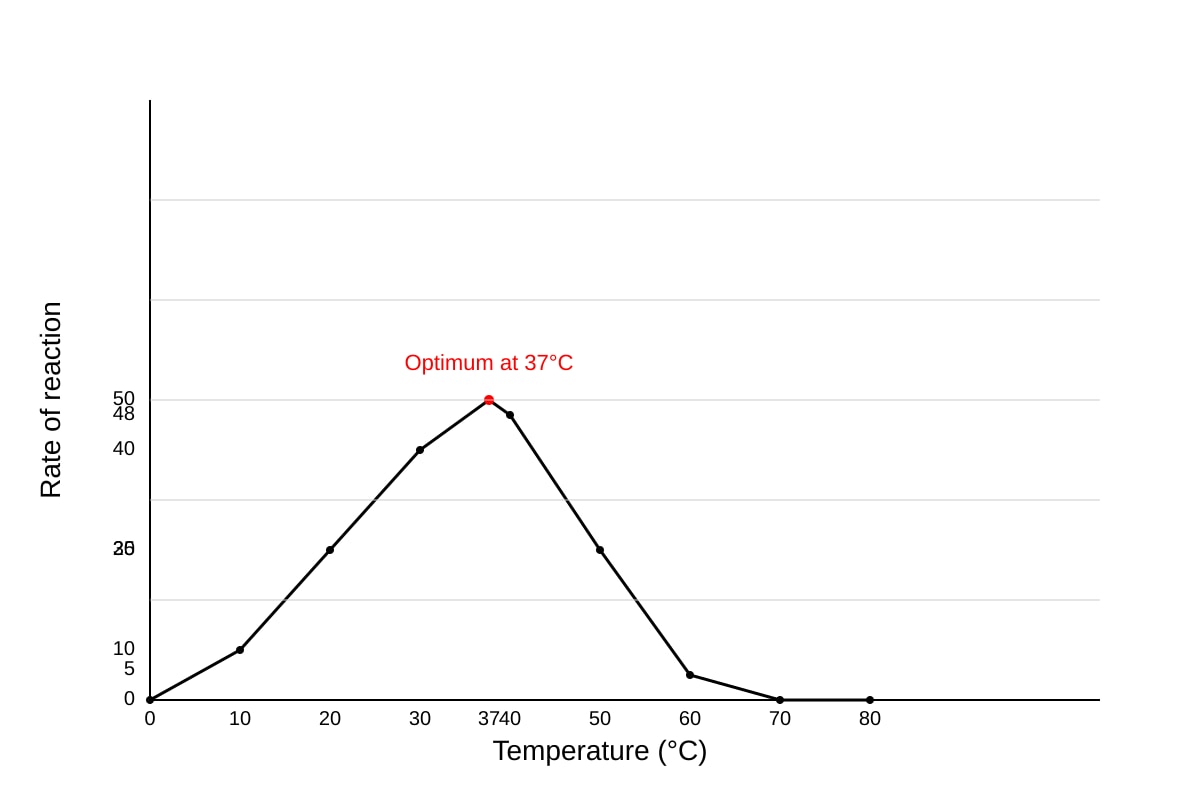
(a) 37°C [1]
(b) High temperature denatures enzyme (breaks bonds, changes active site shape) [1]; substrate no longer fits, reaction stops [1].
Teaching note: Graph shows peak at 37°C then drop; denaturation is irreversible.
Q15 [2]
Answer: Enzyme has specific active site shape [1]; only substrate with complementary shape fits (like key in lock) [1].
Teaching note: Lock-and-key explains specificity, not induced fit.
Section D: Integrated Application (15 marks)
Q16 [3]
Mark breakdown:
- Excess protein deaminated in liver → urea produced [1]
- More urea in blood raises solute concentration [1]
- Kidney reabsorbs more water → urine more concentrated (lower volume, higher solute) [1]
Teaching note: Do not confuse volume with concentration; urea from protein metabolism.
Q17 [3]
Mark breakdown:
- Air stone adds oxygen to solution [1]
- Root cells respire aerobically producing ATP [1]
- ATP used for active transport of mineral ions into roots [1]
Teaching note: Without aeration, anaerobic respiration limits ion uptake.
Q18 [3]
(a) Glucose (or maltose/monosaccharide) [1]
(b) Amino acids [1]
(c) Glycerol + fatty acids [1]
Teaching note: Starch polymer of glucose; proteins of amino acids; lipids of glycerol + fatty acids.
Q19 [2]
(a) Endoplasmic reticulum (or Golgi body / mitochondrion / ribosome) [1]
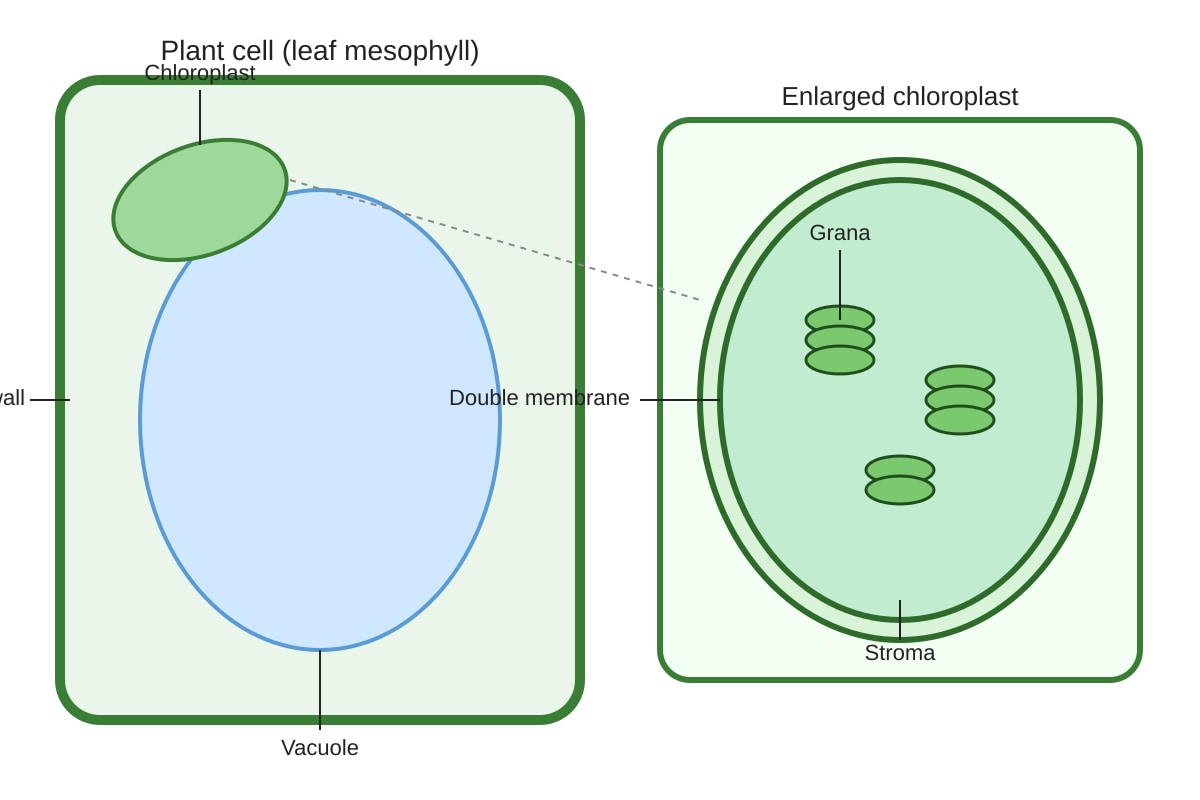
(b) Chloroplast internal grana (or stroma / double membrane detail) [1]
Teaching note: LM shows wall, vacuole, chloroplast outline; EM reveals internal organelles.
Q20 [1]
Answer: Sample contains reducing sugar (low concentration, as green not brick-red).
Teaching note: Benedict's green = small amount reducing sugar; brick-red = high.
End of Answer Key — Total 60 marks </stage3_exam_md>
<stage3_exam_answers_md>
TuitionGoWhere Exam Practice (AI) — Biology O-Level Practice Paper (Version 2) Answer Key
Total Marks: 60
Level: O-Level
Topic focus: Cells & Biomolecules
Section A: Cell Structure and Organisation (15 marks)
Q1 [1]
Answer: Cell wall (or chloroplast / large vacuole).
Teaching note: Plant cells have a rigid cell wall made of cellulose; animal cells lack this. Any one correct plant-only structure earns the mark.
Q2 [2]
Answers:
(a) Bacterial cells have a cell wall made of peptidoglycan; animal cells have no cell wall. [1]
(b) Bacterial cells contain plasmids (small DNA rings); animal cells do not. [1]
(Alternative: bacteria have 70S ribosomes, animal 80S; or nucleoid vs nucleus.)
Teaching note: Must state the difference clearly, not just list a feature both may share.
Q3 [3]
Mark breakdown:
- No nucleus → more space for haemoglobin [1]
- Biconcave shape → increased surface area for oxygen diffusion [1]
- Contains haemoglobin → binds oxygen [1]
Teaching note: Red blood cells specialised for O₂ transport; structure matches function. Image must show biconcave disc and absent nucleus.
Q4 [1]
Answer: Ribosome.
Teaching note: Ribosomes are the site of translation (protein synthesis); visible under EM, not LM clearly.
Q5 [2]
Answer: Plant cell [1]; reason: presence of cell wall, large vacuole, and chloroplasts are plant-cell features not found in animal cells [1].
Teaching note: Any one stated feature as reason is sufficient with correct identification.
Section B: Movement of Substances (15 marks)
Q6 [2]
Answer: Diffusion is the net movement of particles from a region of higher concentration to a region of lower concentration [1] down a concentration gradient [1].
Teaching note: Must include direction and gradient; no membrane required.
Q7 [3]
(a) Across membrane 1 (A|B): water moves B → A (from 5% to 10% sucrose) [1]
(b) Across membrane 2 (B|C): water moves C → B (from 1% to 5%) [1]
(c) Process: Osmosis [1]
Teaching note: Osmosis = water across partially permeable membrane from low to high solute concentration. Diagram labels confirm values.
Q8 [2]
Answer: Active transport moves substances against a concentration gradient [1], requiring ATP from respiration; diffusion is down gradient and needs no energy [1].
Teaching note: Energy distinction is the key marking point.
Q9 [3]
Mark breakdown:
- Root hair cell has long extension → large surface area [1]
- Thin wall → short diffusion distance [1]
- Active transport of ions into cell using ATP [1]
Teaching note: Structure adapted for efficient absorption of water and minerals.
Q10 [2]
Answer: Contractile vacuole activity decreases [1]; salty water is hypertonic, water leaves amoeba by osmosis, less excess water to expel [1].
Teaching note: Osmosis out of cell reduces need for vacuole.
Section C: Biological Molecules and Enzymes (15 marks)
Q11 [4]
(a) Blue-black [1]
(b) Benedict's solution [1]
(c) Purple [1]
(d) Ethanol [1]
Teaching note: Standard food tests; learn reagent–colour pairs.
Q12 [1]
Answer: Carbon (C), Hydrogen (H), Oxygen (O), Nitrogen (N) — sometimes Sulphur (S).
Teaching note: Proteins contain N; carbs and fats do not.
Q13 [4]
Mark breakdown:
- Enzymes are biological catalysts that speed up digestion [1]
- Amylase: starch → maltose (in mouth/small intestine) [1]
- Pepsin (or trypsin): protein → peptides (stomach/duodenum) [1]
- (Or lipase: fats → fatty acids + glycerol) [1]
Teaching note: Must give role + named enzyme + substrate + product for full marks.
Q14 [3]
(a) 37°C [1]
(b) High temperature denatures enzyme (breaks bonds, changes active site shape) [1]; substrate no longer fits, reaction stops [1].
Teaching note: Graph shows peak at 37°C then drop; denaturation is irreversible.
Q15 [2]
Answer: Enzyme has specific active site shape [1]; only substrate with complementary shape fits (like key in lock) [1].
Teaching note: Lock-and-key explains specificity, not induced fit.
Section D: Integrated Application (15 marks)
Q16 [3]
Mark breakdown:
- Excess protein deaminated in liver → urea produced [1]
- More urea in blood raises solute concentration [1]
- Kidney reabsorbs more water → urine more concentrated (lower volume, higher solute) [1]
Teaching note: Do not confuse volume with concentration; urea from protein metabolism.
Q17 [3]
Mark breakdown:
- Air stone adds oxygen to solution [1]
- Root cells respire aerobically producing ATP [1]
- ATP used for active transport of mineral ions into roots [1]
Teaching note: Without aeration, anaerobic respiration limits ion uptake.
Q18 [3]
(a) Glucose (or maltose/monosaccharide) [1]
(b) Amino acids [1]
(c) Glycerol + fatty acids [1]
Teaching note: Starch polymer of glucose; proteins of amino acids; lipids of glycerol + fatty acids.
Q19 [2]
(a) Endoplasmic reticulum (or Golgi body / mitochondrion / ribosome) [1]
(b) Chloroplast internal grana (or stroma / double membrane detail) [1]
Teaching note: LM shows wall, vacuole, chloroplast outline; EM reveals internal organelles.
Q20 [1]
Answer: Sample contains reducing sugar (low concentration, as green not brick-red).
Teaching note: Benedict's green = small amount reducing sugar; brick-red = high.
End of Answer Key — Total 60 marks