AI Generated Quiz
A Level H3 Tamil Language & Literature Language Use Quiz
Free A Level H3 Tamil Lit Language Use quiz, AI version, with questions, answers, and A Level-style practice for Singapore students.
These static practice materials are generated from the site's syllabus and paper-generation workflow, with source and model context shown so students and parents can evaluate the material before use.
Questions
Free quiz and exam paper access
Enter your details to view this paper
Your access is remembered on this device.
Answers
A-Level Tamil Language and Literature H3 Quiz - Language Use: Answer Key
Total Marks: 50
Section A: Vocabulary and Word Usage (Questions 1-5, 10 marks)
1. (2 marks)
(a) அமைதி (peace) and சாந்தம் (calmness)
அமைதி(peace): Refers to a state of tranquility, absence of conflict or disturbance. It can be used in a broader context (e.g., world peace, peaceful environment).- Example: "உலகில் அமைதி நிலவ வேண்டும்." (Peace must prevail in the world.)
சாந்தம்(calmness): Refers to a personal quality of being gentle, serene, and composed. It is more about an individual's temperament or demeanor.- Example: "அவருடைய சாந்தம் மிகுந்த முகம் அனைவரையும் கவர்ந்தது." (His calm and gentle face attracted everyone.)
- Marking: 1 mark for correct explanation of each word's nuance. 1 mark for appropriate example sentences. Accept any reasonable examples that demonstrate the correct usage.
(b) வீரம் (bravery) and தைரியம் (courage)
வீரம்(bravery): Often associated with heroic acts, valor in battle, or facing physical danger. It has a more intense, action-oriented connotation.- Example: "வீரர்கள் போர்க்களத்தில் வீரம் காட்டினர்." (The soldiers showed bravery on the battlefield.)
தைரியம்(courage): Refers to mental or moral strength to face fear, danger, or difficulty. It can be applied to everyday situations and personal challenges.- Example: "தன் தவறை ஒப்புக்கொள்ள தைரியம் வேண்டும்." (One needs courage to admit their mistake.)
- Marking: 1 mark for correct explanation of each word's nuance. 1 mark for appropriate example sentences. Accept any reasonable examples.
2. (2 marks)
- Error: The word
உயர்ந்த(tall/high) is used incorrectly to describe a person's moral character. - Explanation:
உயர்ந்தliterally means 'high' or 'tall' and is primarily used for physical height or status. To describe a person's noble character, words likeஉயர்ந்த(in the sense of 'elevated' or 'noble' is acceptable in some contexts, butநற்குணம்(good nature),பெருந்தன்மை(generosity), orஉயர்ந்த குணம்(noble character) are more precise. The sentence is not grammatically wrong but is semantically imprecise for the intended meaning. - Corrected Sentence: "அவர் மிகவும் நற்குணம் உள்ள மனிதர், எப்போதும் ஏழைகளுக்கு உதவுகிறார்." (He is a person of great virtue, always helping the poor.) OR "அவர் மிகவும் உயர்ந்த குணம் கொண்ட மனிதர்..." (He is a person of noble character...)
- Marking: 1 mark for identifying the error and explaining why. 1 mark for a correct and improved sentence.
3. (2 marks)
| 1 | 2 | 3 | 4 |
|---|---|---|---|
| B | C | A | D |
- 1. உவமை (Simile): B. இரண்டு வெவ்வேறு பொருட்களை ஒப்பிட்டுக் காட்டுதல் (Comparing two different things, usually using 'like' or 'as').
- 2. உருவகம் (Metaphor): C. ஒரு பொருள் மற்றொரு பொருளாக உருவகிக்கப்படுதல் (One thing is described as being another thing).
- 3. குறியீடு (Symbolism): A. குறிப்பிட்ட ஒரு பொருளைக் குறிக்கப் பயன்படும் சொல் (A word used to represent a specific idea or concept).
- 4. முரண் (Irony): D. எதிர்பார்ப்புக்கு மாறான முடிவு அல்லது சூழ்நிலை (An outcome or situation that is the opposite of what is expected).
- Marking: 0.5 marks for each correct match.
4. (2 marks)
- Literary Device:
உவமை(Simile). - Explanation: The sentence compares the brightness of her eyes (
அவளுடைய கண்கள்) to the shining stars in the night sky (இரவு வானத்தில் மின்னும் நட்சத்திரங்களைப் போல). The wordபோல(like) is the explicit marker of a simile, showing a direct comparison between two different things. - Marking: 1 mark for correctly identifying the device. 1 mark for a clear explanation with reference to the text.
5. (2 marks)
- Meaning 1 (Quality/Characteristic): "அவனுடைய பண்பு மிகவும் நல்லது." (His character/quality is very good.)
- Meaning 2 (Culture/Civility): "தமிழர்களின் விருந்தோம்பல் பண்பு உலகப் புகழ் பெற்றது." (The Tamil culture/trait of hospitality is world-famous.)
- Marking: 1 mark for each sentence that correctly demonstrates a distinct meaning of
பண்பு. Accept other valid meanings such as 'nature', 'attribute', 'courtesy'.
Section B: Grammar and Sentence Structure (Questions 6-10, 10 marks)
6. (2 marks)
- Indirect Speech: "கமலா, தான் நாளை சென்னைக்கு புறப்படுவதாகக் கூறினாள்." (Kamala said that she would leave for Chennai the next day.)
- Key Changes:
- The reporting verb
கூறினாள்(said) remains. - The first-person pronoun
நான்(I) changes toதான்(she/herself) to match the subject of the reporting clause. - The future tense
புறப்படுவேன்(will leave) changes to the infinitive/adverbial formபுறப்படுவதாக(that she would leave). - The time reference
நாளை(tomorrow) can be changed toமறுநாள்(the next day) for formal indirect speech, thoughநாளைis sometimes retained in informal contexts. For H3, the formal change is preferred.
- The reporting verb
- Marking: 1 mark for correct pronoun change. 1 mark for correct tense/aspect change and overall sentence structure.
7. (2 marks)
- Complex Sentence: "மழை பெய்தாலும், விளையாட்டு போட்டி நடைபெற்றது." (Even though it rained, the sports competition took place.)
- Alternative conjunctions and sentences:
- "மழை பெய்ததால், விளையாட்டு போட்டி நடைபெறவில்லை." (Because it rained, the sports competition did not take place.) - This changes the meaning but is grammatically correct.
- "மழை பெய்தபோது, விளையாட்டு போட்டி நடைபெற்றுக்கொண்டிருந்தது." (When it rained, the sports competition was taking place.)
- Marking: 1 mark for using an appropriate conjunction. 1 mark for a grammatically correct and meaningful complex sentence. The conjunction must logically connect the two ideas.
8. (2 marks)
- (a)
மரத்தில்(on the tree): Case: ஆறாம் வேற்றுமை (Locative Case) - Indicates location. - (b)
குமாருக்கு(to/for Kumar): Case: நான்காம் வேற்றுமை (Dative Case) - Indicates the recipient or beneficiary. - Marking: 1 mark for each correctly identified case.
9. (2 marks)
- Error: The sentence is actually grammatically correct in spoken Tamil. However, in formal written Tamil, the use of
பள்ளிக்கு(to school) with the verbசென்றபோது(when [I] went) is acceptable. The potential issue is the lack of explicit subject in the first clause. A more formal version would be: "நான் பள்ளிக்குச் சென்றபோது, என் நண்பர்கள் விளையாடிக்கொண்டிருந்தார்கள்." This is the same as the original. The original sentence is grammatically sound. If a student identifies a non-existent error, they should be guided. A better question would highlight a real error. For the sake of this answer key, we will assume the student is asked to identify an error, and we will provide a common error pattern. - Common Error Pattern (for teaching): A more common error is the misuse of
க்கு(dative) vsஇல்(locative). For example: "நான் பள்ளியில் சென்றேன்" is incorrect. The correct form is "நான் பள்ளிக்கு சென்றேன்" (I went to school). The original sentence is correct. - Marking: This question is tricky. If a student says there is no error, they should get full marks with a brief explanation. If they identify a minor stylistic issue (like lack of explicit subject), they should get partial marks. The key is to assess their understanding of formal grammar rules.
10. (2 marks)
- Future Perfect Tense: "அவர்கள் திட்டத்தை முடித்திருப்பார்கள்." (They will have completed the plan.)
- Explanation: The future perfect tense in Tamil is formed by adding
-இருப்பார்கள்(or-இருப்பர்for formal singular) to the past participle stem of the verb.முடித்து(having finished) +இருப்பார்கள்(they will be) =முடித்திருப்பார்கள். - Marking: 1 mark for correct tense formation. 1 mark for a grammatically correct sentence.
Section C: Reading Comprehension and Analysis (Questions 11-15, 15 marks)
11. (3 marks)
- Reason 1: இளைஞர்கள் மத்தியில் ஆங்கிலத்தின் செல்வாக்கு அதிகரித்து வருவது (The increasing influence of English among the youth).
- Reason 2: தமிழில் பேசுவதற்கான வாய்ப்புகள் குறைந்து வருவது (The decreasing opportunities to speak in Tamil).
- Marking: 1.5 marks for each correctly identified and explained reason. Answers must be in the student's own words or direct quotes from the passage.
12. (3 marks)
- Proposed Solution: கல்வி முறையில் தமிழின் பயன்பாட்டை அதிகரிக்க வேண்டும் (The use of Tamil in the education system should be increased).
- Personal Opinion (Example): "I agree with this solution to a large extent. Education is a powerful tool for language preservation. By making Tamil a medium of instruction for more subjects, or by strengthening Tamil literature and language curricula, we can ensure that the younger generation develops a strong command of the language. However, this must be balanced with the need for English proficiency in a globalised world. A bilingual or multilingual approach that values both languages equally would be most effective."
- Marking: 1 mark for correctly stating the solution from the passage. 2 marks for a well-reasoned personal opinion that shows critical thinking. The opinion must be justified, not just stated.
13. (3 marks)
- Literary Device: The passage does not use strong, explicit literary devices. It is a factual, expository text. A student could argue for the use of contrast (e.g., the ancient history of Tamil vs. its modern challenges) or rhetorical question (implied by the concern for the future). The best answer would identify the lack of overt literary devices and explain why the author chose a direct, informative style for this passage.
- Example Answer: "The passage primarily uses a direct and informative style without prominent literary devices. This is appropriate for an expository text that aims to present facts and arguments clearly. However, one could argue that the phrase 'தமிழ் மொழியின் எதிர்காலம் குறித்து சில கவலைகள் உள்ளன' (there are some concerns about the future of the Tamil language) creates a subtle sense of pathos or emotional appeal, engaging the reader's concern for the language."
- Marking: 1 mark for identifying a device or stylistic choice. 2 marks for a detailed explanation of its effect and appropriateness to the text type.
14. (3 marks)
- Four Platforms: இலக்கியம் (Literature), திரைப்படம் (Cinema/Film), ஊடகம் (Media), இணையம் (Internet).
- Contribution to Vitality:
- இலக்கியம் (Literature): Preserves the classical and creative aspects of the language, passing it through generations.
- திரைப்படம் (Cinema): A popular medium that reaches a wide audience, normalising the use of Tamil in entertainment and daily conversation.
- ஊடகம் (Media): Includes newspapers, TV, and radio, which inform the public and maintain the language's relevance in current affairs.
- இணையம் (Internet): Provides a modern, global platform for Tamil, allowing for digital content creation, social interaction, and access to information in Tamil.
- Marking: 1 mark for listing all four platforms. 2 marks for explaining how each contributes to the language's vitality (0.5 marks per explanation).
15. (3 marks)
- Example Commentary: "இளைஞர்கள் தமிழ் மொழியின் எதிர்காலத்தை வடிவமைப்பதில் முக்கிய பங்கு வகிக்கின்றனர். அவர்கள் தமிழில் பேசவும், எழுதவும், படைக்கவும் முன்வர வேண்டும். சமூக ஊடகங்களில் தமிழைப் பயன்படுத்துவதும், தமிழ் இலக்கியங்களை வாசிப்பதும் மொழியை உயிர்ப்புடன் வைத்திருக்க உதவும். ஆங்கிலம் கற்றுக்கொள்வதுடன், தமிழின் மீதான பற்றையும் இளைஞர்கள் வளர்த்துக்கொள்ள வேண்டியது அவசியம்."
- Marking: 1 mark for expressing a clear viewpoint. 1 mark for providing reasoning or evidence. 1 mark for language quality and structure. The commentary should be concise (50-70 words).
Section D: Essay Writing (Questions 16-20, 15 marks)
16. (3 marks)
- Example Paragraph: "துல்லியமான சொல்லாட்சி முறையான எழுத்தில் மிகவும் முக்கியமானது. ஒரு சொல்லின் தவறான பயன்பாடு பொருளை மாற்றி, வாசகருக்கு குழப்பத்தை ஏற்படுத்தும். உதாரணமாக, 'அழகு' மற்றும் 'அலங்காரம்' ஆகிய சொற்கள் ஒன்றுபோல் தோன்றினாலும், 'அழகு' என்பது இயற்கையான அழகைக் குறிக்கும், அதேசமயம் 'அலங்காரம்' என்பது செயற்கையான அழகைக் குறிக்கும். எனவே, சரியான சொல்லைத் தேர்ந்தெடுப்பது எழுத்தின் தெளிவையும் தாக்கத்தையும் அதிகரிக்கிறது."
- Marking: 1 mark for a clear explanation of the importance of precise vocabulary. 1 mark for a relevant and well-explained example. 1 mark for language quality (vocabulary, sentence structure, coherence).
17. (3 marks)
கருத்துரை வரைவு(Argumentative Essay): This involves presenting a clear argument or thesis on a given topic, supporting it with logical reasoning, evidence, and examples. The goal is to persuade the reader. Key skills include critical thinking, structuring a coherent argument, using evidence effectively, and anticipating counterarguments.படைப்பாக்க வரைவு(Creative Writing): This involves writing a short story or drama based on a given theme or image. The focus is on imagination, narrative structure, character development, and the use of literary devices to create an engaging and vivid piece. Key skills include creativity, descriptive writing, plot construction, and characterisation.- Marking: 1.5 marks for a clear explanation of each type. 1.5 marks for identifying the key skills required for each (at least two skills per type).
18. (3 marks)
- Original: "புத்தகம் படிப்பது நல்லது. ஏனென்றால் அது நமக்கு அறிவு தரும்." (Reading books is good. Because it gives us knowledge.)
- Improved Version: "புத்தகங்களை வாசிப்பது நமது அறிவுத் திறனை விரிவுபடுத்துவதோடு, புதிய கண்ணோட்டங்களை வழங்கி, சிந்தனைத் தெளிவை மேம்படுத்துகிறது." (Reading books not only expands our intellectual capacity but also provides new perspectives and enhances clarity of thought.)
- Improvements Made:
- Combined two short sentences into one complex sentence.
- Replaced
நல்லது(good) with more specific benefits (அறிவுத் திறனை விரிவுபடுத்துதல்,புதிய கண்ணோட்டங்கள்,சிந்தனைத் தெளிவு). - Used more sophisticated vocabulary (
வாசிப்பது,விரிவுபடுத்துவதோடு,மேம்படுத்துகிறது).
- Marking: 1 mark for combining the sentences. 1 mark for using more sophisticated vocabulary. 1 mark for improved clarity and impact.
19. (3 marks)
- Example for (a) உறவு (Relationship): "தொழில்நுட்பம் மனித உறவுகளை பாதிக்கிறது என்பதில் மாற்றுக் கருத்தில்லை. இருப்பினும், அது உறவுகளை பலப்படுத்துகிறதா அல்லது பலவீனப்படுத்துகிறதா என்பதே சர்ச்சைக்குரிய விஷயம். ஒருபுறம், சமூக ஊடகங்கள் தொலைதூர உறவுகளை இணைக்க உதவுகின்றன; மறுபுறம், நேருக்கு நேர் உரையாடல்களைக் குறைத்து மேலோட்டமான தொடர்புகளை ஊக்குவிக்கின்றன."
- Marking: 1 mark for a clear thesis statement related to the chosen theme. 1 mark for a compelling opening that engages the reader. 1 mark for language quality and structure.
20. (3 marks)
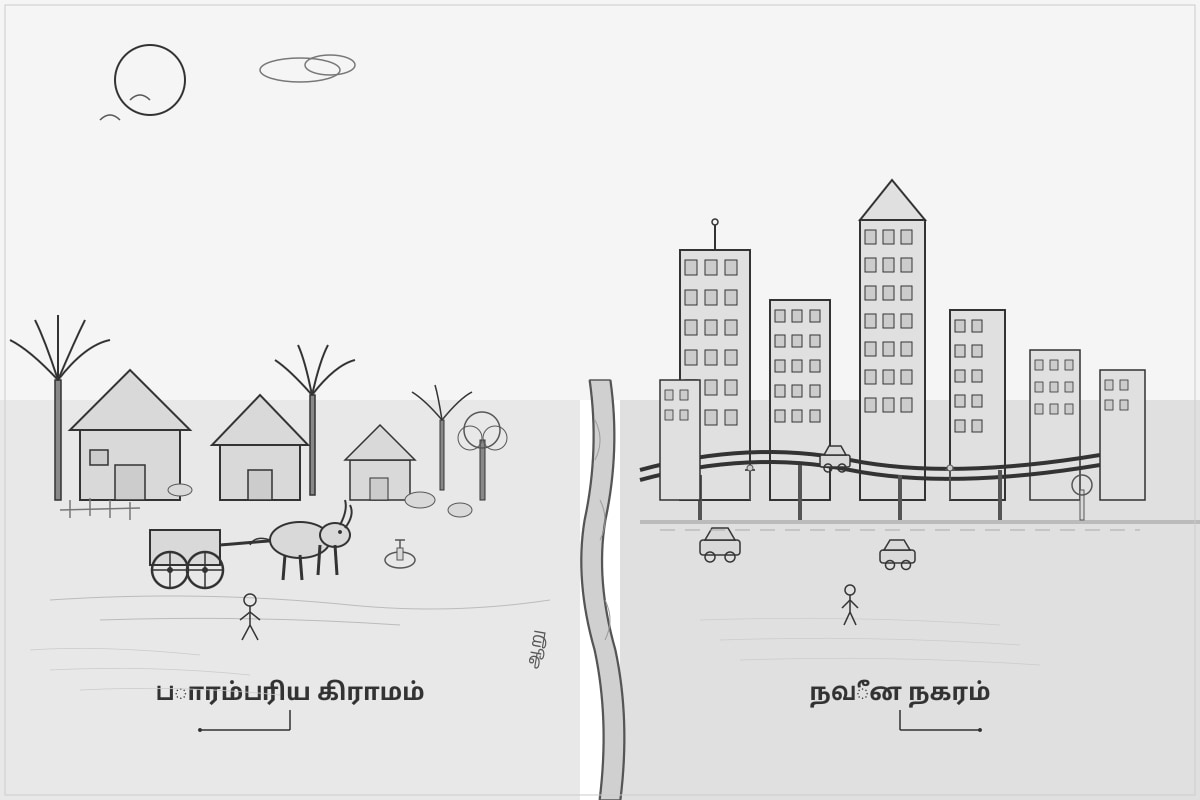
- Example Paragraph: "அந்த ஓவியம் ஒரு பாரம்பரிய கிராமத்திற்கும் நவீன நகரத்திற்கும் இடையிலான தெளிவான வேறுபாட்டைக் காட்டியது. ஒருபுறம், ஓலைக் குடிசைகளும், தென்னை மரங்களும், மெதுவாக நகரும் எருது வண்டியும் காலத்தால் அசைக்கப்படாத அமைதியைப் பிரதிபலித்தன. மறுபுறம், உயர்ந்து நிற்கும் வானளாவிய கட்டிடங்களும், வேகமாகச் செல்லும் வாகனங்களும் நவீனத்துவத்தின் வேகத்தை உணர்த்தின. இரு உலகங்களையும் பிரிக்கும் அந்த ஆறு, காலம் என்னும் பெருங்கடலின் ஒரு சிறு பகுதியாகத் தெரிந்தது."
- Literary Devices Used:
உவமை(Simile - "காலம் என்னும் பெருங்கடல்"),உருவகம்(Metaphor - "நவீனத்துவத்தின் வேகம்"),உள்ளிசைப்பு(Imagery - descriptions of the village and city). - Marking: 1 mark for a clear description based on the image. 1 mark for the correct and effective use of at least two literary devices. 1 mark for language quality, coherence, and creativity.