AI Generated Quiz
A Level H3 Tamil Language & Literature Composition Quiz
Free A Level H3 Tamil Lit Composition quiz, AI version, with questions, answers, and A Level-style practice for Singapore students.
These static practice materials are generated from the site's syllabus and paper-generation workflow, with source and model context shown so students and parents can evaluate the material before use.
Questions
Free quiz and exam paper access
Enter your details to view this paper
Your access is remembered on this device.
Answers
Answer Key: A-Level Tamil Language and Literature H3 Quiz - Composition
Total Marks: 50
Section A: Creative Writing Fundamentals (Questions 1-5)
1. Define கதைக்கரு (story core) and its importance. [2 marks]
Answer:
- கதைக்கரு refers to the central idea, premise, or seed from which the entire story grows. It is the fundamental concept or conflict that drives the narrative.
- Importance: It provides a clear direction for the plot, ensures thematic consistency, and helps the writer avoid digressions. A strong story core keeps the narrative focused and engaging.
Marking Scheme:
- 1 mark for a clear definition of கதைக்கரு.
- 1 mark for explaining its importance in structuring a story.
Common Mistake: Students may confuse கதைக்கரு with கதைக்களம் (plot). Emphasise that கதைக்கரு is the core idea, while கதைக்களம் is the sequence of events.
2. Two key differences between நிகழ்வு வரைவு (narrative essay) and சிறுகதை (short story). [3 marks]
Answer:
| Feature | நிகழ்வு வரைவு (Narrative Essay) | சிறுகதை (Short Story) |
|---|---|---|
| Purpose | To reflect on a personal experience or event, often with a lesson or insight. | To entertain, explore a theme, or create an emotional impact through a fictional narrative. |
| Structure | Often follows a chronological order based on real events; may include reflective commentary. | Has a structured plot (exposition, rising action, climax, falling action, resolution); may use non-linear techniques. |
Marking Scheme:
- 1 mark for identifying each difference (2 marks total).
- 1 mark for clear and accurate explanation of both differences.
Teaching Note: A narrative essay is rooted in the writer's personal experience and aims to share a meaningful reflection. A short story is a crafted fictional narrative with deliberate plot structure and character development.
3. Short story outline based on "மாற்றம் ஒரே நிலையானது". [4 marks]
Sample Answer:
- Main Character: An elderly farmer in a rural Tamil village who has lived the same way for decades.
- Central Conflict: The government announces a plan to build a dam that will submerge his village. He must choose between resisting change or relocating.
- Resolution: After initial resistance, he learns to adapt, moves to a new town, and finds purpose in teaching traditional farming to urban youth. He realises that change, though painful, brings new opportunities.
Marking Scheme:
- 1 mark for a clear main character.
- 1 mark for a well-defined central conflict related to the theme.
- 1 mark for a logical resolution.
- 1 mark for overall coherence and connection to the theme.
Common Mistake: Outlines that are too vague or do not clearly connect to the theme of change.
4. Explanation of உருவகம் (simile/metaphor) with an original example. [3 marks]
Answer:
- உருவகம் is a figure of speech that makes a comparison between two unlike things to create a vivid image. A simile uses "போல" or "போன்ற" (like/as), while a metaphor makes a direct comparison without these words.
- Effect: It helps the reader visualise abstract concepts, evokes emotions, and makes descriptions more memorable.
- Original Example (Metaphor): "அவள் கண்கள் இரவு வானத்தில் மின்னும் நட்சத்திரங்கள்." (Her eyes were stars shining in the night sky.)
Marking Scheme:
- 1 mark for defining உருவகம்.
- 1 mark for explaining its effect.
- 1 mark for a correct and original Tamil example.
Teaching Note: Ensure students understand the difference between simile and metaphor. The example should be original, not a cliché.
5. Role of உரையாடல் (dialogue) in plot and character development. [3 marks]
Answer:
- Advancing the Plot: Dialogue can reveal key information, create conflict, or move the story forward. For example, a character might reveal a secret through dialogue that changes the course of the story.
- Developing Characters: Dialogue reveals a character's personality, motivations, emotions, and background. The way a character speaks (tone, word choice) can show their education, social status, or emotional state.
- Example: In a story, a character says, "எனக்கு இந்த முடிவு பிடிக்கவில்லை, ஆனால் வேறு வழியில்லை." (I don't like this decision, but there is no other way.) This dialogue shows the character's reluctance and sense of being trapped.
Marking Scheme:
- 1 mark for explaining how dialogue advances the plot.
- 1 mark for explaining how dialogue develops characters.
- 1 mark for a relevant example.
Section B: Argumentative and Discursive Essay Skills (Questions 6-10)
6. Distinguish between கருத்துரை வரைவு and விளக்கவுரை வரைவு. [2 marks]
Answer:
- கருத்துரை வரைவு (Argumentative Essay): The writer takes a clear stance (for or against) and uses evidence and reasoning to persuade the reader to adopt their viewpoint.
- விளக்கவுரை வரைவு (Discursive Essay): The writer explores a topic from multiple perspectives without necessarily taking a personal stance. The goal is to present a balanced and informed discussion.
Marking Scheme:
- 1 mark for a correct definition of argumentative essay.
- 1 mark for a correct definition of discursive essay.
Teaching Note: The key difference is the writer's stance: argumentative is persuasive and one-sided; discursive is exploratory and balanced.
7. State position and provide two arguments on "தொழில்நுட்ப வளர்ச்சி மனித உறவுகளைப் பாதித்துள்ளது". [4 marks]
Sample Answer (Position: For the statement):
- Argument 1: முகநூல், வாட்ஸ்அப் போன்ற சமூக ஊடகங்கள் நேருக்கு நேர் உரையாடலைக் குறைத்து, மேலோட்டமான உறவுகளை உருவாக்கியுள்ளன. மக்கள் திரையின் பின்னால் மறைந்து தொடர்புகொள்வதால், உண்மையான உணர்வுப் பரிமாற்றம் குறைந்துவிட்டது.
- Argument 2: தொழில்நுட்பம் குடும்ப உறுப்பினர்களிடையேயான நேரத்தைக் குறைத்துள்ளது. இரவு உணவு நேரத்தில் கூட, ஒவ்வொருவரும் தங்கள் மொபைல் போன்களில் மூழ்கியிருப்பதைக் காணலாம்.
Marking Scheme:
- 1 mark for stating a clear position.
- 1 mark for each well-developed argument (2 marks total).
- 1 mark for overall clarity and relevance.
Common Mistake: Arguments that are too general or lack specific examples.
8. Importance of சான்றுகள் (evidence) and எடுத்துக்காட்டுகள் (examples) in a discursive essay. [3 marks]
Answer:
- சான்றுகள் (Evidence): Evidence (statistics, expert opinions, research findings) provides factual support for the points being discussed. It makes the essay more credible and persuasive, showing that the writer has done their research.
- எடுத்துக்காட்டுகள் (Examples): Examples make abstract concepts concrete and relatable. They help the reader understand complex ideas by connecting them to real-world situations.
- Credibility: Using evidence and examples demonstrates that the writer is knowledgeable and objective, which builds trust with the reader.
Marking Scheme:
- 1 mark for explaining the role of evidence.
- 1 mark for explaining the role of examples.
- 1 mark for explaining how they strengthen credibility.
9. Introductory paragraph for "இளைஞர்கள் தேர்ந்தெடுக்கும் வாழ்க்கைப் பாதைகள்". [4 marks]
Sample Answer: இன்றைய இளைஞர்கள் பல்வேறு வாழ்க்கைப் பாதைகளைத் தேர்ந்தெடுக்கும் வாய்ப்பைப் பெற்றுள்ளனர். மரபுவழி தொழில்கள் முதல் படைப்பாற்றல் மிக்க துறைகள் வரை பல விருப்பங்கள் உள்ளன. இந்தக் கட்டுரை இளைஞர்களின் தேர்வுகளைப் பாதிக்கும் காரணிகளையும், ஒவ்வொரு பாதையின் நன்மை தீமைகளையும் சமநோக்கில் ஆராயும்.
Marking Scheme:
- 1 mark for introducing the topic clearly.
- 1 mark for indicating a balanced approach.
- 1 mark for appropriate language and tone.
- 1 mark for meeting the word count (60-80 words).
Teaching Note: The introduction should not take a side; it should set up the discussion.
10. Two logical fallacies with Tamil examples. [3 marks]
Answer:
- Fallacy 1: ஆதாரமற்ற பொதுமைப்படுத்தல் (Hasty Generalisation) — Drawing a conclusion based on insufficient evidence.
- Example: "எனக்குத் தெரிந்த இரண்டு இளைஞர்கள் வேலை தேட முடியாமல் சிரமப்படுகிறார்கள். எனவே, அனைத்து இளைஞர்களுக்கும் வேலை கிடைப்பது கடினம்."
- Fallacy 2: ஆள் மாறாட்ட வாதம் (Ad Hominem) — Attacking the person instead of their argument.
- Example: "அவர் சொல்வது சரிதான் என்று நான் நினைக்கவில்லை, ஏனென்றால் அவர் பணக்கார குடும்பத்தைச் சேர்ந்தவர். அவருக்கு ஏழைகளின் பிரச்சினைகள் புரியாது."
Marking Scheme:
- 1 mark for identifying and explaining each fallacy (2 marks total).
- 1 mark for providing correct Tamil examples for both.
Common Mistake: Students may confuse fallacies. Ensure the examples clearly illustrate the fallacy.
Section C: Applied Composition and Analysis (Questions 11-20)
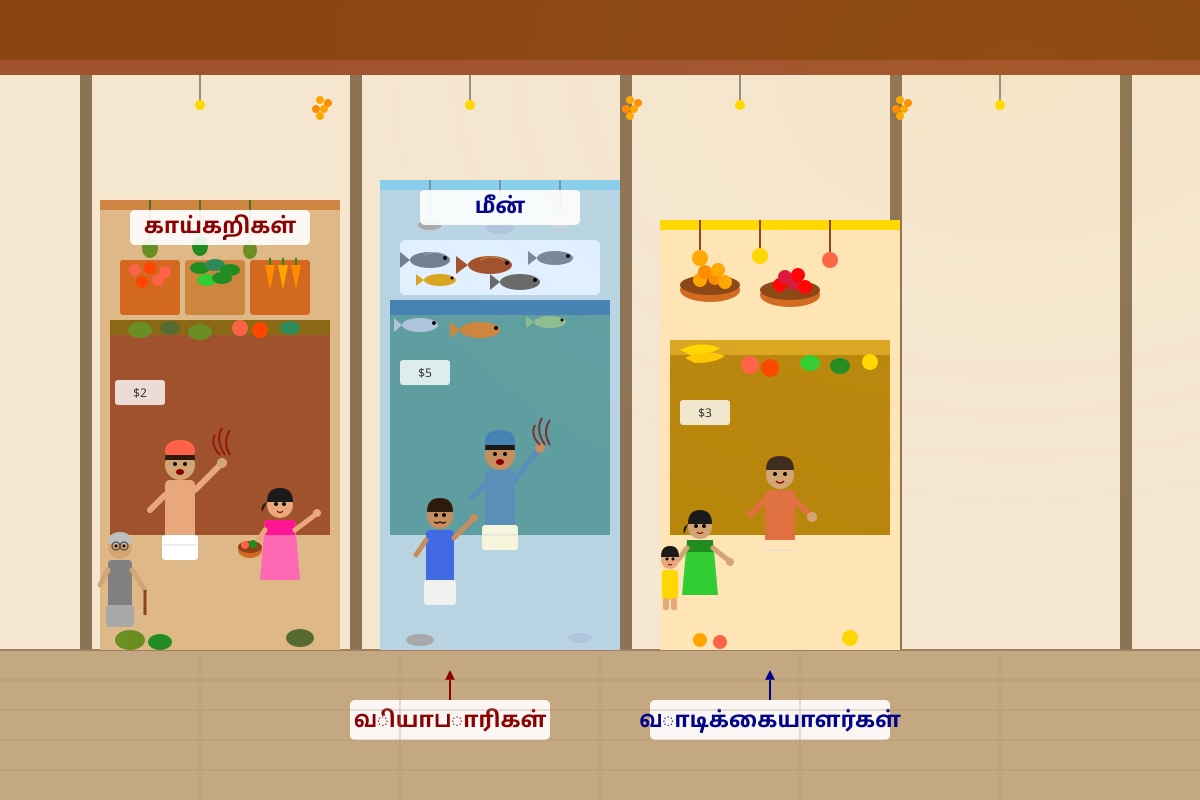
11. Descriptive paragraph based on the image prompt. [4 marks]
Sample Answer: அதிகாலை நேரம். பசுமையான காய்கறிகளும், வெள்ளித் தகடுகளாய் மின்னும் மீன்களும் கண்களைக் கவர்ந்தன. "வாங்கம்மா, வாங்க! புது மீன்!" என்ற வியாபாரிகளின் குரல் காதுகளில் இனிமையாக ஒலித்தது. வாடிக்கையாளர்கள் கூடைகளில் காய்கறிகளை நிரப்பிக்கொண்டிருந்தனர். ஒரு வயதான பெண்மணி மீன் வாங்கும் முன் அதன் புத்துணர்ச்சியைச் சோதித்தார். காற்றில் கறிவேப்பிலை, மல்லி, மற்றும் கடல் வாசனை கலந்து வீசியது. இந்தக் காட்சி சிங்கப்பூரின் பாரம்பரிய சந்தையின் உயிரோட்டத்தைப் பறைசாற்றியது.
Marking Scheme:
- 1 mark for vivid sensory details (sight, sound, smell).
- 1 mark for describing the interaction between vendors and customers.
- 1 mark for appropriate and varied vocabulary.
- 1 mark for overall coherence and meeting the word count.
Teaching Note: Encourage students to use all five senses to create a vivid picture.
12. Continue the story from "அவள் கையில் இருந்த கடிதம் நடுங்கியது." [4 marks]
Sample Answer: அவள் கையில் இருந்த கடிதம் நடுங்கியது. பழைய மஞ்சள் நிற உறையில் அவளுடைய தந்தையின் கையெழுத்துத் தெரிந்தது. பத்து வருடங்களுக்கு முன் இறந்துபோன அவரது கடிதம் இப்போது எப்படி கிடைத்தது? ஜன்னல் வழியாக வந்த குளிர்ந்த காற்று அவள் முகத்தில் அறைந்தது. அவள் மெதுவாக நாற்காலியில் அமர்ந்து, கடிதத்தைத் திறந்தாள். உள்ளே ஒரு பழைய புகைப்படமும் இருந்தது.
Marking Scheme:
- 1 mark for establishing a clear setting.
- 1 mark for revealing the character's emotional state.
- 1 mark for maintaining a consistent tone and style.
- 1 mark for logical and engaging continuation.
Common Mistake: Continuing the story without connecting to the initial line's emotional weight.
13. Analyse the literary device in "மழைத்துளிகள் ஜன்னல் கண்ணாடியில் நடனமாடின." [2 marks]
Answer:
- Literary Device: ஆள் உருவகம் (Personification) — giving human qualities (dancing) to non-human things (raindrops).
- Effect: This creates a vivid and playful image, making the rain seem lively and joyful rather than gloomy. It evokes a positive emotional response and makes the description more memorable.
Marking Scheme:
- 1 mark for correctly identifying personification.
- 1 mark for explaining its effect on the reader.
Teaching Note: Ensure students can distinguish personification from simile and metaphor.
14. Meaning of "ஆழமான விரிவாக்கம்" (expounded in depth) in H3 essay writing. [3 marks]
Answer:
- Meaning: "ஆழமான விரிவாக்கம்" refers to the ability to develop an idea or argument thoroughly, going beyond surface-level discussion. It involves exploring multiple facets of a topic, providing detailed evidence, examples, and analysis, and connecting ideas to broader themes.
- Importance at H3: H3 is a higher-level subject that demands deeper cognitive skills (analysis, synthesis, evaluation). Simply stating an opinion is not enough; students must demonstrate critical thinking by examining complexities, considering counterarguments, and drawing nuanced conclusions. This skill distinguishes H3 from H2.
Marking Scheme:
- 1 mark for a clear definition.
- 1 mark for explaining the skill.
- 1 mark for explaining its importance at the H3 level.
15. Rewrite "அவன் மிகவும் சோர்வாக இருந்தான்" to be more vivid. [2 marks]
Sample Answer: "அவன் உடல் முழுவதும் சோர்வு படர்ந்திருந்தது; கண்கள் மூடிக்கொள்ள போராடின, கால்கள் ஈயத்தால் ஆனவை போல் இழுத்துச் செல்லப்பட்டன."
Marking Scheme:
- 1 mark for using descriptive language (e.g., imagery, simile).
- 1 mark for using a literary device effectively.
Teaching Note: The original sentence is flat. The rewrite should show, not tell.
16. Explain how the three themes (உறவு, மாற்றம், தேர்வு) can be interwoven. [3 marks]
Answer:
- Interweaving: A story can begin with a strong உறவு (e.g., a close friendship). A மாற்றம் (e.g., one friend moving abroad) forces the characters to make a தேர்வு (e.g., to maintain the friendship long-distance or to drift apart). The story explores how their choice affects their relationship and personal growth.
- Example: A young woman (உறவு with her grandmother) must choose (தேர்வு) between pursuing a career abroad or staying to care for her aging grandmother. The grandmother's health deteriorates (மாற்றம்), forcing the decision. The story explores the emotional consequences of her choice.
Marking Scheme:
- 1 mark for explaining how the themes can be connected.
- 1 mark for a clear and relevant example.
- 1 mark for demonstrating understanding of all three themes.
17. Describe a central dilemma for a drama script on தேர்வு (Choice). [3 marks]
Answer:
- Central Dilemma: A young man discovers that his best friend is involved in illegal activities. He must choose between reporting his friend to the authorities (the right thing to do) or protecting their friendship by staying silent.
- Using Dialogue: The protagonist's internal conflict can be revealed through a conversation with his conscience (a voice in his head) or through a heated argument with his friend. For example:
- Friend: "நீ எனக்கு நண்பனா இல்லையா? என்னைக் காட்டிக் கொடுப்பாயா?"
- Protagonist: "நண்பன் என்றால் இதைச் சரி என்று விட்டுவிடுவதா? உனக்கு நல்லது செய்ய வேண்டும் என்றுதான் நினைக்கிறேன்." This dialogue shows the tension between loyalty and morality.
Marking Scheme:
- 1 mark for a clear and compelling dilemma.
- 1 mark for explaining how dialogue reveals the conflict.
- 1 mark for a relevant example.
18. Evaluate: "A strong conclusion is more important than a strong introduction." [3 marks]
Sample Answer (Disagree): I disagree. Both are equally important, but for different reasons. A strong introduction is crucial because it grabs the reader's attention, establishes the topic, and sets the tone for the entire essay. Without a good introduction, the reader may lose interest. However, a strong conclusion is equally important because it provides a sense of closure, reinforces the main argument, and leaves a lasting impression on the reader. An essay with a weak conclusion feels incomplete, even if the introduction was strong. Therefore, a writer must invest effort in both.
Marking Scheme:
- 1 mark for stating a clear position.
- 1 mark for providing a well-reasoned justification.
- 1 mark for addressing both sides of the argument.
Teaching Note: This is an evaluation question. Students should demonstrate critical thinking, not just state an opinion.
19. Commentary on குறியீடு (symbolism) in a studied literary work. [3 marks]
Sample Answer: In the short story collection தூண்டில் மீன், the symbol of the மீன் (fish) is used to represent entrapment and desire. The fish is attracted to the bait (தூண்டில்), just as characters are drawn into situations that seem appealing but lead to their downfall. This symbol effectively conveys the theme of தேர்வு (choice) and its consequences, reminding readers that seemingly attractive options can be deceptive.
Marking Scheme:
- 1 mark for naming the work and the symbol.
- 1 mark for explaining the symbol's meaning.
- 1 mark for explaining its significance in the context of the work.
Common Mistake: Providing a generic description of symbolism without connecting it to a specific text.
20. Strategies for writing an imaginative and structurally coherent creative piece. [3 marks]
Answer:
- Strategy 1: Plan Before Writing (திட்டமிடல்). Before starting, create an outline that includes the main character, setting, conflict, and resolution. This ensures the story has a clear direction and avoids plot holes. A mind map or a simple bullet-point list can be helpful.
- Strategy 2: Use Literary Devices Deliberately (இலக்கிய அணிகளைப் பயன்படுத்துதல்). Incorporate devices like உருவகம், உள்ளிசைப்பு, and குறியீடு to add depth and vividness. However, use them purposefully to enhance the story, not just for decoration. For example, use imagery to create a strong sense of place, and symbolism to reinforce the theme.
Marking Scheme:
- 1 mark for each strategy (2 marks total).
- 1 mark for clear and detailed explanation of how each strategy helps.
Teaching Note: Encourage students to see planning and literary devices as tools for coherence, not constraints on creativity.
— End of Answer Key —