AI Generated Quiz
A Level H3 Tamil Language & Literature Composition Quiz
Free A Level H3 Tamil Lit Composition quiz, AI version, with questions, answers, and A Level-style practice for Singapore students.
These static practice materials are generated from the site's syllabus and paper-generation workflow, with source and model context shown so students and parents can evaluate the material before use.
Questions
Free quiz and exam paper access
Enter your details to view this paper
Your access is remembered on this device.
Answers
A-Level Tamil Language and Literature H3 Quiz - Composition: Answer Key
Total Marks: 50
Section A: Creative Writing (படைப்பாக்க வரைவு) [20 marks]
Question 1 (4 marks)
- Answer: The opening paragraph should effectively establish the setting, introduce the main character, and present a clear dilemma triggered by the arrival of a letter. The writing should be vivid and engaging, using appropriate vocabulary and sentence structures for H3 level.
- Marking Scheme:
- 4 marks: Excellent. The paragraph is compelling, sets the scene vividly, introduces a relatable character, and presents a clear, high-stakes dilemma. Language is sophisticated and error-free.
- 3 marks: Good. The paragraph is clear and functional, with a defined setting, character, and dilemma. Minor language errors may be present.
- 2 marks: Adequate. The paragraph establishes the basics but lacks depth or vividness. The dilemma may be unclear or underdeveloped.
- 1 mark: Weak. The paragraph is very brief, lacks key elements, or has significant language errors.
- 0 marks: No response or completely off-topic.
- Teaching Note: A strong opening should hook the reader. The line "அந்தக் கடிதம் வந்தபோது, என் உலகமே சுழன்றது" (When that letter came, my world spun) implies a shocking revelation. The paragraph should immediately create suspense and make the reader want to know what the letter contains and how the character will react. The dilemma is the core of the 'தேர்வு' (Choice) theme.
Question 2 (4 marks)
- Answer: The description should clearly portray a character torn between family loyalty and personal ambition. The student must use and correctly label at least two of the specified literary devices (உருவகம், குறியீடு, உள்ளிசைப்பு).
- Example Answer: "அவள் இதயம், ஒரு போர்க்களமாக இருந்தது. (உருவகம்) ஒருபுறம் குடும்பக் கடமை என்ற பாரம்பரிய வாள், மறுபுறம் சொந்த லட்சியம் என்ற புதிய கேடயம். (குறியீடு) அவள் கண்களில் தெரிந்த தயக்கம், இரவின் இருளைப் போல ஆழமாக இருந்தது. (உள்ளிசைப்பு)"
- Marking Scheme:
- 4 marks: Excellent. The character is vividly described, the conflict is clear, and two or more literary devices are used effectively and correctly labelled.
- 3 marks: Good. The character and conflict are clear. Two devices are used and labelled, but their application may be slightly less effective.
- 2 marks: Adequate. The character and conflict are present, but the description is basic. Only one device is used effectively, or the labelling is incorrect.
- 1 mark: Weak. The description is vague, the conflict is unclear, and no literary devices are used or labelled correctly.
- 0 marks: No response.
- Teaching Note: Literary devices are tools to create deeper meaning and imagery. An உருவகம் (metaphor) directly compares two unlike things. குறியீடு (symbolism) uses an object to represent an abstract idea. உள்ளிசைப்பு (imagery) uses descriptive language to create a sensory experience. The student should show how these devices enhance the reader's understanding of the character's internal struggle.
Question 3 (4 marks)
- Answer: The dialogue should reveal the conflicting perspectives of two friends who made different career choices. The tension should be palpable but not overly dramatic. The language should be natural and reflect the characters' personalities.
- Example Answer:
- Friend A (Stable): "உனக்கு பைத்தியமா? உன் கலை ஆசையை விட்டுவிட்டு, ஒரு நிலையான வேலைக்குப் போகலாமே!"
- Friend B (Passion): "நிலையான வேலையா? அது ஒரு கூண்டு. நான் என் கனவை விட்டுவிட்டு, வெறும் இயந்திரமாக மாற விரும்பவில்லை."
- Friend A: "கனவு சாப்பிடுமா? வாழ்க்கையில் நிம்மதி வேண்டாமா?"
- Friend B: "என் கனவே என் நிம்மதி. நீ உன் பாதையில் மகிழ்ச்சியாக இரு, நான் என் பாதையில்."
- Marking Scheme:
- 4 marks: Excellent. The dialogue is realistic, reveals deep-seated conflict, and effectively contrasts the two viewpoints. Language is natural and engaging.
- 3 marks: Good. The dialogue is clear and shows the conflict. The viewpoints are contrasted, but the language may be slightly stilted.
- 2 marks: Adequate. The dialogue presents the basic conflict but lacks depth or natural flow.
- 1 mark: Weak. The dialogue is very short, simplistic, or fails to show a clear conflict.
- 0 marks: No response.
- Teaching Note: Good dialogue reveals character and advances the plot. It should not be a direct statement of facts but a natural exchange that shows the characters' emotions, values, and the consequences of their choices. The subtext is often more important than the literal words.
Question 4 (4 marks)
- Answer: The paragraph should use the setting (e.g., weather, time of day, location) as a mirror for the character's internal state after making a significant choice.
- Example Answer: "அவன் அந்தக் கதவை மூடியதும், வெளியே பெய்த கனமழை திடீரென நின்றது. மேகங்கள் விலகி, ஒரு தங்க நிற சூரிய ஒளி அறை முழுவதும் பரவியது. அந்த ஒளி அவன் மனதில் நீண்ட நாட்களாக இருந்த இருளைப் போக்கியது போல் இருந்தது."
- Marking Scheme:
- 4 marks: Excellent. The setting is powerfully and symbolically linked to the character's internal conflict or resolution. The language is evocative and precise.
- 3 marks: Good. The setting is clearly linked to the character's feelings. The connection is effective but may be a bit obvious.
- 2 marks: Adequate. The setting is described, but the connection to the character's internal state is weak or unclear.
- 1 mark: Weak. The setting is mentioned but has no clear connection to the character's emotions.
- 0 marks: No response.
- Teaching Note: This is a key literary technique called pathetic fallacy (though the Tamil term is not required, the concept is). The external environment reflects the internal emotions. A storm can represent turmoil, a calm sea can represent peace, and a crossroads can represent a dilemma. The student should show a sophisticated understanding of this technique.
Question 5 (4 marks)
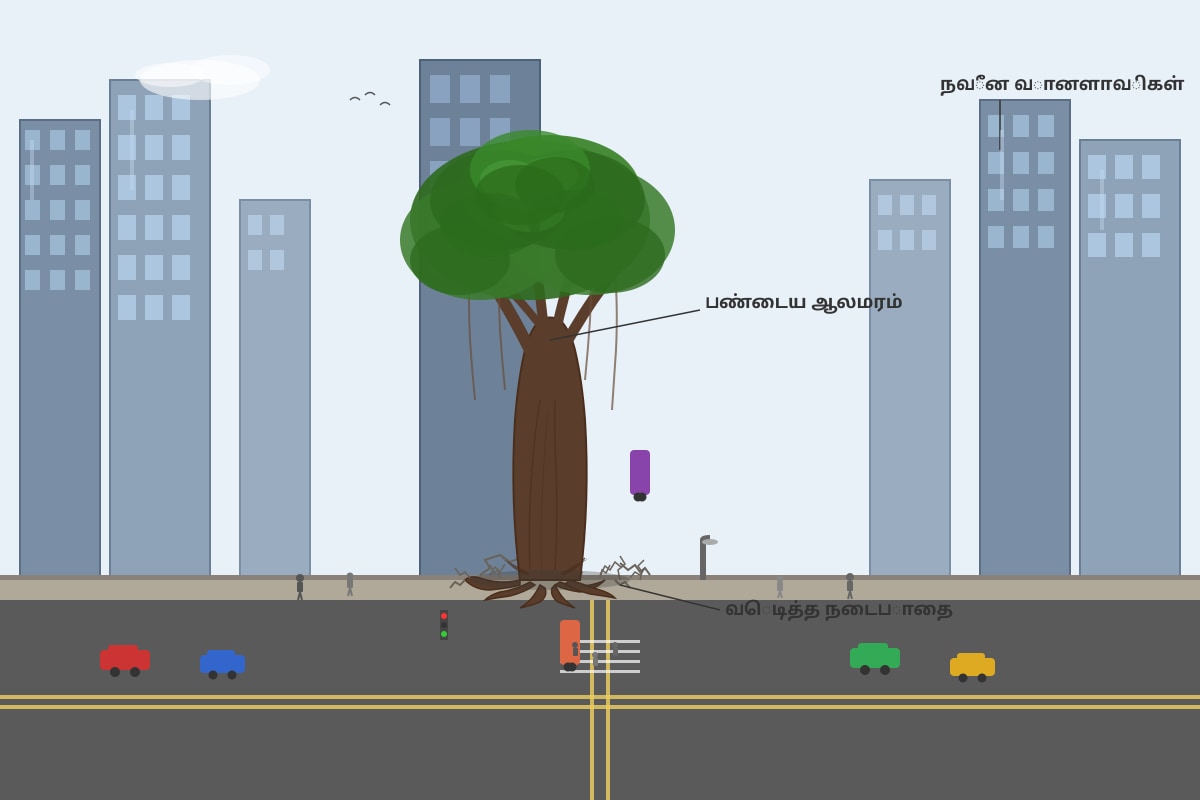
- Answer: The plot outline should be a coherent story idea inspired by the image of the banyan tree in the city. It must include a central conflict, the main character's choice, and a climax.
- Example Outline: "Central Conflict: A city developer (main character) must choose between demolishing an ancient banyan tree to build a new shopping mall (career success) or preserving it to honor the city's heritage and the environment (moral duty). Choice: The developer, after meeting an old man who cherishes the tree, chooses to redesign the project around the tree. Climax: The developer presents the new, tree-centric plan to the board, risking his job but ultimately inspiring a new trend of eco-friendly urban development."
- Marking Scheme:
- 4 marks: Excellent. The outline is creative, coherent, and directly inspired by the image. The conflict, choice, and climax are clearly defined and compelling.
- 3 marks: Good. The outline is clear and has a defined conflict, choice, and climax. The connection to the image is evident.
- 2 marks: Adequate. The outline has the basic elements but lacks creativity or detail. The connection to the image may be weak.
- 1 mark: Weak. The outline is very brief, unclear, or not connected to the image.
- 0 marks: No response.
- Teaching Note: A plot outline is the skeleton of a story. The central conflict is the main problem. The choice is the key decision the character makes. The climax is the turning point, the moment of highest tension where the choice is made or its consequences are faced. The image of the tree vs. the city is a powerful symbol for the theme of 'தேர்வு' (Choice) between progress and preservation.
Section B: Argumentative/Discursive Essay (கருத்துரை வரைவு) [15 marks]
Question 6 (3 marks)
- Answer:
- For: தொழில்நுட்ப மாற்றம் முகமுக சந்திப்புகளை குறைத்து, மனித உறவுகளை மேலோட்டமாக்கியுள்ளது.
- Against: தொழில்நுட்ப மாற்றம் புவியியல் எல்லைகளை கடந்து உறவுகளை வலுப்படுத்தவும், தொடர்பில் இருக்கவும் உதவுகிறது.
- Marking Scheme:
- 3 marks: Both arguments are clear, relevant, and well-stated.
- 2 marks: One argument is strong, but the other is weak or unclear.
- 1 mark: Only one argument is provided, or both are very weak.
- 0 marks: No response or irrelevant arguments.
- Teaching Note: This question tests the ability to see both sides of an issue. A strong argument is specific and logical. The 'for' argument focuses on the loss of depth in relationships. The 'against' argument focuses on the increased breadth and connectivity.
Question 7 (3 marks)
- Answer: சிங்கப்பூரில் பல்கலைக்கழகங்களில் கற்றல் முறைகள் மாறி, ஆன்லைன் கல்வி மற்றும் கலப்பு கற்றல் (blended learning) அறிமுகப்படுத்தப்பட்டது. இது மாணவர்கள் தங்கள் சொந்த வேகத்தில் கற்கவும், உலகளாவிய வளங்களை அணுகவும் உதவியது. இந்த மாற்றம் கல்வித் தரத்தை மேம்படுத்தி, சிங்கப்பூரை உலக அரங்கில் போட்டித்தன்மையுடன் வைத்திருக்க உதவுகிறது.
- Marking Scheme:
- 3 marks: A specific, relevant, and well-explained example from Singapore society is provided.
- 2 marks: An example is provided, but the explanation of how it demonstrates progress is weak.
- 1 mark: A vague or irrelevant example is given.
- 0 marks: No response.
- Teaching Note: This question requires connecting an abstract concept (cultural change) to a concrete, real-world example. The student should choose a clear example of change (e.g., in education, language policy, social norms) and explain why that change was necessary for progress.
Question 8 (3 marks)
- Answer: மாற்றம் என்பது அசௌகரியத்தைத் தருபவை என்றாலும், அதுவே தனிப்பட்ட வளர்ச்சிக்கான ஒரே பாதை என்பதை நாம் உணர வேண்டும்.
- Marking Scheme:
- 3 marks: The topic sentence is clear, assertive, and directly sets the direction for a paragraph arguing that change is essential for growth.
- 2 marks: The sentence is relevant but lacks assertiveness or clarity.
- 1 mark: The sentence is vague or does not clearly set the direction for the argument.
- 0 marks: No response.
- Teaching Note: A topic sentence is the most important sentence in a paragraph. It states the main idea and controls the content of the rest of the paragraph. For an argumentative essay, it should present a clear claim that the rest of the paragraph will support with evidence and reasoning.
Question 9 (3 marks)
- Answer: தமிழின்பம் நூலில், டாக்டர் ரா. பி. சேதுப்பிள்ளை தமிழ் மொழி மற்றும் இலக்கியத்தில் ஏற்பட்ட மாற்றங்களை ஆராய்கிறார். உதாரணமாக, 'தமிழ் மொழியின் வளர்ச்சி' என்ற கட்டுரையில், பண்டைய தமிழ் இலக்கியத்தில் இருந்து நவீன தமிழ் உரைநடை வரை ஏற்பட்ட மாற்றங்களை விளக்குகிறார். இந்த மாற்றம் மொழியின் வளர்ச்சிக்கு இன்றியமையாதது என்பதை அவர் சுட்டிக்காட்டுகிறார்.
- Marking Scheme:
- 3 marks: The explanation is clear, insightful, and directly linked to the prescribed text with a specific example.
- 2 marks: The explanation is relevant but the example from the text is vague or not clearly connected.
- 1 mark: The explanation is very general and does not refer to a specific example from the text.
- 0 marks: No response or incorrect text reference.
- Teaching Note: This question tests knowledge of the prescribed text தமிழின்பம். The student must recall a specific essay or section where the theme of 'மாற்றம்' (Change) is discussed. The example should be precise, showing a clear understanding of the author's argument.
Question 10 (3 marks)
- Answer: ஆகவே, மாற்றத்தை எதிர்ப்பதை விட, அதைத் தழுவி, அதிலிருந்து கற்றுக்கொள்வதே ஒரு நிறைவான மற்றும் முன்னேறிய வாழ்க்கைக்கு வழிவகுக்கும் என்பதில் சந்தேகமில்லை.
- Marking Scheme:
- 3 marks: The concluding sentence is effective, provides closure, and strongly reinforces the essay's main argument.
- 2 marks: The sentence provides some closure but is weak in reinforcing the main argument.
- 1 mark: The sentence is a simple restatement or is irrelevant.
- 0 marks: No response.
- Teaching Note: A concluding sentence should not introduce new information. Its purpose is to summarize the paragraph's main point, provide a sense of completion, and, in an essay, transition to the next point or reinforce the thesis. A strong conclusion leaves a lasting impression on the reader.
Section C: Commentary and Analysis (விளக்கவுரையும் பகுப்பாய்வும்) [15 marks]
Question 11 (1 mark)
- Answer: A small village far away from the city's noise. (ஒரு சிறிய கிராமம், நகரத்தின் இரைச்சலில் இருந்து வெகு தொலைவில்)
- Marking Note: Award 1 mark for identifying the setting as the village.
Question 12 (2 marks)
- Answer: The contrast is between the old man's life of duty, sacrifice, and connection to the land, and the young man's life focused on city comforts and opportunities. The old man represents tradition and commitment, while the young man represents modernity and personal ambition.
- Marking Scheme:
- 2 marks: Identifies the contrast and explains it clearly with reference to the passage.
- 1 mark: Identifies the contrast but provides a weak or incomplete explanation.
- 0 marks: Incorrect or no response.
- Teaching Note: Contrast is a key literary device. The author deliberately places two opposing characters or ideas side-by-side to highlight their differences and explore a theme.
Question 13 (2 marks)
- Answer: The old man's scarred hands symbolize his lifelong sacrifice, hard work, and dedication to protecting the village and its land. They are a physical manifestation of his duty and the price he has paid for it.
- Marking Scheme:
- 2 marks: A clear and insightful explanation of the symbolism.
- 1 mark: A basic or partially correct explanation.
- 0 marks: Incorrect or no response.
- Teaching Note: Symbolism is when an object (the scarred hands) represents an abstract idea (sacrifice, duty). The student should explain the connection between the physical detail and the deeper meaning.
Question 14 (2 marks)
- Answer: "வாழ்க்கை என்பது வசதிகளை தேர்ந்தெடுப்பதா, அல்லது கடமைகளை ஏற்றுக்கொள்வதா?" (Is life about choosing comforts or accepting responsibilities?)
- Marking Scheme:
- 2 marks: Correctly quotes the final question.
- 1 mark: Quotes a related but not the most central line.
- 0 marks: Incorrect quote or no response.
- Teaching Note: The central conflict is often encapsulated in a single line or question. This final question directly presents the core dilemma of the passage, forcing the reader (and the young man) to confront the theme of 'தேர்வு' (Choice).
Question 15 (2 marks)
- Answer: The author uses the contrast between the noisy city and the peaceful village to enhance the theme. The village's tranquility represents a life of simple values and connection to nature, while the city represents a life of distractions and material pursuits. This contrast reinforces the old man's choice of a duty-bound life over a comfortable one.
- Marking Scheme:
- 2 marks: Clearly explains how the setting enhances the theme, showing a connection between the physical environment and the central idea.
- 1 mark: Mentions the setting but provides a weak or superficial explanation of its connection to the theme.
- 0 marks: Incorrect or no response.
- Teaching Note: Setting is not just a backdrop; it is an active element that can create mood, influence characters, and reinforce themes. The student should analyze how the setting contributes to the meaning of the text.
Question 16 (1 mark)
- Answer: Contrast / எதிர்நிலை (or specifically, it could be seen as a form of imagery/உள்ளிசைப்பு, but 'contrast' is the most direct device here as it contrasts with his scarred hands).
- Marking Note: Award 1 mark for identifying 'contrast' or 'எதிர்நிலை'. Accept 'imagery' if the student explains it creates a visual image. The key is the juxtaposition of his scarred hands and bright eyes.
Question 17 (1 mark)
- Answer: The young man believes life is about choosing comforts and opportunities (வசதிகள் மற்றும் வாய்ப்புகள்).
- Marking Note: Award 1 mark for stating that the young man values comfort and opportunity.
Question 18 (2 marks)
- Answer: The final question is significant because it directly presents the central philosophical dilemma of the passage. It forces the reader to reflect on the true purpose of life. It is not a question with a simple answer but a prompt for deep thought, challenging the modern, materialistic view of success and proposing an alternative based on duty and sacrifice.
- Marking Scheme:
- 2 marks: A thoughtful and insightful explanation of the question's significance, connecting it to the passage's theme.
- 1 mark: A basic explanation that identifies the question as important but lacks depth.
- 0 marks: Incorrect or no response.
- Teaching Note: A rhetorical question at the end of a text is a powerful device. It doesn't seek an answer from the characters but from the reader. It invites the reader to engage with the theme on a personal level.
Question 19 (1 mark)
- Answer: "அமைதியாக இருந்தது" (was peaceful/quiet).
- Marking Note: Award 1 mark for any word or phrase that conveys peace, such as "அமைதி" (peace) or "சிறிய கிராமம்" (small village) in this context.
Question 20 (1 mark)
- Answer: The main theme is the conflict between personal comfort/ambition and duty/sacrifice, which is a specific exploration of the broader theme of 'தேர்வு' (Choice).
- Marking Note: Award 1 mark for identifying the theme as 'Choice' (தேர்வு) or the conflict between duty and comfort.