AI Generated Quiz
A Level H2 Tamil Language & Literature Composition Quiz
Free A Level H2 Tamil Lit Composition quiz, AI version, with questions, answers, and A Level-style practice for Singapore students.
These static practice materials are generated from the site's syllabus and paper-generation workflow, with source and model context shown so students and parents can evaluate the material before use.
Questions
Free quiz and exam paper access
Enter your details to view this paper
Your access is remembered on this device.
Answers
A-Level Tamil Language and Literature H2 Quiz - Composition (Answer Key)
Total Marks: 60
Section A: கட்டுரை வகைகள் (Questions 1–5)
1. (4 marks) Answer: Four distinct features of a விவாதக் கட்டுரை (discursive essay) compared to a கருத்துரைப்புக் கட்டுரை (argumentative essay):
- பன்முக நோக்கு (Multiple Perspectives): A discursive essay explores multiple sides of an issue, presenting both for and against arguments in a balanced manner. An argumentative essay takes a clear, single-sided stance and defends it.
- நடுநிலைப்போக்கு (Neutral/Balanced Tone): The tone of a discursive essay is more objective, analytical, and balanced. The writer presents all viewpoints fairly without necessarily declaring a personal preference. An argumentative essay is subjective and persuasive, aiming to convince the reader of the writer's viewpoint.
- முடிவின் தன்மை (Nature of Conclusion): The conclusion of a discursive essay may summarise the different viewpoints and leave the final judgement to the reader, or it may offer a reasoned personal opinion based on the evidence discussed. An argumentative essay's conclusion firmly restates and reinforces the writer's main argument.
- நோக்கம் (Purpose): The primary purpose of a discursive essay is to inform and explore a topic thoroughly, demonstrating a deep understanding of its complexities. The primary purpose of an argumentative essay is to persuade the reader to adopt the writer's position.
Marking Notes:
- Award 1 mark for each correct and clearly explained feature.
- Accept any other valid and well-explained features, such as the use of evidence, structure, or the role of the writer.
2. (3 marks) Answer: The purpose of a படக்கருத்துவிளக்கம் (graphic stimulus essay) is to assess a candidate's ability to interpret a visual stimulus (e.g., a photograph, cartoon, or infographic) and to develop a coherent and well-organised essay based on the ideas, themes, or issues that the image evokes. The candidate is expected to:
- விளக்குதல் (Describe): Briefly describe the key elements and the central theme of the visual stimulus.
- விரிவாக்குதல் (Elaborate): Use the visual as a springboard to explore the broader topic or issue it represents, connecting it to wider societal, personal, or global contexts.
- கருத்துரைத்தல் (Comment): Present a clear and reasoned discussion, analysis, or narrative based on the stimulus, demonstrating original thought and the ability to develop a sustained argument or story.
Marking Notes:
- Award 1 mark for identifying the purpose as interpreting a visual stimulus.
- Award 1 mark for explaining the need to describe the image.
- Award 1 mark for explaining the need to develop a broader discussion or narrative based on the image.
3. (3 marks) Answer: Three elements that elevate a நிகழ்வுக் கட்டுரை (narrative essay) to a high-scoring response:
- உணர்வுகளின் வெளிப்பாடு (Expression of Emotions): A high-scoring narrative goes beyond a simple sequence of events to explore the writer's inner feelings, thoughts, and emotional responses to the experience. This creates a deep connection with the reader.
- வருணனை நயம் (Descriptive Richness): The use of vivid and sensory language (sight, sound, smell, touch, taste) to paint a picture in the reader's mind. This includes the use of metaphors, similes, and other literary devices to make the narrative engaging and immersive.
- பாடம் அல்லது கருத்து (Lesson or Reflection): A high-scoring narrative often has a deeper meaning or a reflective conclusion. The writer connects the personal experience to a broader life lesson, a change in perspective, or a universal truth, giving the essay significance beyond the events themselves.
Marking Notes:
- Award 1 mark for each correct element with a brief explanation.
- Accept other valid elements like character development, effective use of dialogue, or a strong narrative arc.
4. (3 marks) Answer: The recommended minimum word count for a Paper 1 essay is 350 words. The two main assessment criteria are:
- கருத்து (Content): 17 marks
- மொழியும் அமைப்பும் (Language and Organisation): 18 marks
Marking Notes:
- Award 1 mark for the correct word count (350).
- Award 1 mark for each correctly identified criterion with its correct mark allocation.
5. (2 marks) Answer: கருத்து வளம் (richness of ideas) refers to the depth, breadth, and originality of the ideas presented in an essay. It is not just about having many points, but about the quality of those points: their relevance to the topic, the sophistication of the thinking, the use of varied and insightful examples, and the ability to explore the topic from multiple angles, demonstrating a mature and thoughtful perspective.
Marking Notes:
- Award 1 mark for mentioning the depth and breadth of ideas.
- Award 1 mark for mentioning originality, relevance, or sophisticated thinking.
Section B: கட்டுரை அமைப்பும் மொழிநடையும் (Questions 6–10)
6. (4 marks) Answer: The four main parts of a standard essay structure and their primary functions:
- அறிமுகம் (Introduction): Its primary function is to grab the reader's attention, introduce the topic, and present the thesis statement or the main argument/central idea of the essay. It sets the tone and direction for the entire essay.
- பத்தி 1 (Body Paragraph 1): Its function is to present the first main supporting point or argument. It should begin with a topic sentence, followed by elaboration, evidence, and examples to substantiate the point.
- பத்தி 2 (Body Paragraph 2): Its function is to present a second, distinct supporting point or argument. It should also begin with a clear topic sentence and be developed with evidence and examples. (Note: A full essay will have multiple body paragraphs, each dedicated to a single main idea).
- முடிவு (Conclusion): Its primary function is to summarise the main points discussed in the body, restate the thesis in a new and insightful way, and provide a final thought, reflection, or call to action. It provides a sense of closure to the essay.
Marking Notes:
- Award 1 mark for each correctly identified part and its function.
- Accept a generic structure of Introduction, Body, and Conclusion, but for 4 marks, the body should be broken down into at least two distinct paragraphs.
7. (3 marks) Answer: கருத்திணைப்புக் குறிகள் (cohesive devices) are words or phrases that connect ideas, sentences, and paragraphs, creating a smooth flow and logical progression in an essay. They are crucial because they help the reader follow the writer's line of reasoning, show the relationships between different points (e.g., cause and effect, contrast, addition), and make the text coherent and unified. Without them, an essay can feel disjointed and choppy.
Three examples of cohesive devices in Tamil:
- மேலும் (Furthermore/In addition) – for adding information.
- எனவே (Therefore) – for showing consequence or conclusion.
- இருப்பினும் (However/Nevertheless) – for showing contrast.
Marking Notes:
- Award 1 mark for a clear explanation of their importance (flow, coherence, logical progression).
- Award 1 mark for each correct example of a cohesive device in Tamil (up to 2 marks).
8. (3 marks) Answer: சொல்லாட்சி (diction/word choice) refers to the selection of precise, appropriate, and vivid words to convey meaning and create a specific effect. வாக்கிய அமைப்பு (sentence structure) refers to the grammatical arrangement of words and clauses to form sentences, including their length, type (simple, compound, complex), and rhythm.
It is important to vary both because:
- Varying diction prevents repetition, adds precision and nuance to the writing, and creates a more sophisticated and engaging style.
- Varying sentence structure creates rhythm and flow, prevents monotony, and allows the writer to emphasise key points. For example, a short, punchy sentence can be used for impact, while a longer, complex sentence can be used to explain a detailed idea.
Marking Notes:
- Award 1 mark for a correct definition of சொல்லாட்சி.
- Award 1 mark for a correct definition of வாக்கிய அமைப்பு.
- Award 1 mark for a valid explanation of why varying both is important (e.g., for rhythm, engagement, precision, emphasis).
9. (3 marks) Answer: Three common grammatical errors that students make when writing formal Tamil essays:
- இடைவெளி பிழைகள் (Spacing Errors): Incorrectly splitting or joining words, especially with the particle 'உம்' (e.g., writing 'அவனும் அவளும்' incorrectly as 'அவனு மவளும்').
- வினைமுற்று பிழைகள் (Verb Agreement Errors): Incorrect agreement between the subject and the verb in terms of person, number, and gender (e.g., 'நான் செல்கிறான்' instead of 'நான் செல்கிறேன்').
- காலம் காட்டும் பிழைகள் (Tense Errors): Inconsistent or incorrect use of tenses within a sentence or paragraph (e.g., mixing past and present tense when narrating a past event).
Marking Notes:
- Award 1 mark for each correct and clearly explained error.
- Accept other common errors like incorrect case markers (வேற்றுமை உருபுகள்), misuse of 'ஆக' and 'ஆல்', or errors in written Tamil (எழுத்துச் சீர்திருத்தம்).
10. (2 marks) Answer: Two reasons why it is crucial to plan an essay before writing:
- கருத்துகளை ஒழுங்குபடுத்துதல் (Organising Ideas): Planning helps to brainstorm and organise ideas logically, ensuring a clear structure with a coherent introduction, body, and conclusion. It prevents the essay from becoming rambling or disjointed.
- நேரத்தைச் சேமித்தலும் கவனச்சிதறலைத் தவிர்த்தலும் (Saving Time and Avoiding Digression): A plan acts as a roadmap, helping the writer stay focused on the topic and avoid going off on tangents. This saves time during the writing process and ensures that all key points are covered within the time limit.
Marking Notes:
- Award 1 mark for each valid reason.
- Accept other valid reasons like improving the quality of arguments, ensuring all aspects of the question are addressed, or reducing anxiety.
Section C: கட்டுரைத் தலைப்புகள் (Questions 11–15)
11. (3 marks) Answer:
- Essay Type: கருத்துரைப்புக் கட்டுரை (Argumentative Essay) / விவாதக் கட்டுரை (Discursive Essay)
- Thesis Statement: (Example) தொழில்நுட்பம் தூரத்தில் உள்ளவர்களுடன் தொடர்பை ஏற்படுத்தினாலும், அது நேரடி முகமுக உரையாடல்களைக் குறைத்து, ஆழமான மனித உறவுகளை பலவீனப்படுத்தியுள்ளது. (While technology has enabled connection with those far away, it has reduced face-to-face interaction and weakened deep human relationships.)
Marking Notes:
- Award 1 mark for a correct essay type.
- Award 2 marks for a clear, arguable, and relevant thesis statement that directly addresses the question. The thesis should present a clear stance or a balanced perspective.
12. (3 marks) Answer:
- Essay Type: நிகழ்வுக் கட்டுரை (Narrative Essay)
- Thesis Statement: (Example) தேசிய இளையர் சேவை முகாமில் நான் சந்தித்த தோல்வியே, விடாமுயற்சியின் மதிப்பை உணர்த்தி, என்னை ஒரு தன்னம்பிக்கையுள்ள இளைஞனாக மாற்றிய திருப்புமுனையாக அமைந்தது. (The failure I encountered at the National Youth Service camp was a turning point that taught me the value of perseverance and transformed me into a confident young person.)
Marking Notes:
- Award 1 mark for a correct essay type.
- Award 2 marks for a thesis statement that clearly sets up a narrative about a challenging situation and its transformative impact.
13. (3 marks) Answer:
- Essay Type: விவாதக் கட்டுரை (Discursive Essay) / கருத்துரைப்புக் கட்டுரை (Argumentative Essay)
- Thesis Statement: (Example) சிங்கப்பூரின் பொருளாதார வளர்ச்சிக்கும் சமூக நல்லிணக்கத்திற்கும் பன்முகக் கலாச்சாரம் அடிப்படையாக இருந்தாலும், அதன் தொடர்ச்சியான வெற்றிக்கு இனங்களுக்கிடையேயான புரிந்துணர்வை மேம்படுத்துவதில் தொடர்ச்சியான முயற்சிகள் தேவை. (While multiculturalism has been fundamental to Singapore's economic growth and social harmony, continued efforts to enhance inter-ethnic understanding are necessary for its sustained success.)
Marking Notes:
- Award 1 mark for a correct essay type.
- Award 2 marks for a thesis statement that acknowledges the complexity of the issue and presents a clear, reasoned position.
14. (3 marks) Answer:
- Essay Type: படக்கருத்துவிளக்கம் (Graphic Stimulus Essay)
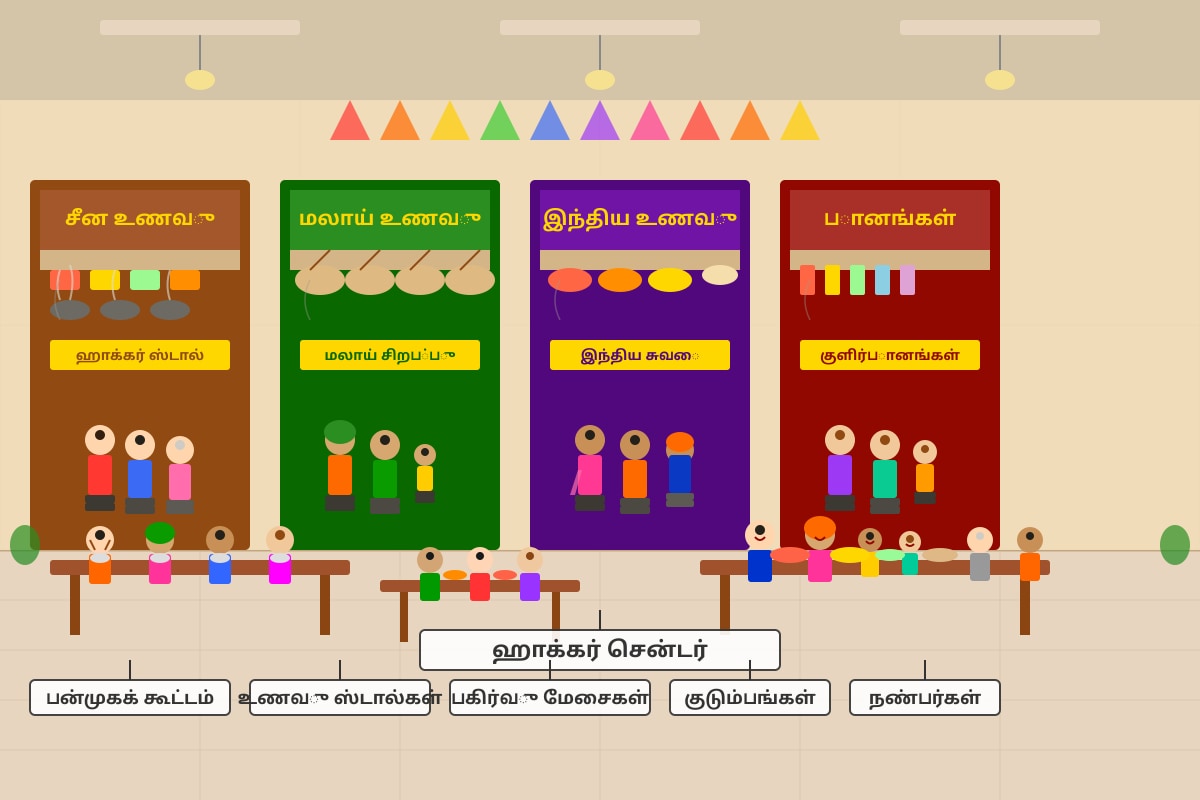
- Thesis Statement: (Example) சிங்கப்பூர் வட்டார உணவகம் (Hawker Centre) என்பது உணவு உண்ணும் இடம் மட்டுமல்ல; அது நம் பன்முக சமூகத்தின் ஒற்றுமை, பகிர்வு, மற்றும் கலாச்சாரப் பரிமாற்றத்தின் உயிருள்ள அடையாளமாகும். (The Singapore hawker centre is not just a place to eat; it is a living symbol of our multicultural society's unity, sharing, and cultural exchange.)
Marking Notes:
- Award 1 mark for a correct essay type.
- Award 2 marks for a thesis statement that clearly interprets the visual stimulus (a hawker centre) and connects it to a broader theme (e.g., multiculturalism, community, social cohesion).
15. (3 marks) Answer:
- Essay Type: விவாதக் கட்டுரை (Discursive Essay) / கருத்துரைப்புக் கட்டுரை (Argumentative Essay)
- Thesis Statement: (Example) சுற்றுச்சூழல் பாதுகாப்பு என்பது அரசாங்கத்தின் கொள்கைகள் மற்றும் சட்டங்களால் மட்டும் சாத்தியமில்லை; அதற்கு ஒவ்வொரு தனிநபரின் நனவான பங்களிப்பும், பொறுப்புணர்வும் இன்றியமையாததாகும். (Environmental protection cannot be achieved by government policies and laws alone; it requires the conscious contribution and sense of responsibility of every individual.)
Marking Notes:
- Award 1 mark for a correct essay type.
- Award 2 marks for a thesis statement that presents a clear stance on the shared or primary responsibility for environmental protection.
Section D: கட்டுரை எழுதுதல் (Questions 16–20)
Marking Notes for Questions 16-20 (5 marks each):
- Content (3 marks):
- 3 marks: Excellent. The response is highly relevant, well-developed, and demonstrates original and insightful thinking. Ideas are supported with strong, specific examples.
- 2 marks: Good. The response is relevant and developed, with some clear examples.
- 1 mark: Basic. The response is relevant but underdeveloped, with limited or generic examples.
- 0 marks: Irrelevant or no response.
- Language and Organisation (2 marks):
- 2 marks: Excellent. The response has a clear structure (intro, body, conclusion), uses a wide range of vocabulary and sentence structures, and has minimal grammatical errors.
- 1 mark: Good. The response has a basic structure, uses adequate vocabulary, and has some grammatical errors that do not impede understanding.
- 0 marks: Poor. The response is disorganised, has limited vocabulary, and has frequent grammatical errors that impede understanding.
16. (5 marks) Answer (Model Response): அறிமுகம்: இன்றைய டிஜிட்டல் யுகத்தில், சமூக ஊடகங்கள் இளைஞர்களின் வாழ்க்கையின் ஒரு அங்கமாக மாறிவிட்டன. இருப்பினும், அவற்றில் செலவிடப்படும் அதிகப்படியான நேரம் அவர்களின் மனநலனுக்கு கேடு விளைவிக்கும் என்பது பலரது கவலையாக உள்ளது. இக்கருத்தை நான் பெரும்பாலும் ஏற்கிறேன்.
உடல்: சமூக ஊடகங்களில் காணப்படும் 'சிறப்பான' வாழ்க்கைகள் உண்மையான வாழ்க்கையுடன் ஒப்பிடப்படும்போது, இளைஞர்களிடம் தாழ்வு மனப்பான்மையும், பொறாமையும், மன அழுத்தமும் ஏற்படுகின்றன. மேலும், இரவு நேரங்களில் சமூக ஊடகங்களில் செலவிடப்படும் நேரம் தூக்கமின்மைக்கு வழிவகுத்து, கவனச்சிதறலையும் மனச்சோர்வையும் அதிகரிக்கிறது. இருப்பினும், சமூக ஊடகங்கள் ஆதரவு குழுக்கள் மற்றும் மனநல விழிப்புணர்வு பிரச்சாரங்கள் மூலம் நேர்மறையான தாக்கத்தையும் ஏற்படுத்தலாம் என்பதை மறுக்க முடியாது.
முடிவு: முடிவாக, சமூக ஊடகங்கள் நன்மை தீமை இரண்டையும் கொண்டிருந்தாலும், அவற்றின் அதிகப்படியான பயன்பாடு இளைஞர்களின் மனநலனுக்கு கணிசமான அச்சுறுத்தலாக உள்ளது. எனவே, அவற்றைக் கட்டுப்படுத்தப்பட்ட முறையில், நேர்மறையான நோக்கங்களுக்காகப் பயன்படுத்தக் கற்றுக்கொள்வது அவசியமாகும்.
Marking Notes:
- Award marks based on the quality of the argument, the use of relevant examples, and the clarity of the structure and language, as per the descriptors above.
17. (5 marks) Answer (Model Response): அறிமுகம்: பள்ளி வாழ்க்கை என்பது கல்வி மட்டுமல்ல, வாழ்க்கைப் பாடங்களைக் கற்கும் களமாகும். அப்படிப்பட்ட ஒரு மறக்கமுடியாத நிகழ்வு, எங்கள் பள்ளியின் ஆண்டு விழாவில் நான் பங்கேற்ற நாடக நிகழ்ச்சியாகும்.
உடல்: நாடகத்தில் நான் ஒரு முக்கிய வேடத்தில் நடிக்கத் தேர்ந்தெடுக்கப்பட்டேன். ஒத்திகைகளின் போது, என் நடிப்பில் போதிய நம்பிக்கை இல்லாததால், பலமுறை தடுமாறினேன். எனது ஆசிரியரும் நண்பர்களும் என்னை ஊக்குவித்து, ஒவ்வொரு அசைவையும், வசனத்தையும் மெருகேற்ற உதவினார்கள். இறுதி நாளில், மேடையில் நான் நடித்தபோது, முழு அரங்கமும் கரவொலி எழுப்பியது. அந்த தருணம் எனக்கு மிகுந்த மகிழ்ச்சியையும் திருப்தியையும் அளித்தது.
முடிவு: அந்த அனுபவம் எனக்கு கற்றுக்கொடுத்த பாடம், ஒத்துழைப்பின் சக்தியும், சுய நம்பிக்கையின் முக்கியத்துவமும் ஆகும். தோல்வி என்பது முடிவல்ல, அது வெற்றிக்கான படிக்கட்டு என்பதை உணர்ந்தேன்.
Marking Notes:
- Award marks based on the narrative quality, the vividness of the description, the clarity of the lesson learned, and the language used, as per the descriptors above.
18. (5 marks) Answer (Model Response): அறிமுகம்: "புத்தகங்கள் ஒரு நண்பன் போன்றவை" என்ற கூற்று மிகவும் பொருத்தமானது. ஒரு நல்ல நண்பனைப் போலவே, புத்தகங்களும் நமக்கு துணையாக, வழிகாட்டியாக, ஆறுதலாக இருக்கின்றன.
உடல்: ஒரு நண்பன் நம்மைப் புரிந்துகொண்டு, நமக்கு ஆலோசனை கூறுவதைப் போல, புத்தகங்கள் நமக்கு அறிவை வழங்குகின்றன. நாம் தனிமையில் இருக்கும்போது, ஒரு நல்ல கதைப் புத்தகம் நம்மை வேறொரு உலகத்திற்கு அழைத்துச் சென்று, மன அழுத்தத்தைப் போக்குகிறது. மேலும், ஒரு நண்பன் நம்மைத் திருத்துவதைப் போல, புத்தகங்கள் நம் தவறுகளை உணர்த்தி, சரியான பாதையில் நடத்துகின்றன. அவை நம்மை விமர்சிப்பதில்லை, கைவிடுவதுமில்லை; எப்போதும் நமக்காக காத்திருக்கின்றன.
முடிவு: எனவே, புத்தகங்கள் வெறும் காகிதத் தாள்கள் அல்ல; அவை உண்மையான, நம்பகமான நண்பர்கள். அவற்றை வாழ்நாள் முழுவதும் நம்முடன் வைத்திருப்போம்.
Marking Notes:
- Award marks based on the clarity of the explanation, the development of the metaphor, the use of relevant examples, and the language used, as per the descriptors above.
19. (5 marks) Answer (Model Response): அறிமுகம்: விளையாட்டு என்பது உடல் பயிற்சி மட்டுமல்ல; அது ஒரு தனிநபரின் ஒட்டுமொத்த வளர்ச்சிக்கு இன்றியமையாத ஒரு கருவியாகும். உடல், மனம், மற்றும் சமூகம் ஆகிய மூன்று தளங்களிலும் அது ஆழமான தாக்கத்தை ஏற்படுத்துகிறது.
உடல்: முதலாவதாக, விளையாட்டு உடல் ஆரோக்கியத்தை மேம்படுத்துகிறது. இதயம், நுரையீரல் வலுப்படுவதுடன், உடல் பருமன் போன்ற பிரச்சனைகளும் குறைகின்றன. இரண்டாவதாக, விளையாட்டு மனதை வலுப்படுத்துகிறது. வெற்றி தோல்விகளை எதிர்கொள்ளக் கற்றுக்கொடுத்து, மன உறுதியையும், ஒழுக்கத்தையும் வளர்க்கிறது. மூன்றாவதாக, அணி விளையாட்டுகள் குழுப்பணி, தலைமைத்துவம், மற்றும் தகவல் தொடர்பு போன்ற சமூகத் திறன்களை வளர்க்கின்றன. வெற்றிக்காக ஒன்றாக உழைக்கும் போது, மற்றவர்களை மதிக்கவும், ஒத்துழைக்கவும் கற்றுக்கொள்கிறோம்.
முடிவு: முடிவாக, விளையாட்டு ஒரு தனிநபரின் வாழ்க்கையில் ஒரு முக்கிய பங்கை வகிக்கிறது. அது ஆரோக்கியமான உடலையும், உறுதியான மனதையும், நல்ல சமூக உறவுகளையும் உருவாக்க உதவுகிறது. எனவே, ஒவ்வொருவரும் தங்கள் அன்றாட வாழ்க்கையில் விளையாட்டை இணைத்துக்கொள்ள வேண்டும்.
Marking Notes:
- Award marks based on the clarity of the arguments, the use of specific examples, the structure of the essay, and the language used, as per the descriptors above.
20. (5 marks) Answer (Model Response): அறிமுகம்: "பழமைவாதம் முன்னேற்றத்திற்கு ஒரு தடையாகும்" என்ற கருத்து சமூகங்களில் அடிக்கடி விவாதிக்கப்படும் ஒரு தலைப்பாகும். பழமைவாதம் பாரம்பரிய விழுமியங்களையும் நடைமுறைகளையும் பாதுகாப்பதை வலியுறுத்துகிறது. இது முன்னேற்றத்திற்கு ஒரு தடையாக இருக்கிறதா என்பதை நான் ஓரளவு ஏற்கிறேன்.
உடல்: ஒருபுறம், மாற்றத்தை எதிர்க்கும் பிடிவாதமான பழமைவாதம், சமூக முன்னேற்றத்தைத் தடுக்கலாம். எடுத்துக்காட்டாக, தொழில்நுட்பத்தை ஏற்க மறுப்பது அல்லது புதிய சமூகக் கொள்கைகளை எதிர்ப்பது ஒரு நாட்டின் வளர்ச்சியைக் குறைக்கலாம். மறுபுறம், பழமைவாதம் எப்போதும் தீங்கு விளைவிப்பதில்லை. அது நமது கலாச்சார அடையாளத்தையும், மரபுகளையும் பாதுகாக்க உதவுகிறது. ஒரு சமூகம் தனது வேர்களை அறியாமல் முன்னேற முடியாது. பாரம்பரிய அறிவும், விழுமியங்களும் புதிய சிந்தனைகளுக்கு ஒரு வலுவான அடித்தளமாக அமையலாம்.
முடிவு: முடிவாக, பழமைவாதம் முழுக்க முழுக்க ஒரு தடை அல்ல. அது ஒரு சமநிலையான அணுகுமுறையுடன், பாரம்பரியத்தைப் பாதுகாத்து, தேவையான மாற்றங்களை ஏற்றுக்கொள்ளும்போது, அது முன்னேற்றத்திற்கு ஒரு உந்து சக்தியாகவும் இருக்க முடியும்.
Marking Notes:
- Award marks based on the quality of the argument, the ability to present a balanced view, the use of relevant examples, and the language used, as per the descriptors above.
END OF ANSWER KEY