AI Generated Exam Paper
A Level H2 Tamil Language & Literature Practice Paper 3
Free A Level H2 Tamil Lit Practice Paper 3, LongCat AI version, with questions, answers, and A Level-style practice for Singapore students.
These static practice materials are generated from the site's syllabus and paper-generation workflow, with source and model context shown so students and parents can evaluate the material before use.
Questions
Free quiz and exam paper access
Enter your details to view this paper
Your access is remembered on this device.
Answers
A-Level Tamil H2 Quiz - Composition
Answer Key and Marking Scheme
Section A: Grammar and Vocabulary in Context (15 marks)
Question 1 (3 marks)
(a) (ii) traditional
[1 mark]
Explanation: "பாரம்பரிய" refers to customs, practices, or things passed down through generations. The context describes farming methods that rural people still follow, indicating these are traditional practices. "Modern" (i) is the opposite. "Experimental" (iii) implies something new and untested. "Temporary" (iv) means short-term, which does not fit.
(b) பாரம்பரிய
[1 mark]
Explanation: "நவைன" means "modern" or "contemporary." Its antonym in the passage is "பாரம்பரிய" (traditional), which appears in line 1. Students should identify the word from the passage itself rather than supplying an external antonym.
(c) மீள்விக்கப்பட்டு / தங்கி / நின்று
[1 mark]
Explanation: "எஞ்சி" means "remaining" or "left behind." Suitable synonyms include "தங்கி" (stayed behind) or "நின்று" (remained). The replacement must fit grammatically in the sentence: "கிராமப்புறங்களில் வயதானவர்கள் மட்டுமே தங்கி நிற்கின்றனர்."
Question 2 (3 marks)
(a) கவனமாக
[1 mark]
Explanation: The blank requires an adverb to modify the verb "செய்ய." "கவனமாக" (carefully) is the adverb form. "கவனம்" is a noun, "கவனமான" is an adjective, and "கவனத்துடன்" is a postpositional phrase — none of these correctly modify the verb in this construction.
(b) பேச்சு
[1 mark]
Explanation: The sentence requires a noun as the subject of "ஈர்த்தது" (attracted). "பேச்சு" (speech) is the correct noun form. "பேசுவது" is a verbal noun that would create redundancy. "பேசினார்" is a finite verb and cannot serve as subject. "பேசும்" is a relative participle and does not fit.
(c) பெய்ததால்
[1 mark]
Explanation: The sentence requires a causal conjunction to explain why the crops flourished. "பெய்ததால்" (because it rained) correctly establishes the cause-effect relationship. "பெய்து" is a conjunctive participle (having rained), which does not convey causation. "பெய்ய" is the infinitive form. "பெய்தால்" is conditional (if it rains), which changes the meaning.
Question 3 (3 marks)
(a) வானிலை அறிக்கை நாளை மழை பெய்யும் என்று கூறியது.
[1 mark]
Explanation: This is a transformation from direct to indirect speech. The reporting verb "கூறியது" (said) is already in the passage. The key change is removing the quotation marks and placing the reported clause after the reporting verb. The tense of the reported speech remains unchanged as it refers to a future event.
(b) அவன் மிகவும் புத்திசாலி என்பதால், இந்தப் பிரச்சனையைத் தீர்க்க அவனால் முடியும்.
[1 mark]
Explanation: The conjunction "என்பதால்" (because/since) connects the two clauses by nominalising the first clause. The structure is: [Statement] + என்பதால் + [Result]. This is a common A-Level grammar pattern testing the ability to use nominalisers.
(c) சந்தைக்குச் சென்ற அந்தப் பெண் பழங்களை வாங்கினாள்.
[1 mark]
Explanation: A participle clause replaces the first verb with its relative participle form. "சென்றாள்" becomes "சென்ற" (having gone), modifying "அந்தப் பெண்." The second clause becomes the main clause. This tests the student's ability to use relative participles (எச்ச வேற்றுமை) to combine sentences.
Question 4 (3 marks)
(a) Error: "சினிமாவுக்கு போனார்கள்" — the postposition "க்கு" is incorrectly used with "போனார்கள்."
Corrected: அவர்கள் நேற்று சினிமாவுக்குச் சென்றார்கள்.
[1 mark]
Explanation: The verb "போனார்கள்" (went) is colloquial/informal. In formal written Tamil, "சென்றார்கள்" is preferred. Additionally, the postposition should be "க்கு" with the verb "செல்" (to go), not "போ" in formal writing. Alternatively, "சினிமாவிற்குப் போனார்கள்" is also acceptable in less formal contexts.
(b) Error: The time adverb "நேற்று" is placed at the end of the sentence, which is awkward in formal Tamil.
Corrected: நேற்று நான் அந்தப் புத்தகத்தை வாசித்து முடித்தேன்.
[1 mark]
Explanation: In standard Tamil sentence structure, time adverbs typically appear at the beginning of the sentence or immediately after the subject. Placing "நேற்று" at the end is a common colloquial habit that should be avoided in formal writing.
(c) Error: The time expression "மணி பத்து" is placed at the end, and the sentence structure is informal.
Corrected: மணி பத்தவளில் அவள் தன் நண்பர்களுடன் பேசிக்கொண்டிருந்தாள்.
[1 mark]
Explanation: Time expressions should appear early in the sentence. Additionally, "மணி பத்து" should be in the locative case ("பத்தவளில்" or "பத்தில்") to indicate "at 10 o'clock." The verb "பேசிக்கொண்டிருந்தாள்" is correctly in the past continuous tense.
Question 5 (3 marks)
(a) மாணவர்களுக்கு ஆசிரியரால் வினாக்கள் கேட்கப்பட்டன.
[1 mark]
Explanation: In passive voice, the object ("வினாக்களை") becomes the subject ("வினாக்கள்"), the subject ("ஆசிரியர்") becomes the agent in instrumental case ("ஆசிரியரால்"), and the verb changes to passive form ("கேட்டார்" → "கேட்கப்பட்டன"). The plural verb agrees with "வினாக்கள்."
(b) புதிய திட்டம் அவர்களால் நடைமுறைப்படுத்தப்படும்.
[1 mark]
Explanation: The object "திட்டத்தை" becomes "திட்டம்" (subject). The subject "அவர்கள்" becomes "அவர்களால்" (agent). The future active verb "நடைமுறைப்படுத்துவார்கள்" becomes the future passive "நடைமுறைப்படுத்தப்படும்."
(c) அந்தக் கடிதம் என்னால் எழுதப்பட்டது.
[1 mark]
Explanation: The object "கடிதத்தை" becomes "கடிதம்" (subject). The subject "நான்" becomes "என்னால்" (agent). The past active verb "எழுதினேன்" becomes the past passive "எழுதப்பட்டது."
Section B: Directed Writing and Composition Skills (20 marks)
Question 6 (4 marks)
Marking Scheme:
- Content: 2 marks (two negative effects + one solution)
- Language: 2 marks (clarity, grammar, vocabulary)
Sample Answer:
மின்னணு சாதனங்களின் அதிகப் பயன்பாடு மாணவர்களின் படிப்பையும் உடல்நலத்தையும் பாதிக்கிறது. முதலாவதாக, இணையத்தில் அதிக நேரம் செலவிடுவதால் மாணவர்களின் கவனம் குறைந்து, படிப்பில் ஆர்வம் குறைகிறது. இரண்டாவதாக, தொலைபேசியில் விளையாடுவதால் கண்பார்வை பாதிக்கப்படுகிறது. இந்தப் பிரச்சனையைத் தீர்க்க, மாணவர்கள் ஒரு நாளைக்கு குறிப்பிட்ட நேர எல்லையை மட்டுமே மின்னணு சாதனங்களைப் பயன்படுத்துவதை உறுதிசெய்ய வேண்டும்.
Marking Notes:
- 1 mark for each negative effect (2 marks total)
- 1 mark for the practical solution
- 1 mark for language quality (grammar, coherence, word count ~80 words)
- Common mistake: Students may list effects without explaining them — this would earn reduced content marks.
Question 7 (5 marks)
Marking Scheme:
- Format (letter conventions): 1 mark
- Content (purpose, activities, benefits, request): 3 marks
- Language: 1 mark
Sample Answer:
தமிழ்மொழி இலக்கிய மன்றம்
[பள்ளி பெயர்]
[தேதி]
அன்புள்ள முதல்வர் அவர்களுக்கு,
பொருள்: தமிழ்மொழி வார விழா நடத்த அனுமதி வேண்டும்.
நாங்கள் தமிழ்மொழி வார விழா ஒன்றை நடத்த விரும்புகிறோம். இந்த விழாவின் நோக்கம் மாணவர்களிடையே தமிழ்மொழியின் மீது ஆர்வத்தை வளர்ப்பதாகும். இதன் போது கவிதை வாசிப்புப் போட்டி, இலக்கிய விவாதம் மற்றும் தமிழ்த் திரைப்படக் காட்சி ஆகிய நடவடிக்கைகளை நடத்த திட்டமிட்டுள்ளோம். இந்த விழா மாணவர்களின் மொழித் திறனை மேம்படுத்தும். எனவே, [தேதி] அன்று பள்ளி மண்டபத்தை இந்த நிகழ்வுக்கு பயன்படுத்த அனுமதி வழங்குமாறு கேட்டுக்கொள்கிறோம்.
நன்றிடன்,
[பெயர்]
செயலாளர், தமிழ்மொழி இலக்கிய மன்றம்
Marking Notes:
- Formal letter format must include: sender's address, date, recipient's designation, subject line, salutation, body, and sign-off.
- At least two activities must be mentioned.
- Word count should be approximately 120 words.
- Common mistake: Students may write in informal tone — deduct language marks for this.
Question 8 (3 marks)
Marking Scheme:
- Content (problem identified): 1 mark
- Content (advice captured): 1 mark
- Language and conciseness (~60 words): 1 mark
Sample Answer:
முகில் தன் பரீட்சை முடிவுகள் எதிர்பார்த்ததை விட குறைவாக இருப்பதால் மனமுடைந்து இருக்கிறான். அவன் பெற்றோர் ஏமாற்றமடைவார்கள் என்று கவலைப்படுகிறான். ராஜு அவனை ஊக்குவித்து, ஒரு பரீட்சை முடிவு ஒருவன் திறமையை முழுமையாக அளவிடாது என்று கூறுகிறான். மேலும், பெற்றோரிடம் உண்மையைச் சொல்லி, அடுத்த முறை சிறப்பாகப் படிக்கும் திட்டம் வகுக்குமாறு அறிவுறுத்துகிறான்.
Marking Notes:
- The summary must capture both the problem (disappointing results, fear of parental disappointment) and the advice (one exam doesn't define ability, be honest with parents, make a study plan).
- Word count must be approximately 60 words.
- Common mistake: Students may include dialogue quotes — summaries should be in reported/indirect speech.
Question 9 (4 marks)
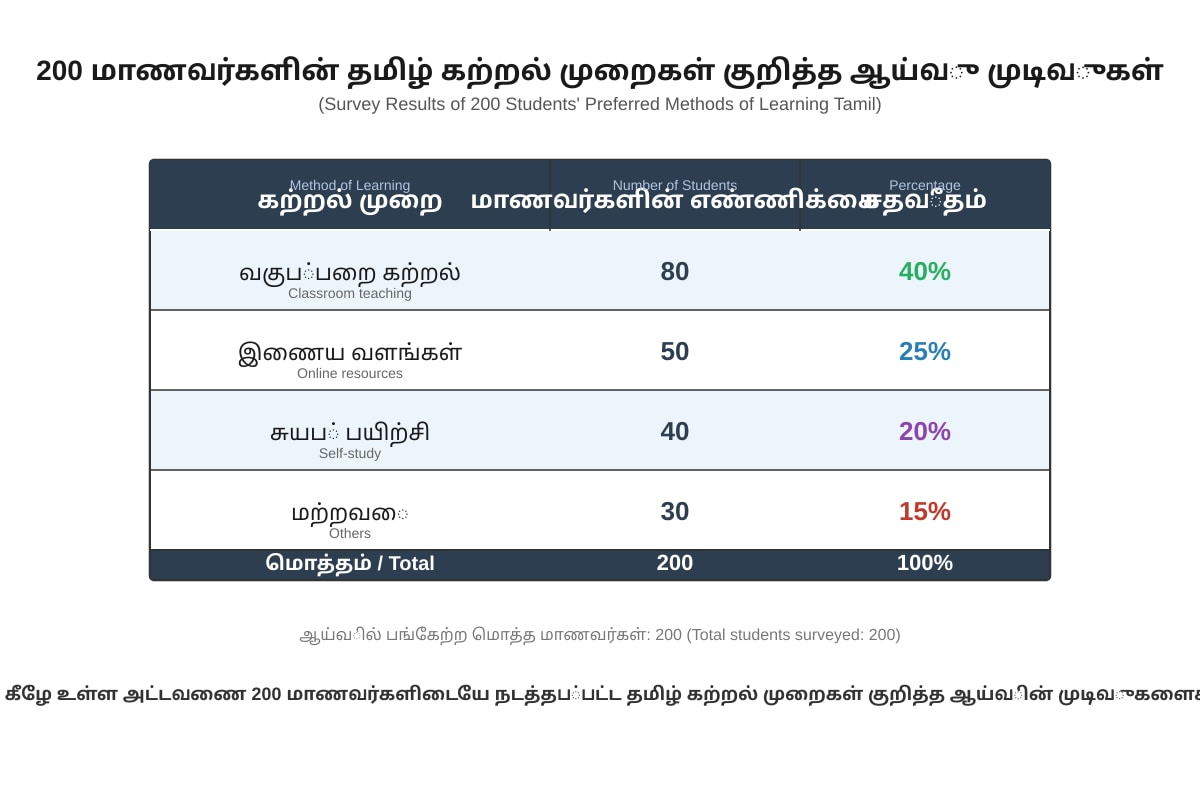
Marking Scheme:
- Description of findings (most/least popular): 1 mark
- Reason for most popular method: 1 mark
- Suggestion for least popular method: 1 mark
- Language and structure: 1 mark
Sample Answer:
நமது பள்ளியில் 200 மாணவர்களிடையே நடத்தப்பட்ட கணக்கெடுப்பின்படி, தமிழ் கற்றலுக்கான விருப்பமான முறைகள் கிடைத்துள்ளன. மிகவும் பிரபலமான முறை வகுப்பறை கற்றல் (40%) ஆகும். இதற்குக் காரணம், ஆசிரியரின் வழிகாட்டுதல் மற்றும் நேரடி தொடர்பு ஆகியவை மாணவர்களுக்கு நம்பிக்கையை அளிக்கின்றன. மிகக் குறைவான விருப்பம் தமிழ் ஊடகங்கள் (15%) ஆகும். இதை ஊக்குவிக்க, பள்ளியில் தமிழ்த் திரைப்பட விழாக்களை நடத்தி, மாணவர்கள் தமிழ் இலக்கியத்தின் வழியே மொழியைக் கற்றுக்கொள்ள வழி செய்யலாம்.
Marking Notes:
- The report must reference specific data from the table (40% for classroom teaching, 15% for Tamil media).
- The reason should be plausible and connected to the data.
- The suggestion should be practical and directly address the least popular method.
- Common mistake: Students may describe all four methods in detail — the question asks for focus on most and least popular only.
Question 10 (4 marks)
Marking Scheme:
- 1 mark per correct and distinct completion (3 completions)
- 1 mark for overall grammatical accuracy and variety of structures
Sample Answers:
(a) மழை பெய்ததால், வயல்கள் நீரால் நிரம்பின.
(Effect: positive — fields filled with water)
(b) மழை பெய்ததால், நான் வெளியே செல்ல முடியவில்லை.
(Effect: negative — unable to go out)
(c) மழை பெய்ததால், பயிர்கள் செழித்து விவசாயிகள் மகிழ்ச்சியடைந்தனர்.
(Effect: compound — crops flourished and farmers were happy)
Marking Notes:
- Each completion must express a different meaning — not just different words for the same idea.
- The conjunction "ஆல்" (because of/due to) requires a consequence that logically follows from the cause.
- Students should demonstrate variety: one positive effect, one negative effect, and one compound/extended effect.
- Common mistake: Students may write three completions that are essentially the same consequence rephrased — this would earn reduced marks.
Section C: Essay Writing (25 marks)
Answer ONE question from Questions 11–15.
Question 11 (25 marks)
Marking Scheme:
| Criterion | Marks |
|---|---|
| Content and argumentation | 10 |
| Structure and organisation | 5 |
| Language and style | 5 |
| Evidence and examples | 5 |
| Total | 25 |
Content Points (expected):
-
Introduction: Define the role of mobile phones in modern life; state position (agree/disagree/partial agreement).
-
Influence of the Internet:
- Access to information and knowledge
- Social media and connectivity
- E-commerce and digital services
- Education and online learning
-
Impact on Social Relationships:
- Positive: staying connected with distant family/friends
- Negative: reduced face-to-face interaction, superficial relationships
- Changing communication patterns among youth
-
Role of Technology:
- Smartphones as essential tools for work and daily life
- Dependency and addiction concerns
- Digital divide and accessibility issues
-
Counterargument and nuance:
- Life without phones is possible but significantly harder
- Balance between utility and over-dependence
- Cultural context: Singapore's digital infrastructure
-
Conclusion: Summarise key points; restate position with a forward-looking statement.
Marking Descriptors:
| Band | Description |
|---|---|
| 21–25 | Excellent: Well-structured, nuanced argument with strong evidence; sophisticated language; addresses multiple perspectives |
| 16–20 | Good: Clear argument with good evidence; well-organised; minor language errors |
| 11–15 | Satisfactory: Adequate content but limited depth; some organisational issues; language errors present |
| 6–10 | Weak: Thin content; poor structure; frequent language errors |
| 1–5 | Very weak: Incoherent; minimal relevant content; serious language issues |
Common Mistakes:
- Writing a one-sided argument without acknowledging counterarguments
- Using only personal opinion without broader social/cultural evidence
- Poor paragraphing — writing one long block of text
- Over-reliance on clichés ("mobile phones are a boon and bane")
Question 12 (25 marks)
Marking Scheme:
| Criterion | Marks |
|---|---|
| Content and argumentation | 10 |
| Structure and organisation | 5 |
| Language and style | 5 |
| Evidence and examples | 5 |
| Total | 25 |
Content Points (expected):
-
Introduction: Define rural development; state position on the statement.
-
Arguments FOR the statement:
- Agriculture as the backbone of the economy
- Rural-urban migration and its consequences
- Equitable development requires rural upliftment
- Food security depends on rural productivity
-
Arguments AGAINST / Nuance:
- Urban development can drive national growth independently
- Industrial and service sectors may not depend on rural development
- Some nations have developed through urban-centric models
-
Singapore/South Asian context:
- Singapore's unique urban nation status
- Relevance to Tamil Nadu/India context
- Government schemes for rural development
-
Conclusion: Balanced view — rural development is important but must be part of a holistic national strategy.
Marking Descriptors: Same as Question 11.
Common Mistakes:
- Failing to address both sides of the argument
- Not providing specific examples or evidence
- Confusing "rural development" with "agricultural development"
- Writing in a purely emotional or polemical tone without reasoned argument
Question 13 (25 marks)
Marking Scheme:
| Criterion | Marks |
|---|---|
| Content and argumentation | 10 |
| Structure and organisation | 5 |
| Language and style | 5 |
| Evidence and examples | 5 |
| Total | 25 |
Content Points (expected):
-
Introduction: Define tradition and modernity; explain the tension between them.
-
Value of Tradition:
- Cultural identity and heritage
- Moral and ethical foundations
- Community cohesion and continuity
- Examples: festivals, language, family values
-
Value of Modernity:
- Technological progress and convenience
- Social reform and equality
- Economic opportunities
- Examples: digital literacy, gender equality, scientific thinking
-
Balancing Both:
- Selective adoption — keeping what is valuable, discarding what is outdated
- Education as a bridge between tradition and modernity
- Youth as agents of balanced change
- Examples: celebrating festivals with modern awareness; using technology to preserve language
-
Conclusion: Tradition and modernity are not mutually exclusive; a harmonious blend is possible and desirable.
Marking Descriptors: Same as Question 11.
Common Mistakes:
- Treating tradition and modernity as completely opposed
- Failing to provide concrete examples of balance
- Overgeneralising about "youth" or "tradition"
- Not addressing the specific question of HOW to balance
Question 14 (25 marks)
Marking Scheme:
| Criterion | Marks |
|---|---|
| Content and argumentation | 10 |
| Structure and organisation | 5 |
| Language and style | 5 |
| Evidence and examples | 5 |
| Total | 25 |
Content Points (expected):
-
Introduction: Define environmental protection; explain why it is every citizen's responsibility.
-
Individual Actions:
- Reduce, reuse, recycle
- Conserving water and electricity
- Using public transport or carpooling
- Reducing plastic consumption
- Planting trees and maintaining green spaces
-
Community/Social Actions:
- Participating in clean-up drives
- Supporting environmental NGOs
- Educating others about environmental issues
- Community gardens and local conservation efforts
-
Broader Context:
- Government policies and their limitations
- Corporate responsibility
- The role of education in environmental awareness
- Singapore's environmental initiatives (e.g., Green Plan 2030)
-
Conclusion: Environmental protection requires collective effort; every small action contributes to a larger impact.
Marking Descriptors: Same as Question 11.
Common Mistakes:
- Listing actions without explaining their impact
- Failing to distinguish between individual and community-level actions
- Not connecting to the Singapore context
- Writing a generic essay without specific examples
Question 15 (25 marks)
Marking Scheme:
| Criterion | Marks |
|---|---|
| Content and argumentation | 10 |
| Structure and organisation | 5 |
| Language and style | 5 |
| Evidence and examples | 5 |
| Total | 25 |
Content Points (expected):
-
Introduction: Define education and success; state position on whether education alone is the key.
-
Role of Education:
- Knowledge and skills acquisition
- Critical thinking and problem-solving
- Career opportunities and social mobility
- Personal development and confidence
-
Limitations of Education:
- Creativity and innovation may not come from formal education alone
- Ethical values are often shaped by family and community, not just schools
- Practical experience and real-world skills are equally important
- Examples of successful individuals without formal education
-
Other Factors for Success:
- Hard work and perseverance
- Emotional intelligence and interpersonal skills
- Opportunity and access to resources
- Mentorship and guidance
-
Conclusion: Education is a crucial factor but not the sole determinant of success; a combination of education, values, creativity, and experience is needed.
Marking Descriptors: Same as Question 11.
Common Mistakes:
- Agreeing with the statement without critical evaluation
- Dismissing the value of education entirely
- Not providing specific examples of other success factors
- Confusing "education" with "academic qualifications"
Summary of Marks
| Section | Marks |
|---|---|
| Section A: Grammar and Vocabulary | 15 |
| Section B: Directed Writing | 20 |
| Section C: Essay Writing | 25 |
| Total | 60 |
This answer key is generated by TuitionGoWhere AI for practice purposes. It is aligned with the A-Level H2 Tamil syllabus but is not derived from any specific past-year examination paper.