From Real Exams Exam Paper
A Level H2 Tamil Language & Literature Practice Paper 4
Free A Level H2 Tamil Lit Practice Paper 4, LongCat Exam version, with questions, answers, and A Level-style practice for Singapore students.
These static practice materials are generated from the site's syllabus and paper-generation workflow, with source and model context shown so students and parents can evaluate the material before use.
Questions
Free quiz and exam paper access
Enter your details to view this paper
Your access is remembered on this device.
Answers
TuitionGoWhere Practice Paper — Tamil H2 A-Level
Answer Key & Marking Scheme — Version 4 of 5
Section A: Short Composition (15 marks)
Question 1 (3 marks)
Task: Use the words மழை, காத்திருப்பு, மனம் to write sentences (minimum 3 sentences).
Marking Scheme:
- 1 mark per correct, meaningful sentence using all three words appropriately (max 3 marks)
- Sentences must be grammatically correct and contextually coherent
- Partial credit (0.5 marks) if a sentence uses the words but has minor grammatical errors
Model Answer:
மழை பெய்யும் நேரத்தில் நான் என் மனதில் மகிழ்ச்சியை உணர்கிறேன். மழைக்காக காத்திருக்கும் பறவைகள் போல, நாமும் நல்ல நேரத்திற்குக் காத்திருக்க வேண்டும். மழைத்துளிகள் என் மனதை அமைதியாக்குகின்றன; இயற்கையின் அழகு என் மனதில் காத்திருப்பின் வலிமையைக் கற்றுத் தருகிறது.
Common Mistakes:
- Using the words in isolation without connecting them meaningfully
- Writing only one long sentence instead of three separate sentences
- Grammatical errors in case endings (மனம் → மனதில்/மனதை)
Question 2 (3 marks)
Task: Write a short dialogue on "இளமையின் இனிமை" (The Sweetness of Youth) with at least two speakers.
Marking Scheme:
- 1 mark for appropriate dialogue format (speaker labels, turn-taking)
- 1 mark for relevant content on the theme of youth's sweetness
- 1 mark for language quality (vocabulary, grammar, natural flow)
Model Answer:
அருள்: மணி, நம் இளமைக்குப் பின் இந்த நினைவுகள் எவ்வளவு அருமையாக இருக்கும்!
மணி: ஆமா, அருள். இளமையில் நாம் செய்த தவறுகளும் கூட இனிமையாகத்தான் நினைக்கிறது. படிப்பு, நட்பு, அனுபவம் — எல்லாமே இன்றைக்கு பொன்னான நினைவுகள்.
அருள்: ஆனால், இளமையின் இனிமையை இன்றே உணர்ந்து பயன்படுத்த வேண்டும். காலம் திரும்பாது.
மணி: சரியாகச் சொன்னாய். ஒவ்வொரு நாளையும் முக்கியமாக வாழ்வோம்!
Common Mistakes:
- Writing a monologue instead of a dialogue
- Dialogue that drifts away from the theme
- Not using proper dialogue conventions (speaker names, colons)
Question 3 (4 marks)
Task: Write a note (within 50 words) based on the image showing Tamil students volunteering at a community elderly care centre.
Marking Scheme:
- 1 mark for identifying the main activity (volunteering/community service)
- 1 mark for describing the setting and participants
- 1 mark for noting cultural elements (Tamil posters, community context)
- 1 mark for language quality and word count compliance (≤50 words)
Model Answer:
சிங்கப்பூர் தமிழ் மாணவர்கள் ஒரு மூத்குடியினர் பராமரிப்பு நிலையத்தில் தன்னார்வ சேவை செய்கின்றனர். அவர்கள் உணவு வழங்கி, மூத்குடியினருடன் உரையாடி, இடத்தைச் சுத்தம் செய்கின்றனர். தமிழ்மொழி சுவரொட்டிகள் கலாச்சார அடையாளத்தை வெளிப்படுத்துகின்றன. இளைய தலைமுறையினரின் சமூக பொறுப்புணர்வு பாராட்டுக்குரியது. (48 சொற்கள்)
Common Mistakes:
- Exceeding the 50-word limit
- Describing the image mechanically without interpreting the significance
- Missing the cultural/Tamil-specific elements
Question 4 (5 marks)
Task: In 80-100 words, write a response to: "Has technology simplified life or complicated it?"
Marking Scheme:
- 1 mark for clear position statement
- 1 mark for at least two supporting points with examples
- 1 mark for addressing the counter-perspective
- 1 mark for coherent structure (introduction, body, conclusion)
- 1 mark for language quality (vocabulary, grammar, word count compliance)
Model Answer:
தொழில்நுட்பம் வாழ்வை எளிதாக்கியதோடு சிக்கலாக்கியும் உள்ளது. தொலைபேசி மற்றும் இணையம் மூலம் தகவல்களை எளிதாகப் பெறலாம்; இது வாழ்வை எளிதாக்குகிறது. ஆனால், சமூக வலைத்தளங்கள் மன அழுத்தத்தை அதிகரித்து, நேரடி மனித உறவுகளைப் பலவீனப்படுத்துகின்றன. தொழில்நுட்பத்தை நுணுவமாகப் பயன்படுத்தினால் வாழ்வு எளிதாகும்; தவறாகப் பயன்படுத்தினால் சிக்கலாகும். எனவே, தொழில்நுட்பம் கருவியே தவிர நோயல்ல; அதன் பயன்பாடுதான் முக்கியம். (92 சொற்கள்)
Common Mistakes:
- Writing only one-sided argument without acknowledging the other perspective
- Exceeding or falling short of the word count (80-100 words)
- Vague generalisations without concrete examples
Section B: Guided Composition (20 marks)
Question 5 (20 marks)
Task: Essay (250-300 words) on whether preserving Singapore Tamil cultural heritage is the responsibility of the younger generation.
Marking Scheme:
| Criterion | Marks | Descriptors |
|---|---|---|
| Thesis & Position | 4 | Clear stance (agree/disagree/partial); well-articulated thesis statement in introduction |
| Argument Development | 6 | Three well-developed reasons with evidence/examples; each reason clearly explained and linked to the thesis |
| Counter-argument | 3 | Acknowledges and evaluates an opposing viewpoint fairly |
| Conclusion | 2 | Summarises key points; reinforces position; may include a call to action |
| Language & Coherence | 5 | Accurate grammar; varied vocabulary; appropriate register; smooth transitions; word count compliance (250-300) |
Total: 20 marks
Model Answer Framework:
Introduction (Thesis): சிங்கப்பூர் தமிழர்களின் கலாச்சார பாரம்பரியத்தைப் பேணுவது இளைய தலைமுறையினரின் கட்டாயப் பொறுப்பு என்பதில் நான் உறுதியாக உடன்படுகிறேன்.
Reason 1 — அடையாளம் மற்றும் சொந்தம் (Identity & Belonging): தமிழ் மொழி, கலைகள், விழாக்கள் ஆகியவை நம் அடையாளத்தின் அடித்தளம். இளையோர் இவற்றைப் பேணாவிட்டால், அடுத்த தலைமுறைக்குத் தமிழர் என்ற உணர்வே தொடராது. உதாரணமாக, தைப்பூசம், பொங்கல் போன்ற விழாக்களில் இளையோர் ஈடுபாடு குறைந்து வருகிறது.
Reason 2 — மொழிப் பாதுகாப்பு (Language Preservation): சிங்கப்பூரில் ஆங்கிலம் ஆதிக்க மொழியாக இருப்பதால், தமிழ்மொழிப் பயன்பாடு குறைந்து வருகிறது. இளைய தலைமுறை தமிழில் பேசி, எழுதி, படிப்பதன் மூலம் மொழியைப் பாதுகாக்க முடியும்.
Reason 3 — சமூக ஒற்றுமை (Social Cohesion): கலாச்சார நடவடிக்கைகள் சமூகத்தில் ஒற்றுமையை வளர்க்கின்றன. தமிழ் இலக்கிய மற்றும் கலை மாநாடுகள், நாடகங்கள் போன்றவை சமூகத்தை இணைக்கின்றன.
Counter-argument: சிலர் இளையோர் தொழில் வாய்ப்புகளில் கவனம் செலுத்த வேண்டும்; கலாச்சாரப் பொறுப்பு அரசு நிறுவனங்களுக்கே என்று வாதிடலாம். ஆனால், அரசு நிறுவனங்கள் வசதிகள் அளித்தாலும், உண்மையான பாரம்பரியப் பேணுதல் தனிநபர்களின் முயற்சியிலிருந்தே வரும்.
Conclusion: இளைய தலைமுறை தமிழ் கலாச்சாரத்தை அங்கீகரித்து, பேணி, முன்னெடுத்துச் செல்ல வேண்டும். இது நம் தந்தைத் தாதைகளின் பாரம்பரியத்தை மதிக்கும் செயலாகும்.
Common Mistakes:
- Writing a one-sided essay without counter-argument
- Vague statements without specific examples from Singapore Tamil context
- Falling outside the 250-300 word range
- Weak or missing thesis statement
Question 6 (20 marks)
Task: Essay (250-300 words) explaining how literature reflects life, with reference to Sangam literature and modern Tamil literature.
Marking Scheme:
| Criterion | Marks | Descriptors |
|---|---|---|
| Thesis & Understanding | 4 | Clear understanding of literature-life connection; well-articulated thesis |
| Sangam Literature Evidence | 4 | Specific reference to at least one Sangam poem/text with explanation of how it reflects life of that era |
| Modern Tamil Literature Evidence | 4 | Specific reference to a modern Tamil work with explanation of contemporary life reflection |
| Comparison | 3 | Meaningful comparison between the two periods; identifies continuity or change |
| Language & Coherence | 5 | Accurate grammar; literary vocabulary; smooth transitions; word count compliance |
Total: 20 marks
Model Answer Framework:
Introduction (Thesis): ஒவ்வொரு நாட்டின் இலக்கியமும் அந்நாட்டு மக்களின் வாழ்க்கையின் பிரதிபலிப்பாகும் — இக்கூற்று தமிழ் இலக்கியத்தில் மிகச் சிறப்பாக நிரூபிக்கப்படுகிறது.
Sangam Literature: சங்க இலக்கியம் கி.மு. 300 முதல் கி.பி. 300 வரையிலான தமிழக வாழ்க்கையை உண்மையாகப் பிரதிபலிக்கிறது. அகநானூற்றில் உள்ள பாடல்கள் கிராமிய வாழ்க்கையின் அன்பு, பிரிவு, போர் போன்ற உணர்வுகளை விவரிக்கின்றன. உதாரணமாக, குறுந்தொகையின் பாடல் ஒன்றில் நாயகன் நாயகியின் மனதைப் புரிந்துகொண்டு திரும்பும் காட்சி விவரிக்கப்படுகிறது — இது அக்கால மக்களின் அன்பு மற்றும் சமூக நெறிமுறைகளைப் பிரதிபலிக்கிறது.
Modern Tamil Literature: நவீன தமிழ் இலக்கியம் சமூக சீர்திருத்தம், சுதந்திரப் போராட்டம், நவீன வாழ்க்கையின் சிக்கல்கள் போன்றவற்றை மையப்படுத்துகிறது. கல்கியின் "தண்ணீர்" நாவல் விவசாயிகளின் வாழ்க்கை பிரச்சினைகளை விளக்குகிறது. பாரதியார் கவிதைகள் சுதந்திர உணர்வையும் பெண் விடுதலையையும் வெளிப்படுத்துகின்றன.
Comparison: சங்க காலத்தில் இயற்கை மற்றும் தனிப்பட்ட உணர்வுகள் முக்கியமாக இருந்தன; நவீன காலத்தில் சமூக நீதி மற்றும் அரசியல் உணர்வுகள் முன்றன்று வந்துள்ளன. இருப்பினும், மனித உணர்வுகள் இரண்டு காலகட்டங்களிலும் மையப் பங்கு வகிக்கின்றன.
Conclusion: தமிழ் இலக்கியம் பல ஆண்டுகளாக தமிழர் வாழ்க்கையின் உண்மையான பிரதிபலிப்பாகத் திகழ்கிறது.
Common Mistakes:
- General discussion of literature without specific textual references
- Failing to compare the two periods
- Not quoting or referencing specific poems/texts
- Falling outside the word count
Section C: Applied Writing (25 marks)
Question 7 (10 marks)
Task: Write a notice (60-80 words) for a school Tamil speech competition.
Marking Scheme:
| Criterion | Marks |
|---|---|
| Correct notice format (heading, date, body, signature) | 2 |
| Competition name | 1 |
| Date, time, venue | 2 |
| Participants eligible | 1 |
| Prizes | 1 |
| Contact details | 1 |
| Language quality & word count (60-80 words) | 2 |
Total: 10 marks
Model Answer:
சிங்கப்பூர் தமிழ்க் கல்வி நிறுவனம் பள்ளி தமிழ்ப் பேச்சுப் போட்டி — 2025
தேதி: 15 ஆகஸ்ட் 2025 நேரம்: காலை 9.00 மணி முதல் மதியம் 12.00 மணி வரை இடம்: பள்ளி மேதாவி மண்டபம்
பங்கேற்பாளர்கள்: 6 முதல் 12 ஆம் வகுப்பு மாணவர்கள் அனைவரும் பங்கேற்கலாம். பரிசுகள்: முதல் பரிசு — 150, மூன்றாம் பரிசு — $100. தொடர்புக்கு: தமிழ் ஆசிரியர் திரு. ராஜேஷ் ([email protected])
பதிவு: 10 ஆகஸ்ட் 2025க்குள்.
(78 சொற்கள்)
Common Mistakes:
- Missing one or more required details
- Wrong format (writing as an essay instead of a notice)
- Exceeding word count
Question 8 (15 marks)
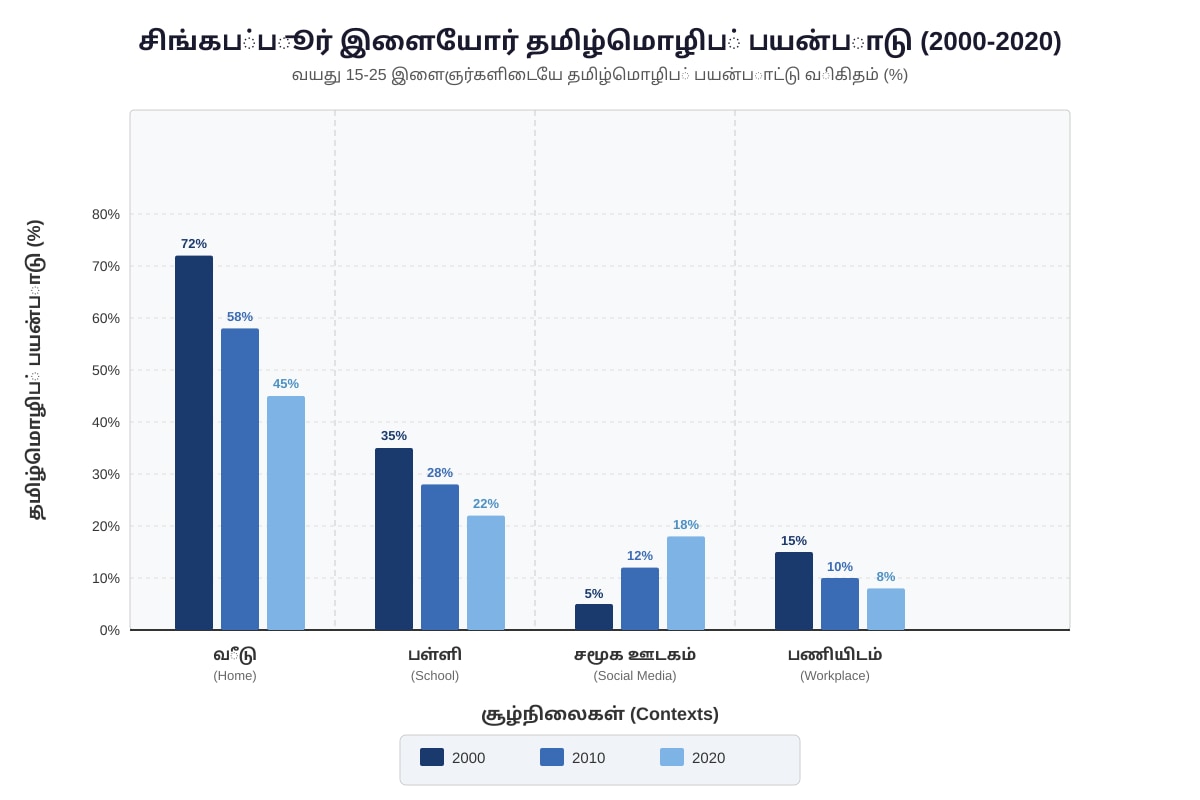
Task: Write a report (150-200 words) on Tamil language usage among Singaporean youth based on the bar chart data.
Marking Scheme:
| Criterion | Marks | Descriptors |
|---|---|---|
| Data Reference | 4 | Accurately references specific data points from the chart (at least 4 data points) |
| Trend Analysis | 4 | Identifies and explains key trends (decline in home/school/workplace; rise in social media) |
| Causes & Effects | 3 | Provides plausible reasons for the trends and discusses implications |
| Recommendations | 2 | Offers practical, relevant suggestions to address the decline |
| Language & Structure | 2 | Report format; formal register; word count compliance (150-200) |
Total: 15 marks
Model Answer:
சிங்கப்பூர் இளையோர் தமிழ்மொழிப் பயன்பாட்டுக் குறித்த அறிக்கை
இந்த அறிக்கை சிங்கப்பூர் இளையோர் (15-25 வயது) தமிழ்மொழிப் பயன்பாட்டின் போக்குகளை ஆராய்கிறது.
தரவுக் குறிப்பு: வீட்டு வட்டாரத்தில் தமிழ்ப் பயன்பாடு 2000 ஆம் ஆண்டில் 72% இருந்து 2020 ஆம் ஆண்டில் 45% ஆகக் குறைந்துள்ளது. பள்ளி வட்டாரத்தில் 35% இருந்து 22% ஆகவும், பணியிடத்தில் 15% இருந்து 8% ஆகவும் குறைந்துள்ளது. இதற்கு மாறாக, சமூக வலைத்தளங்களில் 5% இருந்து 18% ஆக அதிகரித்துள்ளது.
போக்குப் பகுப்பாய்வு: வீடு, பள்ளி, பணியிடம் ஆகிய மூன்று வட்டாரங்களிலும் தமிழ்ப் பயன்பாடு குறைந்து வருகிறது. இதற்குக் காரணம் ஆங்கில ஆதிக்கம், குடும்பத்தில் ஆங்கிலப் பேச்சின் அதிகரிப்பு, மற்றும் தமிழ்மொழிக் கல்வியின் குறைந்த முக்கியத்துவம். சமூக வலைத்தளங்களில் அதிகரிப்பு இருப்பினும், இது பெரும்பாலும் கலப்பு மொழியில் (Tanglish) நடைபெறுவதால் தூய தமிழ்ப் பயன்பாட்டைப் பிரதிபலிக்காது.
பரிந்துரைகள்:
- வீட்டில் தமிழில் பேசும் போக்கை ஊக்குவிக்க வேண்டும்.
- பள்ளிகளில் தமிழ் இலக்கிய மற்றும் கலை நிகழ்ச்சிகளை அதிகரிக்க வேண்டும்.
- தமிழ்மொழி மேம்பாட்டு மையம் (TCLL) போன்ற நிறுவனங்கள் இளையோருக்கான தொழில்நுட்ப அடிப்படையிலான தமிழ் பயிற்சிகளை வழங்க வேண்டும்.
(198 சொற்கள்)
Common Mistakes:
- Not referencing specific data points from the chart
- Describing trends without explaining causes
- Omitting recommendations
- Writing in informal register instead of report format
- Missing the comparison between declining and rising trends
Mark Summary
| Section | Questions | Marks |
|---|---|---|
| A: Short Composition | Q1–Q4 | 15 |
| B: Guided Composition | Q5 or Q6 | 20 |
| C: Applied Writing | Q7–Q8 | 25 |
| Total | 60 |
End of Answer Key