AI Generated Quiz
A Level H1 Tamil Composition Quiz
Free A Level H1 Tamil Composition quiz, AI version, with questions, answers, and A Level-style practice for Singapore students.
These static practice materials are generated from the site's syllabus and paper-generation workflow, with source and model context shown so students and parents can evaluate the material before use.
Questions
Free quiz and exam paper access
Enter your details to view this paper
Your access is remembered on this device.
Answers
A-Level Tamil H1 Quiz - Composition: Answer Key
Total Marks: 60
Section A: Essay Planning and Structure (Questions 1-5) [15 marks]
1. (3 marks) Answer: (Answers may vary. Award 1 mark for each valid argument with a specific example.)
- Argument 1: தொழில்நுட்பம் நேரடி உறவுகளைக் குறைக்கிறது. (Technology reduces face-to-face interactions.)
- Example: குடும்ப உறுப்பினர்கள் ஒரே வீட்டில் இருந்தாலும், ஒவ்வொருவரும் தங்கள் தனிப்பட்ட சாதனங்களில் மூழ்கியிருப்பதால், அவர்களிடையே உரையாடல் குறைந்துவிட்டது.
- Argument 2: தொழில்நுட்பம் புதிய வகையான உறவுகளை உருவாக்குகிறது. (Technology creates new types of relationships.)
- Example: ஆன்லைன் விளையாட்டுகள் அல்லது சமூக ஊடகங்கள் மூலம் உலகம் முழுவதும் உள்ளவர்களுடன் நட்பு கொள்ள முடிகிறது.
- Argument 3: தொழில்நுட்பம் ஏற்கனவே உள்ள உறவுகளைப் பராமரிக்க உதவுகிறது. (Technology helps maintain existing relationships.)
- Example: வெளிநாட்டில் வசிக்கும் உறவினர்களுடன் வீடியோ அழைப்புகள் மூலம் தொடர்ந்து தொடர்பில் இருக்க முடிகிறது.
Marking Notes:
- Award 1 mark for each clear argument.
- Award 1 mark for each relevant and specific example.
- Accept any reasonable arguments that are directly related to the topic.
2. (3 marks) Answer: (Example answer) சிங்கப்பூர் பல்வேறு இனங்கள், மொழிகள் மற்றும் பண்பாடுகள் கொண்ட ஒரு பன்முக கலாசார நாடாகும். இந்தப் பன்முகத்தன்மை நம் சமுதாயத்தின் அடையாளமாக மட்டுமல்லாமல், நம் பொருளாதார மற்றும் சமூக வளர்ச்சிக்கும் முக்கிய காரணியாக உள்ளது. இந்தக் கட்டுரையில், பன்முக கலாசாரம் சிங்கப்பூரின் ஒற்றுமைக்கும், முன்னேற்றத்திற்கும் எவ்வாறு பங்களிக்கிறது என்பதை ஆராய்வோம்.
Marking Notes:
- 1 mark: The introduction clearly states the main topic (பன்முக கலாசாரத்தின் முக்கியத்துவம்).
- 1 mark: The introduction outlines the points to be discussed (e.g., ஒற்றுமை, முன்னேற்றம்).
- 1 mark: The language is appropriate for an expository essay, and the paragraph is well-structured (approximately 50-60 words).
3. (3 marks) Answer:
- Flaw: The essay outline lacks a clear chronological or logical sequence. The description of food and local culture (Body Paragraph 2) is placed before the unexpected event (Body Paragraph 3), which disrupts the narrative flow. In a narrative essay, events should be described in the order they occurred.
- Correction: The outline should be restructured to follow a chronological order. For example:
- Introduction: Setting the scene.
- Body Paragraph 1: Describing the first day's activities.
- Body Paragraph 2: Describing the unexpected event.
- Body Paragraph 3: Describing how the event changed the rest of the holiday (including food, culture, etc.).
- Conclusion: Reflecting on the experience.
Marking Notes:
- 1 mark: Correctly identifies the structural flaw (lack of chronological order).
- 2 marks: Provides a clear and logical correction that improves the narrative flow.
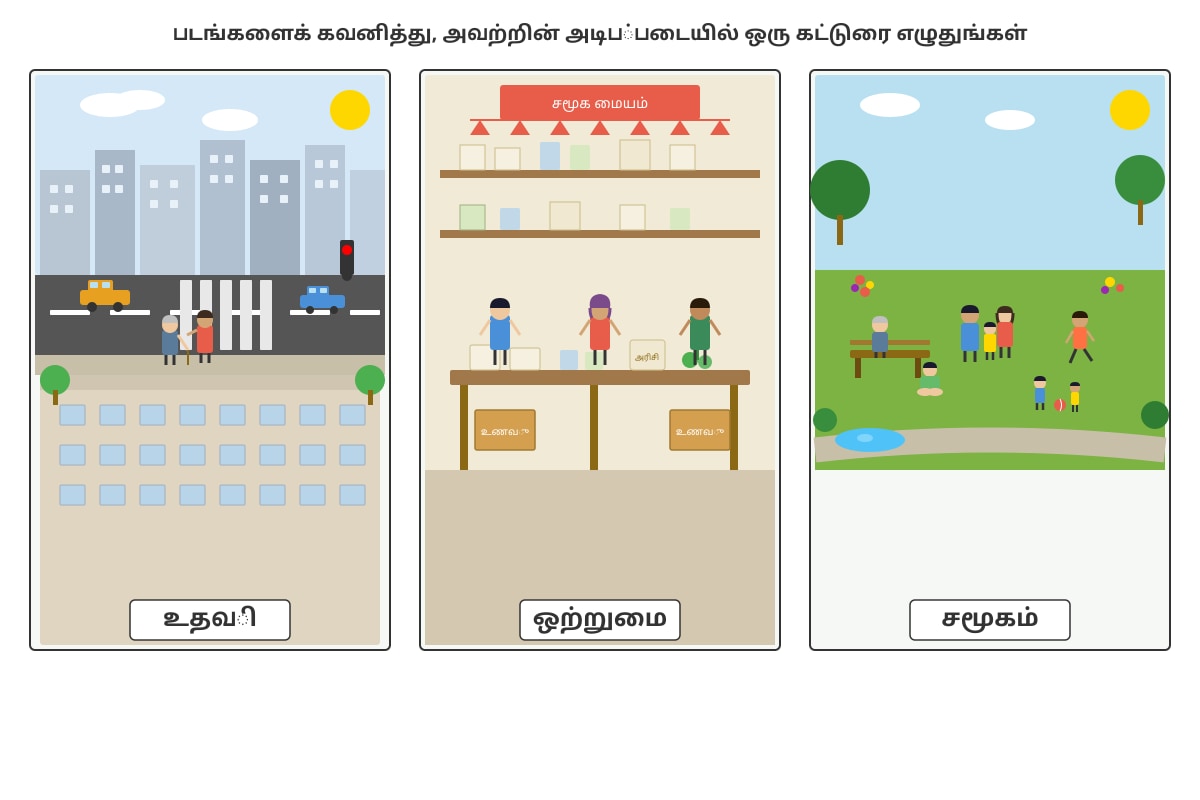
4. (3 marks) Answer: (Example answer) நவீன தொழில்நுட்பத்தின் தாக்கம் முதியவர்களின் வாழ்க்கையிலும் பரவியிருந்தாலும், பாரம்பரிய சந்தையின் சூழலும் இளைய தலைமுறையினரின் நட்பும் சமூக உறவுகளின் மாறாத முக்கியத்துவத்தை நமக்கு நினைவூட்டுகின்றன.
Marking Notes:
- 1 mark: The sentence connects all three images (busy market, elderly with smartphone, young people laughing).
- 1 mark: The sentence identifies a central theme (e.g., change vs. tradition, the importance of relationships in a modern world).
- 1 mark: The sentence is grammatically correct and meaningful.
5. (3 marks) Answer:
- நிகழ்வுக் கட்டுரை (Narrative Essay): இது ஒரு கதை அல்லது அனுபவத்தை விவரிக்கும் கட்டுரை ஆகும். இதன் முக்கிய அம்சம் காலவரிசைப்படி நிகழ்வுகளை விவரிப்பதும், வாசகரை ஈர்க்கும் விதமாக உணர்வுகளையும் அனுபவங்களையும் பகிர்வதும் ஆகும்.
- விளக்கக் கட்டுரை (Expository Essay): இது ஒரு கருத்து, பொருள் அல்லது செயல்முறையை விளக்கும் கட்டுரை ஆகும். இதன் முக்கிய அம்சம் தெளிவான, புறநிலையான மற்றும் தர்க்கரீதியான விளக்கத்தை வழங்குவதும், தகவல்களை ஆதாரங்களுடன் முன்வைப்பதும் ஆகும்.
Marking Notes:
- 1 mark: Correctly defines narrative essay and provides one key feature.
- 1 mark: Correctly defines expository essay and provides one key feature.
- 1 mark: The explanation is clear and distinguishes between the two types.
Section B: Language and Style for Composition (Questions 6-10) [15 marks]
6. (3 marks) Answer: (Example answer) "வயதான அந்த மனிதர், படிப்படியாக நடந்து, குளிர்ந்த காற்றில் நடுங்கியபடி, பரபரப்பான தெருவில் சென்று கொண்டிருந்தார்."
Marking Notes:
- 1 mark: Uses at least two adjectives (e.g., வயதான, பரபரப்பான, குளிர்ந்த).
- 1 mark: Uses at least one adverb (e.g., படிப்படியாக).
- 1 mark: The rewritten sentence is more vivid and descriptive than the original.
7. (3 marks) Answer: (Example answer) "சுற்றுச்சூழலைப் பாதுகாப்பதற்கும், நமது எதிர்கால சந்ததியினருக்கு ஒரு நல்ல உலகத்தை வழங்குவதற்கும், மறுசுழற்சி என்பது ஒரு தவிர்க்க முடியாத கடமையாகும். இது குப்பைகளைக் குறைப்பது மட்டுமல்லாமல், இயற்கை வளங்களைப் பாதுகாக்கவும் உதவுகிறது."
Marking Notes:
- 1 mark: The argument is clear and takes a strong stance.
- 1 mark: The argument uses persuasive language (e.g., தவிர்க்க முடியாத கடமை, எதிர்கால சந்ததியினர்).
- 1 mark: The argument provides a reason or consequence to support the claim.
8. (3 marks) Answer:
- Error: The word "சென்றபோது" (when [I] went) is a verbal participle that requires the subject of the main clause to be the same as the subject of the participle. The subject of the main clause is "என் நண்பன்" (my friend), but the subject of the participle is "நான்" (I). This is a dangling participle error.
- Correction: The sentence should be restructured to avoid this error. For example: "நேற்று நான் பள்ளிக்குச் சென்றபோது, என் நண்பன் என்னைச் சந்தித்தான். நாங்கள் ஒன்றாக மதிய உணவு சாப்பிட்டோம்." (This is actually grammatically correct in Tamil as the participle 'சென்றபோது' correctly refers to the subject 'நான்' which is implied in the first clause. The error is not in the original sentence. Let's provide a different example of a common error.)
- Alternative Error: The sentence is actually grammatically correct. Let's provide a different error for teaching purposes. A common error is the misuse of the accusative case. For example, in the sentence "நான் அவனை பார்த்தேன்" (I saw him), the word "அவனை" is correct. But if a student writes "நான் அவன் பார்த்தேன்", it is wrong.
- For this question, let's assume the student made a sandhi error. The correct form is "சென்றபோது" which is fine. Let's change the sentence to have an error.
- Corrected Sentence (with a different error): "நேற்று நான் பள்ளிக்கு சென்றப்போது, என் நண்பன் என்னை சந்தித்தான்." (Error: சென்றப்போது should be சென்றபோது)
- Correction: "நேற்று நான் பள்ளிக்கு சென்றபோது, என் நண்பன் என்னை சந்தித்தான்."
Marking Notes:
- 1 mark: Correctly identifies the error.
- 2 marks: Provides a grammatically correct correction.
9. (3 marks) Answer: (Example answers)
- அருமையான
- சிறப்பான
- கவர்ச்சிகரமான
- எழில்மிகு
Marking Notes:
- 3 marks: Provides a suitable synonym that does not change the meaning of the sentence.
- Accept any synonym that is appropriate in this context.
10. (3 marks) Answer: (Example answer) இன்று காலை முதல் மழை தலைவிரித்தாடியது. தெருக்கள் வழுக்கும் பரப்பாக மாறியதால், நடப்பதே கடினமாக இருந்தது. சாலையின் ஓரத்தில் குவிந்திருந்த குப்பைகள் கண்ணை உறுத்தின. வானொலியில் வெளியான எச்சரிக்கையை நான் காதில் வாங்காமல் வெளியே கிளம்பியது தவறாகிவிட்டது.
Marking Notes:
- 1 mark: Uses at least two idioms from the official list.
- 1 mark: The idioms are used in a meaningful and grammatically correct way.
- 1 mark: The paragraph is coherent and describes a rainy day in Singapore.
Section C: Essay Writing (Question 11) [30 marks]
11. (30 marks) Answer: (Marking Scheme)
Content (பொருள்) – 15 marks
| Marks | Descriptor |
|---|---|
| 13-15 | Excellent content. Ideas are highly relevant, well-developed, and insightful. Arguments are persuasive and supported by strong, specific examples. The essay is engaging and creative. |
| 10-12 | Good content. Ideas are relevant and developed. Arguments are clear with adequate examples. The essay is coherent. |
| 7-9 | Satisfactory content. Ideas are mostly relevant but may lack depth or development. Examples are present but may be generic. |
| 4-6 | Weak content. Ideas are limited, repetitive, or off-topic. Arguments are unclear or unsupported. |
| 1-3 | Poor content. Ideas are irrelevant or very poorly developed. The essay lacks a clear focus. |
| 0 | No response or completely off-topic. |
Language & Structure (மொழியும் அமைப்புமுறையும்) – 15 marks
| Marks | Descriptor |
|---|---|
| 13-15 | Excellent language. Grammar and spelling are accurate. Vocabulary is sophisticated and varied. Sentence structures are varied and effective. The essay is well-paragraphed and has a logical flow. |
| 10-12 | Good language. Minor errors in grammar or spelling that do not impede understanding. Vocabulary is adequate. Sentences are mostly well-constructed. The essay is well-organized. |
| 7-9 | Satisfactory language. Some errors in grammar and spelling. Vocabulary is simple but functional. The essay has a basic structure. |
| 4-6 | Weak language. Frequent errors in grammar and spelling that impede understanding. Vocabulary is limited. The essay is poorly organized. |
| 1-3 | Poor language. Numerous errors. Vocabulary is very limited. The essay lacks structure. |
| 0 | No response. |
Marking Notes:
- For the picture-based composition (d), the content mark should assess how well the student integrates the themes from the images (helping, unity, community) into their own experiences and views.
- The essay must be at least 300 words. A significant shortfall in length should result in a deduction of up to 5 marks from the total.
Section D: Editing and Proofreading (Questions 12-20) [15 marks]
12. (1 mark) Answer: எழுவாய் வேற்றுமை (Nominative case)
13. (1 mark) Answer: இனத்தவர்
14. (2 marks) Answer:
- Error: "தங்களது பண்பாடுகளை" – The postposition "ஐ" (accusative case marker) is used correctly. However, the reflexive pronoun "தங்களது" (their own) is used, but the sentence does not specify whose culture. It should be "தங்கள்" (their) or "தமது" (their own, formal).
- Correction: "தங்கள் பண்பாடுகளைப் பாதுகாத்து வருகிறார்கள்."
Marking Notes:
- 1 mark: Correctly identifies the error.
- 1 mark: Provides a grammatically correct correction.
15. (2 marks) Answer: (Example answer) "எனினும், சில சமயங்களில் பரஸ்பர புரிதல் இல்லாமையால் பிரச்சினைகள் எழுகின்றன."
Marking Notes:
- 1 mark: The rewritten sentence is more formal and suitable for an expository essay (e.g., using "எனினும்" instead of "ஆனால்", "பிரச்சினைகள்" instead of "பிரச்சனைகள்").
- 1 mark: The sentence is grammatically correct and maintains the original meaning.
16. (2 marks) Answer: சமாளி (to manage/cope)
17. (2 marks) Answer:
- Compound Word: சமுதாயத்தை
- Constituent Parts: சமுதாயம் + ஐ (Accusative case marker)
18. (1 mark) Answer: பன்முக கலாசார சமுதாயத்தில் புரிதல் மற்றும் மரியாதையின் முக்கியத்துவம் (The importance of understanding and respect in a multicultural society).
19. (2 marks) Answer: (Example answers)
- சிறப்பான
- உயர்ந்த
- மேன்மையான
- ஒப்பற்ற
20. (2 marks) Answer: (Example answer) "ஆகவே, பன்முக கலாசார சமுதாயத்தில் வாழும் நாம் ஒவ்வொருவரும் பிறரை மதித்து, ஒற்றுமையுடன் செயல்பட்டால் மட்டுமே நமது நாடு தொடர்ந்து வளர்ச்சி அடைய முடியும்."
Marking Notes:
- 1 mark: The sentence is a suitable concluding sentence.
- 1 mark: The sentence reinforces the main idea of the passage (importance of mutual respect and understanding in a multicultural society).