AI Generated Exam Paper
A Level H2 Physics Practice Paper 3
Free A Level H2 Physics Practice Paper 3, HY3 AI version, with questions, answers, and A Level-style practice for Singapore students.
These static practice materials are generated from the site's syllabus and paper-generation workflow, with source and model context shown so students and parents can evaluate the material before use.
Questions
TuitionGoWhere Practice Paper - Physics H2 A-Level
TuitionGoWhere Practice Paper (AI) — Version 3 of 5
Subject: Physics H2
Level: A-Level
Paper: Practice Paper (Mechanics Focus)
Duration: 1 hour 30 minutes
Total Marks: 60
Name: ______________________
Class: ______________________
Date: ______________________
Instructions
- Answer all questions in the spaces provided.
- Show all working clearly. Use SI units and appropriate notation.
- Marks allocated are shown in brackets [ ].
- This is a syllabus-first practice paper generated from LLM-inferred templates; it is not derived from official past-year papers.
Section A: Kinematics and Dynamics (Questions 1–7) [21 marks]
1. A drone accelerates uniformly from rest to 12 m s−1 in 8.0 s. Calculate its acceleration. [2]
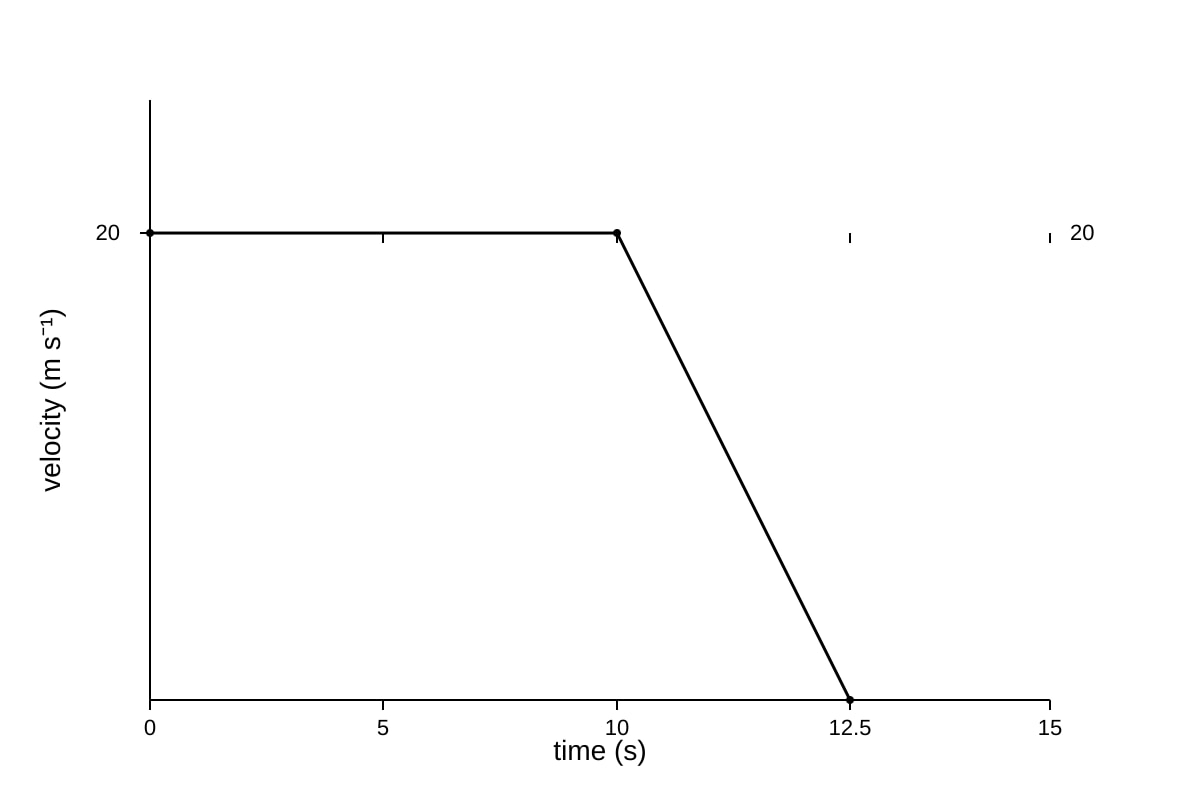
2. A car travels at a constant velocity of 20 m s−1 for 10 s, then decelerates uniformly to rest in 5.0 s.
(a) Calculate the total distance travelled. [2]
(b) Sketch a velocity–time graph for the motion on the axes below. [1]
Image pending generation: graph for Q2.
3. State Newton’s first law of motion. [1]
4. A block of mass 4.0 kg is pulled along a horizontal surface by a force of 10 N at 30∘ above the horizontal. The frictional force is 2.0 N. Calculate the acceleration of the block. [3]
5. A projectile is launched horizontally from a cliff of height 45 m with speed 20 m s−1.
(a) Calculate the time taken to reach the ground. [2]
(b) Calculate the horizontal distance travelled. [1]
6. Explain why, in the absence of air resistance, the horizontal component of a projectile’s velocity remains constant. [2]
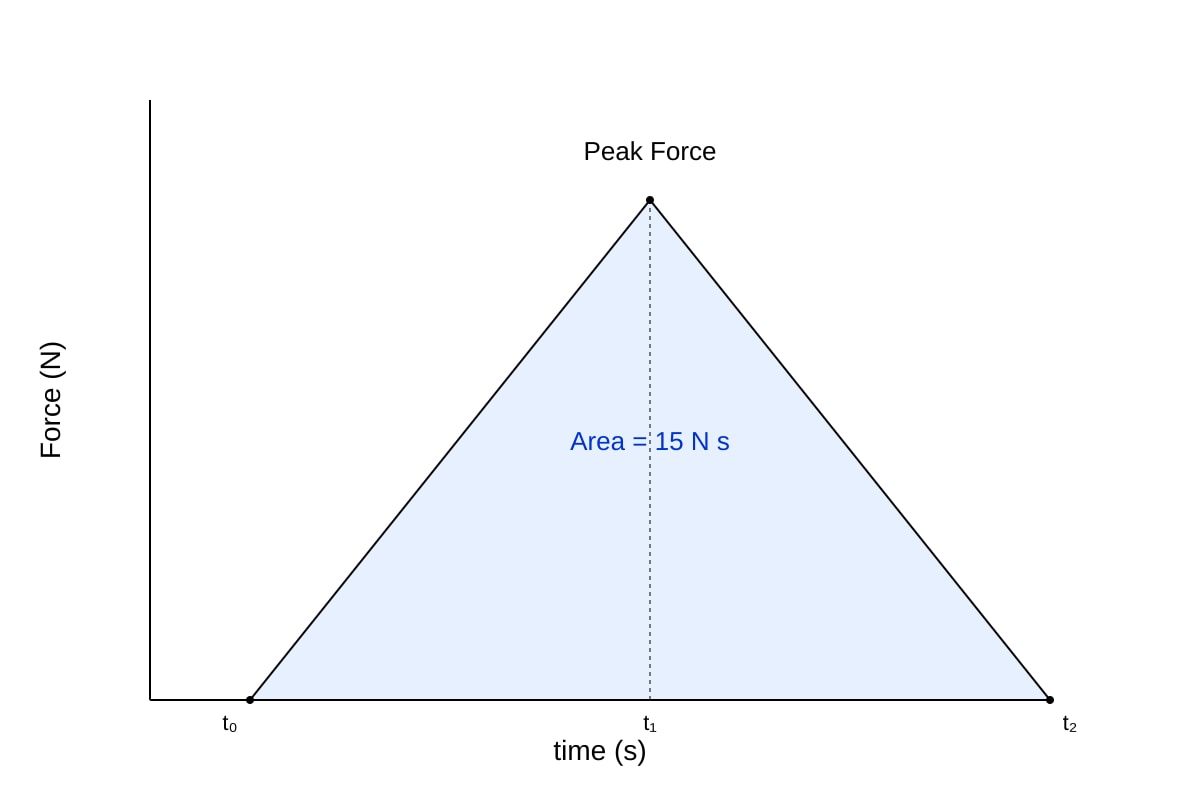
7. A force–time graph for a varying force acting on a 2.0 kg object is shown. The area under the graph is 15 N s.
(a) Calculate the impulse on the object. [1]
(b) If the object was initially at rest, calculate its final velocity. [2]
Image pending generation: graph for Q7.
Section B: Momentum, Circular Motion, and Gravitation (Questions 8–14) [21 marks]
8. State the principle of conservation of linear momentum. [2]
9. A trolley of mass 1.5 kg moving at 4.0 m s−1 collides with a stationary trolley of mass 2.5 kg. After collision, the first trolley moves at 1.0 m s−1 in the same direction. Calculate the velocity of the second trolley. [3]
10. Two objects of masses 2.0 kg and 3.0 kg move towards each other with speeds 5.0 m s−1 and 2.0 m s−1 respectively. They stick together after collision. Calculate their common final velocity and state whether the collision is elastic. [4]
11. A mass of 0.50 kg is whirled in a horizontal circle of radius 0.80 m at 4.0 rev s−1.
(a) Calculate the angular velocity ω. [1]
(b) Calculate the centripetal force required. [2]
12. A satellite orbits Earth at a height where gravitational field strength is 5.0 N kg−1. The satellite has mass 200 kg. Calculate the gravitational force on it. [2]
13. Define gravitational potential at a point. [2]
14. Two masses m1=6.0×1024 kg and m2=7.4×10²² kg are separated by 3.8×10⁸ m. Calculate the gravitational force between them. (G=6.67×10⁻¹¹ N m2kg−2) [3]
Section C: Oscillations and Energy (Questions 15–20) [18 marks]
15. A spring-mass system has m=0.20 kg and k=80 N m−1. Calculate the period of oscillation. [2]
16. For the system in Q15, if amplitude is 0.050 m, calculate the maximum acceleration. [2]
17. A pendulum has length 1.0 m and oscillates with small amplitude. Calculate its period. (g=9.8 m s−2) [2]
18. Describe the energy interchange in simple harmonic motion between kinetic and potential energy. [3]
19. A body executes SHM with displacement x=0.10sin(2πt) m.
(a) State the amplitude. [1]
(b) Calculate the maximum velocity. [2]
20. A damped oscillator loses 20% of its amplitude each cycle. Explain the effect on the total mechanical energy. [4]
Answers
TuitionGoWhere Practice Paper — Answer Key (Version 3)
Subject: Physics H2
Level: A-Level
Paper: Practice Paper (Mechanics Focus)
Total Marks: 60
Section A: Kinematics and Dynamics
1. [2 marks]
a=tv−u=8.012−0=1.5 m s−2
Teaching: Uniform acceleration from rest uses a=(v−u)/t.
Mark breakdown: 1 for formula, 1 for answer with unit.
2. [3 marks]
(a) Distance = area under v–t graph = (20×10)+21(20×5)=200+50=250 m [2]
(b) Graph: horizontal line at 20 from 0–10 s, then straight line to 0 at 15 s. [1]
Teaching: Constant velocity gives rectangle; uniform deceleration gives triangle.
3. [1 mark]
An object remains at rest or in uniform motion in a straight line unless acted upon by a net external force.
Teaching: This is Newton’s first law (law of inertia).
4. [3 marks]
Horizontal component of pull: Fx=10cos30∘=8.66 N
Net force: Fnet=8.66−2.0=6.66 N
a=Fnet/m=6.66/4.0=1.67 m s−2
Mark: 1 each for component, net force, acceleration.
5. [3 marks]
(a) h=21gt2⇒45=21(9.8)t2⇒t=9.18=3.03 s [2]
(b) d=vt=20×3.03=60.6 m [1]
6. [2 marks]
No horizontal force acts (air resistance absent), so by Newton’s first law horizontal velocity is unchanged. Vertical motion is independent.
Mark: 1 for no force, 1 for independence.
7. [3 marks]
(a) Impulse = area = 15 N s [1]
(b) mv=15⇒v=15/2.0=7.5 m s−1 [2]
Section B: Momentum, Circular Motion, Gravitation
8. [2 marks]
In a closed system with no net external force, total momentum before an event equals total momentum after.
Mark: 1 system, 1 before=after.
9. [3 marks]
m1u1+m2u2=m1v1+m2v2
(1.5)(4.0)+0=(1.5)(1.0)+2.5v2
6.0=1.5+2.5v2⇒v2=1.8 m s−1
10. [4 marks]
Take right as positive: pi=2(5)−3(2)=4 kg m s−1
vf=4/5=0.80 m s−1 right [2]
KE initial = 21(2)(25)+21(3)(4)=25+6=31 J
KE final = 21(5)(0.64)=1.6 J → not equal, inelastic [2]
11. [3 marks]
(a) ω=2πf=2π(4.0)=25.1 rad s−1 [1]
(b) F=mrω2=0.50(0.80)(25.12)=252 N [2]
12. [2 marks]
F=mg=200×5.0=1000 N
13. [2 marks]
Gravitational potential at a point is the work done per unit mass in bringing a small test mass from infinity to that point. Negative sign implied.
14. [3 marks]
F=Gr2m1m2=6.67×10⁻¹¹(3.8×10⁸)2(6.0×1024)(7.4×10²²)
=6.67×10−11×1.444×10174.44×1047=2.05×10²⁰ N
Section C: Oscillations and Energy
15. [2 marks]
T=2πm/k=2π0.20/80=0.314 s
16. [2 marks]
amax=ω2A=(k/m)A=(80/0.20)(0.050)=20 m s−2
17. [2 marks]
T=2πL/g=2π1.0/9.8=2.01 s
18. [3 marks]
In SHM, total energy constant; KE max at equilibrium, PE max at extremes. Energy converts continuously. 1 mark each: constant total, KE/PE roles, interchange.
19. [3 marks]
(a) Amplitude = 0.10 m [1]
(b) vmax=ωx0=2π(0.10)=0.628 m s−1 [2]
20. [4 marks]
Amplitude reduces by 20% → factor 0.8 per cycle. Energy ∝ amplitude² → becomes 0.64 of previous (36% loss per cycle). Damping dissipates energy as heat. 2 for amplitude relation, 2 for energy conclusion.
Free quiz and exam paper access
Enter your details to view this paper
Your access is remembered on this device.