AI Generated Quiz
A Level H1 Physics Electricity Magnetism Quiz
Free A Level H1 Physics Electricity Magnetism quiz, HY3 AI version, with questions, answers, and A Level-style practice for Singapore students.
These static practice materials are generated from the site's syllabus and paper-generation workflow, with source and model context shown so students and parents can evaluate the material before use.
Questions
A-Level Physics H1 Quiz - Electricity Magnetism
Name: ______________________
Class: ______________________
Date: ______________________
Score: _______ / 40
Duration: 50 minutes
Total Marks: 40
Instructions:
- Answer all 20 questions.
- Show your working clearly where calculation is required.
- Use the spaces provided.
- Section A: Short Answer (1–7), Section B: Structured Calculation (8–14), Section C: Interpretation & Reasoning (15–20).
Section A: Short Answer (1–7)
1. State what is meant by the electromotive force (e.m.f.) of a battery. [2]
2. A copper wire carries a current of 3.0 A. The charge of an electron is 1.6×10⁻¹⁹ C. Define drift velocity vd and write the equation linking current I, number density n, cross-sectional area A, and vd. [2]
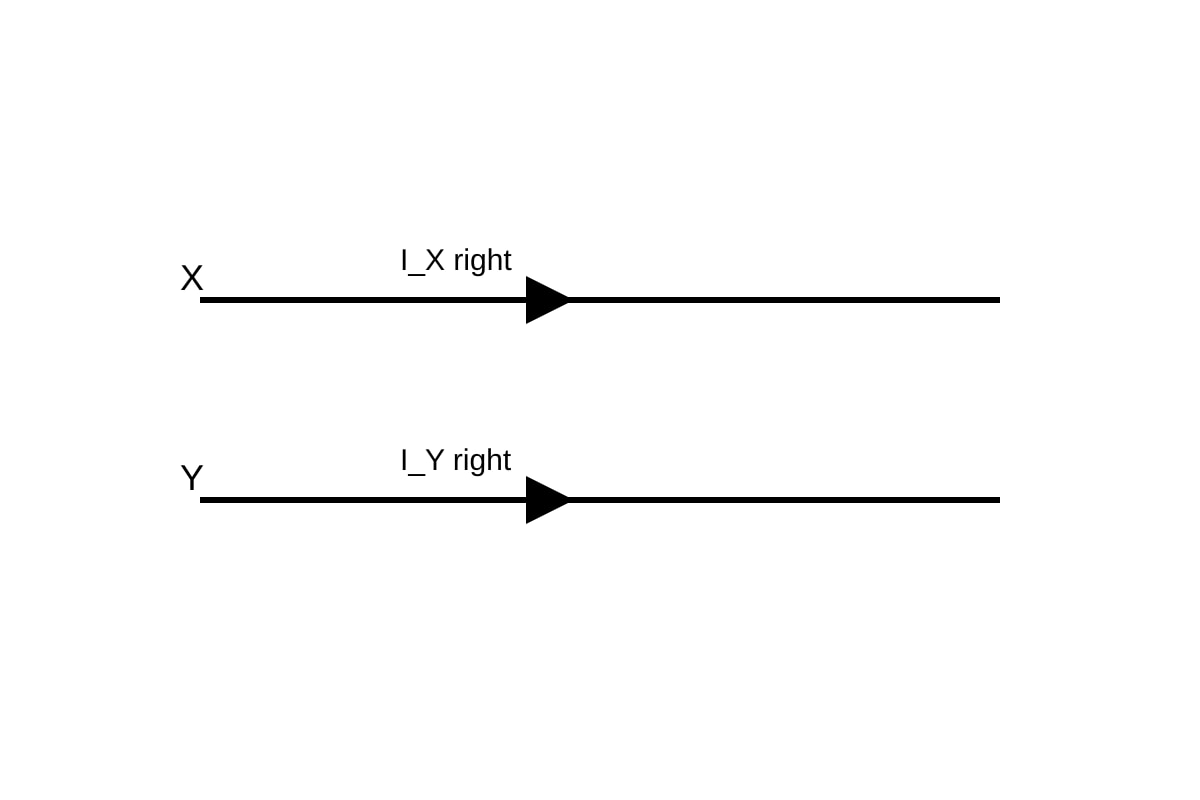
3. Two parallel wires carry currents in the same direction. State the direction of the force between them. [1]
4. Write the equation for the magnetic force on a straight conductor of length l carrying current I perpendicular to a magnetic field of flux density B. [1]
5. A resistor has an I–V graph that is a straight line through the origin. State the term used to describe this resistor. [1]
6. A battery of e.m.f. 6.0 V has internal resistance 1.0 Ω. State the terminal voltage when no external current flows. [1]
7. In a potential divider, two resistors R1=2.0 Ω and R2=3.0 Ω are connected in series across 10 V. State the p.d. across R2. [2]
Section B: Structured Calculation (8–14)
8. A battery of e.m.f. 12.0 V and internal resistance 2.0 Ω is connected to a 10.0 Ω resistor.
(a) Calculate the current in the circuit. [2]
(b) Calculate the terminal voltage of the battery. [2]
9. A wire has number density of free electrons n=8.5×1028 m−3, cross-sectional area A=1.0×10⁻⁶ m2, and carries current I=4.0 A. Calculate the drift velocity vd. (e=1.6×10⁻¹⁹ C) [3]
10. A straight wire of length 0.20 m carries a current of 5.0 A perpendicular to a uniform magnetic field of flux density 0.30 T. Calculate the magnetic force on the wire. [2]
11. Two resistors, 4.0 Ω and 6.0 Ω, are connected in parallel. Calculate their effective resistance. [2]
12. A potential divider consists of R1=5.0 Ω and R2=15.0 Ω across a 12 V supply. A voltmeter is connected across R2. Calculate the voltmeter reading. [3]
13. A charge of 2.0×10⁻⁶ C moves at 4.0×10³ m/s perpendicular to a magnetic field of 0.50 T. Calculate the magnetic force on the charge. [2]
14. A battery of e.m.f. 9.0 V and internal resistance 1.5 Ω supplies a current of 0.50 A to a load. Calculate the power dissipated in the internal resistance. [3]
Section C: Interpretation & Reasoning (15–20)
15.
Image pending generation: graph for Q15.
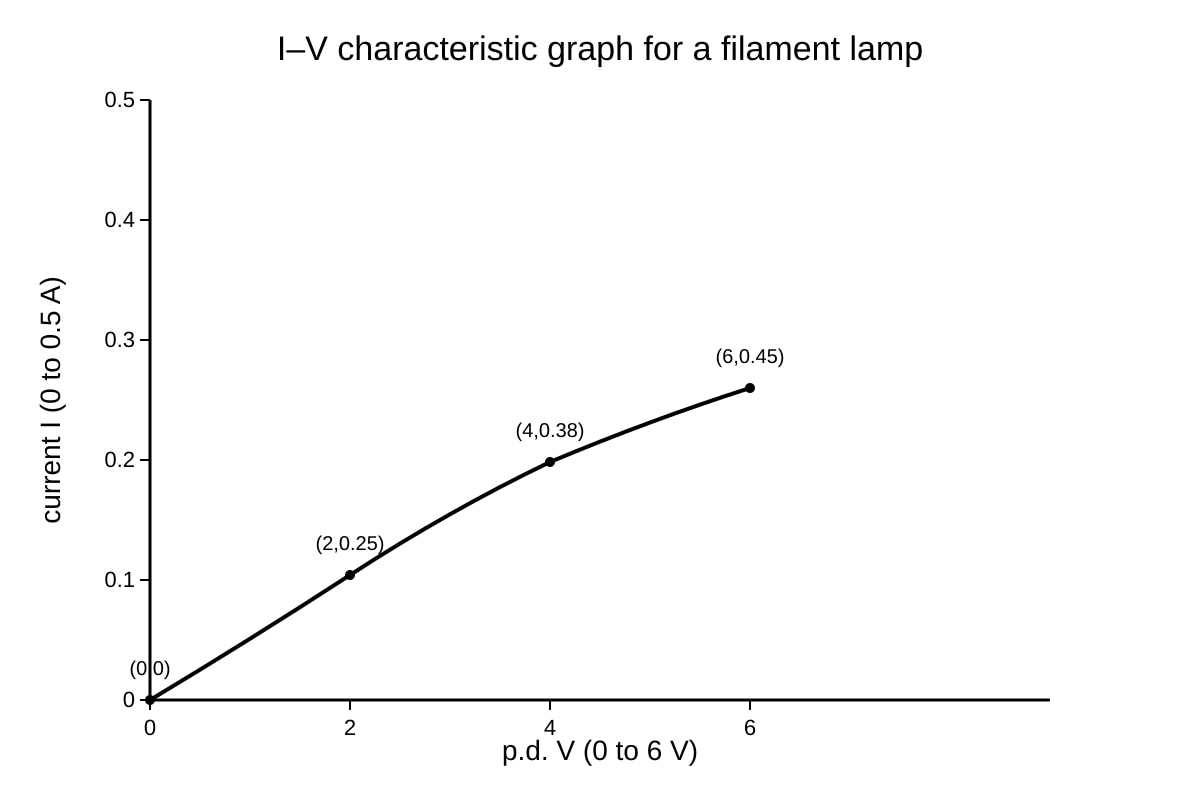
Describe how the resistance of the filament lamp changes as the p.d. increases from 0 to 6 V, using the graph. [3]
16.
Image pending generation: diagram for Q16.
Using Fleming's left-hand rule or magnetic interaction, explain why the two wires attract. [3]
17. A student says: "The e.m.f. of a battery is the same as the terminal voltage when it is connected to a load." Explain why this statement is incorrect. [2]
18.
Image pending generation: experimental_setup for Q18.
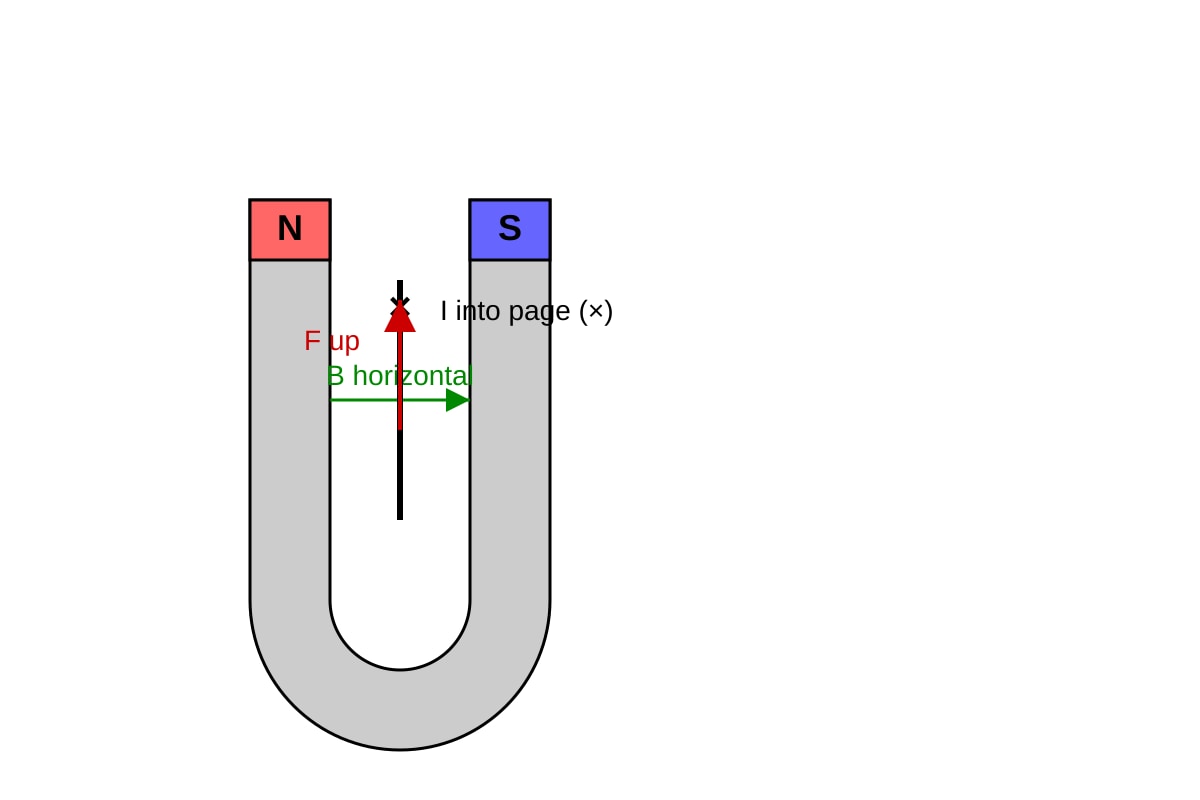
State the rule used to determine the force direction and show how it gives the upward force. [2]
19. A 12 V battery with internal resistance 4.0 Ω is connected to a variable resistor. The maximum power transferred to the variable resistor occurs when its resistance equals the internal resistance. Calculate the maximum power delivered to the load. [4]
20. Compare the magnetic field pattern of a long straight wire carrying current with that of a solenoid carrying the same current. [3]
Answers
A-Level Physics H1 Quiz - Electricity Magnetism (Answer Key)
Total Marks: 40
Topic: Electricity & Magnetism (Syllabus 8867, Topics 8–10)
Section A: Short Answer
1. [2 marks]
e.m.f. is the energy converted from chemical (or other non-electrical) form to electrical energy per unit charge.
- [B1] Definition: work done per unit charge by the source
- [B1] Reference to energy conversion (e.g. chemical → electrical)
Teaching note: e.m.f. is not a "force"; it is measured in volts (J C⁻¹).
2. [2 marks]
Drift velocity vd is the average velocity of free electrons moving along the wire.
Equation: I=nAevd (or I=nAvdq).
- [B1] correct definition
- [B1] correct equation
Teaching note: n = number density, A = area, e = electron charge.
3. [1 mark]
They attract.
Teaching note: Parallel currents in same direction → attractive force.
4. [1 mark]
F=BIl (when perpendicular).
Teaching note: If not perpendicular, F=BIlsinθ.
5. [1 mark]
Ohmic conductor (or linear resistor).
Teaching note: Obeys Ohm's law, constant resistance.
6. [1 mark]
6.0 V.
Teaching note: No current → no internal drop, terminal = e.m.f.
7. [2 marks]
Total resistance = 5.0 Ω, current I=10/5=2.0 A, p.d. across R2=IR2=2.0×3.0=6.0 V.
Or directly: VR2=10×5.03.0=6.0 V.
- [B1] correct ratio method
- [B1] correct value 6.0 V
Section B: Structured Calculation
8. [4 marks]
(a) Rtot=2.0+10.0=12.0 Ω [M1]; I=12.0/12.0=1.0 A [A1].
(b) Vterm=E−Ir=12.0−(1.0)(2.0)=10.0 V [M1+A1].
Marking: (a) 2, (b) 2.
9. [3 marks]
I=nAevd⇒vd=nAeI [M1]
=(8.5×1028)(1.0×10⁻⁶)(1.6×10⁻¹⁹)4.0 [M1]
=1.36×1044.0=2.94×10⁻⁴ m/s [A1].
Teaching note: tiny drift speed despite fast signal.
10. [2 marks]
F=BIl=(0.30)(5.0)(0.20)=0.30 N [M1+A1].
11. [2 marks]
R1=4.01+6.01=125 [M1]; R=2.4 Ω [A1].
12. [3 marks]
VR2=V×R1+R2R2=12×20.015.0 [M2] =9.0 V [A1].
13. [2 marks]
F=BQv=(0.50)(2.0×10⁻⁶)(4.0×10³) [M1] =4.0×10⁻³ N [A1].
14. [3 marks]
P=I2r=(0.50)2(1.5) [M2] =0.375 W [A1].
Section C: Interpretation & Reasoning
15. [3 marks]
From graph, R=V/I; at 2 V, R=8 Ω; at 6 V, R=13.3 Ω [B1]. Resistance increases with p.d. [B1] because filament heats, lattice vibrates more, collisions increase [B1].
Teaching note: non-ohmic, graph slope decreases.
16. [3 marks]
Each wire produces circular B-field; X's field at Y is into page below X [B1]. Force on Y by Fleming left-hand: field into page, current right → force left (toward X) [B1]. Symmetrically X toward Y [B1]. Hence attract.
17. [2 marks]
Terminal voltage V=E−Ir [B1]; when load connected, I>0, so V<E [B1]. Only equal at open circuit.
18. [2 marks]
Fleming's left-hand rule [B1]; field left→right (N to S), current into page, thumb gives force up [B1].
19. [4 marks]
Max power when Rload=r=4.0 Ω [B1].
Current I=12/(4+4)=1.5 A [M1].
P=I2R=(1.5)2(4.0)=9.0 W [M1+A1].
Alternative: P=E2/(4r)=144/16=9.0 W.
20. [3 marks]
Straight wire: concentric circles around wire, strength ∝ 1/r [B1]. Solenoid: uniform inside, weak outside, like bar magnet [B1]. Both due to current; solenoid concentrates field internally [B1].
Free quiz and exam paper access
Enter your details to view this paper
Your access is remembered on this device.