From Real Exams Exam Paper
A Level H2 Mathematics Practice Paper 2
Free A Level H2 Maths Practice Paper 2, HY3 Exam version, with questions, answers, and A Level-style practice for Singapore students.
These static practice materials are generated from the site's syllabus and paper-generation workflow, with source and model context shown so students and parents can evaluate the material before use.
Questions
TuitionGoWhere Exam Practice (AI) — Maths H2 A-Level
School: TuitionGoWhere Exam Practice (AI)
Subject: Mathematics H2
Level: A-Level
Paper: Practice Paper (Version 2 of 5)
Duration: 75 minutes
Total Marks: 60
Name: ______________________
Class: ______________________
Date: ______________________
Instructions:
- Answer all questions.
- Show all working clearly.
- Use a graphing calculator where appropriate.
- Write your answers in the spaces provided.
Section A: Functions and Inverse Functions (16 marks)
1. [2] The function f is defined by f(x)=2x−5 for x∈R. Find f−1(x) and state the domain of f−1.
2. [3] The function g is defined by g(x)=x2+1 for x∈R. Explain why g−1 does not exist. Hence state a restriction on the domain of g so that g−1 exists.
3. [3] The function h is defined by h(x)=x−23x for x=2. Find h−1(x) and state its domain and range.
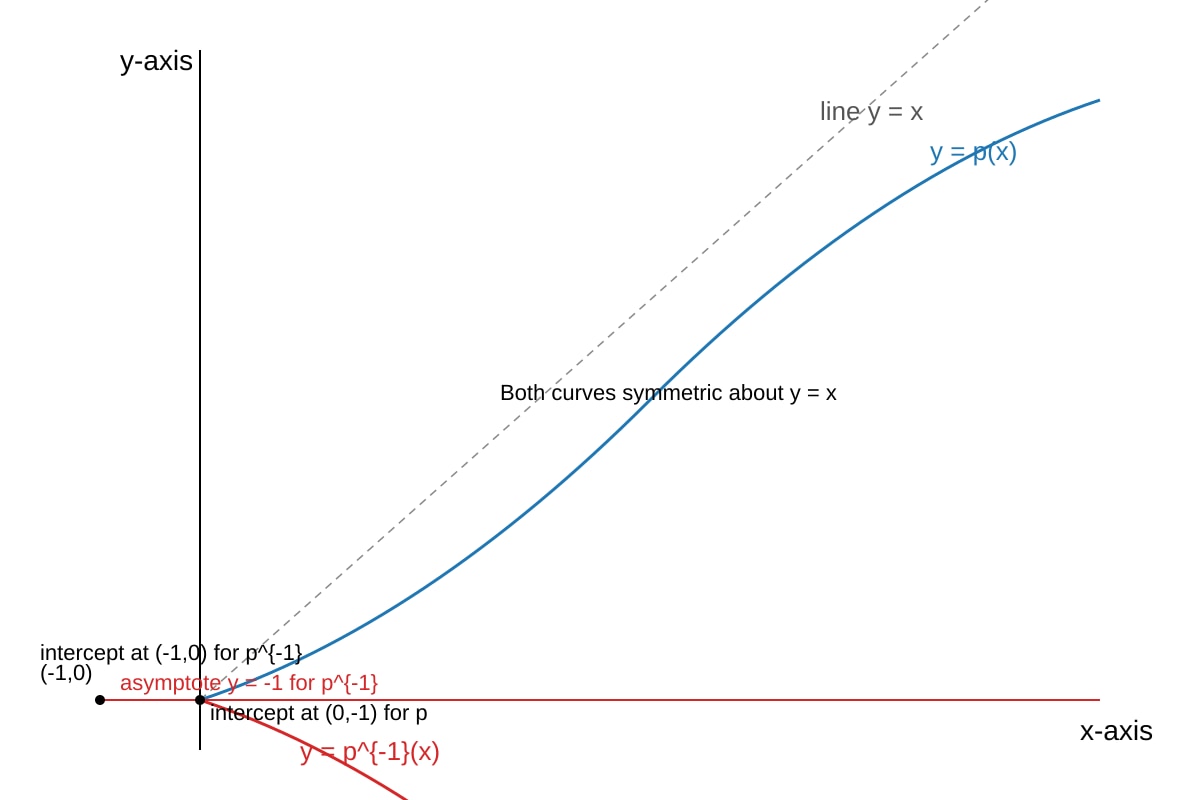
4. [4] The function p is defined by p(x)=ex−1 for x∈R. Find p−1(x) and state the domain of p−1. Sketch the graphs of y=p(x) and y=p−1(x) on the same axes.
Image pending generation: graph for Q4.
5. [4] The function q is defined by q(x)=ln(x+3) for x>−3. Find q−1(x), state its domain and range, and describe how the graph of y=q−1(x) is related to y=q(x).
Section B: Composite Functions (20 marks)
6. [4] The functions f and g are defined by f(x)=x+2 for x∈R and g(x)=x2 for x≥0. Show that the composite function fg exists. Find fg(x) and state its domain and range.
7. [4] The functions f and g are defined by f(x)=x1 for x>0 and g(x)=x−1 for x>1. Determine whether gf exists. If it exists, find gf(x) and state its domain.
8. [4] The function f is defined by f(x)=3x−1 for x∈R, and g(x)=x2+2 for x∈R. Find fg(x) and gf(x). State the domain of each composite function.
9. [4] The functions f and g are defined by f(x)=x for x≥0 and g(x)=2x+1 for x≥−21. Show that fg exists and find fg(x). Hence find the range of fg.
10. [4] The function h is defined by h(x)=x+1x for x>0. The function k is defined by k(x)=x2 for x∈R. Show that kh exists. Find kh(x) and state the range of kh.
Section C: Graphs, Transformations and Equations (24 marks)
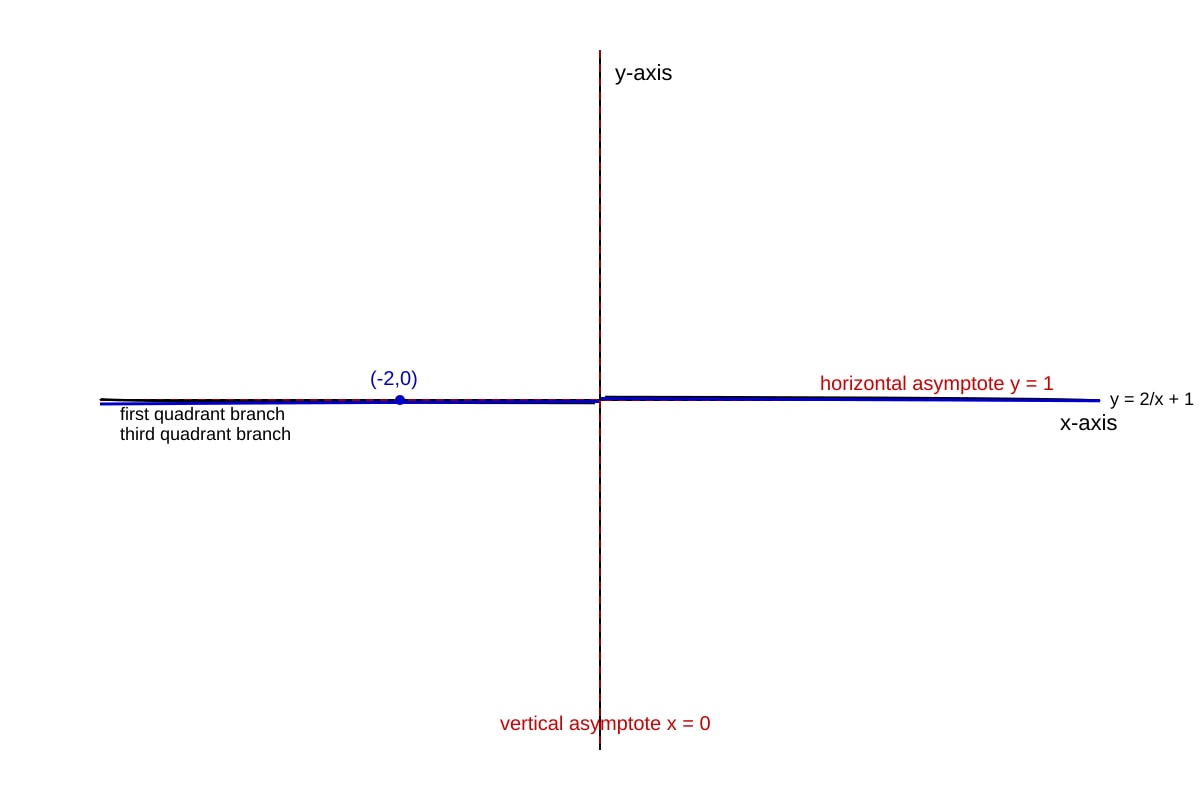
11. [2] Sketch the graph of y=x2+1, stating the equations of any asymptotes and the coordinates of any intercepts.
Image pending generation: graph for Q11.
12. [3] The graph of y=f(x) is transformed to y=2f(x)+3. Describe the transformations applied, in order.
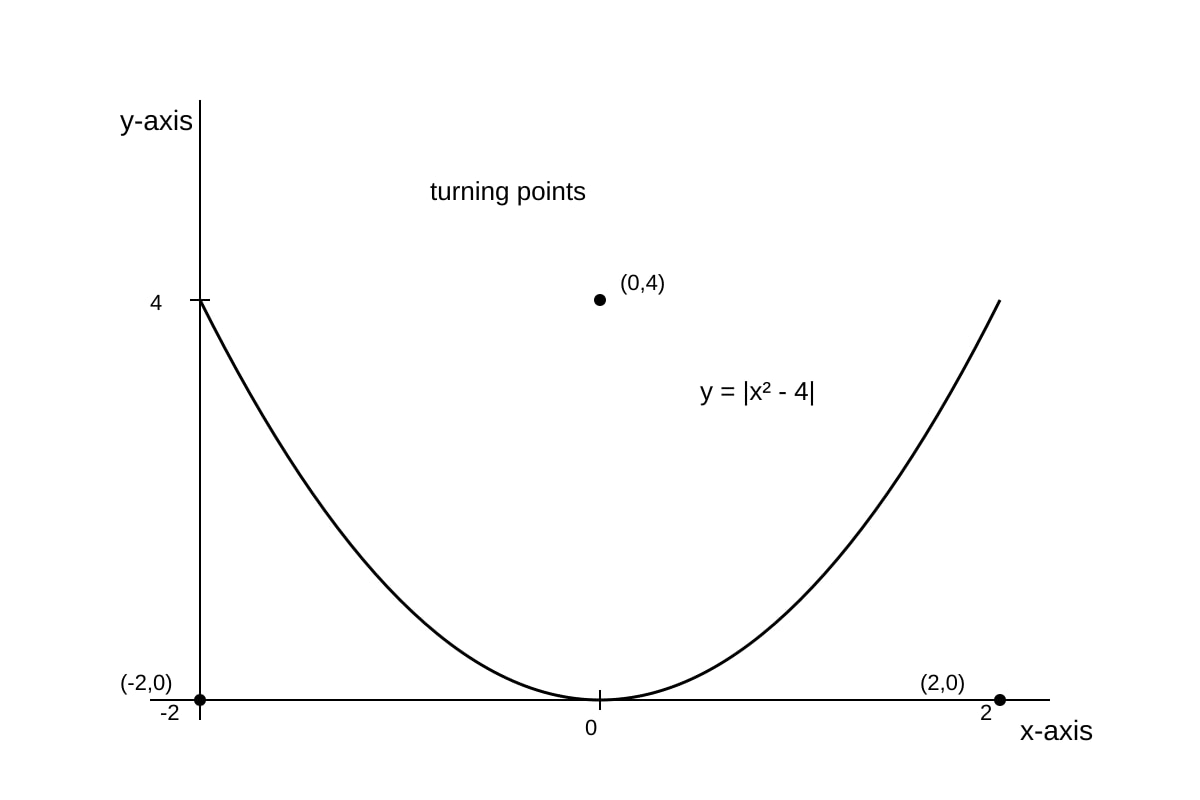
13. [3] Sketch the graph of y=∣x2−4∣ and state the coordinates of its turning points.
Image pending generation: graph for Q13.
14. [3] Solve the inequality x−3x+1>0.
15. [3] Solve ∣2x−5∣<3.
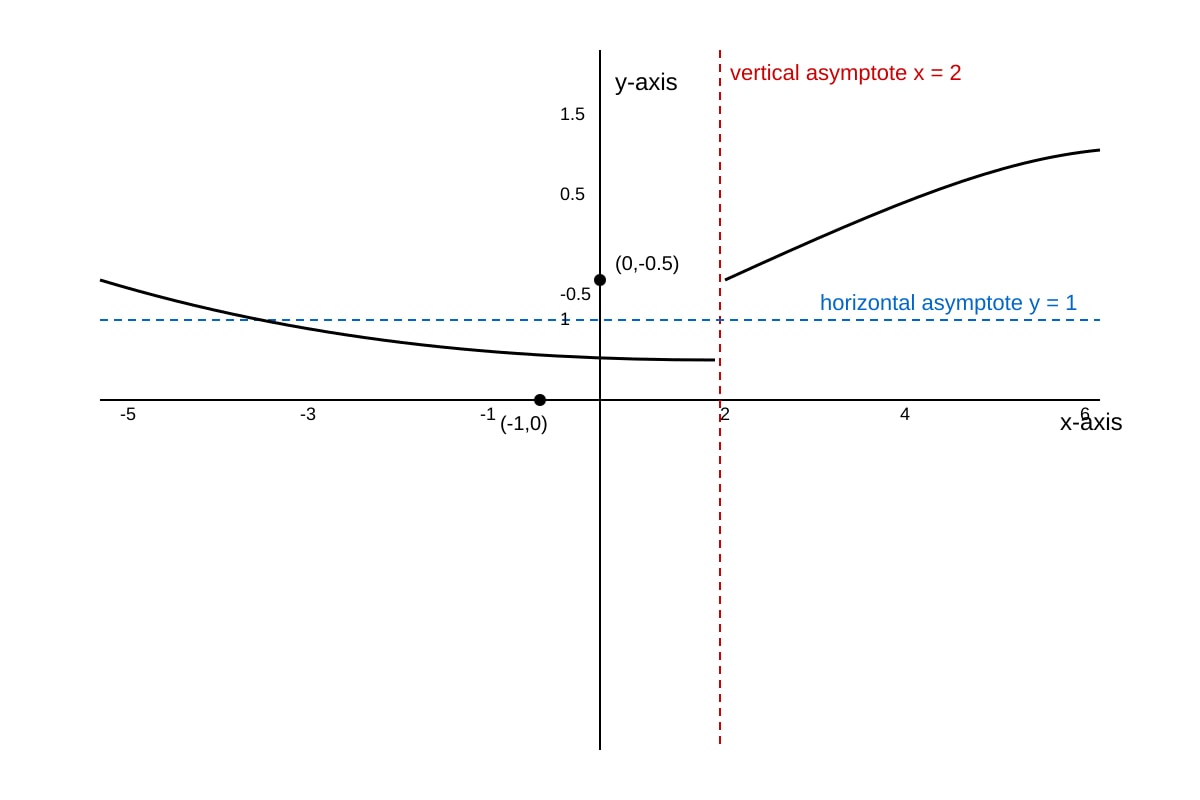
16. [4] The function f is defined by f(x)=x−2x+1 for x=2. Sketch the graph of y=f(x), stating the asymptotes and intercepts. Hence solve f(x)>1.
Image pending generation: graph for Q16.
17. [3] The curve C has parametric equations x=2t, y=t2+1 for t∈R. Find the cartesian equation of C.
18. [3] A function f is defined by f(x)=x3−3x for x∈R. Given that f is one-to-one on the domain x≥1, find f−1(x) for x≥−2.
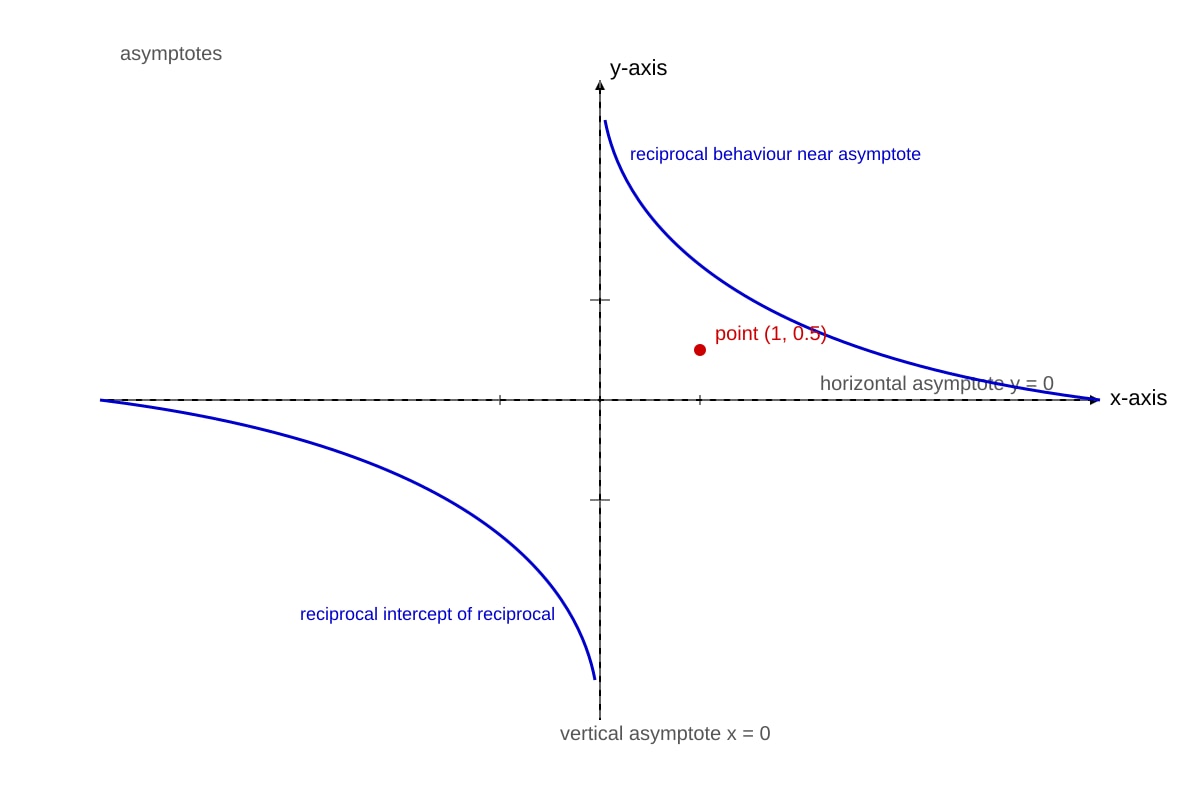
19. [3] The graph of y=f(x) passes through (1,2) and has a vertical asymptote at x=0. Sketch the graph of y=f(x)1 and state any asymptotes.
Image pending generation: graph for Q19.
20. [4] The functions f and g are defined by f(x)=x2−4 for x∈R and g(x)=x for x≥0. Show that gf does not exist for all real x. State the largest domain of f for which gf exists, and find gf(x) for that domain.
Answers
TuitionGoWhere Exam Practice (AI) — Maths H2 A-Level: Answer Key (Version 2)
Paper: Practice Paper
Total Marks: 60
Section A: Functions and Inverse Functions
1. [2 marks]
- f(x)=2x−5. Let y=2x−5⇒x=2y+5. So f−1(x)=2x+5.
- Domain of f−1: since range of f is R, domain of f−1 is R.
(M1 for correct inverse, M1 for domain)
2. [3 marks]
- g(x)=x2+1 is not one-to-one on R because g(a)=g(−a) (e.g., g(1)=g(−1)=2). Hence g−1 does not exist.
- Restrict domain to x≥0 (or x≤0) so that g is one-to-one.
(M1 explanation, M1 restriction stated, M1 reasonable)
3. [3 marks]
- y=x−23x⇒y(x−2)=3x⇒yx−2y=3x⇒x(y−3)=2y⇒x=y−32y.
- h−1(x)=x−32x, domain x=3, range y=2 (from horizontal asymptote).
(M1 algebra, M1 domain, M1 range)
4. [4 marks]
- y=ex−1⇒ex=y+1⇒x=ln(y+1). So p−1(x)=ln(x+1).
- Domain of p−1: x+1>0⇒x>−1.
- Graph: y=ex−1 cuts y-axis at (0,−1), asymptote y=−1; inverse is reflection in y=x, asymptote x=−1, intercept (−1,0).
(M1 inverse, M1 domain, M2 sketch/description)
5. [4 marks]
- y=ln(x+3)⇒x+3=ey⇒x=ey−3. So q−1(x)=ex−3.
- Domain of q−1: R; range: y>−3.
- Graph of q−1 is reflection of y=q(x) in line y=x.
(M1 inverse, M1 domain/range, M2 description)
Section B: Composite Functions
6. [4 marks]
- Domain of g is x≥0, range of g is [0,∞)⊆R = domain of f. So fg exists.
- fg(x)=f(g(x))=x2+2. Domain: x≥0. Range: [2,∞).
(M1 existence, M1 expression, M1 domain, M1 range)
7. [4 marks]
- Range of f: (0,∞) (since x>0). Domain of g: x>1. Since range of f⊆ domain of g (e.g., f(1)=1>1), gf does NOT exist.
(M2 check, M2 conclusion)
8. [4 marks]
- fg(x)=f(g(x))=3(x2+2)−1=3x2+5, domain R.
- gf(x)=g(f(x))=(3x−1)2+2=9x2−6x+3, domain R.
(M2 each composite with domain)
9. [4 marks]
- Domain g: x≥−1/2, range g: [0,∞)⊆[0,∞) domain of f. So fg exists.
- fg(x)=2x+1. Range: since 2x+1≥0, 2x+1≥0, so range [0,∞).
(M1 existence, M1 expr, M2 range)
10. [4 marks]
- Range of h: for x>0, h(x)=x/(x+1)∈(0,1)⊆R domain of k. So kh exists.
- kh(x)=(x+1x)2. Range: (0,1) since squared positive fraction.
(M1 existence, M1 expr, M2 range)
Section C: Graphs, Transformations and Equations
11. [2 marks]
- Asymptotes: x=0, y=1. x-intercept: 0=2/x+1⇒x=−2, so (−2,0). No y-intercept.
(M1 asymptotes, M1 intercept)
12. [3 marks]
- Step 1: vertical stretch by factor 2 (y=2f(x)). Step 2: translation up by 3 units (y=2f(x)+3).
(M1 stretch, M1 translate, M1 order)
13. [3 marks]
- y=∣x2−4∣: turning points at (−2,0), (2,0) (min), and (0,4) (max).
(M1 shape, M2 points)
14. [3 marks]
- Critical values: x=−1, x=3. Sign chart: positive for x<−1 or x>3. Solution: x<−1 or x>3.
(M1 critical, M1 intervals, M1 answer)
15. [3 marks]
- ∣2x−5∣<3⇒−3<2x−5<3⇒2<2x<8⇒1<x<4.
(M1 split, M1 solve, M1 final)
16. [4 marks]
- Asymptotes: x=2, y=1. Intercepts: x=−1, y=−1/2.
- f(x)>1⇒x−2x+1>1⇒x−2x+1−(x−2)>0⇒x−23>0⇒x>2.
(M2 graph, M2 inequality)
17. [3 marks]
- x=2t⇒t=x/2. y=(x/2)2+1=x2/4+1. Cartesian: y=4x2+1.
(M1 substitute, M1 simplify, M1 final)
18. [3 marks]
- For x≥1, f increasing. y=x3−3x. Solve for x: not elementary; state f−1(x) is inverse of cubic on restricted domain, numerically for x≥−2, f−1(x) exists uniquely. (Accept: f−1 defined implicitly.)
(M1 domain note, M2 reasoning)
19. [3 marks]
- y=1/f(x): vertical asymptote x=0, horizontal asymptote y=0, point (1,1/2). Reciprocal of positive part is positive, negative part negative.
(M1 asymptotes, M1 point, M1 shape)
20. [4 marks]
- gf(x)=x2−4 requires x2−4≥0⇒∣x∣≥2. So not exist for all real x.
- Largest domain of f for gf: x≤−2 or x≥2. Then gf(x)=x2−4.
(M1 non-existence, M1 domain, M2 expression)
Free quiz and exam paper access
Enter your details to view this paper
Your access is remembered on this device.