AI Generated Quiz
A Level H1 Malay Composition Quiz
Free A Level H1 Malay Composition quiz, AI version, with questions, answers, and A Level-style practice for Singapore students.
These static practice materials are generated from the site's syllabus and paper-generation workflow, with source and model context shown so students and parents can evaluate the material before use.
Questions
Free quiz and exam paper access
Enter your details to view this paper
Your access is remembered on this device.
Answers
A-Level Malay H1 Quiz - Composition: Answer Key and Marking Scheme
Total Marks: 50
Section A: Perancangan Karangan (Planning an Essay) [10 marks]
1. [2 marks] Answer: The genre required is argumentatif (argumentative). Explanation: The question uses the word "Bincangkan" (Discuss), which is a command word that requires the writer to present a balanced argument, considering different perspectives on a topic, and to arrive at a reasoned conclusion. This is a hallmark of argumentative writing. Marking: 1 mark for identifying the genre correctly. 1 mark for a clear and accurate explanation.
2. [2 marks] Answer: The most relevant theme is Perubahan (Change). Explanation: The essay question is about climate change, which is a major global change. The theme of 'Perubahan' (Change) directly covers topics like environmental shifts, technological impacts, and societal evolution, making it the most appropriate lens for this discussion. Marking: 1 mark for identifying the theme correctly. 1 mark for a logical explanation linking the theme to the essay topic.
3. [2 marks] Answer: Walaupun terdapat pelbagai cabaran global yang lain, perubahan iklim merupakan ancaman yang paling serius kerana kesannya yang meluas dan tidak dapat dipulihkan, justeru tindakan segera dan kolektif amat diperlukan. Explanation: A good thesis statement is a single, clear sentence that presents the writer's main argument. This example takes a clear stance (climate change is the biggest threat) and provides a brief reason (its widespread and irreversible effects). It also hints at the essay's direction (need for action). Marking: 1 mark for a clear, arguable thesis. 1 mark for relevance to the essay question. Accept any reasonable thesis statement that takes a position.
4. [2 marks] Answer:
| Isi (Main Point) | Huraian (Explanation) |
|---|---|
| 1. Kesan terhadap alam sekitar | Kenaikan suhu global menyebabkan pencairan ais di kutub, peningkatan paras laut, dan kejadian cuaca ekstrem seperti banjir dan kemarau yang lebih kerap. |
| 2. Kesan terhadap ekonomi | Sektor-sektor utama seperti pertanian, perikanan, dan pelancongan terjejas teruk, menyebabkan kerugian ekonomi yang besar dan meningkatkan kadar kemiskinan di negara-negara membangun. |
Explanation: The 'isi' are the main arguments or points that will form the body paragraphs. Each 'isi' should be a distinct idea. The 'huraian' is a brief explanation of what that point will cover. The points should be directly relevant to the essay question. Marking: 1 mark for each relevant and distinct main point (isi). 1 mark for each clear and relevant explanation (huraian). Accept other valid points.
5. [2 marks] Answer: Peribahasa: "Sediakan payung sebelum hujan" Explanation: This peribahasa means to take precautionary measures before a problem occurs. It supports the argument that we must act now to mitigate climate change rather than waiting for its worst effects to happen. It emphasises the need for proactive, preventative action. Marking: 1 mark for a correct peribahasa from the official list. 1 mark for a clear explanation of how it supports the argument. Accept other suitable peribahasa like "Alah bisa tegal biasa" (if arguing for adaptation) or "Bagai aur dengan tebing" (if arguing for international cooperation).
Section B: Pengembangan Perenggan (Developing Paragraphs) [15 marks]
6. [3 marks] Answer (Example): Kesan perubahan iklim dapat dilihat dengan jelas dalam sektor pertanian, yang mengancam keselamatan makanan global. Corak cuaca yang tidak menentu, seperti kemarau panjang dan banjir kilat, telah memusnahkan tanaman di pelbagai negara. Akibatnya, hasil tuaian semakin berkurangan, menyebabkan harga makanan melambung tinggi. Negara-negara yang bergantung kepada pertanian sara diri paling teruk terjejas, dan ramai penduduknya menghadapi kebuluran. Oleh itu, perubahan iklim bukan sahaja isu alam sekitar, tetapi juga isu kemanusiaan yang mendesak. Explanation: The paragraph starts with the given topic sentence. It then provides specific supporting details (erratic weather, destroyed crops). It explains the consequences (reduced harvest, higher prices, famine). It ends with a concluding sentence that links back to the main argument. The paragraph is coherent and well-developed. Marking:
- 1 mark for maintaining the given topic sentence.
- 1 mark for providing 2-3 relevant supporting details.
- 1 mark for a coherent structure and a concluding/linking sentence.
7. [4 marks] Answer (Example): Namun, ada yang berpendapat bahawa tumpuan terhadap perubahan iklim telah melampaui batas dan mengabaikan isu-isu lain yang lebih mendesak seperti kemiskinan dan peperangan. Mereka berhujah bahawa sumber kewangan yang terhad harus digunakan untuk menyelesaikan masalah yang memberi kesan segera kepada kehidupan manusia. Walaupun hujah ini mempunyai merit, ia adalah pandangan yang cetek. Perubahan iklim bertindak sebagai "pengganda ancaman" yang memburukkan lagi masalah kemiskinan dan konflik. Kekurangan sumber akibat perubahan iklim sering mencetuskan persaingan dan keganasan. Justeru, menangani perubahan iklim adalah langkah proaktif untuk mencegah krisis kemanusiaan yang lebih besar pada masa hadapan. Explanation: This paragraph first acknowledges an opposing view (climate change is overhyped, other issues are more important). It then refutes this view by presenting a counter-argument (climate change is a threat multiplier that worsens other issues). The paragraph is well-structured and persuasive. Marking:
- 1 mark for clearly stating an opposing viewpoint.
- 1 mark for providing a logical refutation.
- 1 mark for using appropriate discourse markers (e.g., "Namun", "Walaupun", "Justeru").
- 1 mark for overall coherence and paragraph length (4-6 sentences).
8. [4 marks] Answer (Example): Kesimpulannya, perubahan iklim sememangnya merupakan ancaman besar yang memerlukan perhatian serius daripada semua pihak. Seperti yang telah dibincangkan, kesannya terhadap alam sekitar, ekonomi, dan masyarakat adalah terlalu ketara untuk diabaikan. Walaupun terdapat cabaran lain, perubahan iklim bertindak sebagai pemangkin yang memburukkan lagi masalah sedia ada. Oleh itu, tindakan kolektif dan segera, bermula daripada perubahan gaya hidup individu kepada kerjasama antarabangsa, adalah penting untuk memastikan masa depan yang mampan untuk generasi akan datang. Kita tidak mampu lagi untuk berlengah-lengah. Explanation: The conclusion restates the thesis (climate change is a big threat). It summarises the main points (effects on environment, economy, society). It ends with a strong final thought/call to action (collective action is needed, we cannot delay). Marking:
- 1 mark for restating the thesis in a new way.
- 1 mark for summarising the main points.
- 1 mark for a final thought or call to action.
- 1 mark for overall coherence and paragraph length.
9. [4 marks] Answer (Corrected Paragraph): Ramai orang berfikir bahawa teknologi akan menyelesaikan semua masalah perubahan iklim. Namun, mereka lupa bahawa teknologi juga boleh menyebabkan pencemaran. Selain itu, teknologi hijau adalah mahal dan tidak semua negara mampu membelinya. Oleh itu, kita tidak harus bergantung sepenuhnya pada teknologi sahaja. Explanation: The original paragraph had several issues:
- Cohesion: The sentences felt disconnected. Added discourse markers ("Namun", "Selain itu", "Oleh itu") to improve flow.
- Word Choice: "Jadi" is informal for an essay. Replaced with the more formal "Oleh itu".
- Structure: The paragraph is now a more coherent argument: claim, counterpoint, supporting detail, conclusion. Marking:
- 1 mark for correcting the flow/cohesion.
- 1 mark for replacing "Jadi" with a more formal discourse marker.
- 1 mark for maintaining the original meaning.
- 1 mark for overall grammatical accuracy and paragraph structure.
Section C: Karangan Penuh (Full Essay) [25 marks]
10. [25 marks] Answer: This is an essay question. The answer key provides a marking scheme and descriptors, not a single model answer.
Marking Scheme for Essay (25 marks):
| Kriteria | Markah | Penerangan |
|---|---|---|
| Isi (Content) | 13 | |
| - Kerelevanan | 4 | Sejauh mana isi menjawab soalan dan kekal fokus pada tema. |
| - Pembinaan Idea | 5 | Kedalaman dan perkembangan idea. Hujah yang logik, disokong dengan contoh dan bukti yang kukuh. |
| - Organisasi | 4 | Struktur karangan yang jelas: pengenalan, perenggan isi yang teratur, dan kesimpulan yang mantap. |
| Bahasa (Language) | 12 | |
| - Ketepatan Tatabahasa | 4 | Penggunaan imbuhan, sintaksis, dan ejaan yang betul. |
| - Penggunaan Kosa Kata | 4 | Pelbagai dan tepat. Penggunaan peribahasa yang sesuai akan mendapat markah lebih tinggi. |
| - Kelancaran & Gaya | 4 | Ayat yang pelbagai strukturnya, penggunaan penanda wacana yang berkesan, dan gaya penulisan yang menarik. |
Band Descriptors for Isi (Content):
- Cemerlang (10-13): Idea sangat relevan, mendalam, dan kritis. Hujah sangat meyakinkan dengan contoh yang sangat sesuai. Organisasi karangan sangat baik.
- Baik (7-9): Idea relevan dan dikembangkan dengan baik. Hujah jelas dengan contoh yang sesuai. Organisasi karangan baik.
- Memuaskan (4-6): Idea relevan tetapi kurang mendalam. Hujah mudah dan contoh terhad. Organisasi karangan boleh diikuti.
- Lemah (1-3): Idea kurang relevan atau tidak dikembangkan. Hujah tidak jelas. Organisasi karangan tidak teratur.
Band Descriptors for Bahasa (Language):
- Cemerlang (9-12): Tatabahasa sangat tepat. Kosa kata luas dan digunakan dengan tepat. Gaya penulisan lancar dan menarik. Penggunaan peribahasa yang tepat dan berkesan.
- Baik (7-8): Tatabahasa umumnya tepat dengan sedikit kesilapan. Kosa kata sesuai. Gaya penulisan lancar.
- Memuaskan (4-6): Terdapat beberapa kesilapan tatabahasa yang ketara. Kosa kata terhad. Gaya penulisan kurang lancar.
- Lemah (1-3): Banyak kesilapan tatabahasa yang menjejaskan kefahaman. Kosa kata sangat terhad. Gaya penulisan tidak lancar.
Common Mistakes to Flag:
- Not answering the question: Students may write a general essay on the topic without directly addressing the specific command word ("Bincangkan", "Setujukah anda", "Huraikan").
- Poor structure: Lack of a clear introduction, body paragraphs, and conclusion.
- Weak arguments: Making claims without providing examples or evidence.
- Language errors: Frequent mistakes in affixes (imbuhan), sentence structure, and spelling.
- Not using peribahasa: Failing to incorporate any peribahasa, which is expected at the A-Level.
- Insufficient length: Writing less than 380 words.
Section D: Analisis Karangan (Essay Analysis) [10 marks]
11. [2 marks] Answer: The paragraph is a perenggan isi (body paragraph). Explanation: It presents a main argument (that preserving traditional culture is not futile) and supports it with reasoning and an example. It is not an introduction (which would set the context) or a conclusion (which would summarise). Marking: 1 mark for identifying the type of paragraph. 1 mark for a clear justification.
12. [2 marks] Answer: The student's main argument is that traditional culture is still relevant and valuable in the modern world, and we should make an effort to preserve it while adapting to change. Explanation: The student explicitly states disagreement with the opposing view and then builds a case for the continued relevance of cultural values. Marking: 1 mark for identifying the main argument. 1 mark for a clear and accurate summary.
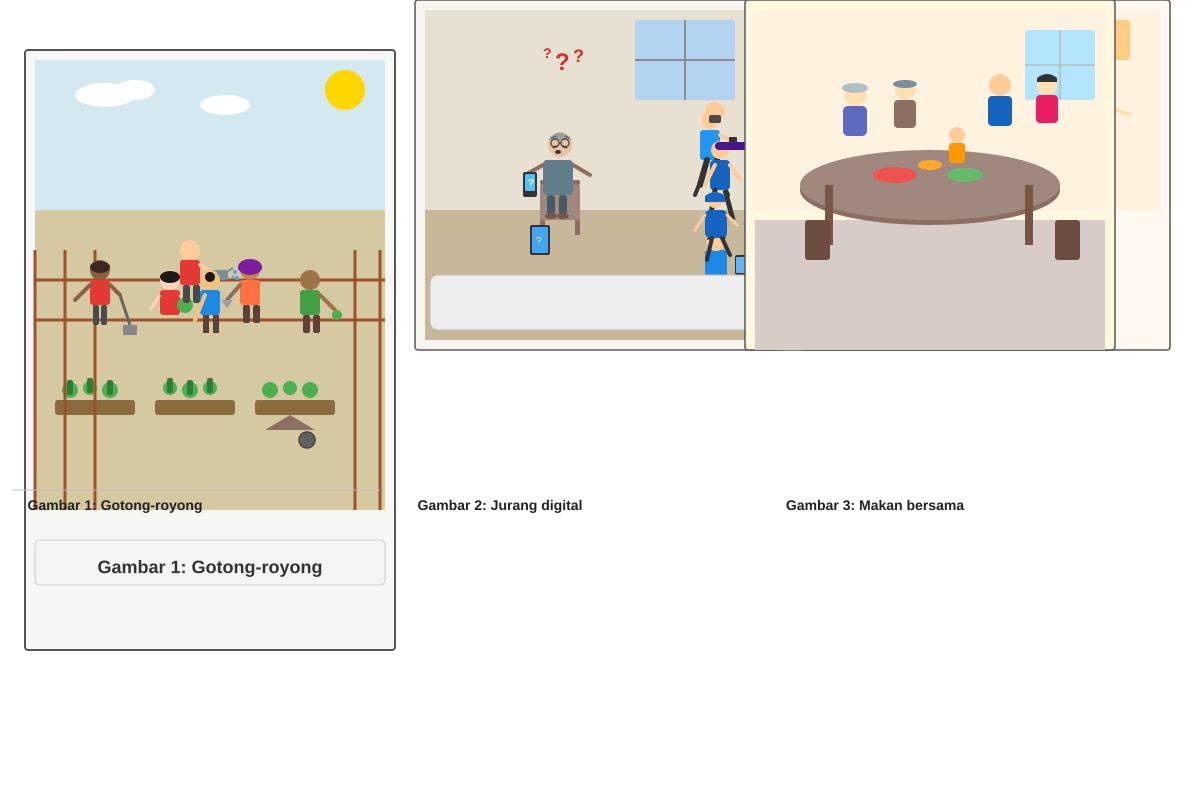
13. [2 marks] Answer: The example is "nilai-nilai seperti hormat-menghormati dan gotong-royong yang terdapat dalam budaya Melayu" (values like respect and mutual cooperation found in Malay culture). Explanation: This example strengthens the argument by moving from a general claim (culture is relevant) to a specific, concrete instance. It shows the reader how culture is relevant by pointing to specific values that can be practiced in modern contexts, making the argument more persuasive and tangible. Marking: 1 mark for correctly stating the example. 1 mark for explaining how it strengthens the argument.
14. [2 marks] Answer: The cohesive device is "Sebagai contoh" (For example). Explanation: Its function is to introduce a specific example that supports the preceding general statement. It signals to the reader that evidence is about to be provided, which improves the clarity and flow of the paragraph. Marking: 1 mark for identifying a correct cohesive device (e.g., "Namun", "Oleh itu", "Sebagai contoh"). 1 mark for explaining its function correctly.
15. [2 marks] Answer: The student could improve the paragraph by providing a more detailed or contemporary example. Explanation: The current example is good but generic. A more persuasive paragraph might describe a specific modern initiative, such as a community centre that runs gotong-royong clean-up drives, or a school programme that teaches younger generations about hormat-menghormati through intergenerational dialogue. This would make the argument more concrete and compelling. Marking: 1 mark for a relevant and specific suggestion. 1 mark for a clear explanation of how it would improve persuasiveness. Accept other valid suggestions (e.g., using a peribahasa, addressing a counter-argument).
Section E: Peribahasa dalam Karangan (Proverbs in Essays) [10 marks]
16. [2 marks] Answer: Meaning: The peribahasa "Bagai aur dengan tebing" means a relationship of mutual benefit and interdependence, where both parties support and need each other. Context: It could be used in an essay about relationships to describe the ideal dynamic between parents and children, or between different racial groups in a multi-racial society like Singapore, where each group supports the other for the common good. Marking: 1 mark for a correct explanation of the meaning. 1 mark for a suitable context.
17. [2 marks] Answer: "Sedikit-sedikit, lama-lama jadi bukit." Explanation: This peribahasa perfectly captures the idea that small, consistent efforts accumulate over time to produce a significant result. The original sentence's meaning is directly replaced by the proverb. Marking: 2 marks for the correct peribahasa. 0 marks for an incorrect one.
18. [2 marks] Answer: B) "Tak lapuk dek hujan, tak lekang dek panas" Explanation: This peribahasa means something that is timeless and enduring, not eroded by time or changing circumstances. This is the most suitable for an essay about preserving cultural heritage, as it implies that cultural values are permanent and valuable.
- A) "Seperti katak di bawah tempurung" means having a narrow worldview.
- C) "Bagai melepaskan batuk di tangga" means doing something half-heartedly or insincerely.
- D) "Alah bisa tegal biasa" means that a difficult task becomes easier with practice. Marking: 2 marks for the correct answer (B). 0 marks for any other answer.
19. [2 marks] Answer: "Kerajaan harus mengambil langkah proaktif dengan melabur dalam tenaga boleh baharu sekarang, kerana pepatah Melayu 'Sediakan payung sebelum hujan' mengingatkan kita tentang kepentingan persediaan awal untuk menghadapi bencana perubahan iklim." Explanation: The sentence correctly uses the peribahasa in the context of climate change, advocating for proactive measures (preparing the umbrella) before the disaster (the rain) strikes. Marking: 1 mark for using the peribahasa correctly in a sentence. 1 mark for the context being clearly related to climate change.
20. [2 marks] Answer: Using peribahasa appropriately can improve the quality of a karangan because it demonstrates a deep understanding of the Malay language and culture. It adds depth, colour, and persuasiveness to the writing. A well-chosen peribahasa can encapsulate a complex idea in a few words, making the argument more memorable and impactful. It also shows the examiner that the student has a sophisticated command of the language, which is a key criterion for scoring high marks in the 'Bahasa' component. Marking: 1 mark for mentioning cultural/language depth. 1 mark for mentioning impact on persuasiveness or quality of writing. Accept other valid points.
--- END OF ANSWER KEY ---