AI Generated Quiz
A Level Literature H2 Drama Quiz
Free A Level Literature H2 Drama quiz, HY3 AI version, with questions, answers, and A Level-style practice for Singapore students.
These static practice materials are generated from the site's syllabus and paper-generation workflow, with source and model context shown so students and parents can evaluate the material before use.
Questions
Free quiz and exam paper access
Enter your details to view this paper
Your access is remembered on this device.
Answers
A-Level Literature H2 Quiz - Drama (Answer Key)
Topic: Drama | Total Marks: 40
Syllabus-first generated content; not from past-year papers.
Q1 [2 marks]
- Anagnorisis = moment of critical discovery or recognition by a character (1 mark).
- Example: Leontes' recognition of his wrongdoing in The Winter's Tale Act 5, or Oedipus' discovery in Oedipus Rex (1 mark).
Teaching note: This Aristotelian concept shows how drama turns plot via self-knowledge. Common mistake: confusing with peripeteia (reversal).
Q2 [2 marks]
- Chorus = a character or group commenting on action, often external to plot (1 mark).
- Example: The Player in Rosencrantz and Guildenstern are Dead functions chorically; or the Old Man in King Lear (1 mark).
Teaching note: Choric figures frame audience interpretation.
Q3 [2 marks]
- Diegetic = sound within the story world (e.g., a character's radio) (1 mark).
- Non-diegetic = external sound (e.g., background score) not heard by characters (1 mark).
Teaching note: Useful for AO3 on stagecraft.
Q4 [2 marks]
- Iambic pentameter (1 mark).
- Scanning: Thou trem'-blest, and the white'-ness in thy cheek' (u / u / u / u / u /) — show 5 feet (1 mark).
Teaching note: Mark 10 syllables, stress on even beats.
Q5 [2 marks]
- Soliloquy = speech alone revealing inner thought (1 mark).
- Example: Hamlet (if studied in context) or Leontes' asides in Winter's Tale (1 mark).
Teaching note: Distinguish from aside (briefer, to audience).
Q6 [3 marks]
- Use of comic dialect ("barne", "clouts") signals rustic pastoral (1 mark).
- Shift in tone via diminutives ("pretty", "puppet") softens tragedy (1 mark).
- Discovery of child = regenerative plot turn (1 mark).
AO3 language focus. Common mistake: not citing features.
Q7 [3 marks]
- Metadrama: play acknowledges its own fictionality (1 mark).
- "Opposite of people" = characters are constructs, not real (1 mark).
- Links to absurdist critique of identity (1 mark).
AO3: form/structure.
Q8 [2 marks]
- Revenge tragedy / domestic murder convention (1 mark).
- De Flores as agent of moral corruption (1 mark).
Teaching note: Jacobean tragedy often shows fallen women + accomplice.
Q9 [3 marks]
- Spotlight = isolation of character, focus (1 mark).
- Sound fade = psychological interior (1 mark).
- Stillness = tension, unsaid trauma (1 mark).
AO3 stagecraft.
Q10 [3 marks]
- Dramatic irony: audience knows fortune fake (1 mark).
- Boyle's boast contrasts imminent ruin (1 mark).
- Frames tenement tragedy as systemic + personal (1 mark).
AO2 context.
Q11 [2 marks]
- Renaissance reconciliation / family restoration ideal (1 mark).
- Influence of pastoral romance (Greene's Pandosto) (1 mark).
AO2.
Q12 [2 marks]
- Breaks fourth wall / non-linear time (1 mark).
- Centres marginal voices vs. bourgeois form (1 mark).
AO2 postcolonial.
Q13 [3 marks]
- Winter's Tale: seasonal, redemptive time (1 mark).
- Rosencrantz: circular, absurd time (1 mark).
- AO1 personal: both question control (1 mark).
AO1+AO2.
Q14 [3 marks]
- Coin toss = repetition shows fate's indifference (1 mark).
- Absurd structure mirrors existential void (1 mark).
- Form enacts theme (1 mark).
AO3.
Q15 [2 marks]
- Individual truth vs. majority interest (1 mark).
- Staged via town meeting / doctor's isolation (1 mark).
AO2.
Q16 [3 marks]
- Masque = false appearance of order (1 mark).
- Beatrice uses masque to hide desire (1 mark).
- Exposure = hypocrisy unmasked (1 mark).
AO2+AO3.
Q17 [3 marks]
- Anchor 1: Interruptions of ritual (Winter's Tale sheep-shearing) (1 mark).
- Anchor 2: Interruptions of logic (Rosencrantz coin) (1 mark).
- Anchor 3: Interruptions of authority (King Lear disowning) (1 mark).
Plan only; AO4 structure.
Q18 [2 marks]
- Dialect signals class/identity (1 mark).
- SG reader sees parallel to multilingual society (1 mark).
AO2.
Q19 [3 marks]
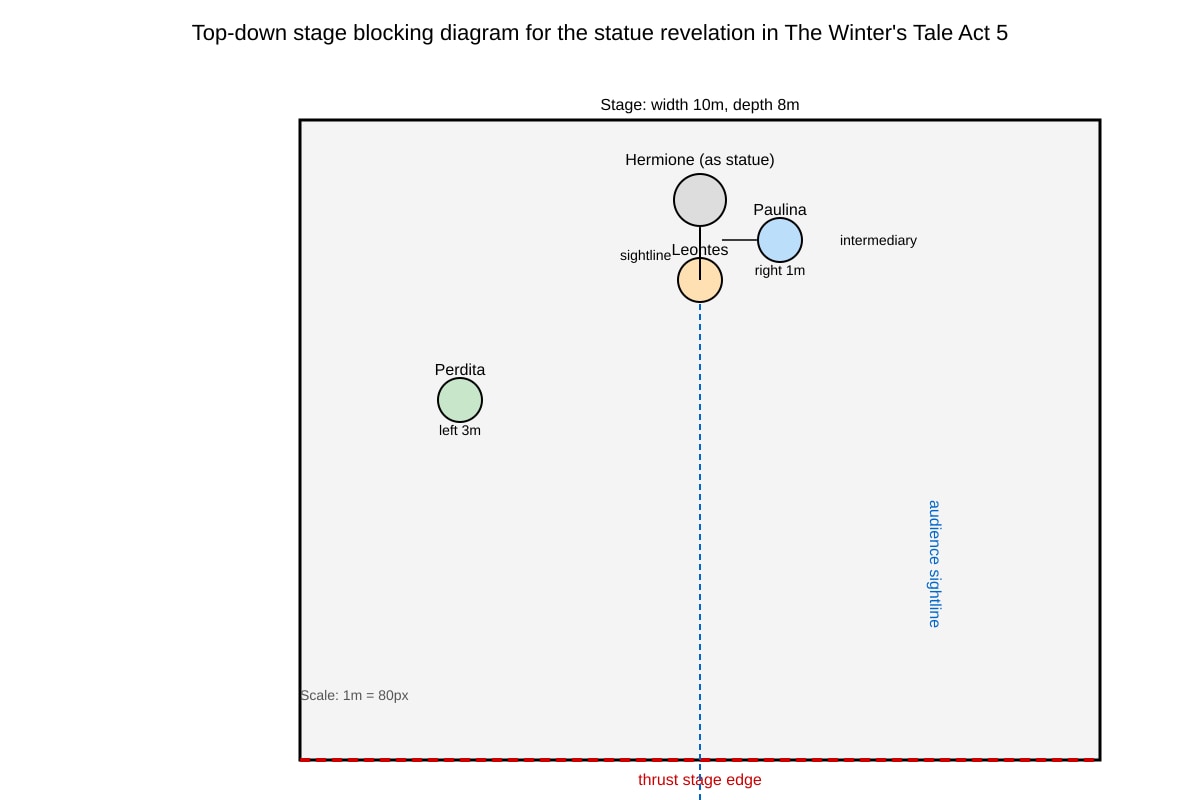
- Based on placeholder: sightline = Leontes sees statue directly = guilt confronted (1 mark).
- Paulina intermediary = control of revelation (1 mark).
- Minimal set = focus on human resurrection (1 mark).
AO3 using described diagram.
Q20 [3 marks]
- Intro: define authority/repentance (1 mark).
- Body para: Lear vs Leontes with text evidence (1 mark).
- Conclusion: synthesis of tragic vs romance arc (1 mark).
AO4.