AI Generated Exam Paper
A Level History H1 Practice Paper 5
Free A Level History H1 Practice Paper 5, HY3 AI version, with questions, answers, and A Level-style practice for Singapore students.
These static practice materials are generated from the site's syllabus and paper-generation workflow, with source and model context shown so students and parents can evaluate the material before use.
Questions
Free quiz and exam paper access
Enter your details to view this paper
Your access is remembered on this device.
Answers
TuitionGoWhere Practice Paper - History H1 A-Level (Answers)
Version 5 — Answer Key
Total Marks: 40
Section A: Source-Based Case Study
Question 1(a) — Compare Source A and Source B (10 marks)
Marking Descriptors (L0–L3):
- L3 (8–10): Effective use of both sources; clear explanation of similarities/differences with source details; insight into reasons for views.
- L2 (4–7): Uses both sources; clear explanation of similarities/differences with source details.
- L1 (1–3): Describes content of each source; simple comparison.
- L0 (0): No relevant response.
Sample Answer (L3 standard): Both Churchill (Source A) and Kennan (Source B) view the Soviet Union as a threat to Western freedom, but they frame it differently. Churchill describes a concrete political division — an "iron curtain" across Europe — and emphasises Soviet control over Eastern European capitals as fact (Stettin to Trieste). Kennan (Source B) analyses the threat more conceptually: he calls it "Russian expansive tendencies" and proposes "containment" via "counter-force" at shifting points. Similarity: both see Soviet pressure as needing a Western response. Difference: Churchill uses vivid geographic imagery of imposed control; Kennan provides a strategic policy prescription based on long-term patient vigilance. The difference arises because Churchill speaks as a political leader warning the public, while Kennan writes as a diplomat advising government.
Teaching Note: Students must quote or paraphrase specific phrases ("iron curtain", "containment", "expansive tendencies") and not just say "both think USSR is bad". Link purpose to author role for L3.
Question 2(b) — Test assertion using all sources (30 marks)
Marking Descriptors (L0–L5):
- L5 (25–30): Treats sources as a set; critical awareness; evaluates in context; sustained analytical argument with supported conclusion.
- L4 (19–24): Good use of sources; attempts evaluation in context but with gaps.
- L3 (13–18): Some cross-referencing; attempts evaluation through content/provenance but not full context.
- L2 (7–12): Uses sources at face value; isolation; some provenance awareness.
- L1 (1–6): Limited use; description; contextual knowledge only.
- L0 (0): No response.
Sample Answer (L5 standard): The assertion that the Cold War was caused primarily by mutual misunderstanding rather than deliberate aggression is partially supported but oversimplified.
Source D (post-revisionist) directly supports the assertion: it states both superpowers "misunderstood each other's security needs" and that "neither side intended a permanent split". This aligns with the "mutual misunderstanding" view.
However, Source A (Churchill) and Source B (Kennan) show Western perception of deliberate Soviet expansion — Churchill cites "increasing measure of control from Moscow"; Kennan describes "Russian expansive tendencies". This suggests the West saw aggression, whether or not USSR intended it.
Source C (Soviet Pravda) reverses the blame: it calls the Marshall Plan "American imperialists" scheme" to "establish dominance" — showing the USSR also perceived US deliberate aggression, not mere misunderstanding.
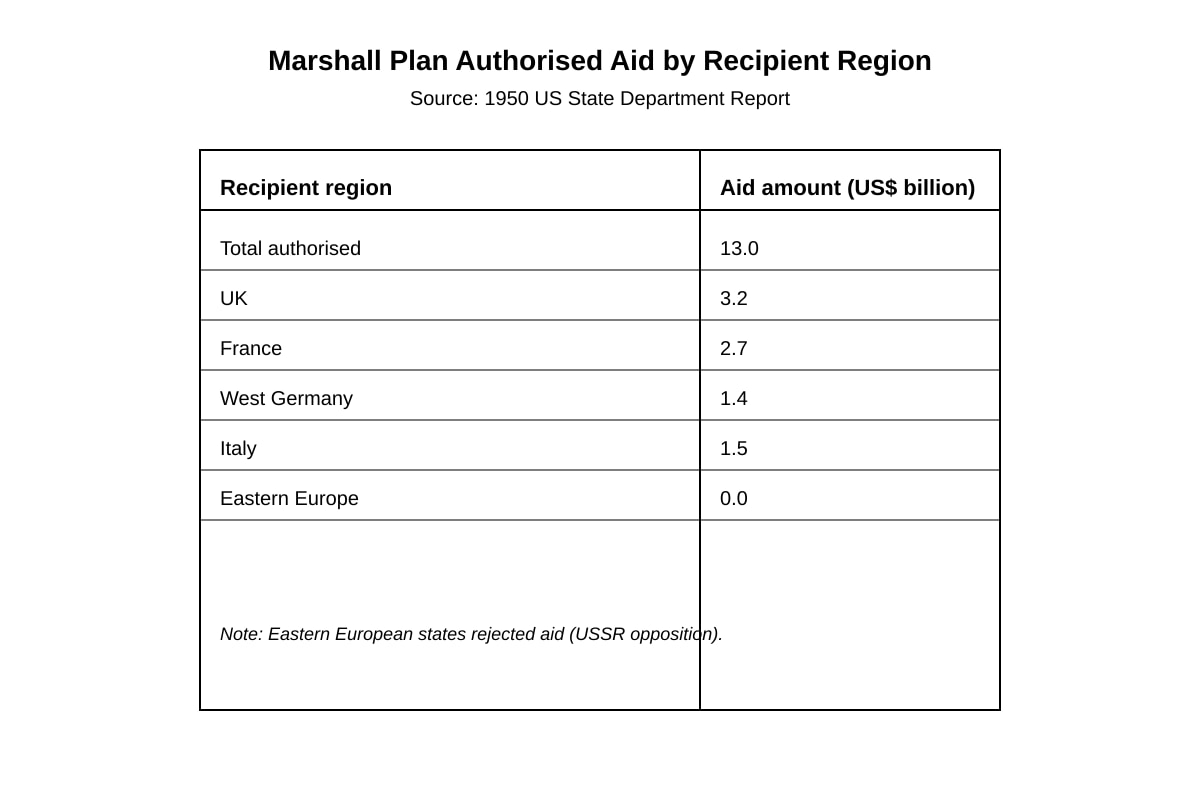
Source E (aid table) shows 0.0 billion to Eastern Europe because USSR rejected it — evidence of structural division, not just misunderstanding; both sides built blocs.
Own knowledge: Yalta/Potsdam tensions, Sovietisation, Truman Doctrine show real policy clashes. But Gorbachev later revealed USSR's defensive fears.
Conclusion: Misunderstanding existed (Source D, Source C's reciprocal suspicion), but deliberate policies (Sources A, B, E) also drove the split. Assertion is too narrow; a combination of structural insecurity and perceived aggression is more accurate.
Teaching Note: Must use ALL five sources. Link Source D to post-revisionist view; contrast with traditional (Source A/B) and Soviet (Source C). Use table to show aid exclusion. Contextualise with 1945–48 events. Mark per source use (≈4–5 marks each) + synthesis (≈5–10 marks).
Common Mistake: Ignoring Source E or using only 2–3 sources → capped at L2/L3.