AI Generated Exam Paper
A Level History H1 Practice Paper 4
Free A Level History H1 Practice Paper 4, HY3 AI version, with questions, answers, and A Level-style practice for Singapore students.
These static practice materials are generated from the site's syllabus and paper-generation workflow, with source and model context shown so students and parents can evaluate the material before use.
Questions
Free quiz and exam paper access
Enter your details to view this paper
Your access is remembered on this device.
Answers
TuitionGoWhere Practice Paper Answers — History H1 A-Level (Version 4)
Subject: History H1
Level: A-Level
Paper: Practice Paper (Source-Based Skills Focus)
Total Marks: 40
Section A: Source-Based Case Study — Mark Scheme
Question 1 (a) — Compare Source A and Source B [10 marks]
Level Descriptors (from syllabus):
- L3 (8–10): Effective use of both; clear explanation of similarities/differences with source details; insight into reasons.
- L2 (4–7): Uses both; clear explanation of similarities/differences with details.
- L1 (1–3): Describes content; simple comparison.
- L0 (0): No relevant response.
Teaching Notes & Sample Answer:
- Both sources attribute Cold War tensions to Soviet behaviour: Kennan (A) describes a "neurotic view" and Russian "insecurity" driving expansion; Churchill (B) speaks of an "iron curtain" and "Soviet sphere" in Eastern Europe. [Similarity: both see USSR as creating division]
- Difference: A is an internal US diplomatic analysis proposing "containment" via counter-force; B is a public speech alerting the West to Soviet encroachment. A focuses on psychological cause, B on territorial outcome.
- Insight: Kennan writes from Moscow embassy experience (1946), Churchill from Missouri after losing office, thus different audiences shape tone.
Mark breakdown example (L3, 9/10):
- Identifies both depict USSR as threat (2)
- Uses quote "iron curtain" and "containment" (2)
- Explains A is policy-oriented, B is rhetorical (3)
- Links to author context (2)
Question 1 (b) — Assess assertion using all sources + knowledge [30 marks]
Level Descriptors:
- L5 (25–30): Treats sources as set; critical awareness; evaluates in context; sustained argument.
- L4 (19–24): Good use; attempts evaluation with gaps.
- L3 (13–18): Some cross-referencing; not fully in context.
- L2 (7–12): Face value; isolation.
- L1 (1–6): Limited; contextual only.
- L0 (0): No response.
Teaching Notes: Assertion: Cold War caused by mutual suspicion/security, not single aggression.
Source use:
- A: US suspicion of USSR insecurity → containment (supports mutual suspicion from US side)
- B: Soviet sphere shows Western suspicion of Soviet expansion (security concern)
- C: USSR counters that US "aggressive circles" surrounded them with bases (shows Soviet suspicion of US, supports mutual)
- D: Spending rises on both sides 1948–52, USSR initially higher then US surpasses → arms race from both, security dilemma
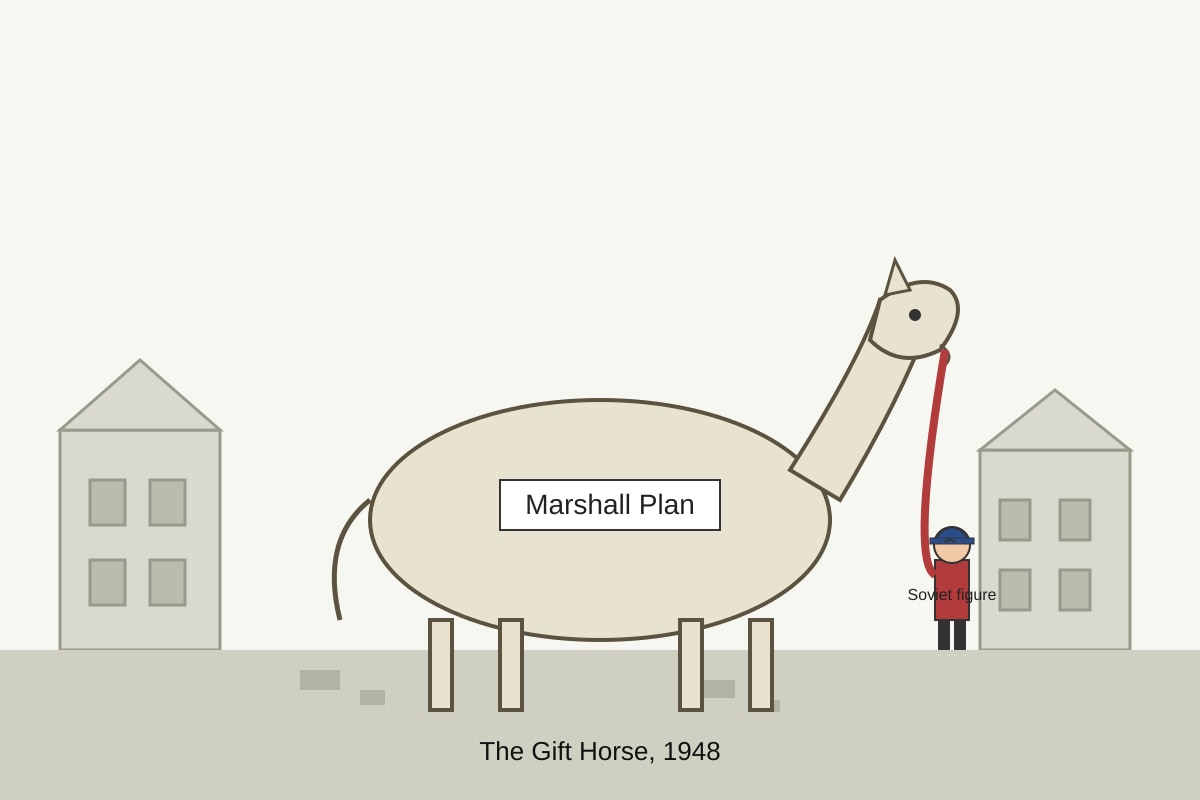
- E: Marshall Plan seen by USSR as threat (image shows suspicion of aid)
Own knowledge: Yalta/Potsdam failures, Truman Doctrine, Berlin Blockade, NATO/Warsaw Pact.
Argument structure:
- Intro: assertion partially valid; both sides feared others.
- From US view: A + B show perception of Soviet threat → policy response.
- From USSR view: C + E show perception of US encirclement.
- D shows both built arms → mutual.
- Counter: traditional view sees Stalin's aggression; but sources show reactive policies.
- Conclusion: mutual suspicion central, but actions like blockade also aggressive; nuanced.
Marking example (L5, 27/30):
- Uses all 5 sources as set (10)
- Contextualises each (6)
- Own knowledge Yalta, Truman (5)
- Balanced judgement (6)
Common mistake: Using only US sources; not addressing "not one side's aggression".
End of Answer Key