AI Generated Quiz
A Level H1 General Paper Comprehension Quiz
Free A Level H1 GP Comprehension quiz, HY3 AI version, with questions, answers, and A Level-style practice for Singapore students.
These static practice materials are generated from the site's syllabus and paper-generation workflow, with source and model context shown so students and parents can evaluate the material before use.
Questions
Free quiz and exam paper access
Enter your details to view this paper
Your access is remembered on this device.
Answers
A-Level General Paper H1 Quiz - Comprehension (Answer Key)
Topic: Comprehension
Total Marks: 40
Level: A-Level (H1 GP) — syllabus-first practice; not claimed as exam-derived.
Section A: Word and Phrase Analysis (Q1–7)
Q1. [2 marks]
Expected: The author uses "Of course" to signal a concession or shared assumption that attention-seeking is not new, but then contrasts with "unprecedented scale" to emphasise the modern difference.
Teaching note: Discourse markers show tone. "Of course" = reader already agrees; author uses it to acknowledge continuity before pivoting.
Marking: 1 mark for identifying concession/assumption; 1 mark for linking to contrast with scale.
Q2. [1 mark]
Expected: "Spawned" means produced or gave rise to (a culture of scrolling) rapidly, with slight negative connotation of uncontrolled growth.
Teaching note: Avoid dictionary def. Context: algorithms caused a new behaviour.
Marking: 1 mark for contextual meaning of generated/caused.
Q3. [2 marks]
Expected: "Even" is used to emphasise that the effect reaches the most vulnerable (toddlers), strengthening the claim that no one escapes screen influence.
Teaching note: "Even" = concession/emphasis on extreme case.
Marking: 1 mark for emphasis on inclusivity; 1 mark for link to argument about universal reach.
Q4. [2 marks]
Expected: "Coded" suggests our focus is converted into data (like a code) and exchanged as a commodity without obvious visibility, implying hidden exploitation.
Teaching note: Figurative: coded = turned into digital value.
Marking: 1 mark for data/commodity idea; 1 mark for unseen/awareness link.
Q5. [1 mark]
Expected: "Mere" means only or just, diminishing earlier view of gardens as decoration to show upgraded importance.
Marking: 1 mark for "only/just" minimising previous role.
Q6. [2 marks]
Expected: "Ticking time bomb" means delayed but inevitable danger; climate change is building silently and will explode if ignored.
Teaching note: Metaphor of urgency.
Marking: 1 mark for delayed danger; 1 mark for urgency implication.
Q7. [2 marks]
Expected: Phrase shows people are unaware their attention is taken; author criticises passive consumption.
Marking: 1 mark for unawareness; 1 mark for critical tone.
Section B: Inference and Paragraph Understanding (Q8–14)
Q8. [2 marks]
Expected: Screen culture reaches all ages, including very young children (toddlers), showing pervasive impact.
Marking: 1 mark for all ages; 1 mark for toddler example.
Q9. [3 marks]
Expected: From decoration (visual appeal) → essential mental-health infrastructure (wellbeing). Mechanism: planners recognised health value.
Marking: 1 mark start state; 1 mark end state; 1 mark causal link.
Q10. [2 marks]
Expected: Green spaces correlate with reduced stress; implied causal benefit for residents.
Marking: 1 mark correlation; 1 mark benefit inference.
Q11. [2 marks]
Expected: Climate science communicated with urgency/metaphor to prompt action, not just facts.
Marking: 1 mark urgency; 1 mark action aim.
Q12. [3 marks]
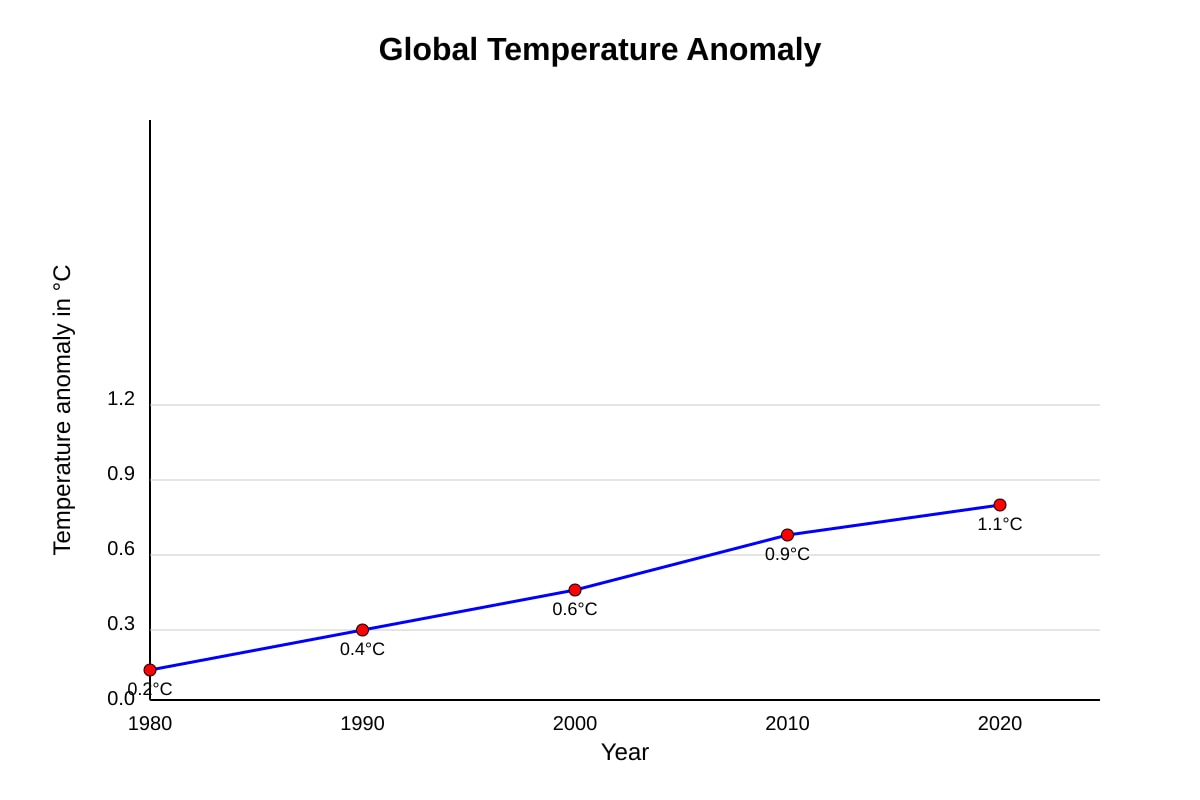
Expected: Graph shows steady rise (0.2→1.1°C); supports stats that warming is real and accelerating.
Marking: 1 mark trend identified; 1 mark data use; 1 mark link to argument.
Q13. [2 marks]
Expected: Companies are profit-driven, competing for attention as resource.
Marking: 1 mark competition; 1 mark motive.
Q14. [2 marks]
Expected: Short stark sentence forces reader to notice loss; emotional punch.
Marking: 1 mark effect; 1 mark purpose.
Section C: Author's Purpose and Technique (Q15–20)
Q15. [2 marks]
Expected: Opens with relatable context to engage reader; sets thesis of attention competition.
Marking: 1 mark engage; 1 mark frame.
Q16. [2 marks]
Expected: "Unprecedented" shows scale never before seen, justifying concern.
Marking: 1 mark meaning; 1 mark link.
Q17. [2 marks]
Expected: Repetition drills urgency, makes call to action memorable.
Marking: 1 mark emphasis; 1 mark memory.
Q18. [2 marks]
Expected: Graph gives visual proof, strengthens credibility of stats.
Marking: 1 mark evidence; 1 mark credibility.
Q19. [2 marks]
Expected: "Report" shows sourced claim (studies), more objective than assertion.
Marking: 1 mark source; 1 mark tone.
Q20. [3 marks]
Expected: Words build chain: spawned (cause) → even (reach) → coded (hidden cost); together show systemic, unnoticed extraction.
Marking: 1 each for three links or overall synthesis.