A-Level Geography H2 Quiz - Resources Sustainability
Name: ___________________________
Class: ___________________________
Date: ___________________________
Score: ___________________________
Duration: 60 minutes
Total Marks: 40
Topic: Resources & Sustainability (Cluster 1.1 Environment and Resources)
Instructions:
- Answer all 20 questions.
- Section A: Short data-based items (1–10). Section B: Structured explanations (11–15). Section C: Extended application (16–20).
- Use the resources provided. Write clearly and concisely.
- Marks for each question are shown in brackets [ ].
Section A: Data-Based Short Response (1–10)
1. Define the term sustainable development as used in Our Common Future. [2]
2. State one provisioning ecosystem service and one regulating ecosystem service. [2]
3. Distinguish between renewable and non-renewable resources with one example each. [2]
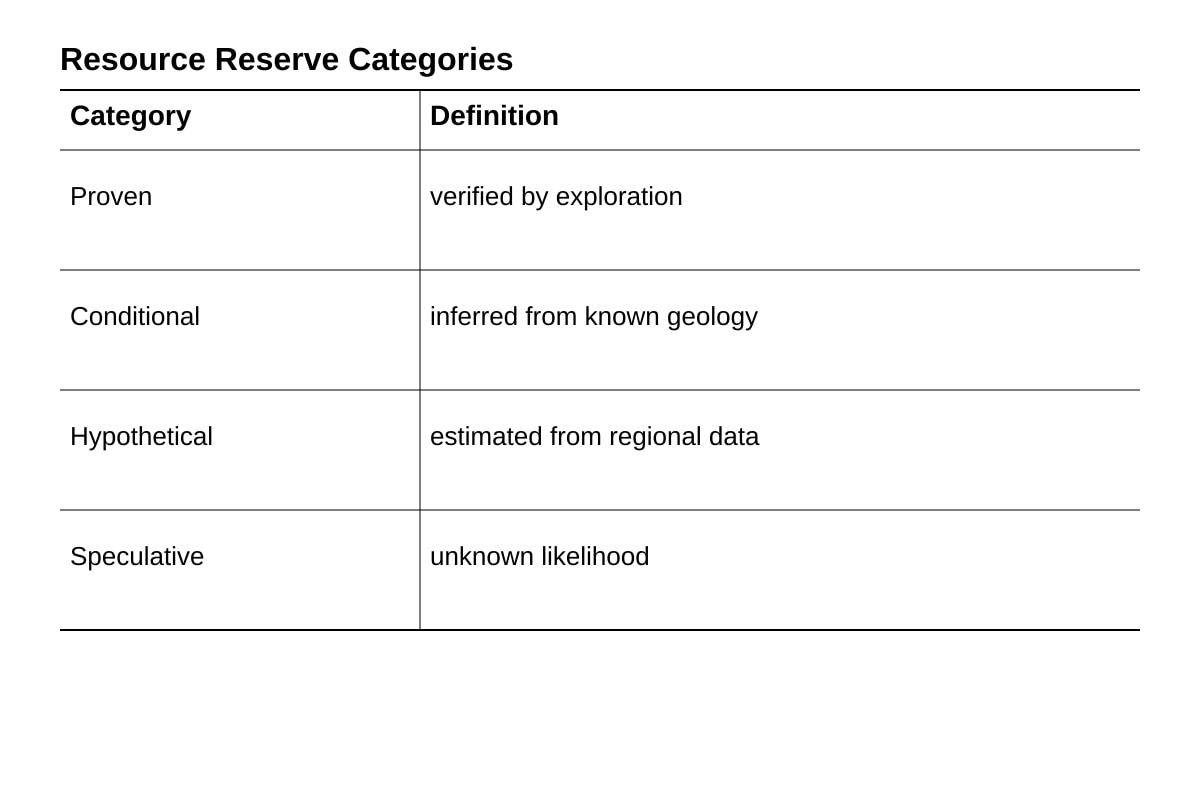
4. According to the resource below, identify the category of reserve that describes resources inferred from geological evidence but not yet proven.
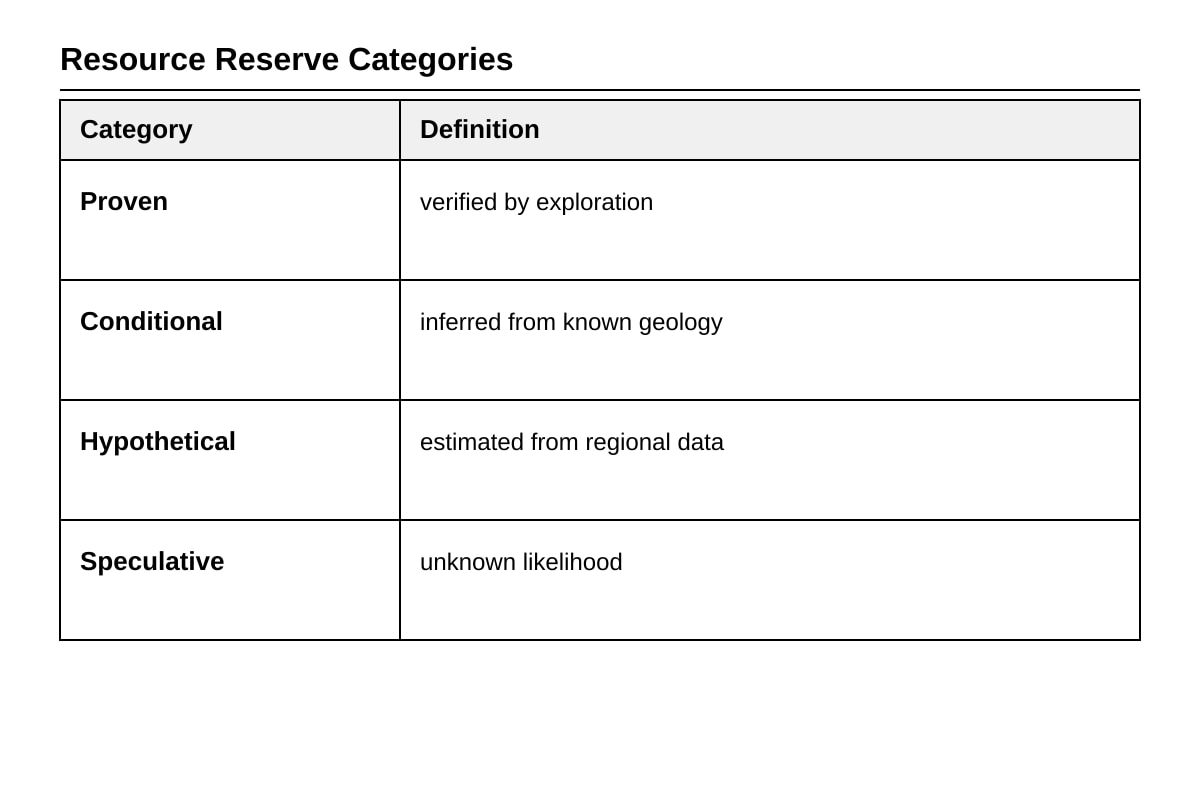
Generated table for Q4.
[1]
5. State Thomas Malthus' central view on the relationship between population and natural environmental limits. [2]
6. State Ester Boserup's opposing view on technology and the resource base. [2]
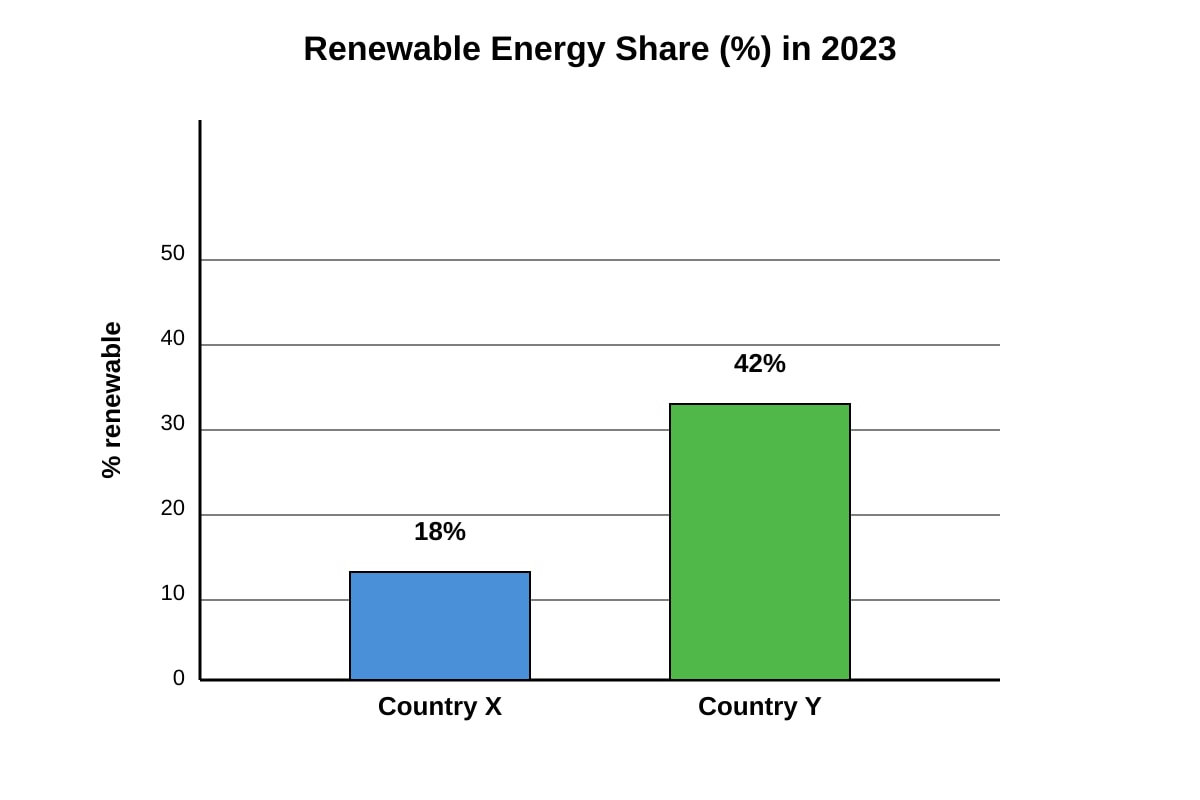
7. Refer to the bar chart resource. Compare the renewable energy share (%) of Country X and Country Y in 2023.
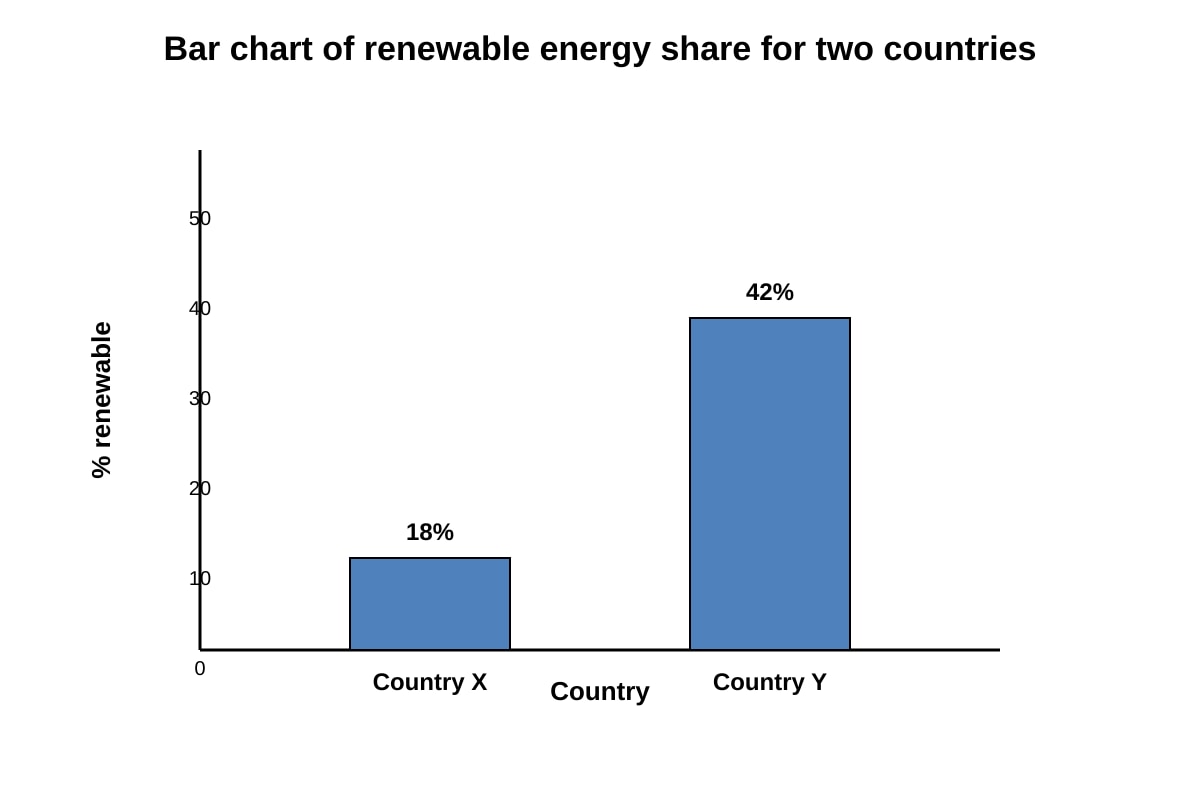
Generated graph for Q7.
[3]
8. Name one management strategy for transboundary water resources. [1]
9. Identify one negative environmental impact of extractive industries. [1]
10. State one Sustainable Development Goal (SDG) related to environmental protection. [1]
Section B: Structured Explanation (11–15)
11. Explain how habitat destruction and pollution compromise ecosystem services, using one example for each. [6]
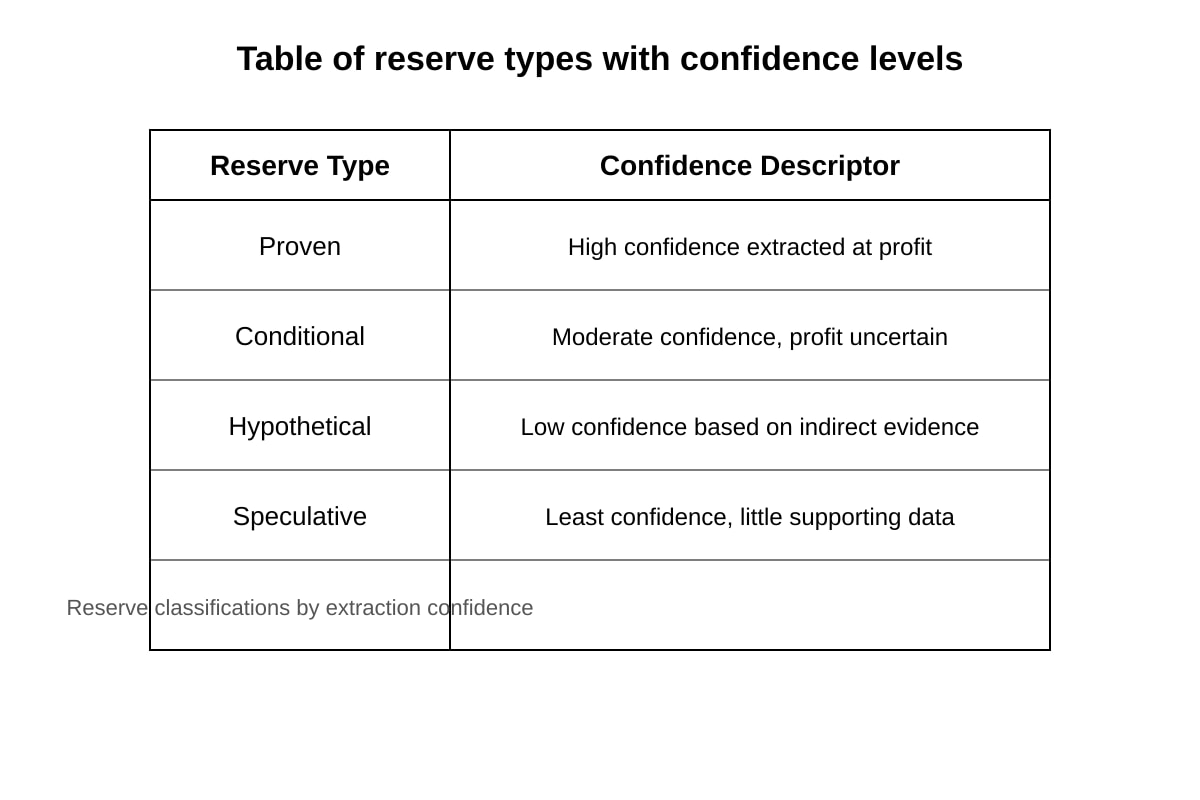
12. The table shows resource availability classifications. Describe the difference between proven and speculative reserves. [4]
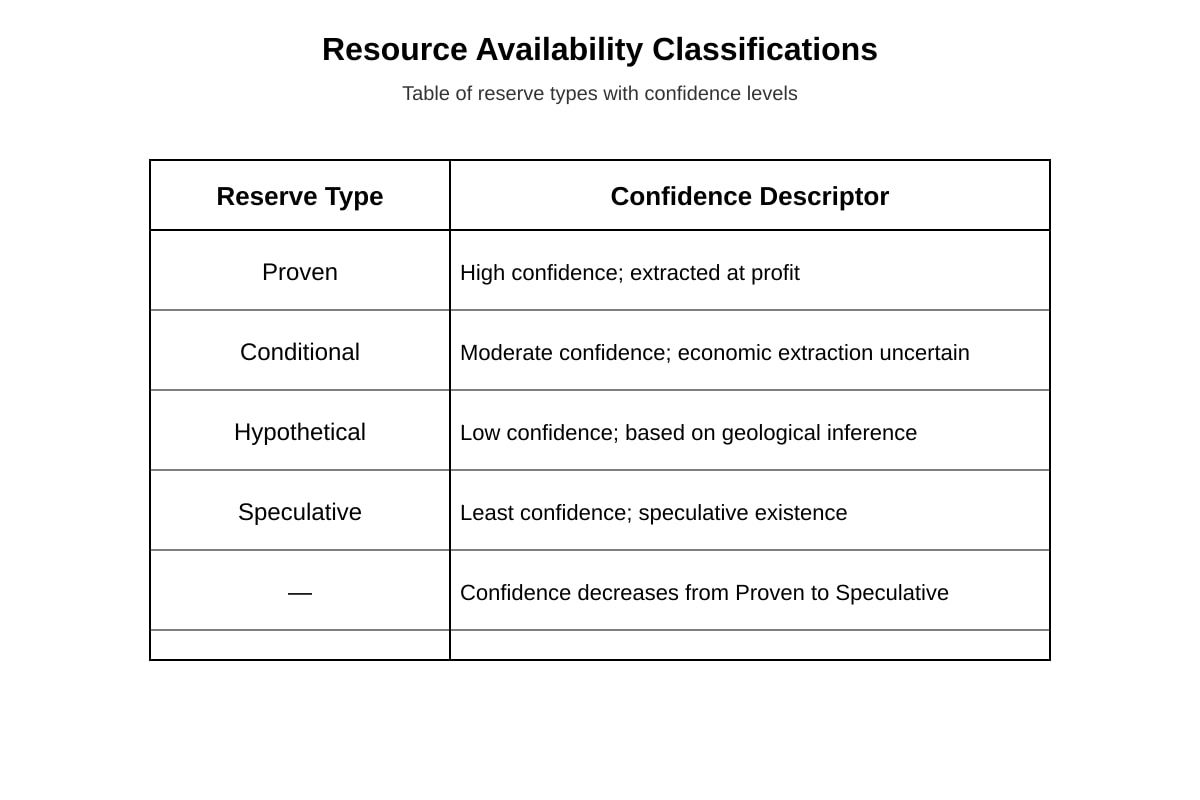
Generated table for Q12.
[4]
13. Explain the chemical process by which carbonic acid weathers limestone in karst systems. [5]
14. Compare the views of Malthus and Boserup on resource limits. [5]
15. Explain two limitations of large-scale hydropower as a renewable energy source for energy security. [5]
Section C: Extended Application (16–20)
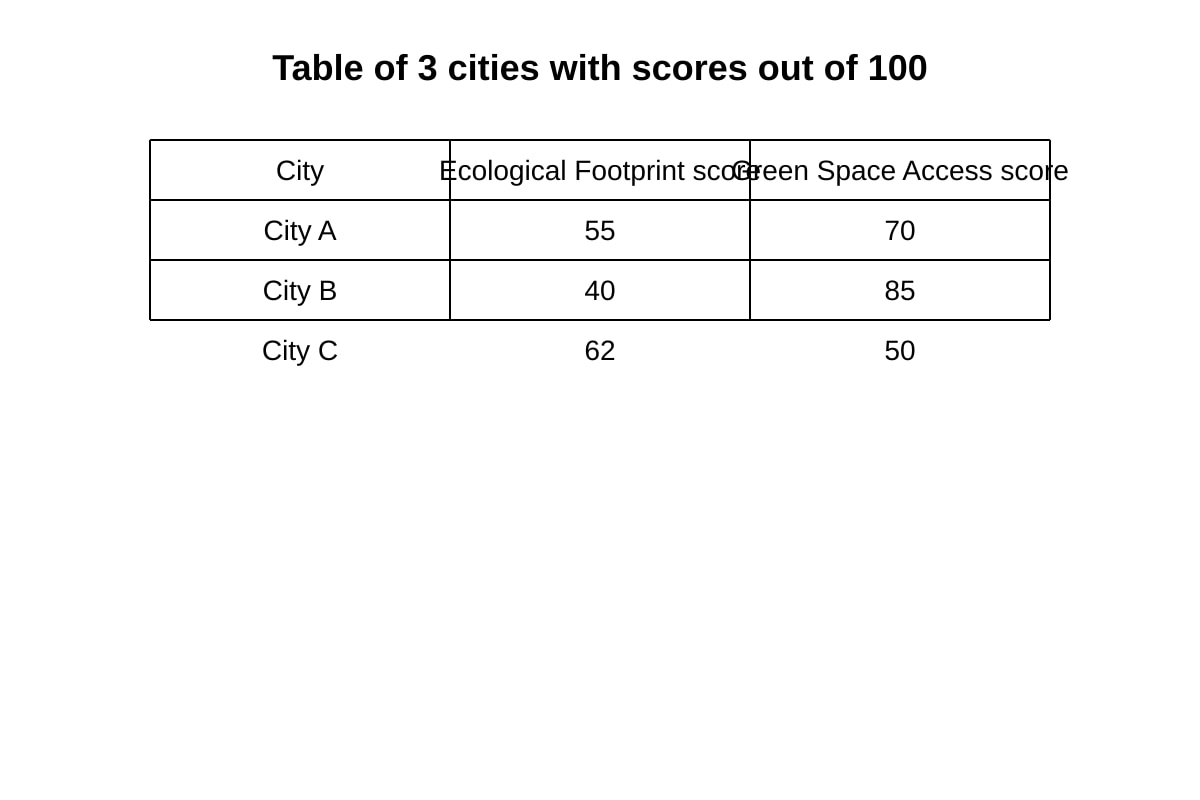
16. Using the data below, compare the sustainability scores of three cities A, B, and C across two dimensions: ecological footprint and green space access.
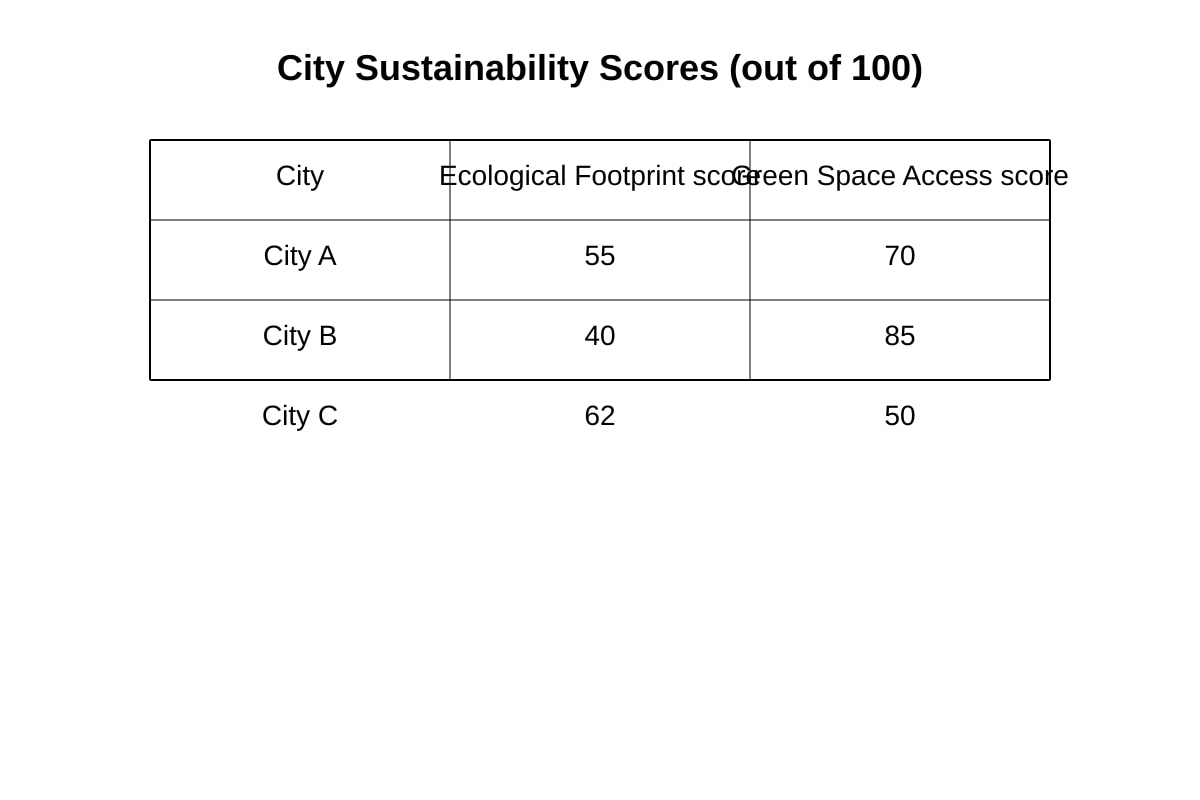
Generated table for Q16.
[5]
17. Explain how solar power and hydropower can reduce fossil fuel dependence, and discuss one trade-off for each. [6]
18. Account for variations in the economic, environmental, and social impacts of extractive industries across different host countries. [6]
19. Evaluate the extent to which technology can overcome Malthusian resource limits in the context of renewable energy. [7]
20. "Transboundary water management is more successful when states share equal political power." Assess this statement with reference to two examples. [7]
</stage3_quiz_answers_md>
<stage3_quiz_answers_md>
A-Level Geography H2 Quiz - Resources Sustainability (Answer Key)
Total Marks: 40
Topic: Resources & Sustainability
Section A: Data-Based Short Response (1–10)
1. [2 marks] Sustainable development is development that meets the needs of the present without compromising the ability of future generations to meet their own needs (Brundtland definition from Our Common Future).
Teaching note: Define using intergenerational equity. Award 1 mark for present-needs focus, 1 mark for future-limits focus.
2. [2 marks] Provisioning: e.g., timber, food, fresh water. Regulating: e.g., flood regulation, carbon sequestration, climate regulation.
Marking: 1 mark each type with example. Common mistake: confusing cultural/support services.
3. [2 marks] Renewable = regenerates within human timescale (solar, forests); Non-renewable = finite stock depleted by use (coal, oil).
Marking: 1 mark definition, 1 mark example each.
4. [1 mark] Conditional reserves.
From Q4-fig1: Conditional = inferred from known geology but not yet proven.
5. [2 marks] Malthus argued population grows geometrically while food grows arithmetically, leading to inevitable limits and crisis when population exceeds resource capacity.
Marking: 1 mark population-food gap, 1 mark natural limit conclusion.
6. [2 marks] Boserup argued that rising population density stimulates technological innovation (e.g., intensification, irrigation) that expands the resource base, preventing Malthusian collapse.
Marking: 1 mark tech expands resources, 1 mark contrast with Malthus.
7. [3 marks] Country Y (42%) has more than double the renewable share of Country X (18%). Country Y is over twice as reliant on renewables.
From Q7-fig1: Compare values with comparative language. 1 mark each: identify values, compare direction, quantify gap.
8. [1 mark] E.g., joint river basin commissions; treaties (e.g., Mekong River Commission).
Accept any valid strategy.
9. [1 mark] E.g., habitat loss, water pollution, soil degradation, emissions.
Accept one clear impact.
10. [1 mark] E.g., SDG 7 (Affordable and Clean Energy), SDG 13 (Climate Action), SDG 15 (Life on Land).
Accept any environmental SDG.
Section B: Structured Explanation (11–15)
11. [6 marks]
- Habitat destruction (e.g., deforestation for palm oil) removes provisioning services like food and timber, reducing ecosystem output. [2]
- Pollution (e.g., fertiliser runoff) degrades regulating services such as water purification and aquatic habitats. [2]
- Link to loss of human welfare and biodiversity. [2]
Marking: 3 marks each, process + example.
12. [4 marks] Proven reserves are verified by exploration and extractable at profit (high confidence). Speculative reserves are estimated with low confidence from limited data, unlikely to be extracted soon.
From Q12-fig1: 2 marks each category explained. Common mistake: confusing with conditional/hypothetical.
13. [5 marks]
- Rainwater + CO₂ → H₂CO₃ (weak carbonic acid). [1]
- Acid infiltrates joints in limestone (CaCO₃). [1]
- CaCO₃ + H₂CO₃ → Ca²⁺ + 2HCO₃⁻ (dissolved). [2]
- Over time, cavities enlarge into caves/sinkholes. [1]
Marking: equation 2 marks, process 3 marks.
14. [5 marks]
- Malthus: pessimistic, fixed limits, population outpaces food. [2]
- Boserup: optimistic, tech expands base, necessity drives innovation. [2]
- Contrast: tech vs nature as constraint. [1]
15. [5 marks]
- Limitation 1: Displacement/resettlement social cost; variable river flow reduces reliability. [2+1]
- Limitation 2: High capital cost, methane from reservoirs, ecosystem fragmentation. [2+1]
Marking: 2 marks each limitation with explanation.
Section C: Extended Application (16–20)
16. [5 marks]
- City B best green access (85) but lowest footprint (40); City C worst green (50) highest footprint (62). [2]
- City A middle: EF 55, GS 70 balanced. [1]
- Pattern: higher green access links to lower footprint except C. [2]
From Q16-fig1: compare all three, use data.
17. [6 marks]
- Solar/hydro reduce fossil CO₂; solar scalable, hydro baseload. [2]
- Trade-off solar: land use, intermittency. [2]
- Trade-off hydro: ecology, methane, displacement. [2]
18. [6 marks]
- Economic: rent dependence vs linkage. [2]
- Environmental: regulation strength varies. [2]
- Social: local vs foreign labour, rights. [2]
**19. [7 marks]**Essay-style
- Argue tech (solar, storage) delays limits. [3]
- Counter: materials, land, uneven access. [3]
- Judgement: partial, not absolute. [1]
Descriptors: L3 (5–7) balanced eval; L2 (3–4) partial; L1 (1–2) list.
**20. [7 marks]**Essay-style
- Eg Mekong (unequal power, partial success) vs Rhine (equal, success). [4]
- Assess: power parity aids but not sufficient; institutions matter. [3]
Marking: 2 examples (4m), evaluation (3m).
</stage3_quiz_answers_md>
<stage3_quiz_md>
A-Level Geography H2 Quiz - Resources Sustainability
Name: ___________________________
Class: ___________________________
Date: ___________________________
Score: ___________________________
Duration: 60 minutes
Total Marks: 40
Topic: Resources & Sustainability (Cluster 1.1 Environment and Resources)
Instructions:
- Answer all 20 questions.
- Section A: Short data-based items (1–10). Section B: Structured explanations (11–15). Section C: Extended application (16–20).
- Use the resources provided. Write clearly and concisely.
- Marks for each question are shown in brackets [ ].
Section A: Data-Based Short Response (1–10)
1. Define the term sustainable development as used in Our Common Future. [2]
2. State one provisioning ecosystem service and one regulating ecosystem service. [2]
3. Distinguish between renewable and non-renewable resources with one example each. [2]
4. According to the resource below, identify the category of reserve that describes resources inferred from geological evidence but not yet proven.
Generated table for Q4.
[1]
5. State Thomas Malthus' central view on the relationship between population and natural environmental limits. [2]
6. State Ester Boserup's opposing view on technology and the resource base. [2]
7. Refer to the bar chart resource. Compare the renewable energy share (%) of Country X and Country Y in 2023.
Generated graph for Q7.
[3]
8. Name one management strategy for transboundary water resources. [1]
9. Identify one negative environmental impact of extractive industries. [1]
10. State one Sustainable Development Goal (SDG) related to environmental protection. [1]
Section B: Structured Explanation (11–15)
11. Explain how habitat destruction and pollution compromise ecosystem services, using one example for each. [6]
12. The table shows resource availability classifications. Describe the difference between proven and speculative reserves. [4]
Generated table for Q12.
[4]
13. Explain the chemical process by which carbonic acid weathers limestone in karst systems. [5]
14. Compare the views of Malthus and Boserup on resource limits. [5]
15. Explain two limitations of large-scale hydropower as a renewable energy source for energy security. [5]
Section C: Extended Application (16–20)
16. Using the data below, compare the sustainability scores of three cities A, B, and C across two dimensions: ecological footprint and green space access.
Generated table for Q16.
[5]
17. Explain how solar power and hydropower can reduce fossil fuel dependence, and discuss one trade-off for each. [6]
18. Account for variations in the economic, environmental, and social impacts of extractive industries across different host countries. [6]
19. Evaluate the extent to which technology can overcome Malthusian resource limits in the context of renewable energy. [7]
20. "Transboundary water management is more successful when states share equal political power." Assess this statement with reference to two examples. [7]