AI Generated Exam Paper
A Level H2 Geography Practice Paper 2
Free A Level H2 Geography Practice Paper 2, HY3 AI version, with questions, answers, and A Level-style practice for Singapore students.
These static practice materials are generated from the site's syllabus and paper-generation workflow, with source and model context shown so students and parents can evaluate the material before use.
Questions
Free quiz and exam paper access
Enter your details to view this paper
Your access is remembered on this device.
Answers
TuitionGoWhere Practice Paper Answer Key — Geography H2 A-Level (Version 2)
Subject: Geography H2
Level: A-Level
Paper: Practice Paper (Resources Sustainability Focus)
Total Marks: 60
Section A Answers (18 marks)
Q1 [2 marks]
- Definition: Sustainable development is development that meets the needs of the present without compromising the ability of future generations to meet their own needs (Brundtland / Our Common Future).
- Mark breakdown: 1 mark for present needs, 1 mark for future needs / intergenerational equity.
- Teaching note: This is the foundational definition; students must show both temporal dimensions.
Q2 [3 marks]
- Provisioning service example: timber from forests (1 mark).
- Variation: In the past, timber was scarce and local; today technology (chainsaws, transport) makes it a globally traded commodity, changing its value and classification by demand (2 marks).
- Teaching note: Provisioning = products obtained from ecosystems. Demand and tech shift what is considered provisioning.
Q3 [2 marks]
- Proven reserves: technically and economically extractable now (1 mark).
- Speculative reserves: assumed to exist but not confirmed by exploration; uncertain extraction (1 mark).
- Common mistake: confusing with conditional (needs tech/econ change).
Q4 [2 marks]
- Limitation 1: Ignores technological innovation that increases yield (1 mark).
- Limitation 2: Uneven access – some regions import food, so local limits don't apply (1 mark).
Q5 [5 marks]
- Norway (98%) far exceeds India (22%) and Singapore (4%); India > Singapore (1 mark per comparison or synthesis).
- Norway near-full renewable (hydro), Singapore lowest due to land limits (2 marks for context).
- Marking: 1 mark each for correct comparative statement across 3 countries + 2 for depth.
- Teaching: Use comparative language "higher than", "lowest".
Q6 [2 marks]
- Habitat destruction removes wetlands that regulated floods (1 mark); loss increases flood frequency (1 mark).
- Teaching: Regulating = benefits from control of natural processes.
Q7 [2 marks]
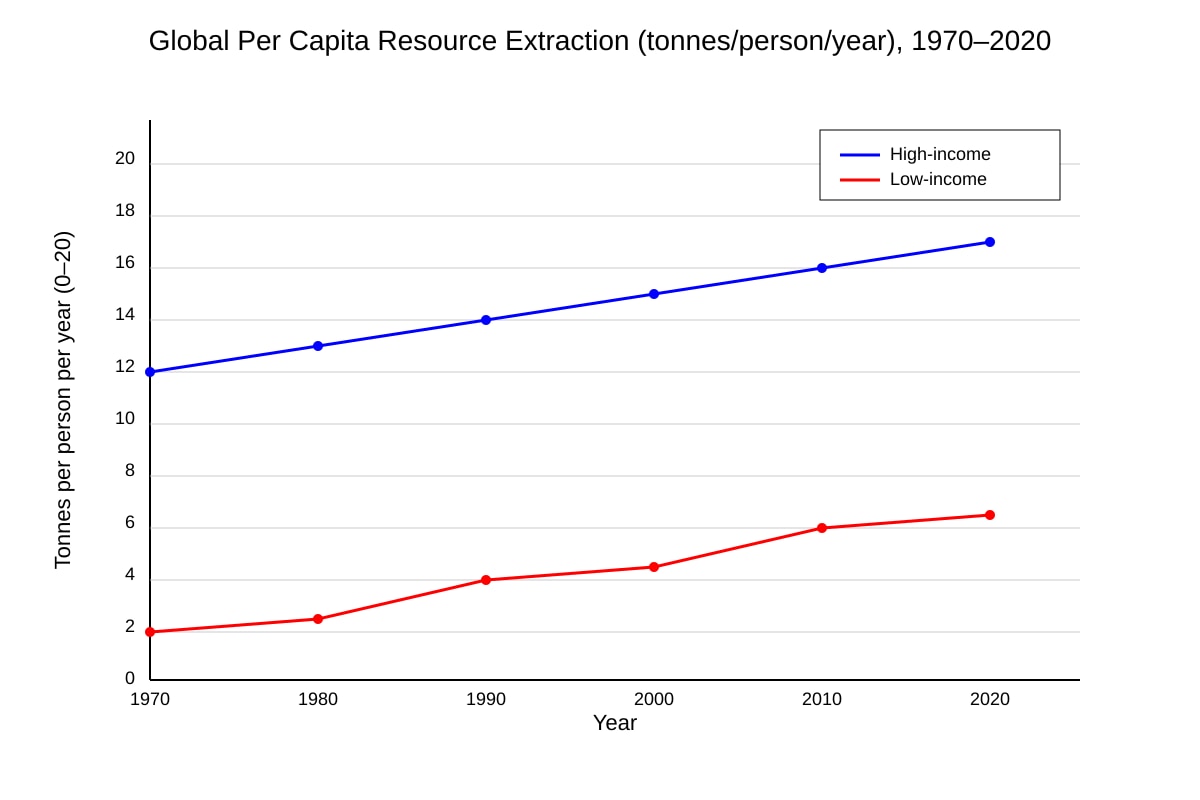
- High-income rises steadily 12→17 t/p/yr; low-income 2→4.5 t/p/yr (1 mark).
- Gap widens over time (1 mark).
- Based on Q7-fig1 line graph data.
Section B Answers (24 marks)
Q8 [4 marks]
- Challenge 1: Short-term profit motive discourages long-term investment (2 marks).
- Challenge 2: Political cycles ignore cross-border issues (2 marks).
Q9 [6 marks]
- Potential: abundant solar in SEA, reduces coal use (2).
- Limitations: intermittent, land use, grid cost (2).
- Trade-off: econ vs env (2).
- Marking descriptors: 6 = clear eval, 4 = partial, 2 = list.
Q10 [4 marks]
- Success: MRC forum established (1).
- Failure: no binding flow rule, upstream dams harm Vietnam (3).
- Teaching: Transboundary = shared but unequal power.
Q11 [4 marks]
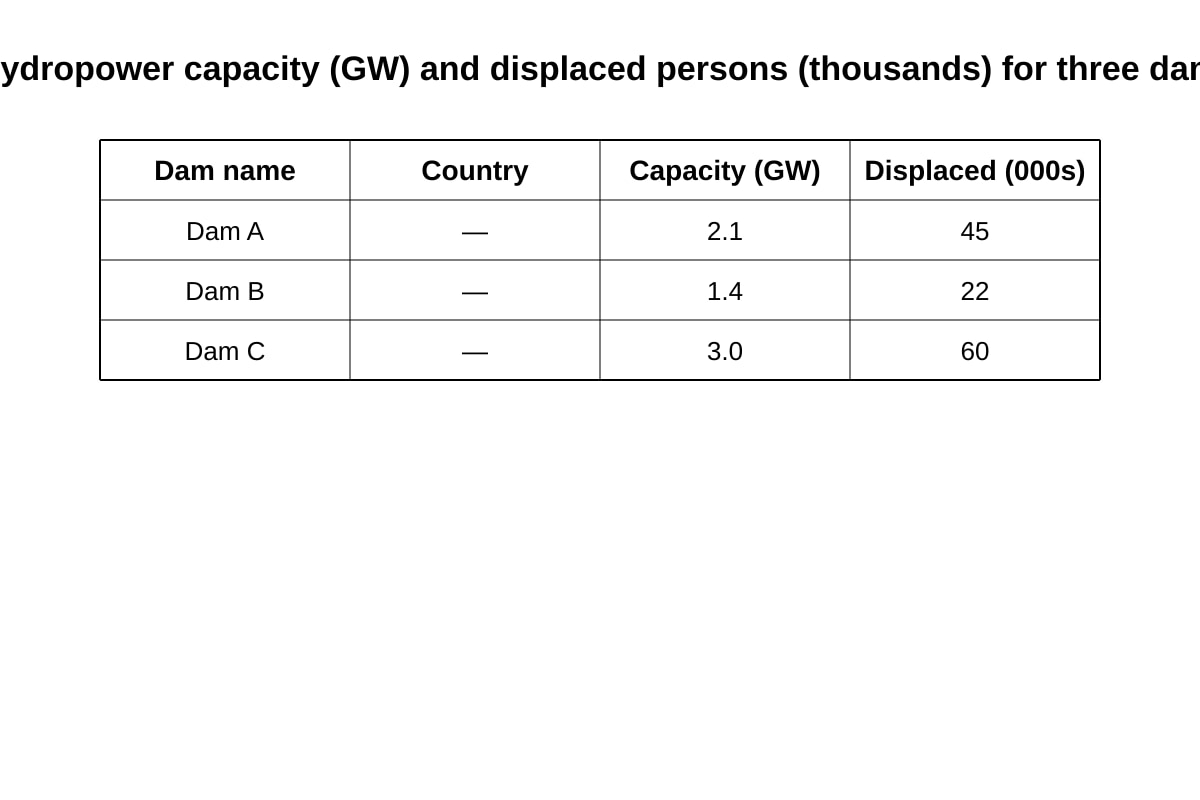
- Dam C: 60k/3.0=20k per GW; A: 21.4k; B: 15.7k (2 marks calc).
- B most equitable, C least (2 marks).
- From Q11-fig1 table.
Q12 [4 marks]
- Strategy: rehabilitation of mined land (2).
- Eval: restores soil but costly, slow (2).
Q13 [2 marks]
- Boserup: population pressure drives tech that raises resource limits (2).
Q14 [2 marks]
- Reasons: infrastructure gap, trade barriers (1 each).
Section C Answers (18 marks)
Q15 [6 marks]
- Using Q7-fig1 (rich use more) and Q11-fig1 (displacement): trade-off = clean energy vs justice (3).
- Assessment: global south bears social cost (3).
Q16 [6 marks]
- Agree: reduces waste (2). Disagree: needs tech/capital (2). Conclusion balanced (2).
Q17 [3 marks]
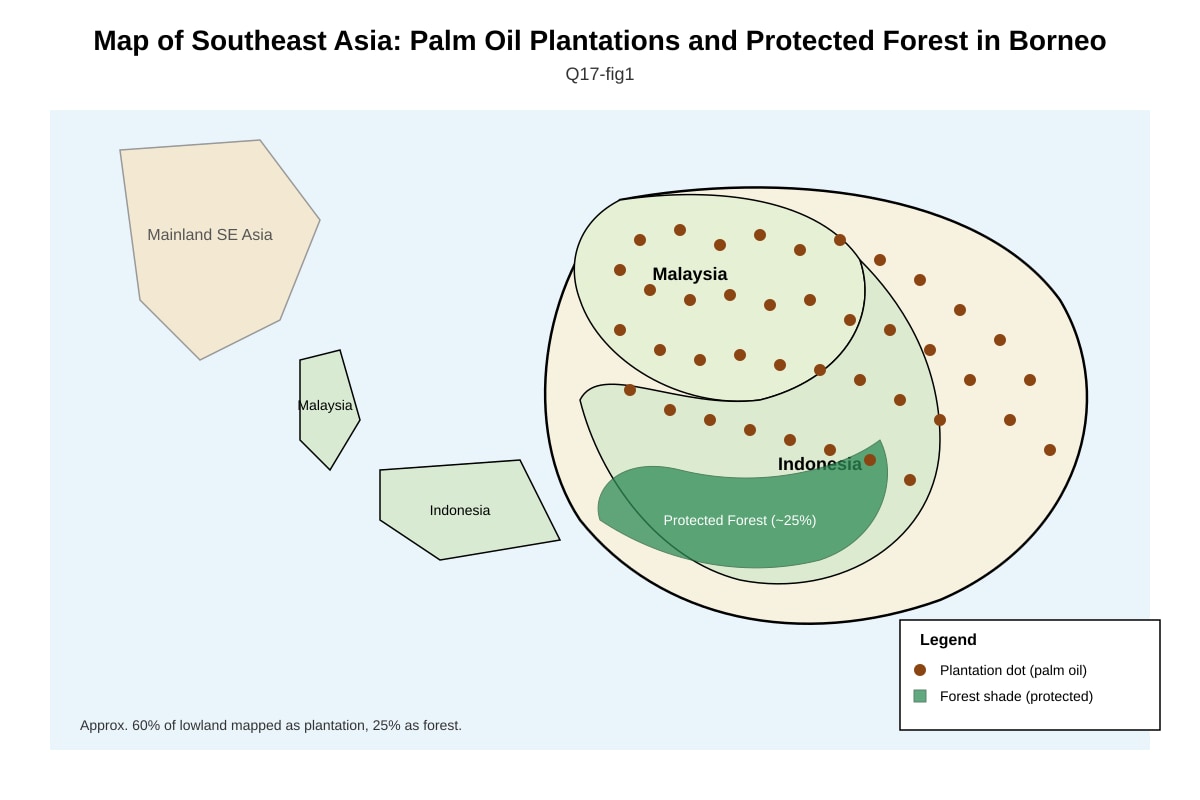
- Map shows 60% plantation vs 25% forest → timber/food loss (2). From Q17-fig1.
- 1 mark for link to provisioning.
Q18 [3 marks]
- SDG 6: clean water 2030 access (1.5); SDG 7: affordable energy 2030 (1.5).
Q19 [2 marks]
- Water hyacinth blocks rivers, reduces fishing (2).
Q20 [4 marks]
- GDP ignores env cost, distribution (2); example depletion not subtracted (2).
Total Marks Check: 18+24+18 = 60 ✓