From Real Exams Exam Paper
A Level H2 Geography Practice Paper 5
Free A Level H2 Geography Practice Paper 5, HY3 Exam version, with questions, answers, and A Level-style practice for Singapore students.
These static practice materials are generated from the site's syllabus and paper-generation workflow, with source and model context shown so students and parents can evaluate the material before use.
Questions
TuitionGoWhere Exam Practice (AI) — Geography H2 A-Level Practice Paper
School: TuitionGoWhere Exam Practice (AI) Subject: Geography H2 Level: A-Level Paper: Practice Paper (Resources Sustainability Focus) — Version 5 of 5 Duration: 1 hour 30 minutes Total Marks: 60 Name: ___________________________ Class: ___________________________ Date: ___________________________
Instructions:
- This practice paper contains 20 questions across three sections.
- Answer all questions.
- Use the resources provided (tables, extracts, and diagrams) to support your answers.
- Marks for each question are shown in brackets.
- Section marks and question marks total exactly 60.
Section A: Data Interpretation and Description (Questions 1–8) [24 marks]
1. Study the table below showing the Sustainable Development Goal (SDG) progress scores for four Southeast Asian cities in 2024.
| City | Economic (out of 100) | Environmental (out of 100) | Social (out of 100) | Overall |
|---|---|---|---|---|
| Bangkok | 72 | 55 | 68 | 65 |
| Jakarta | 61 | 49 | 58 | 56 |
| Singapore | 85 | 78 | 82 | 82 |
| Manila | 54 | 44 | 51 | 50 |
Compare the scores for the four Southeast Asian cities shown in the table above. [5]
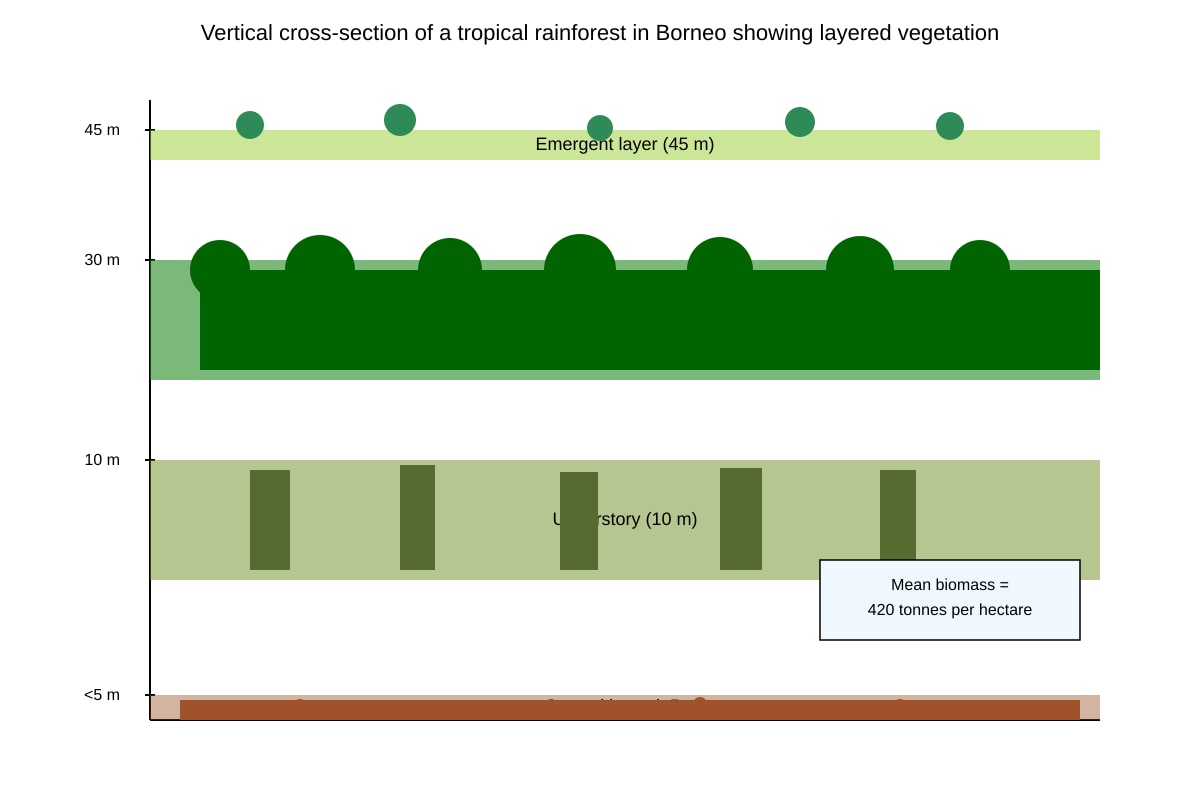
2. Describe the vegetation structure and mean biomass of a typical tropical rainforest in Borneo as shown in Resource 1 below.
Image pending generation: diagram for Q2.
[3]
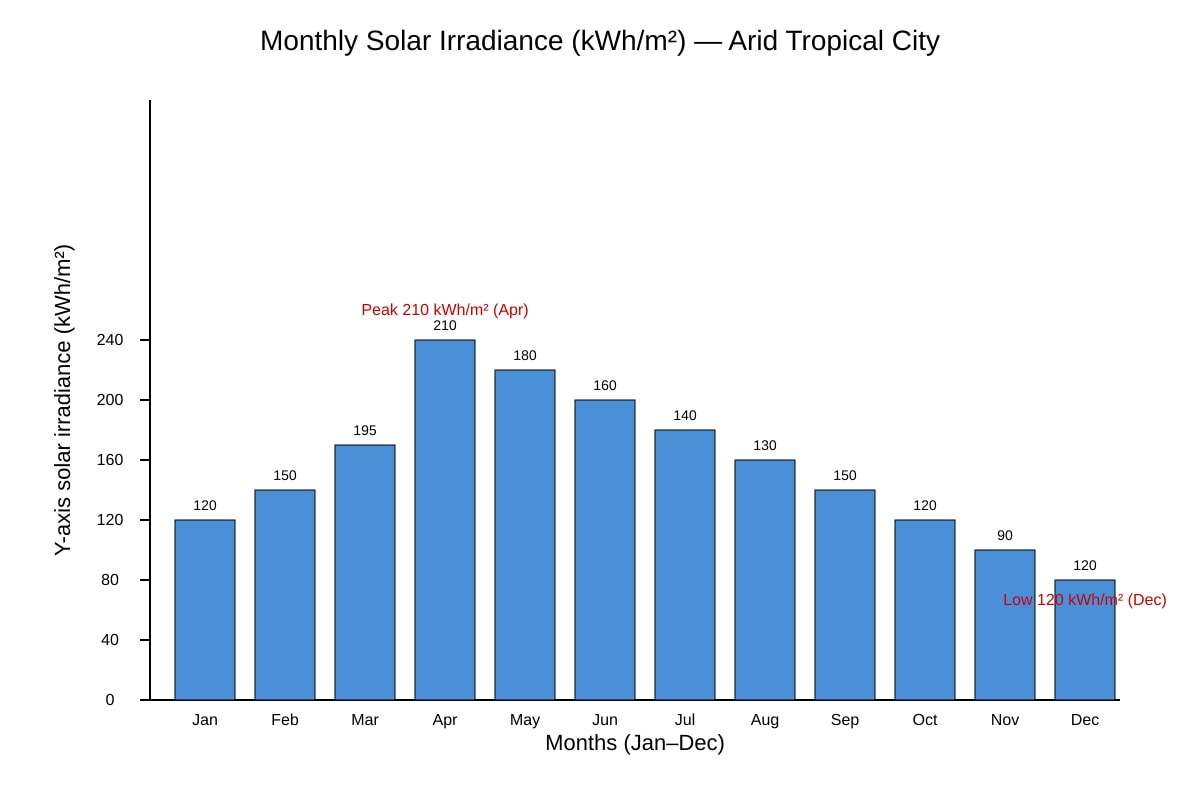
3. Identify the type of renewable energy resource shown in Resource 2 and state one limitation of its use for national energy security.
Image pending generation: graph for Q3.
[2]
4. State one provisioning ecosystem service and explain how demand and technology can change what is considered a provisioning service over time. [3]
5. The table below shows proven and speculative reserves of lithium (million tonnes) for three countries.
| Country | Proven | Conditional | Hypothetical | Speculative |
|---|---|---|---|---|
| Chile | 9.3 | 4.1 | 2.0 | 1.5 |
| Australia | 7.0 | 3.3 | 1.2 | 0.8 |
| Indonesia | 2.1 | 5.6 | 3.4 | 2.2 |
Define "proven reserves" and "speculative reserves" using the table. [2]
6. Explain how extractive industries for non-renewable resources are typically characterised by capital- and technology-intensive operations. Use one example. [3]
7. Study the extract below.
"Transboundary water management between Cambodia and Vietnam on the Mekong Delta has faced challenges due to upstream dam construction. Joint commissions have had limited success because of unequal political influence."
Suggest one reason why management strategies for transboundary water resources may vary in success. [2]
8. Describe two differences between Malthus' and Boserup's views on resource limits and population. [4]
Section B: Explanation and Analysis (Questions 9–14) [20 marks]
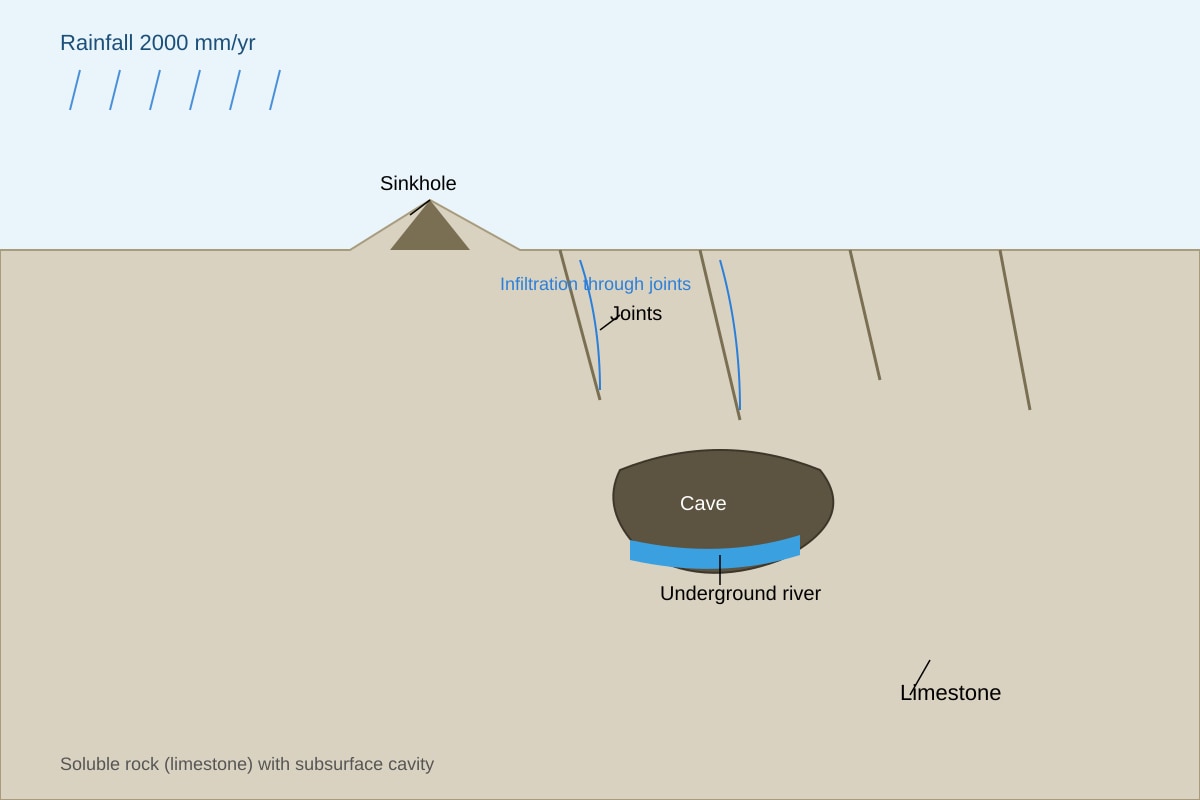
9. Explain the chemical weathering processes that contribute to the formation of a karst landscape in limestone regions as shown in Resource 3.
Image pending generation: diagram for Q9.
[7]
10. Account for the percentage of plastic waste in Phnom Penh's total municipal solid waste using the data below.
| Waste type | % of total |
|---|---|
| Plastic | 18% |
| Organic | 55% |
| Paper | 12% |
| Other | 15% |
[5]
11. Explain how solar power management could reduce fossil fuel dependence but create trade-offs in environmental and social dimensions. [4]
12. Compare internet penetration and mobile penetration of three Asian countries from the table.
| Country | Internet (%) | Mobile (%) |
|---|---|---|
| South Korea | 97 | 99 |
| India | 47 | 79 |
| Thailand | 85 | 94 |
[4]
13. Explain how Boserup's view on technology expanding the resource base is limited by uneven access to resources. [3]
14. Using the extract below, explain how non-state actors could help protect workers from transnational corporations (TNCs).
"NGOs in Bangladesh have monitored garment factories supplying global brands, revealing unsafe conditions and prompting codes of conduct."
[3]
Section C: Evaluation and Synthesis (Questions 15–20) [16 marks]
15. To what extent can hydropower management fully address energy sustainability in tropical countries? [8]
16. Evaluate the success of transboundary water resource management between two countries of your choice. [8]
17. State two ecosystem services that are compromised by habitat destruction and explain one impact for each. [4]
18. Identify one challenge limiting progress towards sustainable development and explain its effect on the SDGs. [2]
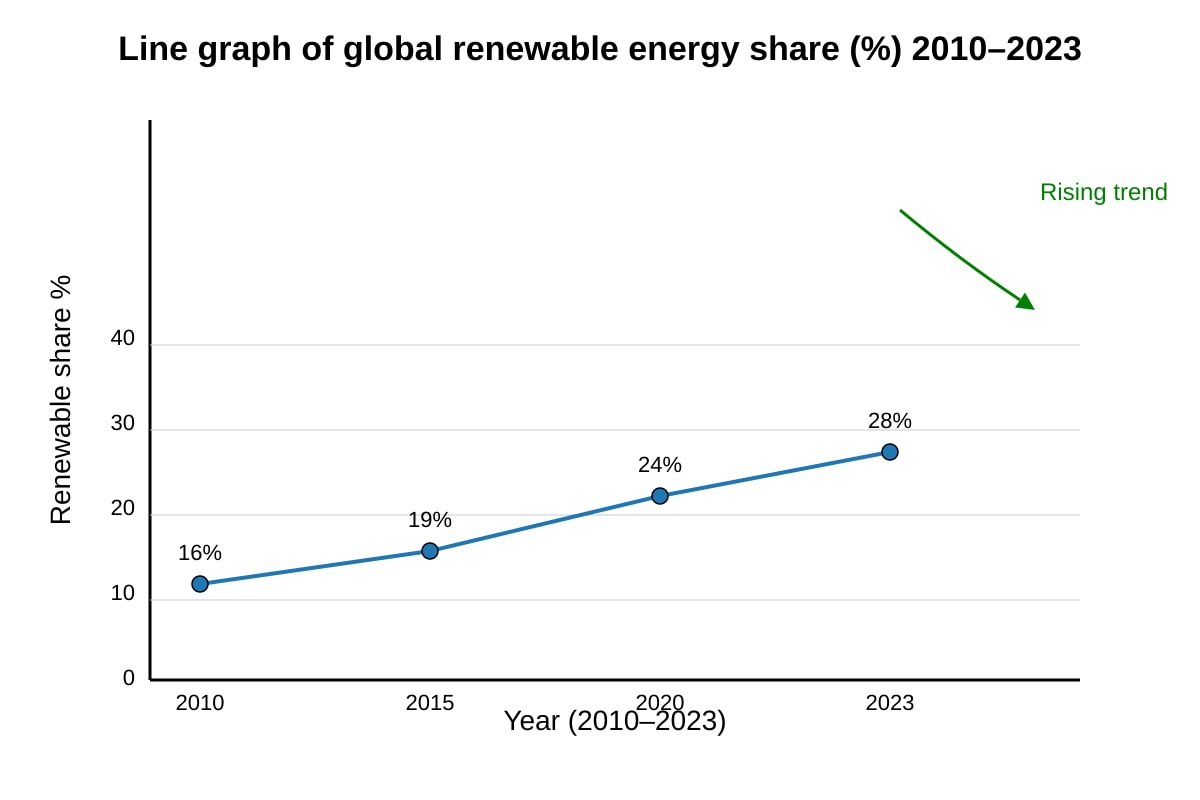
19. Using Resource 4, describe the trend in global renewable energy share from 2010 to 2023.
Image pending generation: graph for Q19.
[2]
20. Suggest what a city can do to meet the needs of elderly residents based on sustainability principles. [2]
Answers
TuitionGoWhere Exam Practice (AI) — Geography H2 A-Level Practice Paper (Version 5) Answer Key
Total Marks: 60
Section A Answers (24 marks)
1. [5 marks] Compare the four SEA cities using the table.
- Singapore scored highest overall (82) and in all three dimensions (Economic 85, Environmental 78, Social 82). [1]
- Manila was lowest overall (50) and in each dimension (Economic 54, Environmental 44, Social 51). [1]
- Bangkok (65) outperformed Jakarta (56) overall; Bangkok led in all dimensions. [1]
- Environmental scores were consistently lower than economic/social for all cities except Singapore where gap is small. [1]
- Jakarta and Manila show weaker environmental performance relative to economic. [1] Teaching note: Use comparative language (higher/lower than). Reference all cities and dimensions. Common mistake: stating numbers without comparing.
2. [3 marks]
- Structure: Four layers — emergent (~45 m), continuous canopy (~30 m), understory (~10 m), ground (<5 m). [1]
- Canopy dense and continuous, intercepts rainfall. [1]
- Mean biomass = 420 tonnes per hectare. [1] Teaching note: Describe vertical structure fully, not just one layer; include units for biomass.
3. [2 marks]
- Renewable energy: Solar power (from irradiance chart). [1]
- Limitation: Seasonal variation (low Dec 120 kWh/m²) reduces reliability for constant national supply. [1] Teaching note: Identify from graph type; limitation must relate to energy security.
4. [3 marks]
- Provisioning service: e.g., food crops, timber, fresh water. [1]
- Demand/tech change: Higher demand or new tech (e.g., algae for fuel) reclassifies items as provisioning. [2] Teaching note: Define provisioning as material outputs from ecosystems.
5. [2 marks]
- Proven reserves: economically extractable under current tech (Chile 9.3). [1]
- Speculative: estimated, not confirmed, low confidence (Indonesia 2.2). [1]
6. [3 marks]
- Characterised by high capital cost, advanced tech, large firms. [2]
- Example: Deep-sea oil drilling by major corporation. [1]
7. [2 marks]
- Unequal political influence reduces joint commission power. [2]
8. [4 marks]
- Malthus: nature limits population; Boserup: tech expands resource base. [2]
- Malthus pessimistic, Boserup optimistic on innovation. [2]
Section B Answers (20 marks)
9. [7 marks]
- Limestone soluble carbonate rock. [1]
- Rain + CO₂ → H₂CO₃ (carbonic acid). [1]
- Acid dissolves CaCO₃ along joints/bedding. [1]
- Infiltration/percolation enlarges cavities. [1]
- Subsurface erosion forms caves/rivers. [1]
- Surface sinkhole from collapse. [1]
- Long-term, climate-dependent (rain 2000 mm). [1]
10. [5 marks]
- Plastic 18% due to packaging, consumer habits. [2]
- Urbanisation, weak recycling. [2]
- Compare to organic 55% dominant. [1]
11. [4 marks]
- Reduces fossil use (clean). [2]
- Trade-off: land use, social displacement. [2]
12. [4 marks]
- SK highest both (97,99). [1]
- India lowest internet (47) but mobile 79. [1]
- Thailand mid. [1]
- Gap internet-mobile largest in India. [1]
13. [3 marks]
- Tech benefits uneven; poor lack access. [2]
- Limits Boserup globally. [1]
14. [3 marks]
- NGOs monitor, reveal abuses. [2]
- Force codes of conduct. [1]
Section C Answers (16 marks)
15. [8 marks] Descriptors: Level 4 (7–8) balanced extent with evidence; Level 3 (5–6) partial; Level 2 (3–4); Level 1 (1–2). Content: Hydropower reduces CO₂, but limited by geography, ecosystems, displacement. Conclusion: partial not full.
16. [8 marks] Similar descriptors. Example: Mekong — partial success due to politics. Evidence-based.
17. [4 marks]
- Regulating (e.g., flood control) lost → floods. [2]
- Cultural (recreation) lost → wellbeing drop. [2]
18. [2 marks]
- Political challenge → slows SDG targets. [2]
19. [2 marks]
- Rising from 16% (2010) to 28% (2023). [2]
20. [2 marks]
- Accessible transport, healthcare per sustainability. [2]
Free quiz and exam paper access
Enter your details to view this paper
Your access is remembered on this device.