AI Generated Quiz
A Level H1 Geography Physical Geography Quiz
Free A Level H1 Geography Physical Geography quiz, HY3 AI version, with questions, answers, and A Level-style practice for Singapore students.
These static practice materials are generated from the site's syllabus and paper-generation workflow, with source and model context shown so students and parents can evaluate the material before use.
Questions
Free quiz and exam paper access
Enter your details to view this paper
Your access is remembered on this device.
Answers
A-Level Geography H1 Quiz - Physical Geography (Answer Key)
Total Marks: 40
Topic: Physical Geography (Syllabus 8834, Cluster 1 Topic 1.2)
Q1 [2 marks]
Answer: The enhanced greenhouse effect is the additional warming of Earth’s surface and lower atmosphere caused by increased concentrations of greenhouse gases (e.g., CO₂, CH₄) from human activities, trapping more outgoing longwave radiation than in pre-industrial times.
Teaching note: Define clearly: natural greenhouse effect is baseline; “enhanced” = human boost. Mark: 1 for greenhouse gas mechanism, 1 for human cause.
Q2 [2 marks]
Answer: Ice cores (or ocean cores / sediment cores).
Teaching note: Proxy indicators substitute for thermometers. Accept any one valid proxy from syllabus. Mark: 2 for correct named proxy.
Q3 [2 marks]
Answer: Changes in thermohaline circulation (or changes in ice sheets).
Teaching note: Natural factors: solar output, thermohaline, ice sheets. Mark: 2 for valid factor.
Q4 [2 marks]
Answer: A positive feedback amplifies the initial change. Example: melting ice reduces albedo, more solar absorbed, more warming, more melt.
Teaching note: Contrast with negative feedback. Mark: 1 def, 1 example.
Q5 [2 marks]
Answer: “Very likely” (IPCC language, >90% probability).
Teaching note: Syllabus states unequivocal and very likely human-caused. Mark: 2.
Q6 [3 marks]
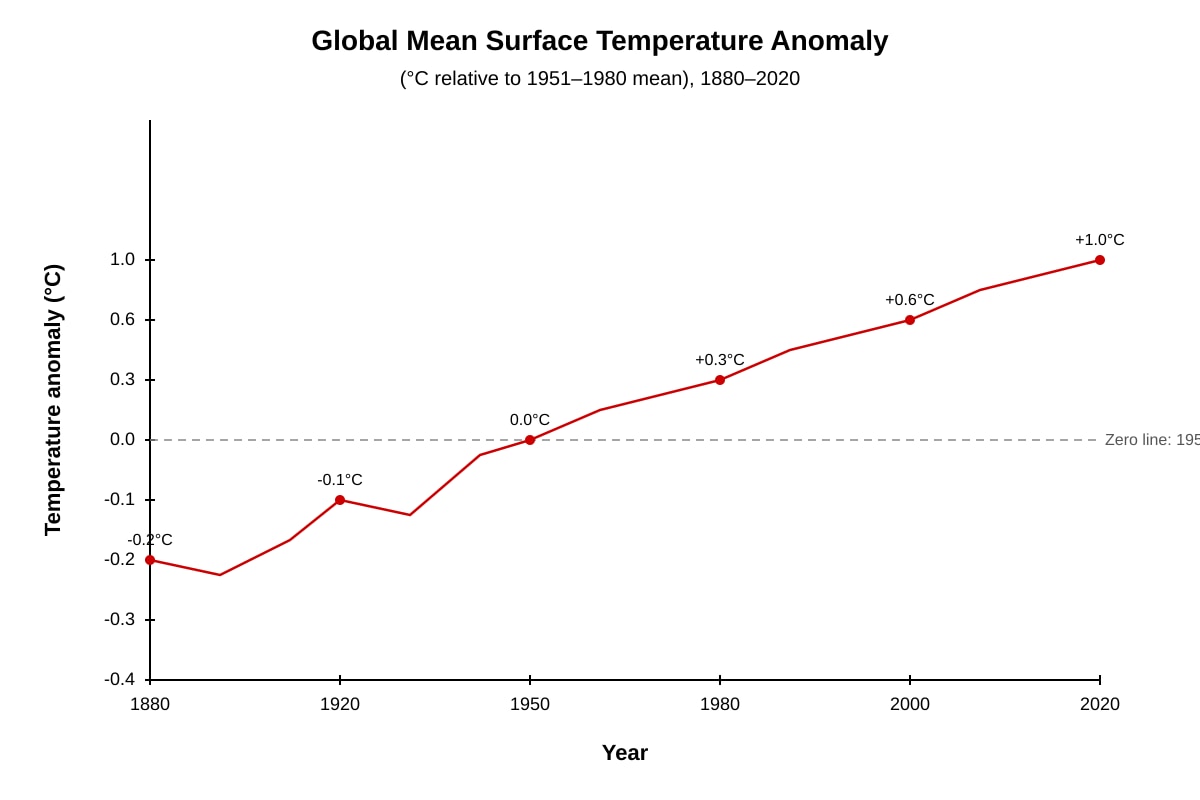
Answer: Resource A shows a long-term upward trend from about -0.2°C in 1880 to +1.0°C in 2020, with accelerated rise after 1950.
Marking: 1 trend stated, 1 use of values, 1 note acceleration.
Teaching: Anomaly = deviation from baseline mean.
Q7 [3 marks]
Answer: Slowed thermohaline circulation reduces heat transport to North Atlantic, causing regional cooling (e.g., Younger Dryas).
Marking: 1 mechanism, 2 consequence/exp.
Teaching: Ocean conveyor distributes heat.
Q8 [4 marks]
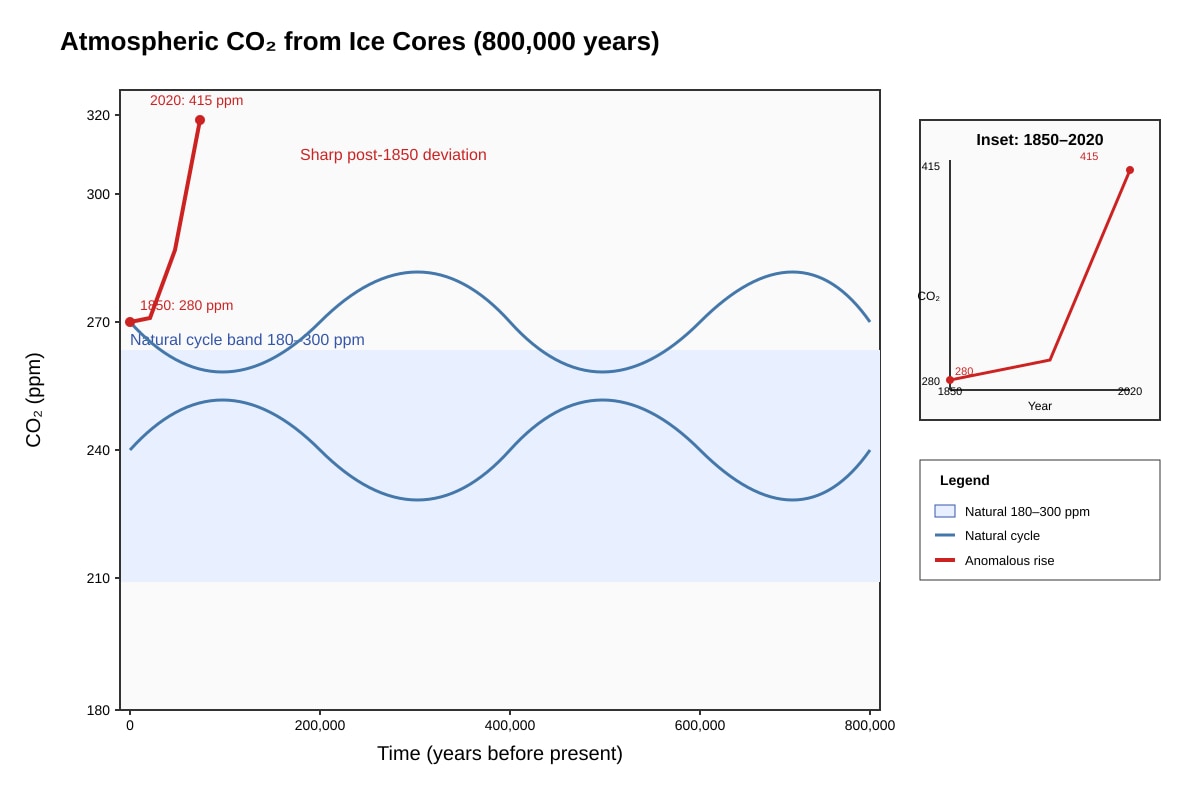
Answer: Ice core data show CO₂ ranged 180–300 ppm over 800k yrs. Post-1850 jump to 415 ppm is outside natural band → anomalous.
Marking: 2 for natural range, 2 for recent spike interpretation.
Teaching: Proxy records give long context.
Q9 [3 marks]
Answer: (1) Species migration/phenology shift; (2) Habitat loss from warming/drought.
Marking: 1.5 each.
Teaching: Terrestrial ecosystems sensitive to temp/moisture.
Q10 [3 marks]
Answer: Deforestation removes forest sink; e.g., Amazon clearance cuts CO₂ uptake.
Marking: 1 activity, 2 example.
Teaching: Sinks absorb CO₂; human reduce them.
Q11 [4 marks]
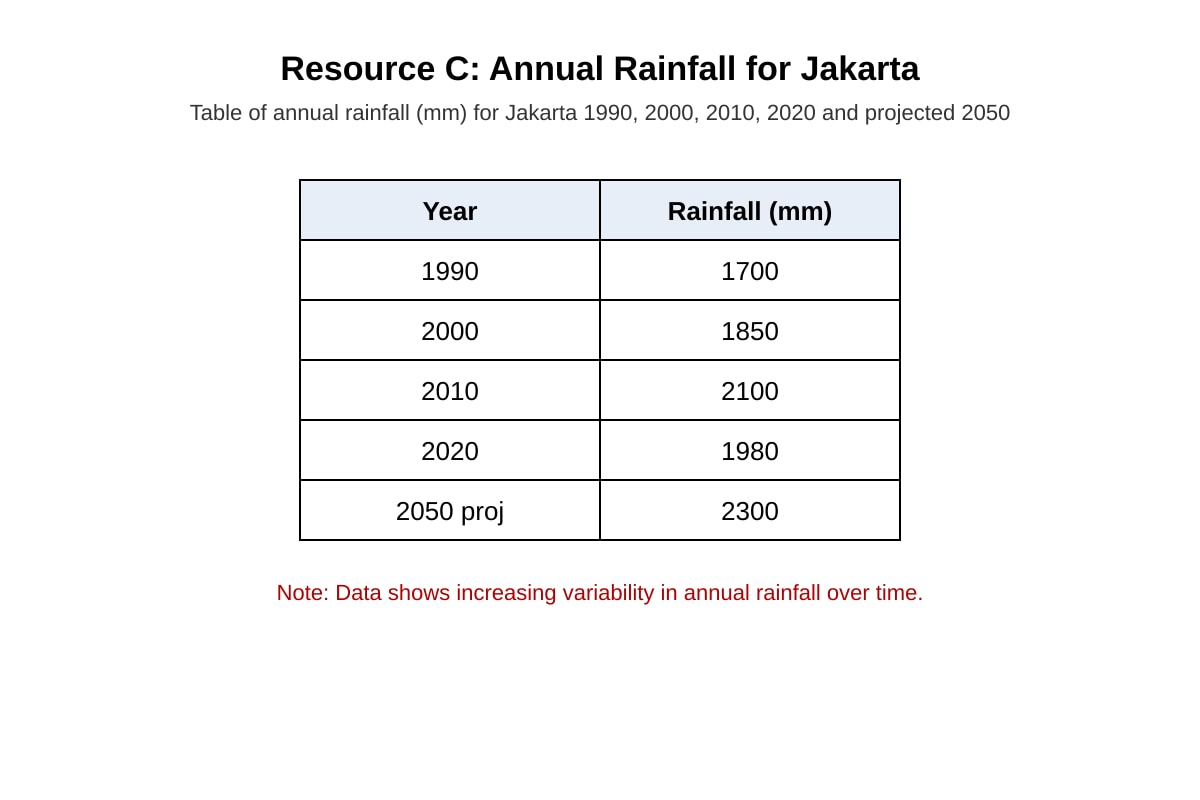
Answer: Useful: shows local trend (rise to 2100 then dip, proj 2300). Limited: single city, short record, projections uncertain.
Marking: 2 strength, 2 limitation.
Teaching: Evaluate = judge value + limits.
Q12 [3 marks]
Answer: Ice sheet melt adds freshwater, slows thermohaline, cools N Atl; also reduces albedo → positive feedback.
Marking: 1 albedo, 1 circulation, 1 synthesis.
Teaching: Ice is both indicator and feedback.
Q13 [3 marks]
Answer: Form over warm oceans (>26.5°C) lat 5–20°; rare near equator, none in S Atlantic normally.
Marking: 1 temp, 1 lat, 1 distribution.
Teaching: Requires warm sea surface.
Q14 [4 marks]
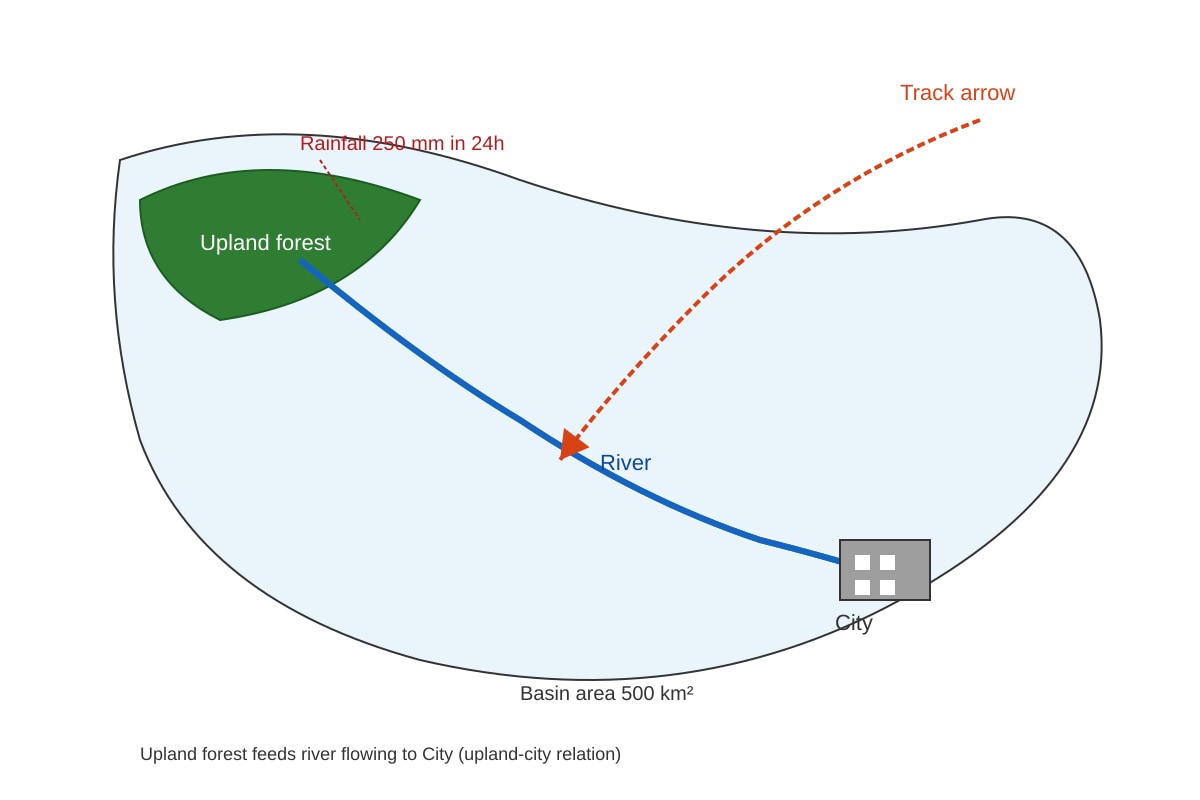
Answer: Heavy rain (250mm) on upland → rapid runoff, infiltration exceeded, river rises, urban flooding.
Marking: 1 rain, 1 runoff, 1 river response, 1 urban impact.
Teaching: Hydrological cycle intensified.
Q15 [3 marks]
Answer: Sea level rise inundation; stronger storm surge.
Marking: 1.5 each.
Teaching: Low-lying = vulnerable.
Q16 [4 marks]
Answer: Ocean cores: microfossils → sea temp; ice cores: trapped gas → atmospheric CO₂. Different proxies complement.
Marking: 2 each.
Teaching: Multi-proxy improves confidence.
Q17 [4 marks]
Answer: Human activities dominant since 1850 (IPCC); natural factors explain older variability but not recent rate.
Marking: 2 human, 2 natural context.
Teaching: Weigh evidence.
Q18 [4 marks]
Answer: Less rain + higher temp → lake stratification, oxygen drop, fish decline.
Marking: 2 precip, 2 temp interaction.
Teaching: Coupled stressors.
Q19 [4 marks]
Answer: Challenges: resolution coarse, dating uncertainty, spatial gaps.
Marking: 1.3 each.
Teaching: Proxies indirect.
Q20 [4 marks]
Answer: Poor nations lack adaptation funds, face greater exposure → uneven impact.
Marking: 2 development, 2 exposure.
Teaching: Scale & equity matter.